While we’re all gradually adjusting to internet whitelists, the launch of 5G in Russia could happen as early as summer 2026. The State Radio Frequency Commission (GRFC) plans to allocate the necessary frequency band to carriers by late June. But if you’re expecting your smartphone to suddenly download much faster, you’ll need to temper those expectations: the real impact for everyday users will be modest and won’t come immediately. Let’s break down what exactly the commission is deciding, who will actually benefit in the coming years, and why your current smartphone might be useless for the new networks.
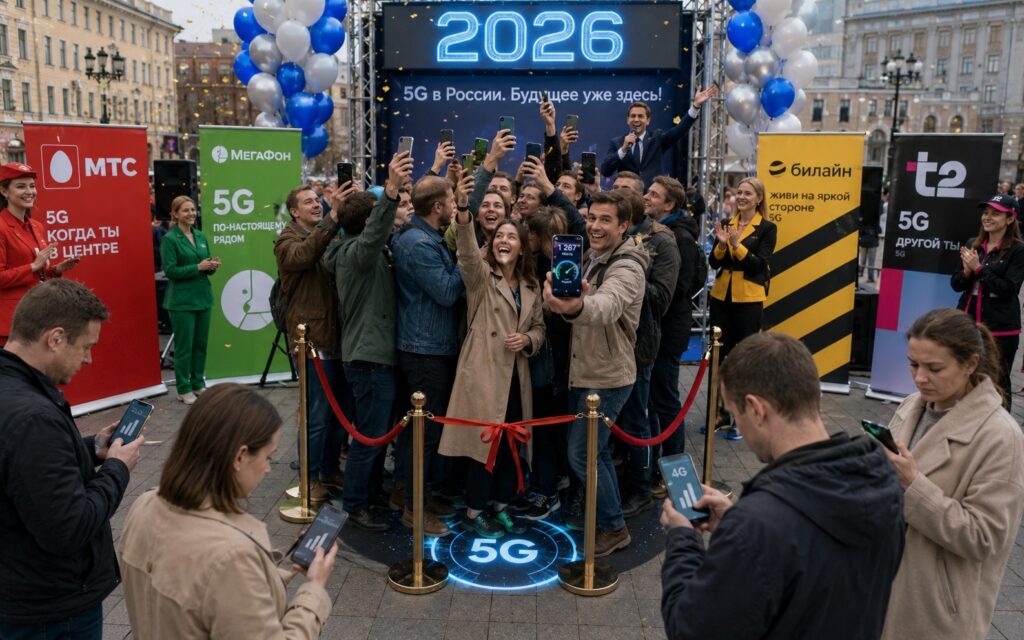
They say we’ll be using 5G as early as this summer
When Will 5G Launch in Russia
This is about allocating frequencies for fifth-generation networks. The State Radio Frequency Commission plans to allocate the 4.63–4.99 GHz band to carriers Vympelcom, MTS, MegaFon, and T2 by the end of June, intended for deploying 5G networks in major cities across the country. This was reported by Izvestia, citing commission documents.
It’s important to understand: this is not a command to “switch on 5G tomorrow,” but an administrative step. The Ministry of Digital Development stated that the final start of commercial 5G deployment depends on the approval of launch conditions currently being discussed with government agencies and businesses. In other words, the date of frequency allocation alone doesn’t mean the network will instantly appear in your city.
5G Internet Speeds in Russia
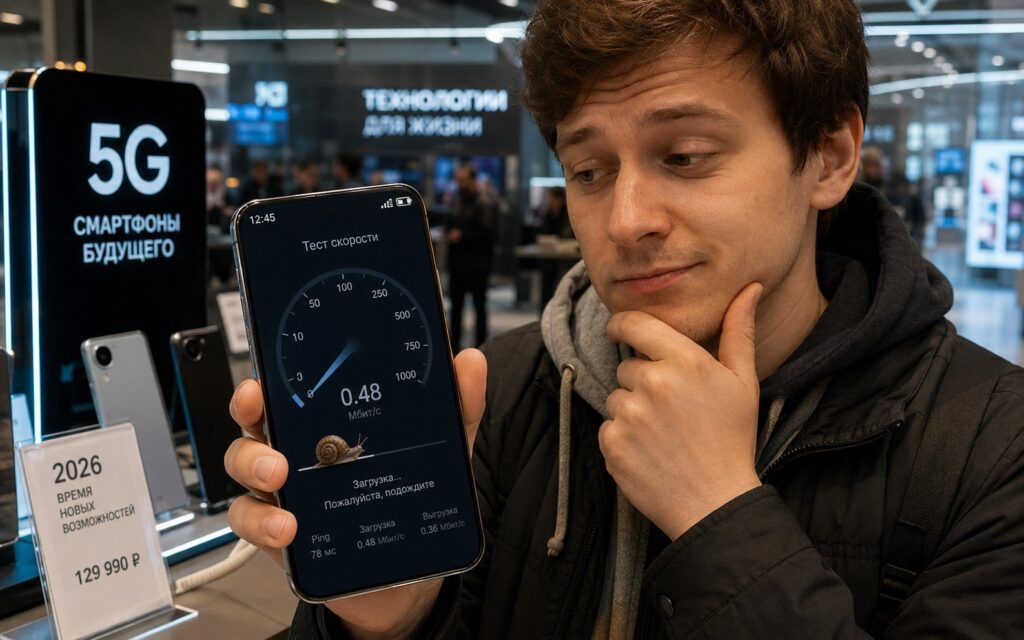
The main disappointment for regular users is that there won’t be a noticeable speed boost at first. Carriers already have 5G-capable equipment and will be able to quickly activate new networks in technology-neutral mode (meaning on existing LTE frequencies). However, without a full-scale launch of the 4.63–4.99 GHz band, changes will be limited to only a slight increase in data transfer speeds and reduced latency.
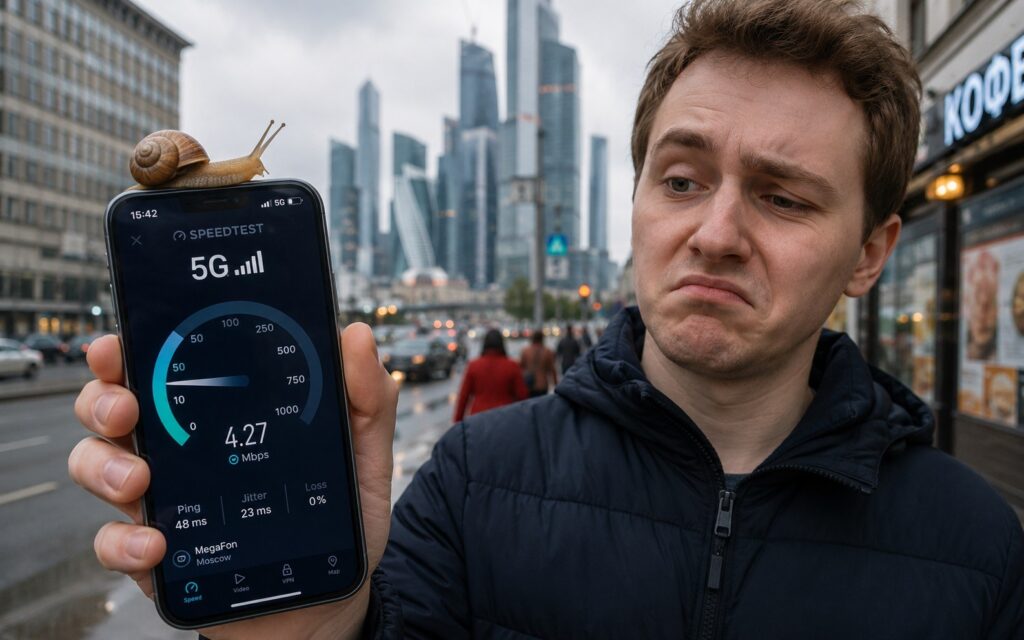
Don’t expect high speeds right away
Simply put, in the first phase, 5G will operate on top of the familiar frequencies that currently power your mobile internet. The speed test numbers might go up slightly, but this isn’t the leap promised in those flashy fifth-generation commercials.
Which Russian Cities Will Get 5G
The rollout is planned for years ahead, moving from major cities to the rest. According to the draft commission decision, the timeline looks like this:
- By the end of 2026, next-generation networks should appear in the first four regional centers
- In 2027, another 16 cities will be added
- By the end of 2027, 5G services should be operational in all Russian cities with populations over one million
- By 2030, the number of such cities should grow to 40, and by 2035 — to 84
The conclusion is simple: if you live in a city with over a million people, you can realistically expect 5G closer to 2027, and in smaller cities, you’ll have to wait even longer. This is typical for large-scale telecom infrastructure, where plans are announced well in advance, and actual coverage catches up gradually.
Problems with 5G in Russia
Here lies the most unpleasant issue for users. The chosen frequency band differs from what’s used in most countries around the world. This creates problems: there’s virtually no mass-produced equipment for these networks yet, and many smartphones don’t support the 4.63–4.99 GHz band or have support blocked at the firmware level.
What this means in practice: your current smartphone with 5G support may not work with Russian networks, even if the specs proudly state “5G.” Support for the required band must be present in both the hardware and unlocked in the software. Before buying a new device for local networks, you’ll need to carefully check the list of supported frequencies rather than just looking for the 5G badge.
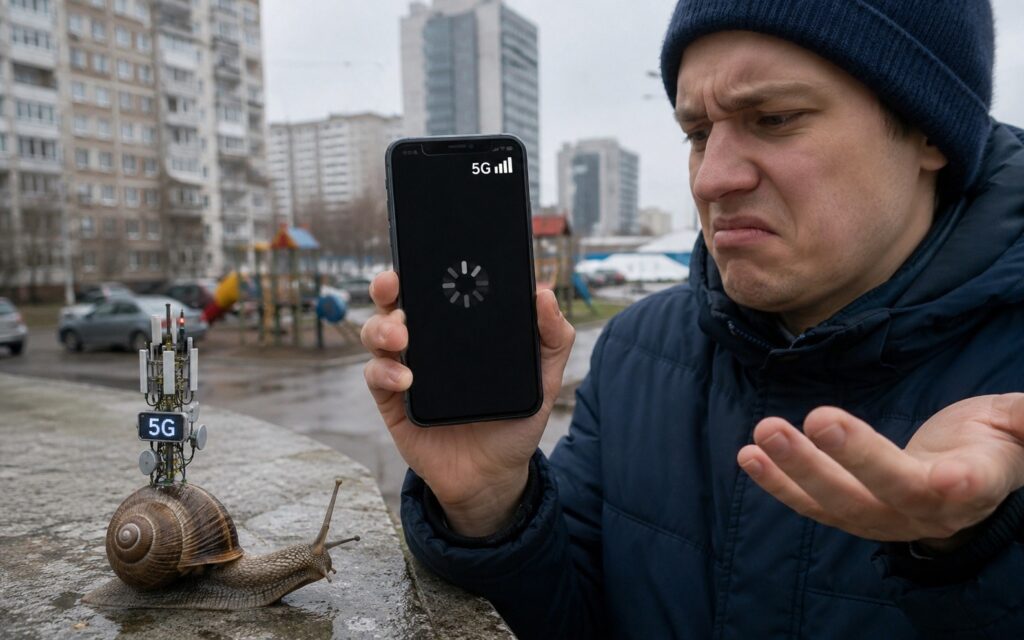
5G in Russia is complicated, and it will be for a while
There’s also an infrastructure limitation. The signal on these frequencies penetrates buildings poorly and fades quickly, so carriers will need to build a denser network of base stations. For users, this means that reception quality at home and indoors may initially be uneven.
Who Needs 5G and Why
In short — it’s not for you, and not for your smartphone, at least not yet. Experts believe that the main advantages of 5G in Russia in the coming years will be in demand not so much by regular users as by industry and the corporate sector. The technology will enable the development of autonomous transport, robotics, smart cities, and industrial digital services, where minimal latency and high data transfer speeds are critically important.
A separate topic is the transition to domestic equipment, which is also spread out over time. By the end of 2027, the share of domestic equipment in 5G networks should be at least 1%, by 2030 — at least 50%, and a complete phase-out of foreign equipment is planned by 2031. For users, this is an indirect signal: the pace of deployment will also depend on how quickly domestic technology becomes available.
Should You Buy a 5G Smartphone in 2026
This news doesn’t require any urgent action. Upgrading your smartphone for 5G right now is definitely premature: the networks don’t exist yet, launch conditions haven’t been approved, and the first cities will get coverage at best by the end of 2026. If you’re already planning to buy a new device in the coming year, keep the compatibility question with the local frequency band in mind — but don’t make it the deciding factor just yet.
Don’t rush to buy a new 5G smartphone
The main sober conclusion: the GRFC’s summer step is the beginning of a long journey, not the moment when your phone’s internet suddenly speeds up. Regular users in major cities will feel the real benefits of 5G closer to 2027, and even then only if they have a compatible smartphone and dense coverage nearby. Until then, the everyday experience will continue to rely on good old LTE.