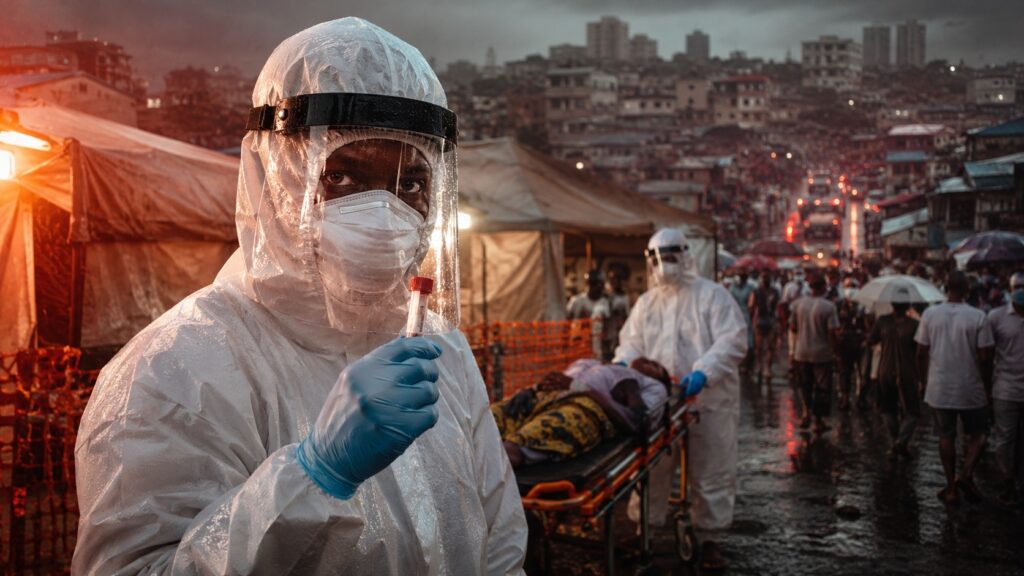
The new Ebola strain has seriously alarmed WHO, and there are reasons for that
The World Health Organization has declared an international emergency due to an Ebola outbreak in the Democratic Republic of Congo and Uganda. The Bundibugyo strain has already killed more than 80 people, and there is no vaccine or specific treatment for it, despite all past efforts by scientists. Let’s break down what is happening and what the risks are.
The 2026 Ebola Outbreak
According to Reuters, on May 5, 2026, the WHO received a signal about an unknown disease with high mortality in the Mongbwalu health zone of Ituri Province in northeastern Congo.
Among the dead were four healthcare workers who died within four days. The earliest known case was a nurse who developed symptoms on April 24: fever, bleeding, and vomiting. She died at a medical center in the city of Bunia.
For nearly three weeks, the virus circulated undetected. The reason: initial tests at the regional laboratory in Bunia simply could not identify this strain. Diagnostic equipment was configured only to detect the Zaire strain, the most common type of Ebola. It was only on May 15 that samples sent to the capital’s laboratory in Kinshasa tested positive. Genomic sequencing confirmed it was the Bundibugyo strain.
As of May 16, Ituri Province had recorded 8 laboratory-confirmed cases, 246 suspected cases, and 80 presumed deaths. By the time the emergency was declared on May 17, the death toll had reached 89 people.
International Emergency Due to Ebola
A Public Health Emergency of International Concern, or PHEIC, is the second-highest level of WHO alarm. Only pandemic status is higher. This designation is given when the risk of disease spreading between countries is high and international coordination is needed to combat it.
This time, WHO acted unusually quickly. The outbreak was officially confirmed on Friday, and by Saturday, WHO Director-General Tedros Adhanom Ghebreyesus declared a PHEIC — for the first time in history without first convening an expert committee, which speaks to the seriousness of the situation.
The reasons for alarm include a high percentage of positive tests among the first samples, confirmed cases in two countries simultaneously, and a growing number of suspected cases and death clusters. According to WHO, the actual scale of the outbreak may be significantly larger than what is currently being recorded.
At the same time, Tedros emphasized that the outbreak does not yet meet the criteria for a pandemic, but neighboring countries are in a high-risk zone.
The Bundibugyo Strain: A Rare Ebola Variant With No Vaccine
Ebola is not a single virus but an entire family. There are four species of the Ebola virus that cause disease in humans. The vast majority of past outbreaks in Congo were caused by the Zaire strain, and vaccines and treatments were developed specifically for it.
Bundibugyo is a different story. This strain was first detected in 2007 in the district of the same name in Uganda: 131 people were infected, and 42 of them died. Five years later, in 2012, it struck again — this time in the DR Congo, where 29 out of 57 infected people died. The current outbreak is only the third in recorded history.
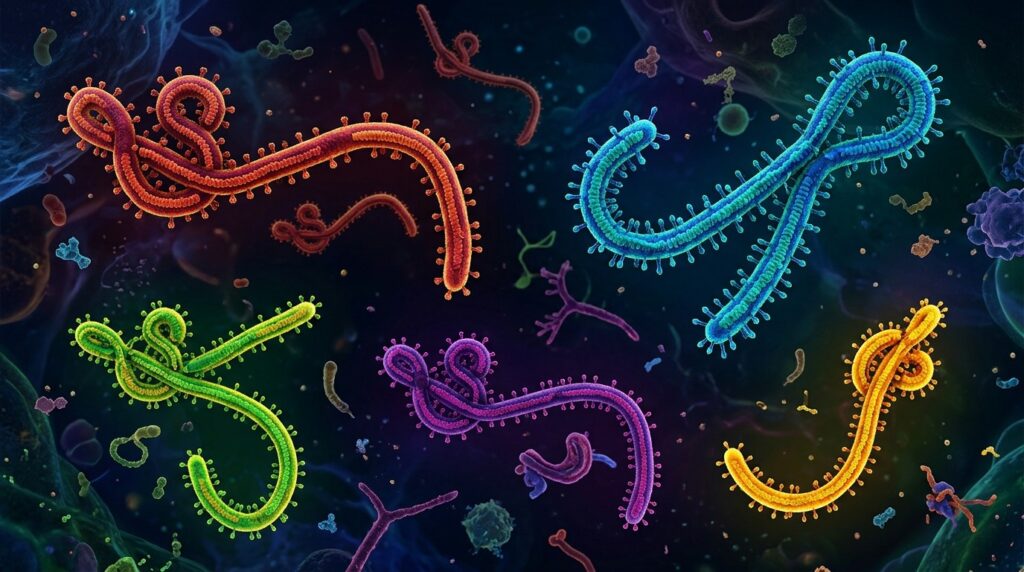
The Ebola virus family includes several variants with different fatality rates
Unlike the Zaire strain, there are no approved vaccines or specific drugs for Bundibugyo. The existing vaccine Ervebo (rVSV-ZEBOV), which helped stop previous outbreaks, was developed exclusively for the Zaire strain and provides virtually no protection against Bundibugyo.
This is the key problem of the current outbreak. The only thing doctors can currently offer is supportive therapy: fluid and electrolyte replenishment and treatment of complications. The fatality rate during Bundibugyo outbreaks has previously ranged from 30 to 50%.
How Ebola Is Transmitted and How It Differs From Flu and COVID-19
Ebola is neither the flu nor COVID. The virus is considered moderately contagious because it is not transmitted through airborne droplets. Infection can only occur through direct contact with the biological fluids of an infected person: blood, vomit, or saliva. The infection is also transmitted through contaminated objects: clothing, bedding, and medical equipment.
Notably, a person becomes contagious only after symptoms appear. The incubation period for Ebola can last up to 21 days, and during this entire time the carrier poses no danger to others. This is why the main tool for fighting Ebola is contact tracing and isolating contacts before symptoms appear.
Ebola symptoms include fever, headache, muscle pain, weakness, diarrhea, vomiting, abdominal pain, and in later stages — unexplained bleeding. It is precisely these massive hemorrhages that make Ebola one of the most terrifying infections on the planet.
The Ebola Virus Has Reached Cities
Until recent days, the outbreak was concentrated in hard-to-reach areas of Ituri Province. But then the virus began to spread. Two laboratory-confirmed cases, including one death, were registered in the Ugandan capital Kampala — two different individuals who arrived from Congo with no apparent connection to each other.
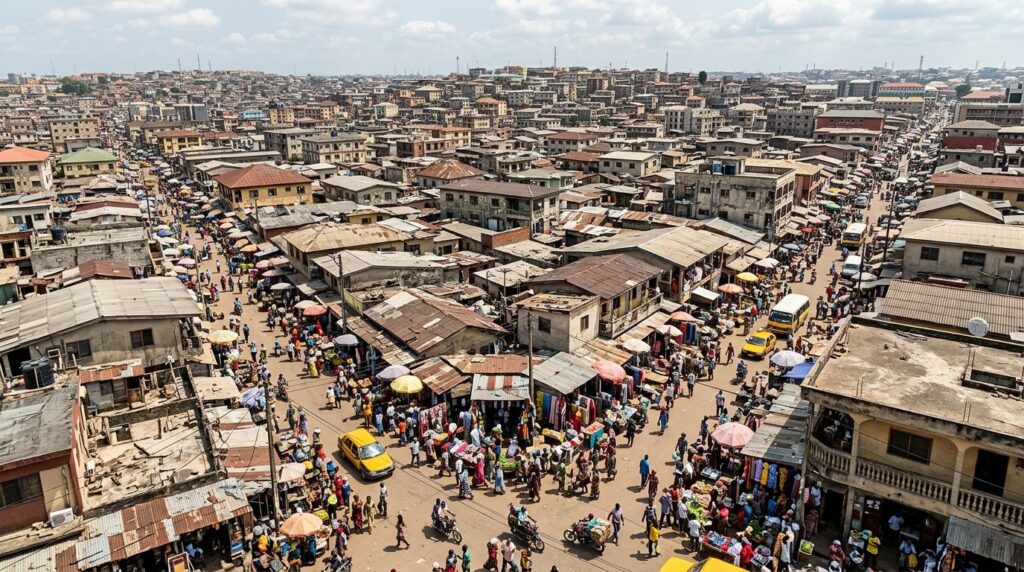
Large African cities with dense construction and crowded markets are a zone of special risk during Ebola outbreaks
And on Sunday, a case was confirmed in Goma — a major city in eastern Congo with a population of about two million people. The patient turned out to be the wife of a man who died of Ebola in Bunia. She traveled to Goma after her husband’s death, already infected.
WHO representatives stated that the penetration of the Ebola outbreak into urban centers, including Kinshasa and Kampala, is of particular concern, since infectious diseases spread faster in densely populated areas. In rural areas, contacts are limited, but in a city, a single infected person can visit a market, a hospital, and a crowded bus all in one day.
Why Ebola Outbreaks Are So Hard to Stop
The current outbreak is believed to have started in Mongbwalu — an active gold mining area with heavy foot traffic. Ituri Province borders Uganda and South Sudan, and people constantly move between countries.
But the main problem is security. Several armed groups are fighting for control of the mines in the region. Due to combat operations and checkpoints, tracing the contacts of infected individuals is nearly impossible. Some people on contact lists had already fallen ill and died before medical teams could reach them.
Added to this are infrastructure challenges. The Republic of Congo is four times the size of France, but the country’s roads and communications are extremely underdeveloped. Delivering medical equipment to remote areas is a serious logistical challenge in itself.
However, Congo also has a unique advantage: no other country in the world has as much frontline experience fighting Ebola as the Republic of Congo, where outbreaks have occurred 17 times since 1976. Standard Ebola containment methods — isolating the sick, contact tracing, quarantine — work even without a vaccine but require resources and access to the population.
Could the Ebola Outbreak Spread Worldwide
According to WHO estimates, countries neighboring Congo are in a high-risk zone due to population mobility, trade, and transport connections.
The European Centre for Disease Prevention and Control (ECDC) assesses the risk of infection for EU residents as very low, due to the low probability of importation and secondary transmission in Europe. The American CDC also considers the risk for the US population to be low. Russia’s consumer health watchdog Rospotrebnadzor also assessed the probability of Ebola appearing in Russia as low.
Ebola is transmitted only through direct contact with an infected person’s fluids, not through the air, which is why a COVID-19-style pandemic scenario is extremely unlikely for this virus.
Nevertheless, WHO urged countries to take immediate action.