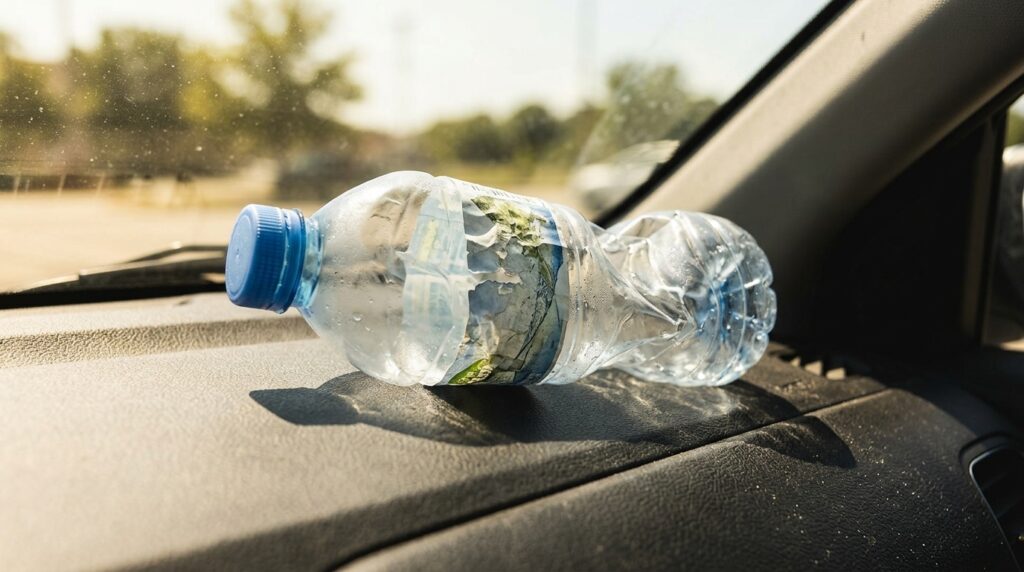
You shouldn’t leave a water bottle in the sun, especially if it’s already opened
In summer, a car interior heats up to 60–70 degrees Celsius within just a few hours, and everything you left inside heats up with it. The water bottle you grabbed for the road turns into something nothing like a fresh drink by lunchtime. Plastic reacts to heat, chemicals alter the taste, and if you’ve already taken a sip from the bottle, bacteria start multiplying at an astronomical rate. A bottle left in the car can not only explode but also cause other, more serious problems.
What Happens to a Bottle Inside a Car
Even if it’s not extremely hot outside, the temperature inside a closed car rises rapidly. According to calculations by American meteorologists, in just 10 minutes the air inside the cabin can heat up by 10–15 degrees, and within an hour in direct sunlight, the temperature can exceed 60 degrees.
For an ordinary disposable bottle, such conditions become a serious challenge. The plastic experiences significant stress — it heats up, softens, and then cools down again. If you leave water on the dashboard in direct sunlight, the bottle walls can deform, and the water itself takes on an unpleasant chemical aftertaste and smell.
Dangerous Chemicals in Drinking Water
Most disposable bottles are made from PET (polyethylene terephthalate). This type of plastic usually doesn’t contain bisphenol A, which is often used as a scare tactic online, so you shouldn’t believe every horror story. However, heat still does its damage.
The main problem with PET when heated is the leaching of antimony into the liquid. This substance is used in the production of plastic containers. Research shows that at room temperature, the water remains safe, but when heated above 50 degrees, the concentration of antimony begins to rise sharply. If a bottle sits in such scorching conditions for several days, the level of chemicals can exceed safe limits.
Additionally, scientists regularly find microplastics in water from plastic bottles. Science has not yet definitively determined how dangerous it is for health, but drinking a warm chemical cocktail is certainly not advisable.
Bacterial Growth in a Plastic Bottle
A factory-sealed bottle is only half the problem. It’s a completely different story if you’ve already taken a sip from it. At that moment, bacteria from your mouth and hands remain on the neck, threads, and inner side of the cap.
The warm, moist, and enclosed environment inside a heated car becomes an ideal incubator for microbes. At high temperatures, bacteria multiply at a colossal rate, forming an invisible slimy biofilm on the walls. This is exactly why drinking water from an opened bottle is unsafe.
A single sip of clean water from a sealed container is unlikely to poison you, but if an opened bottle has been sitting in your car for several days, feel free to toss it in the trash.
Storing Water in a Glass Bottle
A logical question arises: will a glass bottle save the day? From a chemistry standpoint, glass is absolutely safe. It doesn’t release harmful substances when heated, doesn’t change the taste of the drink, and doesn’t add microplastic particles to it.
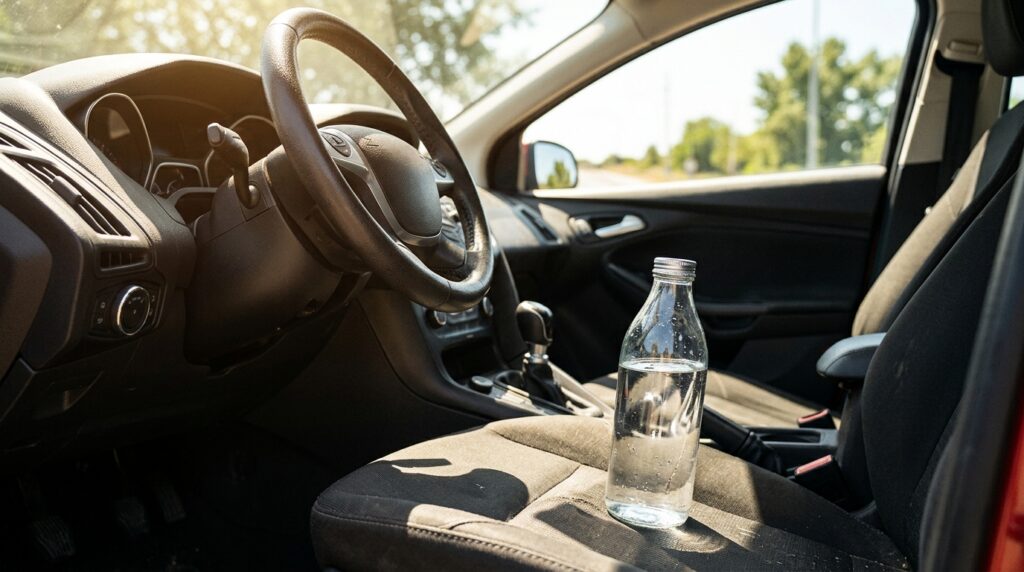
Glass containers don’t release chemicals, but water in them still heats up quickly
But there are a couple of important caveats. First, glass in bright sunlight acts as a lens and can theoretically cause the car’s upholstery to catch fire. Second, the bacteria rule works just as reliably here: if you’ve already drunk from a glass bottle, microbes will multiply in it under the effect of heat just as well as in a plastic container.
How to Safely Carry Water in Your Car During Summer
To always have clean drinking water on the road without a plastic aftertaste or colonies of microorganisms, you need to change your approach to storing it.
- Use reusable insulated containers. The best choice for summer is a thermos or a quality bottle made from food-grade stainless steel with a wide mouth. It will keep water cool and is easy to wash with hot soapy water;
- Keep water out of the sun. Store bottles in a cooler bag, a special insulated pouch, or under the seat. Never leave them on the dashboard;
- Don’t store water near automotive chemicals. Keep drinks away from gas canisters, windshield washer fluid, antifreeze, or insect repellents.
The golden rule of experienced drivers: use a sealed plastic bottle after heat exposure only as a last resort, and throw away any opened and warm ones without hesitation.
The habit of tossing a water bottle into the cup holder seems harmless, but in summer the laws of physics and biology work against us. Now you know that it’s not about made-up internet horror stories, but about real antimony leaching and rapid bacterial growth. It’s much safer and more pleasant to get into the habit of bringing a good car thermos with fresh water on the road.