In movies, medications are often stored in the bathroom, but you shouldn’t do this
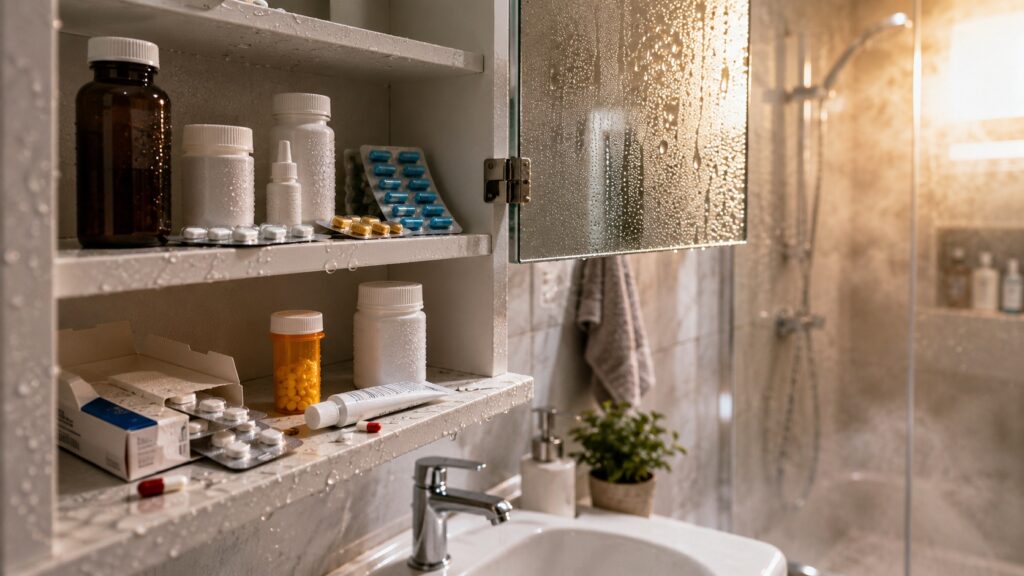
Have you ever wondered why medication instructions always say store in a dry place? Some people ignore this recommendation and put the package in the cabinet above the sink — where steam billows every morning and evening after a hot shower. It seems like a small thing, but this very habit can turn an expensive medication into useless chalk in just a couple of weeks. It’s not even about the expiration date of medications, but about what happens to tablets every time you turn on the water.
Why the Bathroom Destroys Medications
The main problem isn’t the room itself, but its unstable microclimate. Every time you take a shower, the air temperature rises rapidly, and condensation settles on mirrors and furniture. For most medications, this is devastating because moisture triggers chemical reactions, and heat accelerates the breakdown of active ingredients.
According to Rospotrebnadzor standards, standard medications should be kept in a dry place at temperatures up to +25°C and humidity no higher than 60%. In a real bathroom, however, humidity easily reaches 100%, and the temperature can fluctuate from 13 to 31 degrees.
Even a tightly closed cabinet door is not a reliable barrier. Cardboard boxes quickly absorb moisture, and blister packs gradually lose their seal. As a result, tablets change in density and dissolution rate in the body.
Which Medications Are Most Sensitive to Humidity
Dry forms suffer the most from humidity and heat: capsules, regular and effervescent tablets, and powders. Water is the main catalyst for effervescent products, so in damp conditions they begin to soften, crumble, and lose their properties.
Special caution should be exercised in the following cases:
- Split tablets. If you divide a dose into halves in advance, they lose their protective coating. Under these conditions, split tablets lose their protection and deteriorate quickly;
- Aspirin. Sensitive to moisture and heat. When breaking down, aspirin decomposes into acids, acquiring a sharp vinegar smell. Taking it is dangerous and can cause stomach irritation;
- Nitroglycerin. This medication is extremely unstable. It should only be kept in its original packaging, which protects it from air and light. Transferring it into convenient pill organizers is strictly prohibited.
Where to Best Store Your Home Medicine Cabinet
The optimal solution for storing medications is a dry, dark, and cool cabinet in a living area. Shelves in the bedroom, a closed drawer in the hallway, or a storage closet work perfectly. The key is to keep them away from heating radiators, kitchen stoves, sinks, and direct sunlight.
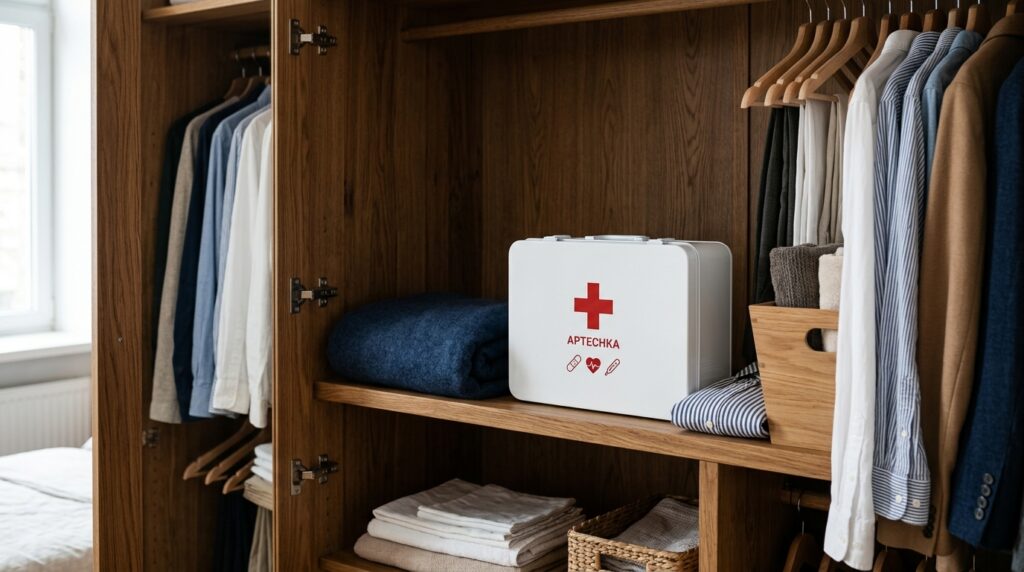
A medicine cabinet is best stored in a closed cabinet in the bedroom or hallway
Basic rules for storing a home medicine cabinet:
- Keep medications in their original packaging. This way you’ll never lose the instructions, expiration date, or batch information;
- Don’t mix tablets in one container. This is a direct path to dosage confusion and accidentally taking an expired medication;
- Record dates. If you’ve opened a syrup, eye drops, or ointment, be sure to write the opening date on the packaging. The shelf life of such products often drops sharply after the seal is broken.
Should You Store Medications in the Refrigerator?
Many people put all their medications on the refrigerator door just in case. You shouldn’t do this. For most regular tablets, the cold isn’t necessary, and the constant condensation triggers the destruction process.
The refrigerator is only necessary for medications where the manufacturer specifically indicates a temperature range of +2 to +8 degrees. For example, unopened insulin truly requires cold storage to maintain its effectiveness.
Key Signs of Spoiled Tablets and Ointments
The tricky part is that a medication can spoil without visible signs. That’s why maintaining proper temperature conditions is more important than visual inspection. If the expiration date has passed, the safety and effectiveness of the medication are no longer guaranteed.
But there are signals that mean a product should be discarded immediately, even if the dates say it’s still good:
- Tablets have crumbled, cracked, become unusually hard, or conversely, sticky;
- Gelatin capsules have deformed or stuck together;
- Liquid solutions, drops, or syrups have become cloudy, with strange sediment or flakes appearing;
- Creams or ointments have separated into water and a thick base, or changed their usual smell.
Which Medications You Should Throw Away
Your home medicine cabinet needs to be sorted through regularly. Doctors recommend checking expiration dates every 3–6 months.
Into the trash — or better yet, to special collection points at pharmacies — should go any expired tablets. Also get rid of medications without identifying information, because if part of the blister with the name has been cut off or the dosage isn’t visible, taking them is dangerous.
Leftover antibiotics deserve a separate mention. After completing a prescribed course, they should not be kept in reserve. Leftover antibiotics should not be stored and especially should not be given to relatives or pets.
Also ruthlessly part with opened eye or nasal drops if you don’t remember when you opened them. Many eye drops are safe for only 28 days after opening, and some liquid antibiotics go bad within just 1–2 weeks.
Where your medications are stored directly affects how they’ll work when you need them. By moving your medicine cabinet from a humid bathroom to a dry bedroom closet, you’ll protect yourself from taking unpredictable chemical compounds.