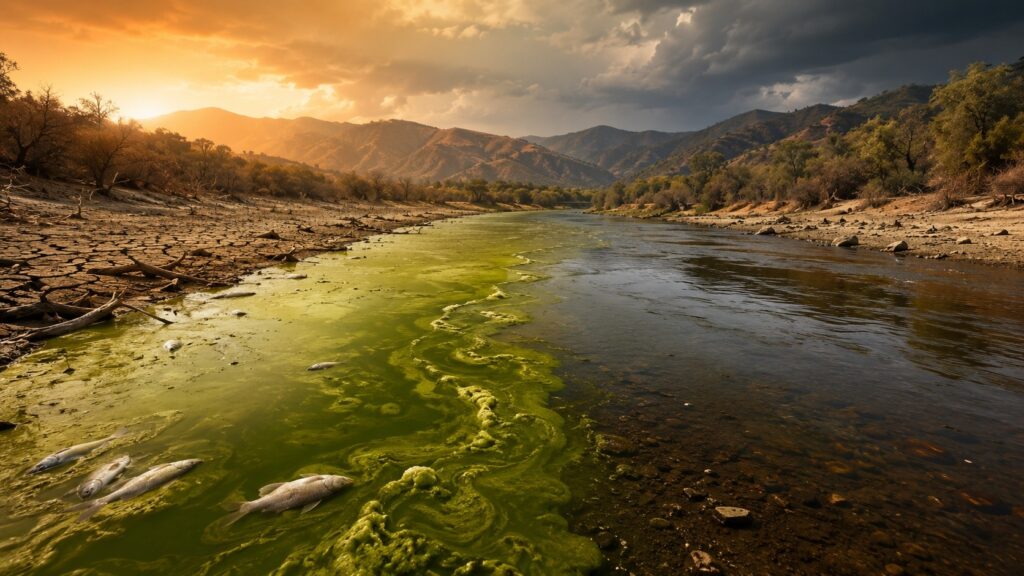
Rivers on Earth are becoming toxic, and scientists don’t quite know what to do about it
Rivers around the world are warming, losing oxygen, and accumulating toxic substances. One might think that factories and sewage systems are entirely to blame. But no — scientists say that climate change has also made a significant negative contribution. A large-scale analysis of 965 cases of declining river water quality showed that droughts, floods, and long-term warming are destroying rivers faster than previously thought. In the past, rivers in dire condition could be counted on one hand, but now their numbers are growing rapidly.
Why River Water Is Getting Warmer
For a long time, water resource management boiled down to a simple formula: if there’s too little water, it’s a drought, and if there’s too much, it’s a flood. And between these extremes, everything was more or less fine. But the climate has changed, and this logic no longer works.
A study led by Michelle van Vliet analyzed 965 cases of changes in river water quality during droughts, heat waves, heavy rainfall, and floods. It turned out that in 68% of cases, water quality deteriorated during droughts and heat waves, in 51% during heavy rainfall and floods, and in 56% against the backdrop of long-term climate changes. The work was published in the journal Nature Reviews Earth & Environment.
The mechanism is simple and brutal. Warm water is physically incapable of holding as much dissolved oxygen as cold water. At the same time, when temperatures rise, microorganisms and aquatic inhabitants begin consuming oxygen faster. The result is a double blow: there’s less oxygen, and it gets used up quickly.
A separate study by Penn State University, published in Nature Climate Change, reconstructed water quality data for nearly 800 rivers in the US and Central Europe: 87% of them are warming, and 70% are losing oxygen. Moreover, rivers are warming and losing oxygen faster than oceans, which came as a surprise even to scientists.
Why Declining Oxygen in Rivers Is Dangerous
For aquatic inhabitants like fish, insects, and mollusks, dissolved oxygen in water is just as vital as air is for humans. When its level drops, the ecosystem begins to shrink. Some species leave, others die.
According to scientists’ forecasts, in the next 70 years, rivers may face oxygen levels so low that it will lead to the extinction of entire fish species.
But it’s not just about fish. Low oxygen levels trigger a chain reaction throughout the entire composition of river water. In oxygen-free conditions, nutrients and heavy metals begin to be released from bottom sediments. Conditions emerge for the proliferation of microbes that release methane and nitrous oxide — powerful greenhouse gases. Warm water intensifies oxygen loss, oxygen loss changes the chemistry, and altered chemistry amplifies ecological stress. The river gets trapped in a cycle that’s hard to escape.
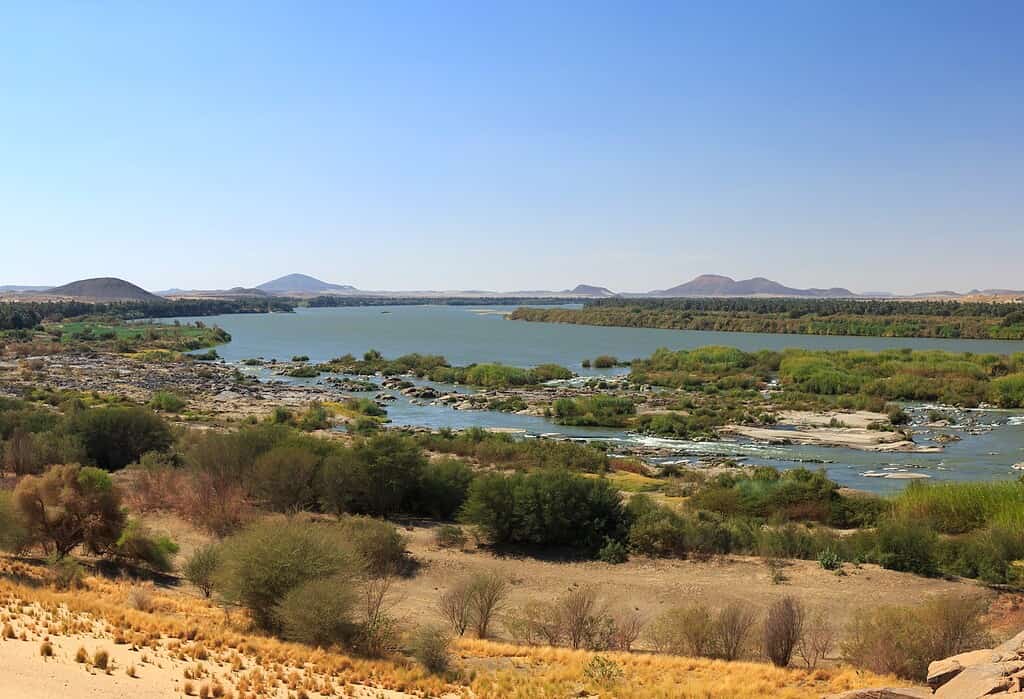
Mass fish die-offs are one of the consequences of oxygen starvation in rivers
In cities, rivers heat up the fastest due to asphalt, concrete, and other materials that accumulate heat. And in agricultural areas, oxygen disappears particularly quickly because fertilizers and manure enter the water and feed algae and bacteria, which actively consume oxygen as they decompose.
The Danger of Toxic Algae in Water
Rising temperatures also create ideal conditions for dangerous organisms. Nitrogen and phosphorus from agriculture, cities, and sewage act as fertilizer for algae and blue-green algae (cyanobacteria). Heat helps them grow faster and persist longer.
In September 2025, the Hudson River in the US experienced the largest cyanobacteria bloom in nearly 40 years of observation. Tests confirmed it was Microcystis — a cyanobacterium capable of producing toxins dangerous to humans and animals.
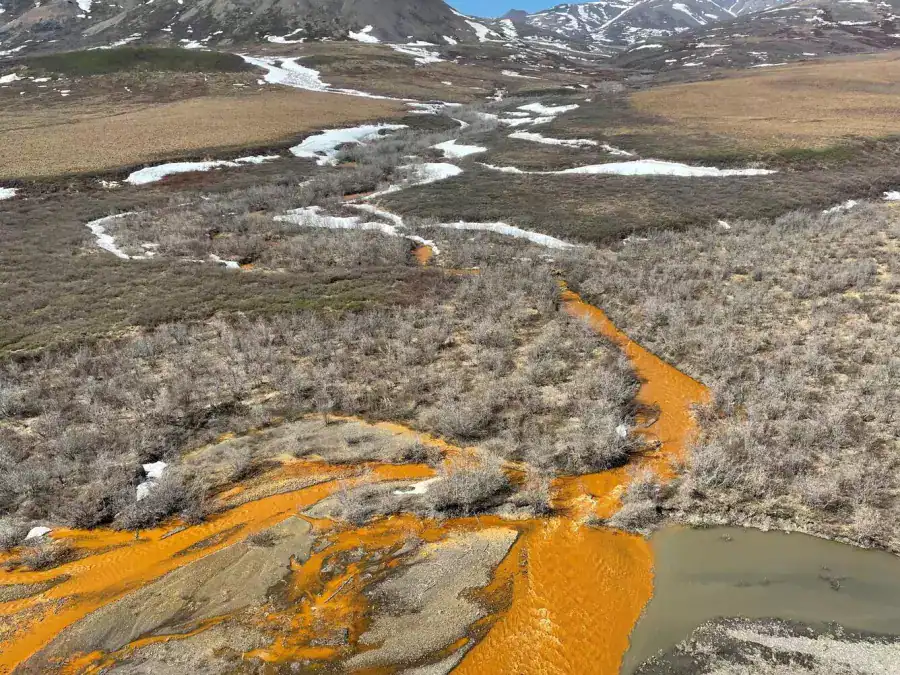
Toxic algae blooming on a river’s surface — a beautiful but dangerous sight
There’s also another hidden threat. In many industrial regions, arsenic, lead, mercury, and cadmium have accumulated on riverbeds for decades. As long as they’re “locked” in bottom sediments, they’re relatively safe. But floods, droughts, and dropping oxygen levels can release them back into the water.
Microplastics and pharmaceutical residues create a separate problem. Heat and ultraviolet light break plastic waste into ever smaller fragments. Droughts concentrate pharmaceutical drugs in shallow rivers, which can contribute to the development of antibiotic-resistant bacteria.
How Dirty Rivers Cost Us Millions
River pollution directly hits our wallets and health. Declining river water quality increases the cost of water treatment, complicates flood recovery, and affects fishing, tourism, and land values near waterways.
The scale of economic losses is impressive. According to Water.org, unsafe water and poor sanitation cost the world approximately $260 billion annually. In the US alone, nutrient pollution costs the tourism industry nearly a billion dollars a year.
Meanwhile, the value of residential property that could be affected by recurring floods and water quality degradation is estimated at $930 billion. All these figures will only grow if temperatures continue to rise.
For Russia, this problem is no less pressing. The Volga, Ob, Don, and other major rivers are sources of drinking water for tens of millions of people. Any changes in the temperature and chemical composition of their water affect water intakes, fisheries, and public health.
Can Rivers Be Saved from Pollution?
Tall dams and concrete embankments won’t solve the problem. More and more scientists are focusing on approaches that return some of the natural complexity to rivers that was taken away during development.
A straight concrete channel moves water quickly but also spreads pollution just as quickly. A river connected to wetlands, floodplains, and shaded banks works differently: it slows the flow, allows particles to settle, gives microbes and plants time to process nutrients, and creates habitat instead of simple drainage.
Riparian buffer zones — strips of trees, shrubs, and grasses along riverbanks — are considered one of the most effective protective measures. They intercept runoff before it reaches the channel, stabilize banks, and shade the water. Shade is especially important in warming conditions: cooler water retains oxygen better and is less stressful for fish. Such buffer zones significantly reduce the transport of sediment particles and nutrients, especially in agricultural landscapes.
Another effective tool is beaver dams, both natural and artificial. They slow floodwaters and help restore the natural balance of the ecosystem.
Technology also plays a role. Artificial intelligence and machine learning can detect pollution faster than traditional periodic sampling methods. Satellite data helps track chlorophyll and suspended particles over large areas. But data alone won’t clean a river — that requires decisions at the city, regional, and national levels.
The glorious days of clean rivers that purify themselves are over.