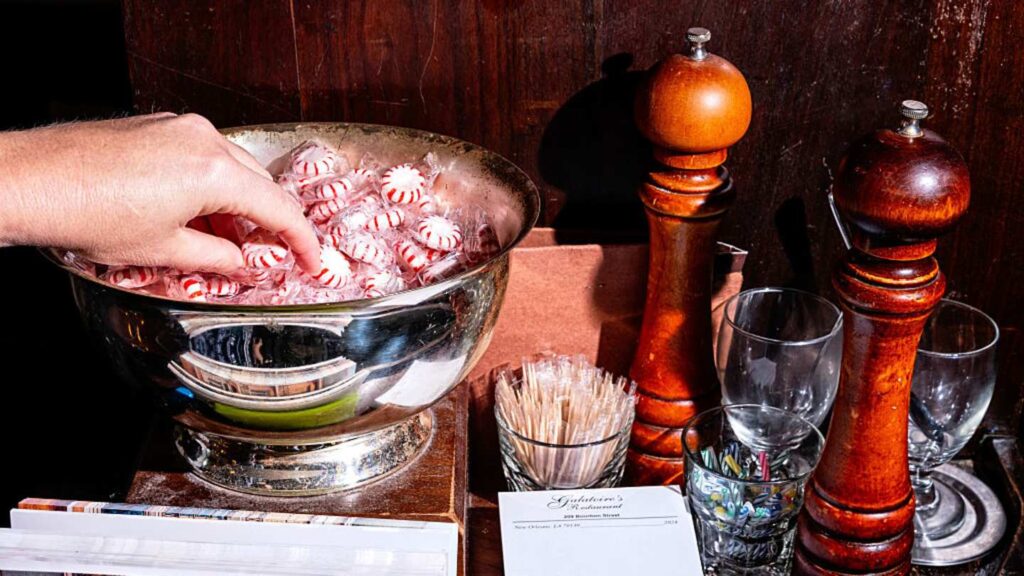
Why restaurants give candies after meals: a secret that will surprise you
You’ve probably noticed: in many restaurants and cafés, a small candy or mint is brought along with the check. It seems like just a nice touch, but no — there’s a whole chain of reasons behind it, from ancient digestive practices to modern research in the psychology of tipping. Let’s figure out where this candy tradition came from and why it benefits everyone.
Why Mint and Fennel Were Given After Meals in the Past
The exact time and place of this tradition’s origin are unknown. But there’s a compelling theory related to health. In Indian restaurants, guests are still offered fennel seeds after meals. Fennel is a traditional remedy that helps with bloating and improves digestion.
A similar role was played by mint, ginger, and cinnamon in various cultures. All of these plants have been used in folk medicine for centuries specifically as digestive aids. It’s quite possible that early food establishments offered herbal treats after meals precisely for this purpose, and over time, medicinal seeds and herbs gave way to ordinary candies.
The European tradition of digestifs — alcoholic drinks served at the end of dinner to aid digestion — also played its part. Candies became a kind of non-alcoholic alternative to this ritual.
How Candies With the Check Help Restaurants Get Tips
Even if the tradition’s origins are linked to digestion, modern restaurants continue it for a far more pragmatic reason. Back in 2002, the Journal of Applied Social Psychology published a curious study: it turned out that guests who received a chocolate candy with the check left noticeably higher tips than those who left without a treat. Moreover, both the type of candy and the way it was presented mattered.
Scientists explained this effect through the psychological principle of reciprocity. The idea is simple: when we receive something for free, we feel a subconscious desire to “pay it back.” This is the same principle behind free samples in stores — after trying a piece of cheese, you’re more likely to buy a whole package.
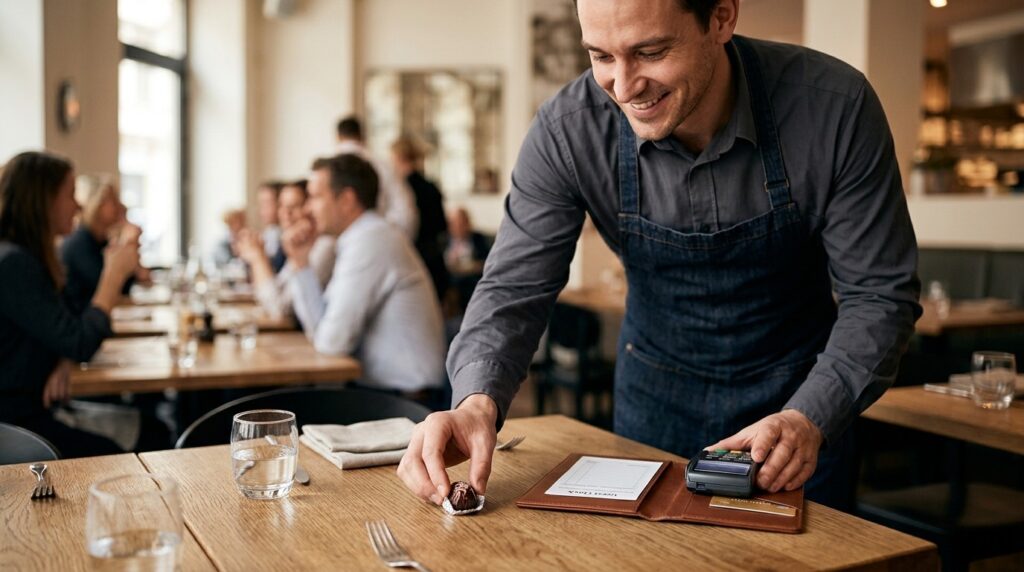
A waiter places a candy next to the check
In a restaurant, this mechanism works especially well. A candy is a small gift that costs the establishment almost nothing but triggers a chain reaction in the guest’s mind: someone did something nice for me, and I want to return the favor.
Why Sweets Improve the Restaurant Experience
Reciprocity isn’t the only reason candies work. There’s a whole set of factors that boost the guest’s mood at the moment of payment.
First, sweets cause a small spike in dopamine — a neurotransmitter associated with pleasure. Receiving something for free is pleasant on its own, and if it’s also sugar — the effect doubles. Second, the candy can satisfy the part of the brain that “craves” dessert after the main course. Even a tiny sweet can create a sense of meal completion.
Additionally, a mint candy freshens your breath — and that’s also a nice bonus, especially if you didn’t hold back on the garlic during dinner. And a good mood at this moment is important: this is exactly when the guest is deciding how much to add for a tip and whether to leave a review.
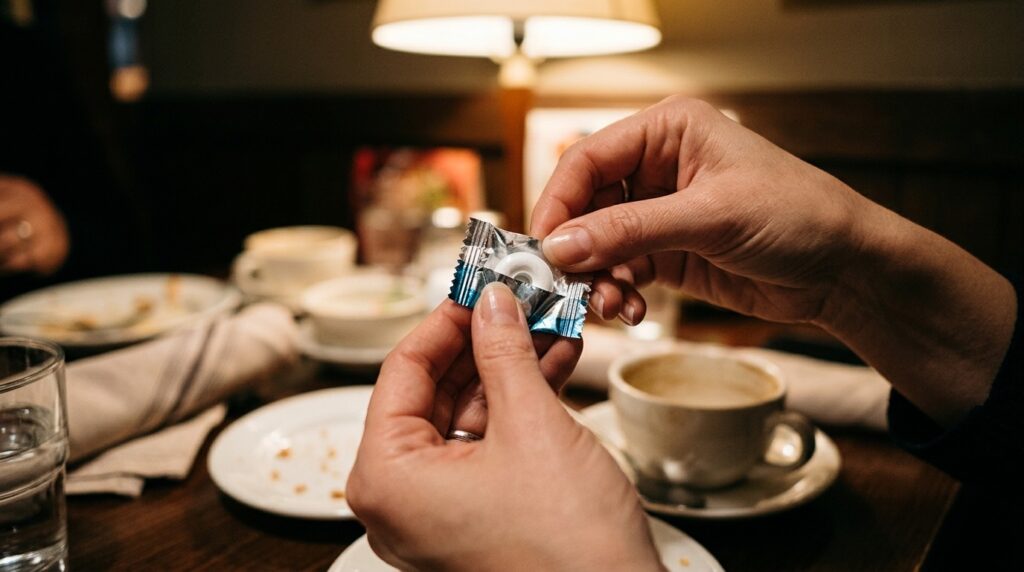
A mint candy after dinner — a small pleasure with a big effect
Why Restaurants Are Giving Candies After Meals Less Often
If candies work so well, why are they given less and less? You’re not imagining it — the practice is indeed declining, and there are several reasons:
- Allergies: more and more people suffer from food allergies, and it’s easier for restaurants to remove candies than to check the ingredients of each one
- Hygiene: open bowls of mints touched by dozens of hands raise questions, especially after the pandemic
- Budget: even small expenses add up to a significant amount, especially for high-traffic establishments
Nevertheless, many restaurants still keep a bowl of candies by the exit or include a treat with the check. And now that you know the mechanics behind this gesture, you’ll probably look at that little candy differently.