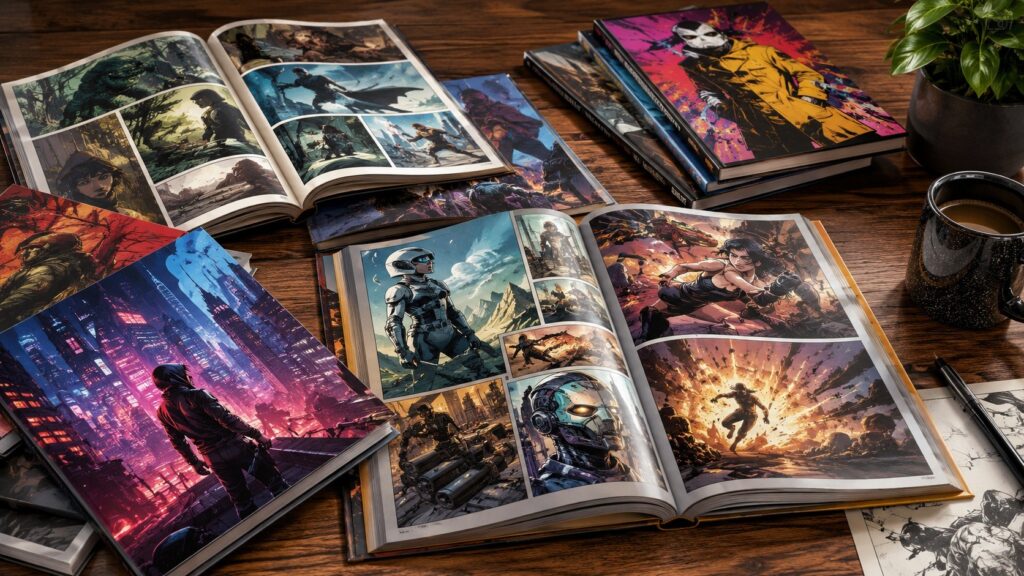
Many people consider comics a stupid pastime, and they’re wrong
There is an opinion that only children read comics. Perhaps you think so yourself, because they have more colorful pictures than text. However, comics are over a hundred years old and have long since become something more than stories about people with superpowers. Many comics tackle serious topics like psychological trauma. And some aren’t intended for children at all. But the stereotype that comics aren’t serious is very persistent. Let’s try to figure out why.
What’s the Difference Between Books and Comics
The main myth about comics is closely tied to the cult of literature. The logic is simple: writers rely solely on the mastery of words, while comic book creators cheat by supplementing text with pictures. Therefore, comic book fans simply can’t process text without a visual cue. Generation after generation, parents suggested their children read a book, and in this hierarchy, comics ended up somewhere at the very bottom, alongside television and video games.
But there’s a fundamental error here. Comics and literature are different art forms. Pictures in a comic aren’t illustrations to text — they are the narrative itself. Historically, comics didn’t emerge from books supplemented with pictures, but from captions to newspaper caricatures. Text in them was secondary to the drawing. If we follow the critics’ logic, then cinema, painting, and animation are also cheating, since they too aren’t limited to pure words.
To truly understand a good comic, a reader must carefully examine the spreads, notice parallels between panels, visual quotes, and the use of color. This is closer to perceiving visual art than to simplified reading. There are plenty of popular myths that it’s long past time to stop believing, and the myth about the stupidity of comics fits right in.
What Genres Exist in Comics
Many people believe that comics always tell stories about a person in tights punching a villain. Yes, superhero stories are a bright and popular genre that largely defines the mainstream. But it was never the only one. The first comics were comedies, adventures, and detective stories. Alongside superheroes, there have always been horror, fantasy, science fiction, and realistic drama.
The European comic book tradition developed along its own path entirely: adventure comedies about Tintin and Asterix, the space opera about Valerian. And superhero stories themselves are far more diverse than they appear from the outside. The superhero genre includes noir detective stories, science fiction, and urban fantasy — essentially, it can be any kind of story.
Comics on Serious Topics
In 1980, Art Spiegelman’s comic “Maus” was released. It’s a story based on real events about Holocaust survivors, where Jews are depicted as mice and Nazis as cats. In 1992, this graphic novel received the Pulitzer Prize, and this seriously influenced the perception of comics in the art world.
But “Maus” is far from the only example. The comic “Persepolis” tells the story of the Iranian Revolution, the comic “Pyongyang” is about life in the capital of North Korea. The graphic novel “Requiem: Vampire Knight” is valued above all for its detailed imagery of the afterlife, and the Lovecraftian comic “Providence” is analyzed page by page by fans looking for references and allusions.
All of these are works that children and most teenagers would find incomprehensible and uninteresting. They require life experience, knowledge of context, and readiness for complex topics. Calling them “books for stupid people” is roughly the same as calling cinema stupid because cartoons exist.
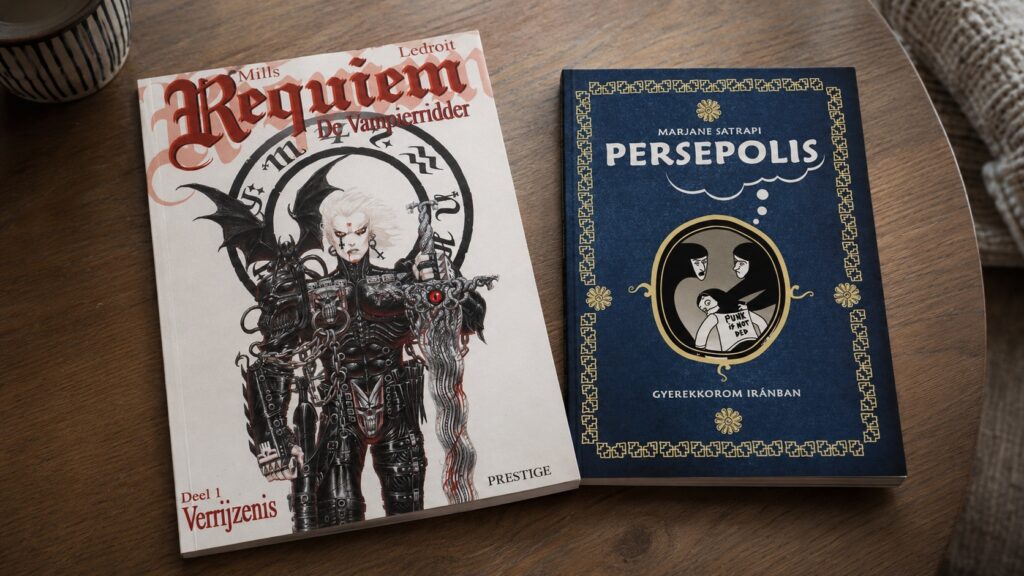
Comics “Requiem: Vampire Knight” and “Persepolis”
How Reading Comics Develops Thinking
The accusation that comics “impoverish imagination” by showing characters instead of letting readers fill in the gaps sounds logical, but only at first glance. The same could be said about cinema, animation, sculpture, and painting. Moreover, books with their direct descriptions of thoughts and feelings also deprive us of the opportunity to speculate and guess. Meanwhile, comics that reveal characters through actions and individual lines of dialogue actually force the imagination to work harder.
A good comic isn’t text with pictures — it’s a complex system where visuals and words work together. Some artists completely abandon a realistic style and use the differences between panels as illustrations of a character’s thoughts — for example, enlarging an object from panel to panel that frightens a character or draws their attention. To read such techniques, you need attentive, active perception.
Why Adults Read Comics
Many comics are multilayered works that mix “teenage” heroes and a bright visual style with reflections on politics, religion, ecology, and personal relationships. People who easily pick up on such layers in films by Tarantino or the Coen brothers somehow stumble over bright illustrations and the reputation of a “children’s” format.
Part of the problem is a self-fulfilling prophecy. Editors and studio directors understand that comics will be placed closer to young adult literature than to “high” art anyway, and they don’t try to change public opinion. It’s precisely the people who don’t consider comics art who push it into the space of industry, forcing creators to work within a logic of repetition and simplicity. What’s the point of experimenting if your work will be perceived as cheap entertainment anyway?
But the situation is changing. Comics are gaining more and more recognition, their artists feel greater creative freedom, and audiences are making more diverse demands. Artwork ranges from cartoonish to realistic. Comic book artists draw on classical painting, cinema, photography, caricature, and the works of their predecessors.
Is It Beneficial for Children to Read Comics
Comics don’t replace books — they complement them. These are different art forms with their own strengths and weaknesses. Comics teach people to read visual information, notice details, and follow narratives through action. Books develop other skills — working with abstract description, internal monologue, and linguistic nuances.
The very first comics, like “The Adventures of Tintin,” were indeed aimed at children. And for young readers, comics remain an excellent way to fall in love with reading, thanks to the visual element that helps maintain attention and understand context. But posing the question as “comics or books” is like asking “cinema or music.” They’re not competitors — they’re neighbors.
Comics are over a hundred years old, and during this time they’ve come a long way from newspaper caricatures to the Pulitzer Prize. They tell stories about the Holocaust, explore the psychology of villains, and examine the structure of totalitarian states. The more people understand that a comic is simply another way to tell a story — one that has its own failures and masterpieces — the more interesting both the industry itself and our reading experience will become.