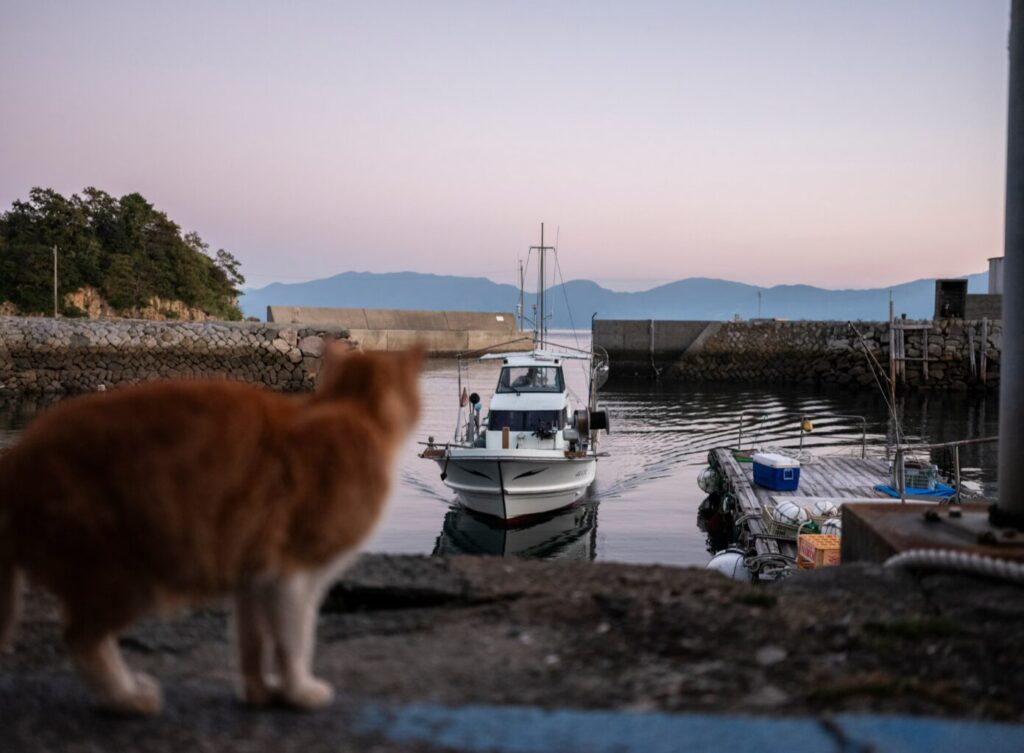
A ginger cat watches Mr. Hidenori Kamimoto return from fishing. Image source: theguardian.com
On the Japanese island of Aoshima, about 80 cats and only a few elderly people live today. It was once a thriving fishing village with a population of nearly 900. Now the island is known worldwide as “Cat Island” — a place where whiskered residents rule the streets, sleep in abandoned houses, and greet every ferry. But behind the postcard-perfect cuteness lies a story about demographics, genetics, and inevitable decline.
How Cat Island Aoshima Appeared in Japan
Aoshima is a tiny island about 1.6 km long in Japan’s Seto Inland Sea, in Ehime Prefecture. The only way to get there is by a small ferry from Nagahama port, which runs twice a day. The trip takes about 30 minutes.
The history of cats on the island begins with fishermen. Aoshima was settled as early as the 17th century and by the mid-20th century had become a thriving village that lived off sardine fishing. Fishermen brought several cats to the island for a simple purpose — to fight the rats that gnawed through fishing nets. But when the fishing industry declined, people started leaving for the mainland, leaving their cats behind. Without natural predators (there are no dogs on the island), the cat population grew rapidly.
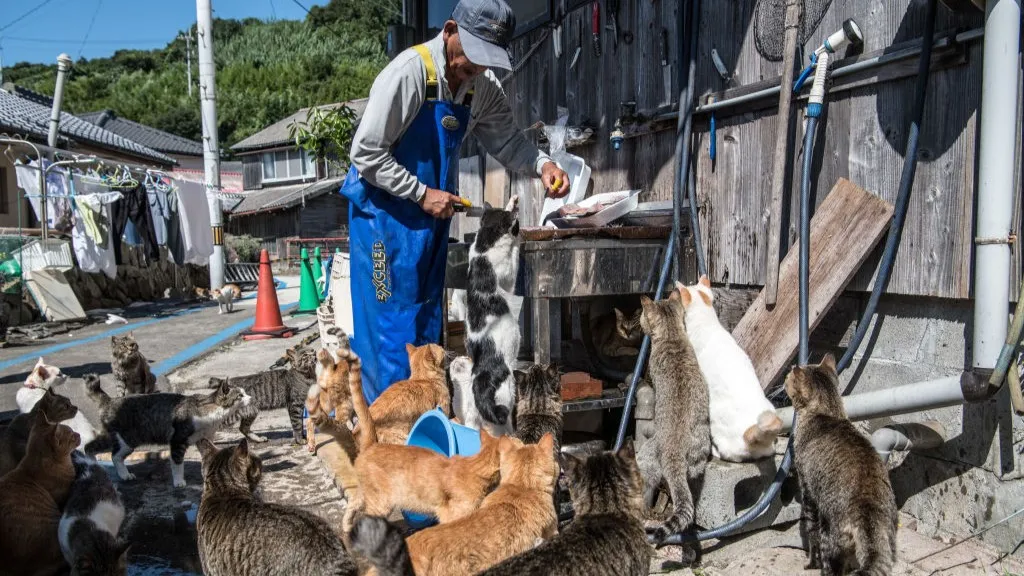
A resident of Aoshima island in Japan treats cats to freshly caught fish. Image source: livescience.com
By 2015–2018, the island had between 120 and 200 cats, while only about fifteen people remained — mostly retirees over 75 years old. The ratio of cats to humans at one point reached 36 to 1.
How Cats Live on Aoshima Island Today
Today, Aoshima has no hotels, no shops, no cafes, and not even vending machines. Cats occupy abandoned houses and structures that are gradually crumbling due to typhoons and storms. The cats are fed through donations: people from all over Japan send food for the island’s feline population.
The central figure in the cats’ lives is Naoko Kamimoto, a local resident in her seventies whom islanders call the “cat mother.” She feeds the cats twice a day and gives them medicine. The cats also hunt small animals, but exactly how this affects the local fauna is something scientists have not yet determined.
Kamimoto speaks calmly about the future: “We just live one day at a time. But the day will come when there will be neither people nor cats here. All we can do is take care of them while we’re here.”
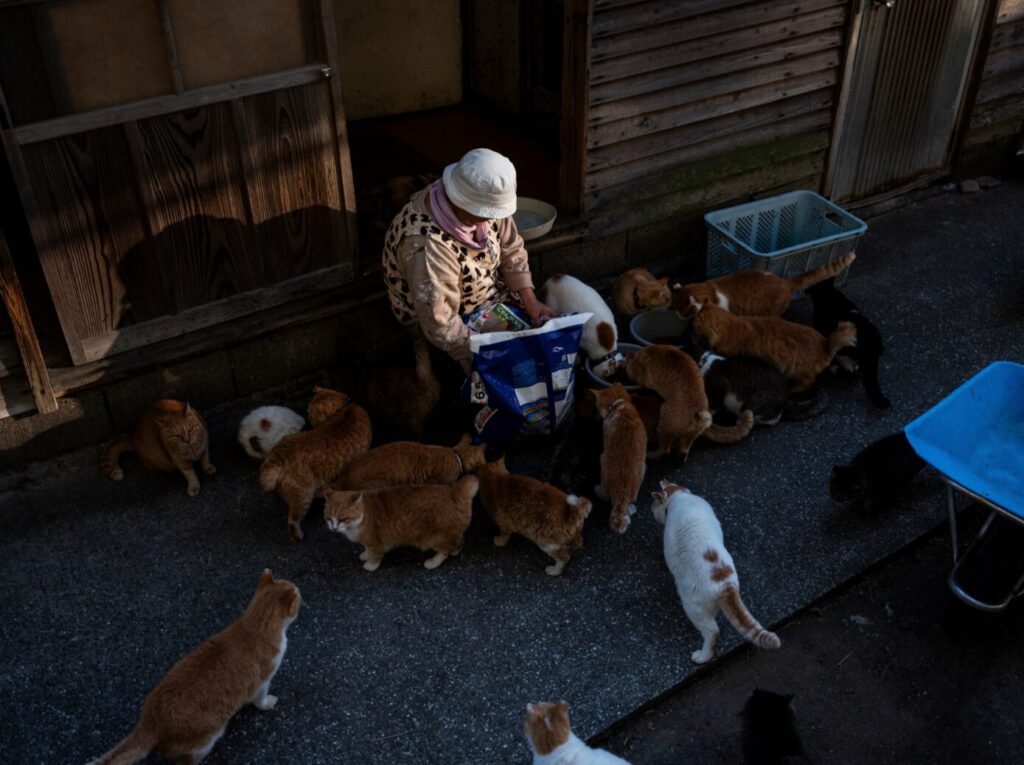
Mrs. Naoko Kamimoto feeds cats with food brought by caring people. Image source: theguardian.com
Why Cats on Aoshima Are Mostly Ginger
If you look at photos of Aoshima’s cats, an unusual pattern stands out: almost all of them are ginger or tortoiseshell. This is not a coincidence but the result of the so-called founder effect — a genetic phenomenon in which a small group of animals passes its traits to all offspring.
A study from 2023, published in the Vavilov Journal of Genetics and Breeding, analyzed the genetic profile of Aoshima’s cats using photographs. Scientists assessed the frequency of mutant alleles — gene variants responsible for coat color. It turned out that the frequency of the O (Orange) allele, which “activates” ginger pigment, is one of the highest in Japan on Aoshima. At the same time, some alleles characteristic of Japanese cats in general are completely absent on the island.
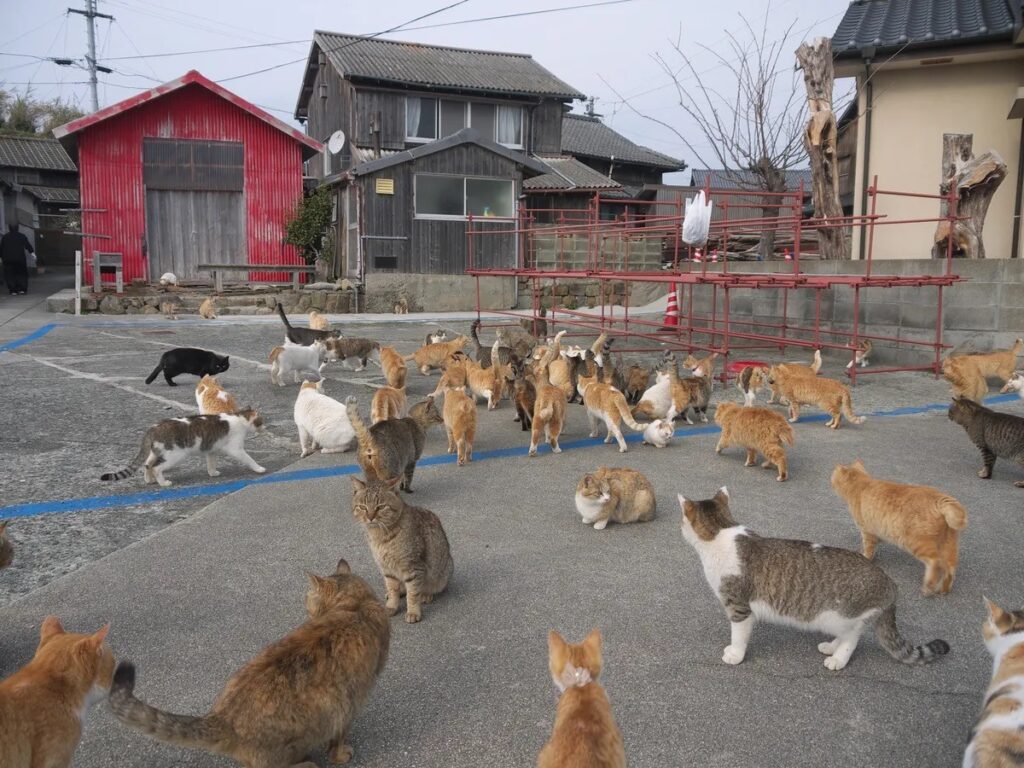
Cats on Aoshima are mostly ginger and tortoiseshell because they descended from a small population brought to the island by fishermen. Image source: livescience.com
The simple explanation: the few cats that fishermen once brought to the island most likely carried the “ginger” gene. And since no new cats arrived from outside, this trait became fixed and spread throughout the entire population — much like if all residents in an isolated settlement had blue eyes because they were all descendants of one family.
Cat Sterilization on Aoshima and the Demographic Crisis
In 2018, the situation on Aoshima became critical: the aging residents physically could not care for hundreds of cats. The Aoshima Cat Protection Society decided on mass sterilization. In a short time, veterinarians sterilized about 210 animals. One of the local old-timers hid approximately 10 cats because he opposed the program — but overall, the operation covered nearly the entire population.
Since October 2018, not a single kitten has been born on the island. Ten years ago, about 200 cats lived on Aoshima; now approximately 80 remain. All of them are over seven years old. By estimates, a third of them suffer from diseases — blindness, respiratory problems — caused by decades of inbreeding.
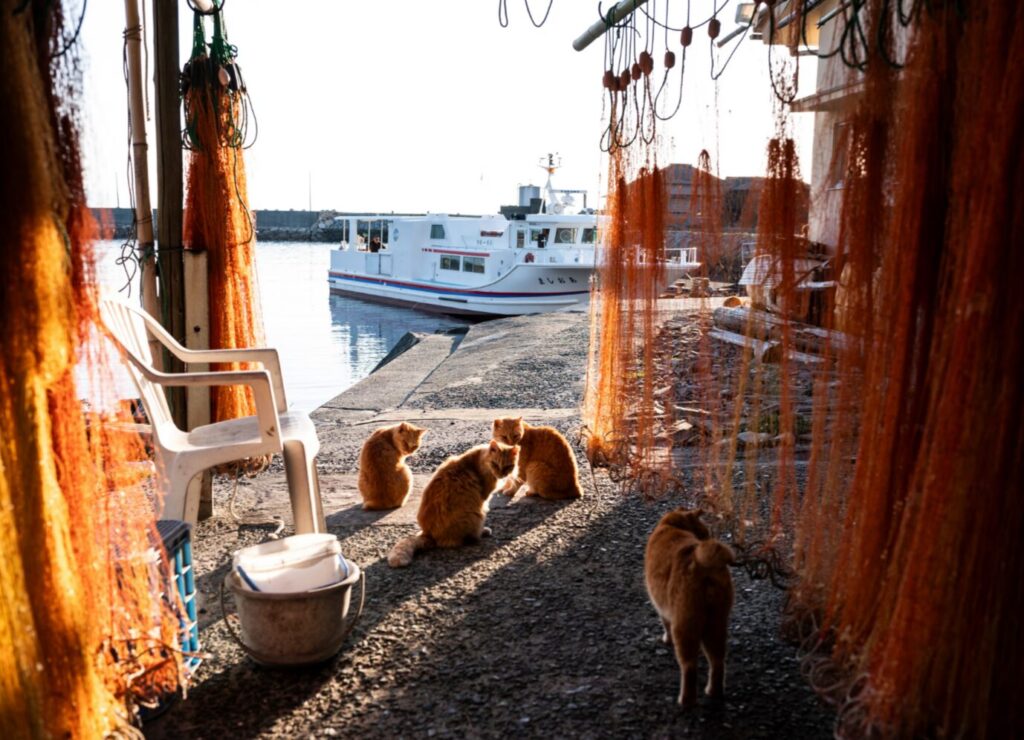
Cats bask in the sun among fishing nets. Image source: theguardian.com
There are almost no people left on the island either. Right after World War II, nearly 900 people lived here, but about ten years ago their number had shrunk to 80, as aging fishermen and their spouses moved to the mainland, leaving their cats behind. By 2017, only 13 residents remained; in 2023, The New York Times reported five residents. Today only four people remain on the island: Naoko and Hidenori (her husband), plus another couple who prefer to keep a low profile. There is a possibility that within a few years, Aoshima will become uninhabited — for both people and cats.
Tashirojima: Another Cat Island in Japan
Aoshima is far from the only “cat island” in Japan. In total, the country has about 11 islands where cats significantly outnumber humans. One of the most famous is Tashirojima island in Miyagi Prefecture.
On Tashirojima, cats appeared in a similar way: residents raised silkworms and brought in cats to fight mice. Over time, the cat population grew while the human population shrank — today about a hundred people live on the island, with several times more cats. Unlike Aoshima, Tashirojima has a cat shrine called Neko-jinja and a themed campsite called “Manga Island” with cat-shaped cabins.
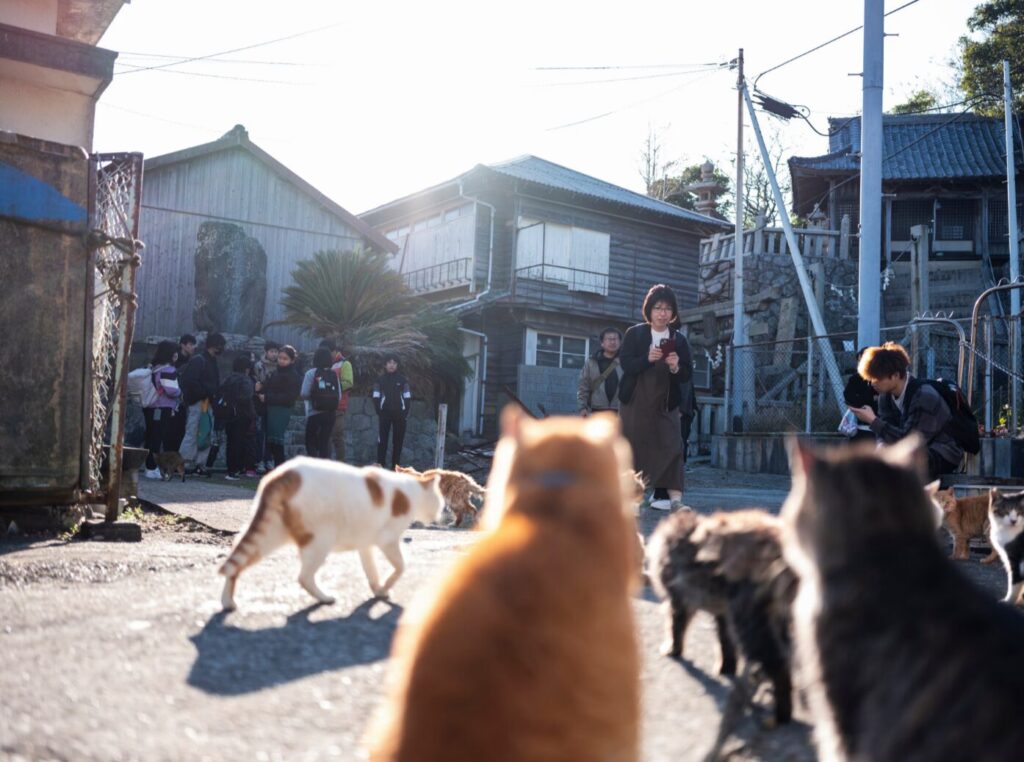
Tourists on Aoshima island arrive by ferry to see the cats. Image source: theguardian.com
Notably, cat islands are not just a curiosity. They are an example of “nekonomics” —