
Before drinking sparkling water, you need to know a few important nuances
Sparkling water seems like a harmless compromise between boring tap water and sugary soda. But many myths have built up around it. For example, some people are convinced that sparkling water leaches calcium, while others believe it helps with weight loss. In reality, sparkling water quenches thirst just as well as still water — the key is understanding the nuances of its composition and not confusing pure sparkling water with drinks that contain added sugar.
How Much Sparkling and Still Water Should You Drink Per Day
Water doesn’t get stored in the body in advance because we constantly lose it through breathing, sweating, and other processes. So the point isn’t to drink a lot at once, but to maintain water balance — the ratio between what we take in and what we lose.
Relying solely on thirst isn’t always reliable either. Along with water, we get minerals, and it’s especially important to replenish them during intense physical activity. For a general understanding of daily water intake, there are two simple calculations:
- 1 ml per 1 kcal of daily intake: for example, with a 2,200 kcal diet, that’s about 2.2 liters of fluid per day;
- 30–45 ml per kilogram of body weight: at 60 kg, that’s roughly 2.25 liters.
These are guidelines, not strict rules. If you feel comfortable with these amounts, that’s great — your body will let you know if something is off.
Is Sparkling Water Really Worse Than Still Water?
There’s one important detail that many people overlook: sparkling water comes in very different forms. You can roughly distinguish four types of sparkling water:
- Club soda — carbonated with carbon dioxide, contains sodium and additional minerals;
- Seltzer water — carbonated but without minerals, often with added fruits, vegetables, or herbs;
- Mineral water from a natural source, sometimes with additional carbonation, containing sodium, magnesium, and calcium;
- Tonic water — sparkling water with minerals, bitter quinine, and sugar to balance the taste.
This is exactly why there’s no definitive answer to whether it’s harmful or not — it all comes down to the composition of the sparkling water. If you have heart or kidney problems, you should be cautious even with the amount of minerals, let alone sodium.
The main catch, however, is sugar in carbonated drinks, which can negate all the benefits of the beverage. Pure sparkling water without sugar is one story, while sweetened tonic water is an entirely different one.
How Sparkling Water Affects Digestion and Heartburn
The bubbles in sparkling water have quite specific effects on digestion. It’s believed that sparkling water can be harmful to those who suffer from bloating. It can also cause problems for people with heartburn.
This is because carbon dioxide significantly affects the stomach and intestines. For some people, it helps speed up digestion, while for others, it actually worsens discomfort. So there’s no universal recommendation — you need to pay attention to how your own body feels.
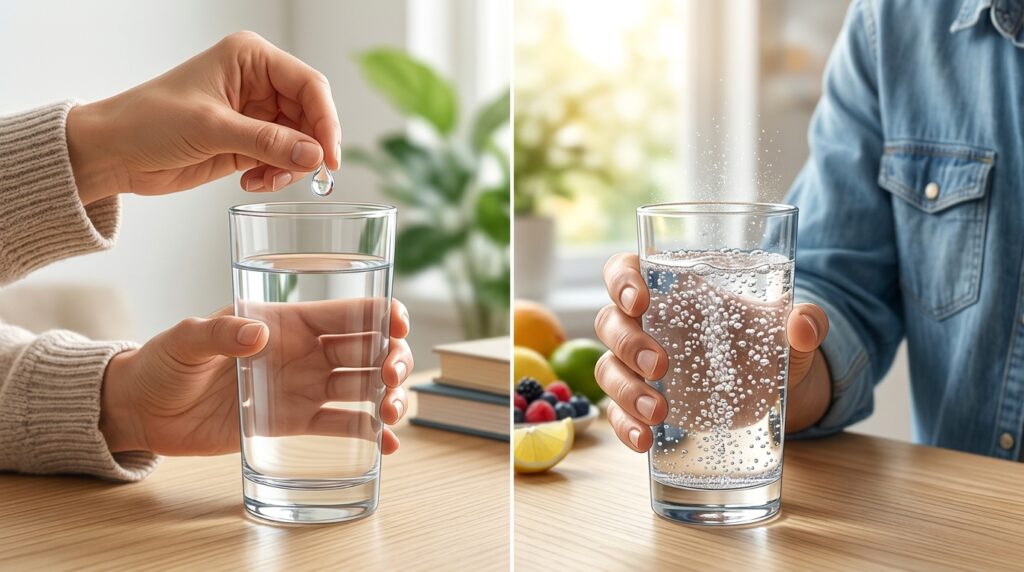
Sparkling water may help with constipation, but there’s a risk of causing heartburn
A separate topic is bloating and belching. Carbonated drinks cause a person to swallow air along with them, which leads to gas formation. If you experience bloating or frequent belching after having bubbly drinks, that’s a signal to simply reduce your intake of such water.
How Sparkling Water Affects Teeth and Bones
Sparkling water is slightly acidic, and that’s the reason so many fears surround it. With excessive consumption, the acidity can lead to calcium leaching and bone mass loss, which affects both bones and teeth.
But this applies specifically to excessive consumption of sparkling water. We’re not talking about a glass of mineral water at lunch, but rather a situation where sparkling water replaces everything else and is consumed by the liter every day. In reasonable amounts, plain unsweetened sparkling water poses no threat to teeth. Sugary drinks are far more dangerous for enamel.
Does Sparkling Water Help with Weight Loss?
Sparkling water does actually help with weight loss, but the effect is very modest. Unsweetened sparkling water can be used for weight management, and it works through several mechanisms:
- Water fills the stomach, so you feel less hungry;
- Half a liter of water can briefly boost metabolism by about 30% for 30–40 minutes;
- On average, two liters of fluid per day increases metabolism and helps burn about 96 kcal per day, or roughly 700 kcal per week.
But don’t be deceived — 700 kcal per week alone won’t make you lose weight. The real benefit is that if unsweetened sparkling water reduces your appetite and helps you avoid reaching for extra food, that’s already a valuable contribution. Just pay attention to how you feel.
Sparkling or Still Water: Which Quenches Thirst Better?
Setting myths aside, when it comes to replenishing fluids in the body, sparkling water works just as well as still water. The purpose of drinking water is to get hydration, regardless of whether there are bubbles or not.
So if sparkling water tastes better to you and you drink it more willingly because of that, it’s a plus, not a minus. With unsweetened sparkling water, it’s also easy to make homemade lemonade of any sweetness level, without sugar and with various flavors. It’s an excellent summer alternative to store-bought sodas.
In the end, it turns out that there’s no such thing as right or wrong water. There’s water that’s right for you personally. Sparkling water is not the enemy, as long as it contains no sugar and you listen to your body. If you have heartburn, bloating, or heart and kidney issues, you should drink less of it; in all other cases — drink to your health. And the most important rule remains unchanged: avoid dehydration and always check the ingredients on the label.