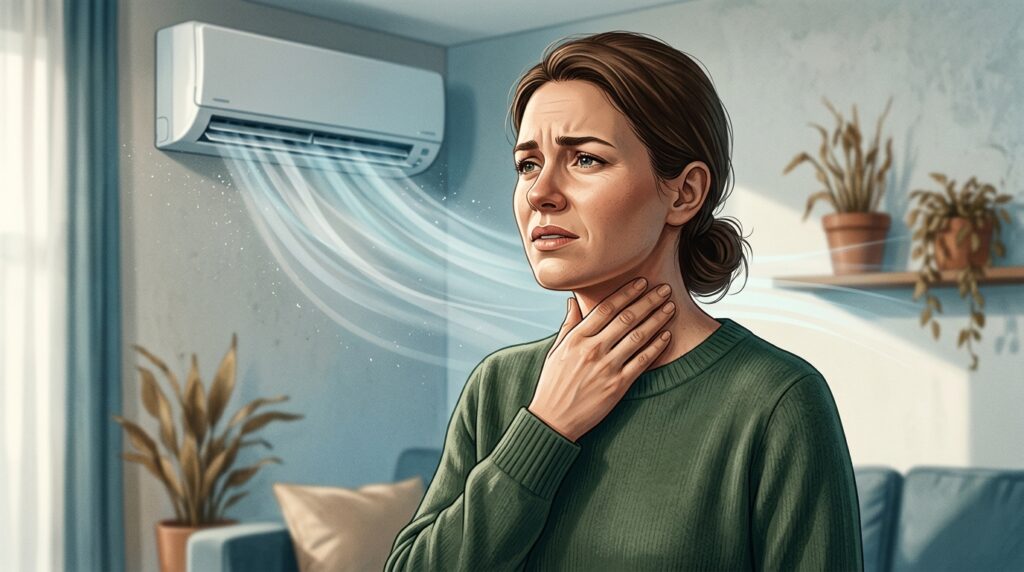
Cold air from an air conditioner doesn’t cause colds — sore throats appear for other reasons
If you’ve ever had a sore throat after sitting near an air conditioner, you’re not alone. This is especially common in hot summers when you spend the whole day in a cool office, only to suffer from a scratchy, dry throat in the evening. You might think the cold is to blame. But in reality, the health risks of air conditioning lie in other causes.
Can an Air Conditioner Cause a Cold
An air conditioner cannot directly cause a cold. The fact is that acute respiratory infections and the flu are caused by viruses, not cold air. An air conditioner doesn’t infect a person, but it can change the environment in a way that dries out mucous membranes, irritates them, and weakens their defense against dust, allergens, and infections.
So if you’ve been saying you “caught a chill,” that’s not quite the right way to put it. Mayo Clinic lists dry indoor air, allergens, dust, mold, and chemical irritants among the causes of sore and scratchy throats. In other words, the problem is usually not the cold itself, but the whole set of harmful factors that come with it.
Why Dry Air Hurts Your Throat, Not the Cold
The main cause of a sore throat is dry air. An air conditioner cools the air and almost always reduces its humidity at the same time.
Dry air is a big problem for the throat. The mucous membranes of the nose and pharynx need to stay moist because they trap dust, allergens, and microbes and help the local defense system of the airways function. When the air is too dry, the protective mucus layer becomes thinner. Dry air reduces throat moisture and can make it dry, irritated, and inflamed. This is where the scratchy feeling, dry cough, and uncomfortable swallowing come from.
Why Your Throat Hurts in the Morning After Air Conditioning
This happens especially often at night. A person sleeps with the split system on, the air gets drier, the nose can become congested, and they start breathing through their mouth. Mouth breathing dries out the throat even more because the air bypasses the natural “humidifier” in the nose.
Cleveland Clinic lists dry air, mouth breathing, dehydration, and nighttime irritation among the causes of morning sore throat. It becomes a vicious cycle: dry air congests the nose, a congested nose forces mouth breathing, and that adds more dryness.
Also, don’t forget about the nose’s reaction to cold air. A review on PubMed describes how cold air can trigger rhinitis: a runny nose, congestion, and a burning sensation in the nose appear within minutes and go away once the cold exposure stops.
And then a simple connection kicks in: the nose and throat are connected, and if the cold causes a runny nose, mucus drips down the back of the throat, irritating it and causing constant throat clearing. The person thinks their throat got sore from the air conditioner, when it actually all started in the nose.
Why Dust and Mold in a Dirty Air Conditioner Are Dangerous
If the air conditioner’s filters haven’t been cleaned in a long time, it turns from a source of freshness into a dusty fan. Dust, mold spores, pet hair, pollen, skin particles, and bacteria accumulate inside. And all of this gets blown around by the air conditioner.
Mold is particularly unpleasant. During cooling, condensation forms inside the air conditioner, and if the drainage, heat exchanger, or filters are dirty, ideal conditions for microbial growth are created inside.
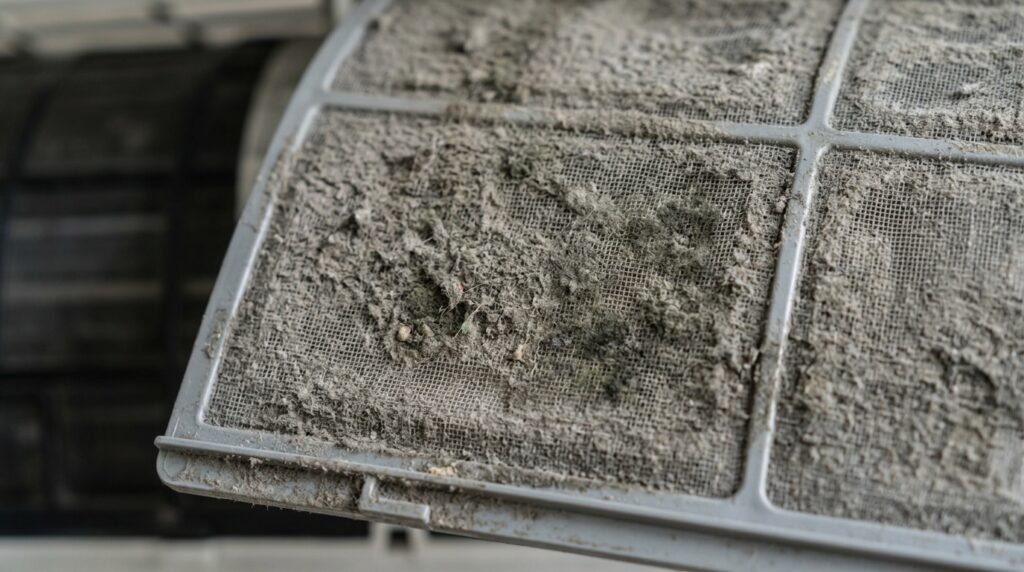
Dirty air conditioner filter with dust buildup
And this is no longer harmless. Mold from an air conditioner can irritate the eyes, skin, nose, throat, and lungs even in people without a pronounced allergy, and for those who suffer from allergies or asthma, the reaction can be more severe.
IMPORTANT: If turning on the air conditioner causes a musty smell, throat irritation, coughing, itchy eyes, or sneezing — this looks less like "catching a chill" and more like an air quality problem.
How to Use an Air Conditioner Without Getting a Sore Throat
You don’t need to turn off the air conditioner because of a possible sore throat. Just use it properly. Here’s what actually helps.
- Don’t sit directly under the air conditioner. Direct the airflow along the ceiling or away from your bed, couch, and workspace. At night this is especially important, because if the air blows in your face, a dry throat in the morning is almost guaranteed;
- Don’t set the temperature too low. For most people, it’s wiser to start at 24–26°C rather than 18°C. Rospotrebnadzor (Russian consumer protection agency) recommends avoiding sharp temperature changes and keeping the difference between outdoor and indoor temperatures within 7–10 degrees;
- Monitor air humidity. According to Rospotrebnadzor standards, a humidity level of 30–65% is comfortable during the warm season. If the air is too dry, a humidifier will help, but it needs to be cleaned regularly, otherwise it will become a breeding ground for bacteria and mold itself;
- Clean the air conditioner filters. In household split systems, mesh filters are usually removable and washable. If the air conditioner smells musty, cools poorly, or causes coughing after being turned on, it’s time to service it;
- Ventilate the room. An air conditioner cools the air but doesn’t always provide fresh air intake, while ventilation clears the room of airborne contaminants;
- Drink water. In dry air, mucous membranes lose moisture faster. Warm drinks and sugar-free lozenges temporarily reduce throat irritation because they stimulate saliva production.
How to Tell If a Sore Throat Is From a Cold or From Irritation
It’s important not to confuse nose and throat irritation with an actual infection. If your throat is simply dry and scratchy after a night under the air conditioner, there’s no fever, no body aches, and it gets better after warm drinks and normal air, this looks like irritation that goes away on its own.
However, if there’s a fever, severe weakness, runny nose, cough, body aches, swollen lymph nodes, white patches on the tonsils, or the pain persists for several days and gets worse, this is most likely a viral or bacterial infection.
A sore throat from an air conditioner isn’t caused by the cold. It’s much simpler than that — dry air, dirty filters, mold, dust, poor ventilation, and sharp temperature changes are to blame. The air conditioner itself doesn’t cause acute respiratory infections, but it easily irritates mucous membranes. So if the air conditioner is drying out your throat, you don’t need to rush for pills — start with simple steps. First of all, redirect the airflow away from your face, raise the temperature, check the humidity level, and finally wash the filters.