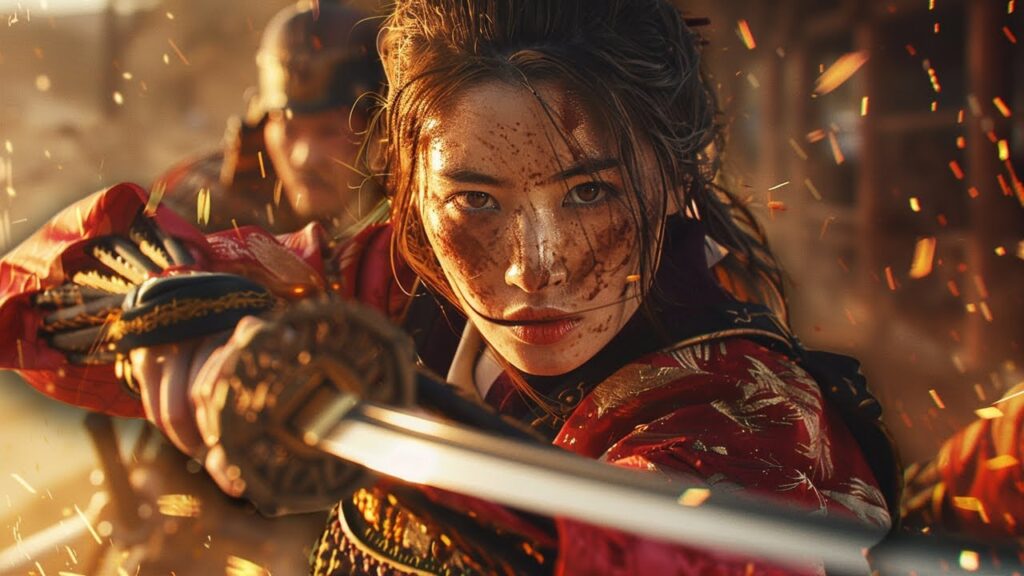
Female samurai existed: the forgotten history of Japanese women warriors
In popular culture, a samurai is always a man with a katana. And there are plenty of such historical misconceptions. In reality, Japanese women from the samurai class were trained in weapons for centuries, and some of them went onto the battlefield and fought alongside men as equals. How widespread was this phenomenon, and what do historians and archaeologists have to say about it?
How Female Samurai Fought at the Battle of Aizu
One of the best-documented cases of Japanese women participating in actual combat dates to 1868. During the Boshin Civil War, the Jōshigun unit — a female detachment armed with swords and naginata (a polearm with a curved blade used for both slashing and thrusting) — was formed in the Aizu domain.
The unit engaged in battle at the Yanagi Bridge against an enemy armed with firearms. Nakano Takeko, who commanded the unit, killed five or six enemies with her naginata before being shot. The battle ended in defeat, and the surviving fighters — both women and men — retreated to the castle.
This outcome was no accident: during the Tokugawa shogunate, women of the samurai class were required to undergo combat training with the naginata so they could defend themselves and their families in a world where much was determined by the samurai code. The extent of training varied from region to region, but in the Aizu domain it was particularly rigorous.
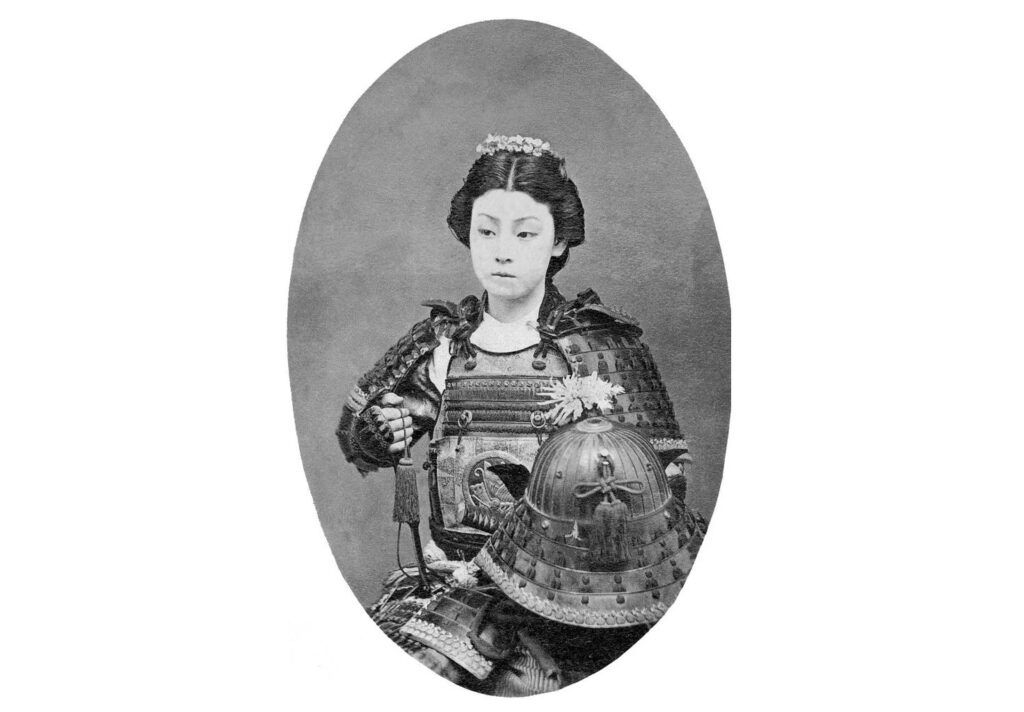
An 1870 photograph showing an actress in armor posed as a female samurai.
Burial of Female Warriors from the 16th Century in Numazu
In the city of Numazu, in central Japan, there is a burial mound that, according to some scholars, contains the remains of women who died in battle. An analysis of the burial was published back in 1989 in the Japanese Journal of Anthropology. The mound contained skulls of approximately 105 individuals — all of whom were young adults at the time of death, and about a third of them turned out to be women.
The remains date to the 16th century, and scholars associate them with the Battle of Senbonhama — a clash between the Takeda and Hōjō clans. Thomas Conlan, a professor of medieval Japanese history at Princeton University, considers this burial mound evidence that women of fighting age fought and died in 16th-century battles.
However, not all historians share this optimism. Karl Friday, Distinguished Professor of History at the University of Georgia, warns that one cannot be certain all those buried in the mound were actually combat participants. Some of them may have been civilians killed during the battle.
Japanese women warriors were not a unique phenomenon: history also knows of women gladiators who entered the arena in defiance of societal norms.
Tomoe Gozen: Japan’s Most Famous Female Warrior
The most famous female samurai is Tomoe Gozen, who lived in the late 12th century. She is often mentioned among the bravest women warriors in world history. According to chronicles, she served the warlord Minamoto no Yoshinaka and participated in the Genpei War (1180–1185) between the Taira and Minamoto clans.
In “The Tale of the Heike” — one of the greatest literary works of medieval Japan — it is said of her: “As a warrior she was worth a thousand ordinary men, skilled in the use of weapons, able to draw the strongest bow, on horseback or on foot, always ready to meet any demon or god in her path with a sword.”
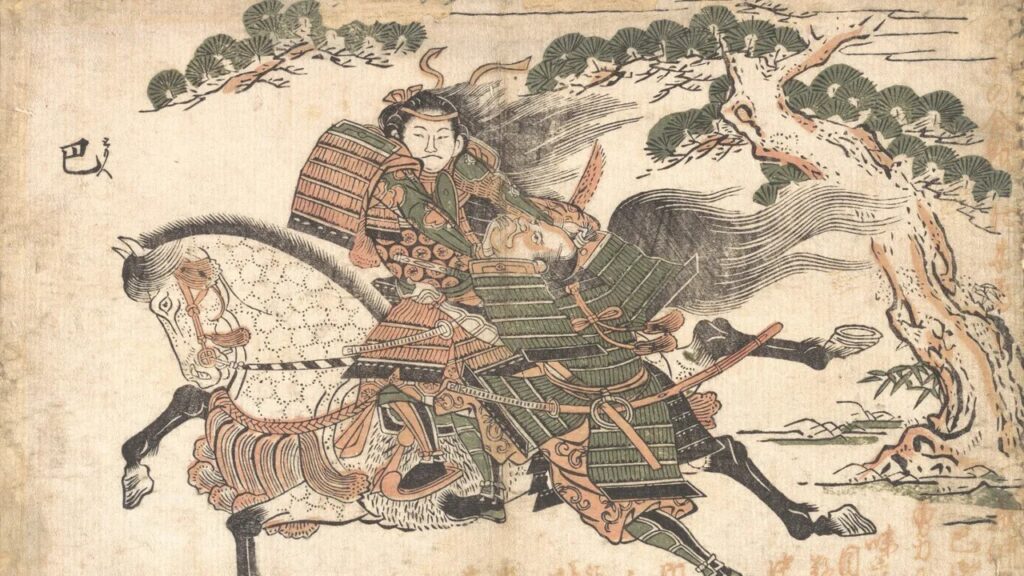
A 1750 painting depicting Tomoe Gozen, a female samurai from the 12th century, slaying an enemy.
Another notable figure is Ōhori Tsuruhime (c. 1526–1543), who became the high priestess of the Ōyamazumi Shrine on Omishima Island. After the deaths of her father and brothers, she led the island’s defense against the invasion of daimyō Ōuchi Yoshitaka at the age of 16. Some of her armor has survived to this day and is displayed at the shrine. According to Conlan, this is a 16th-century set of armor tailored to fit the female body.
However, Professor Friday urges caution: Tomoe Gozen, Tsuruhime, and other similar figures remain semi-legendary, especially regarding their direct participation in combat.
Why Women Were Rarely Allowed on the Battlefield in Japan: Traditions and Taboos
Despite these vivid stories, women’s participation in battles was apparently more the exception than the rule. Karl Friday points out that in medieval Japan there were serious taboos associated with the presence of women near combat operations.
A curious set of rules governing military conduct from one branch of the Hōjō clan has survived, which prohibited:
- sharing quarters with women for three days before a battle;
- allowing pregnant or recently postpartum women to touch a warrior’s weapons;
- traveling in boats with female passengers on the way to battle;
- allowing women to watch officers departing for war.
In Friday’s view, the very fact that individual women warriors became so famous actually attests to the exceptional rarity of such cases.
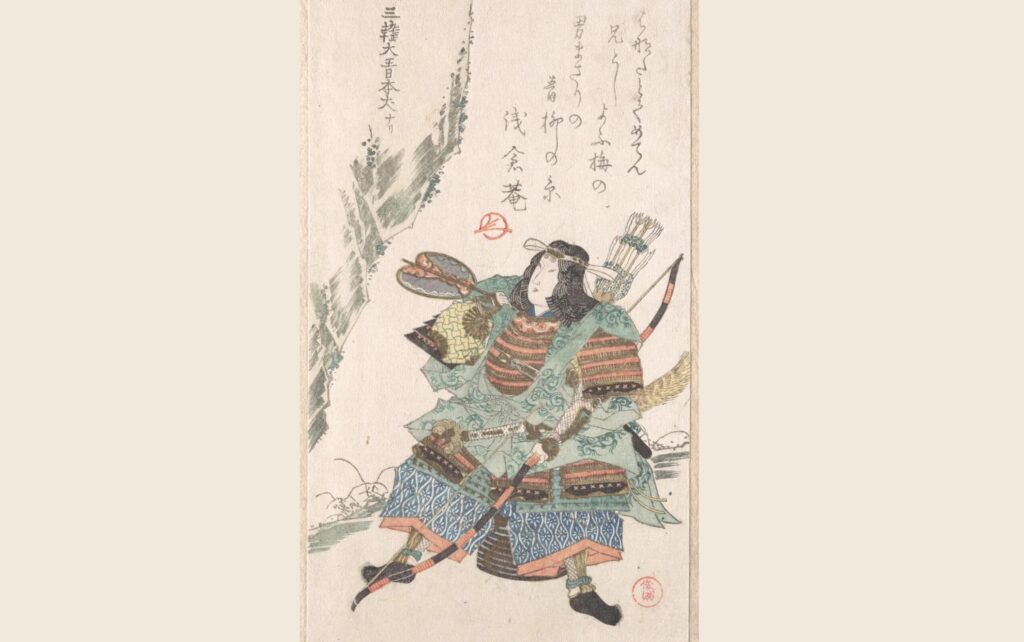
A 19th-century print depicting a female warrior in armor
“There is no compelling evidence that women warriors were more common in Japan than in medieval France or ancient Sparta,” emphasizes historian Karl Friday.
The samurai class was effectively abolished in the 1870s, but some combat traditions associated with female samurai have survived. The Yoshin school — one branch of traditional Japanese martial arts — still practices naginata training in kimono. As Japanese martial texts translator Eric Shahan explains, this reflects the historical principle that a woman might be forced to grab a weapon suddenly — with no time to change clothes.