
Brain-toxic foods we eat every day without even realizing it
We tend to think that food mainly affects our figure and stomach, but food also affects the brain. The state of your brain directly depends on what’s usually on your plate: memory, concentration, mood, and even anxiety levels are all linked to diet. The products listed below, when consumed regularly, literally damage the brain. And some of them are considered perfectly “healthy.”
The gut-brain connection: why diet affects brain function
It may seem surprising, but the brain and gut work in tandem (as do many things in our body). When the digestive system suffers — the intestines, the liver — it reflects on mental health: apathy, anxiety, and chronic stress appear. And this is already a fairly well-studied connection.
Poor nutrition triggers a whole chain reaction: inflammation inside blood vessels, cholesterol metabolism disruption, and increased blood pressure. For the brain to function normally, it needs one simple condition — good blood flow through healthy vessels. Once the vessels are damaged, thinking suffers too.
How trans fats impair memory and brain function
The main suspects are trans fats and saturated fats. And here’s an important caveat: the most dangerous are artificially created fats. A classic example is margarine, which is used in pastries and fast food.
What does this mean for the brain? Cognitive performance decreases, and the level of “bad” cholesterol — low-density lipoproteins — rises. Unlike “good” cholesterol, which helps blood vessels recover, this type destroys their walls. The risk of Alzheimer’s disease, neurological disorders, and memory impairment also increases. Fatty (and sugary) foods literally make us dumber.
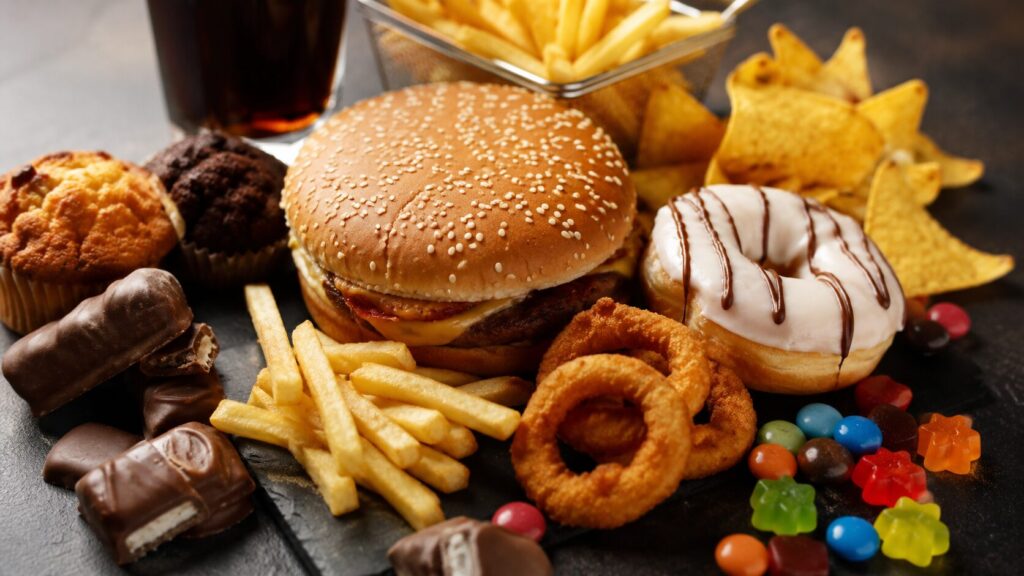
Consuming large amounts of trans fats leads to decreased brain performance and higher levels of “bad” cholesterol.
How excess salt affects the brain and blood vessels
Salt is another silent offender. This might surprise some, but it’s found in large amounts in sausage, hot dogs, baked meat, fast food, chips, crackers, soy sauce, and marinades.
A love of salty food raises blood pressure, which leads to spasms and destruction of blood vessels. The result — blood flow to the brain worsens. There’s also a side effect: to flush out excess salt, the body makes us go to the bathroom more often and sweat more, which can lead to dehydration.
If you want to stay healthy in every sense — salt is easy to replace. Herbs and a little lemon juice enhance flavor without harm. As for processed meat (bacon, ham, sausage, etc.), it’s best to avoid it: besides salt and fats, it contains nitrates and chemical additives.
Why sugar is harmful to the brain
The brain does need carbohydrates — they’re its fuel. But sugar is a fast carbohydrate: it burns quickly, causes fermentation, and doesn’t provide cells with proper nutrition, while sharply spiking glucose and insulin levels. In the long run, this is the road to metabolic syndrome and obesity.
Simple carbohydrates include sugar, fructose, maltose, lactose, and glucose. They hide not only in baked goods and fast food, but also in beer, gummy candy, dairy products, and even honey.
Another downside of sugar: it destroys beneficial gut bacteria. This again raises blood pressure, arteries lose elasticity, blood reaches tissues less effectively, and the brain functions worse.
How soda and alcohol harm the brain
Carbonated drinks are dangerous because they cause spasms of smooth muscles — first in the bile ducts and pancreatic pathways, then in the blood vessels of the brain. Sweet soda has another downside: it’s increasingly linked not only to excess weight but also to anxiety.
But the absolute leader in harmfulness is alcohol, which kills nerve cells by the thousands. Penetrating the brain cortex, it increases the risk of blood vessel destruction and blood clot formation. Dead cells are replaced by non-functional areas — the brain literally loses efficiency.

Carbonated drinks are very dangerous for the brain, while alcoholic beverages are maximally toxic to the brain.
Why tuna can be dangerous for the brain
And here’s a surprise: even fish can end up on the list of unhealthy foods. We’re talking about tuna — it accumulates mercury due to its habitat. And mercury settles in the human body and impacts cognitive abilities: memory and reaction speed.
An important point: all of this applies to regular consumption in large quantities. A piece of tuna once a month won’t cause a catastrophe — the problem lies in the pattern.
What to replace brain-toxic foods with
You can help your brain with simple food. Doctors recommend focusing on several food groups.
- Unsaturated fats — avocado, egg yolks, flaxseed, olive oil, and coconut oil, properly prepared ghee.
- Complex carbohydrates — brown and black rice, buckwheat, vegetables. They provide the brain with steady energy without sugar spikes.
- Superfoods — sprouts, broccoli, blueberries, beets, walnuts, spinach.
Another tip: it’s better to limit dairy consumption if you experience heaviness in the gut after eating it.
The main idea is simple: the brain doesn’t keep count of every occasionally eaten donut or sausage sandwich. What matters more is regularity. If your regular diet consistently consists of the products listed above, the consequences accumulate over time. But if you more often choose foods that help blood vessels rather than destroy them, the difference also gradually becomes noticeable.