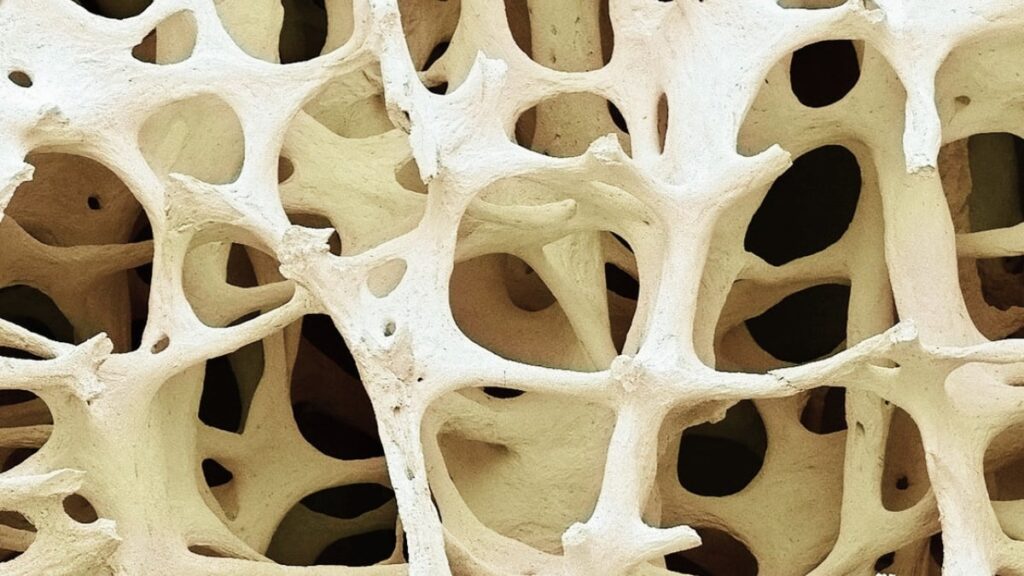
40% of adults have a hidden diagnosis that could lead to serious health problems in the future
About 40% of adults worldwide live with a diagnosis of osteopenia. This is a condition in which bones gradually lose mineral density. The insidious part is that a person can go years without suspecting there’s a problem, because osteopenia doesn’t hurt, doesn’t show externally, and is often discovered only after the first fracture. If this problem is ignored, a person can develop osteoporosis. Although scientists previously said they found a way to reverse osteoporosis, it is still a serious disease.
The Difference Between Osteopenia and Osteoporosis
Bone is not a static structure. It is living tissue that is constantly renewed through remodeling. This is a process in which old areas are broken down and new bone forms in their place. At a young age, these two processes are balanced. Maximum bone density is reached around age 25–30, and after that the balance gradually shifts: breakdown begins to outpace restoration.
When bone density loss is already noticeable on examination results but hasn’t yet reached the threshold for osteoporosis, doctors diagnose osteopenia. This is an intermediate condition, a kind of warning signal.
To use an analogy, osteopenia is like the yellow fuel indicator light: you can still drive, but it’s time to think ahead.
Osteoporosis is the next stage, in which bones become so fragile that a fracture can occur from minimal stress. But it’s important to understand that the transition from osteopenia to osteoporosis is not inevitable. With the right measures, bone density can be stabilized and even improved.
Who Is at Risk for Osteopenia
The main factor is age. After 35–40 years, bone mass loss becomes a natural part of aging. Bone fragility is considered a sign of increasing biological age. But there are circumstances that significantly accelerate this process.
At the top of the list are hormonal changes, especially the decline of estrogen after menopause. Estrogen helps restrain bone breakdown, and when its level drops, the process accelerates sharply. Every other woman over 50 may sustain a fracture from minimal trauma.
Among other factors that increase the risk of osteopenia:
- smoking and alcohol abuse;
- insufficient physical activity;
- deficiency of calcium and vitamin D in the diet;
- long-term use of steroid medications;
- diseases that impair nutrient absorption: Crohn’s disease or celiac disease.
Women suffer from osteopenia approximately four times more often than men, although men are also susceptible to this condition, especially when testosterone levels decline.
How to Tell If You Have Osteopenia
Osteopenia does not cause pain and does not manifest externally. Many people learn about it accidentally, during an X-ray for another reason or after a fracture that shouldn’t have happened from an ordinary fall. It is precisely this lack of symptoms that makes this condition particularly insidious.
The main diagnostic tool is densitometry. This is a quick and painless procedure in which a low-dose X-ray measures the mineral content of bones, most commonly in the spine and hip area.
The result is expressed as a T-score, which compares your bone density with that of a healthy young person. A score from +1 to –1 is considered normal. A value from –1 to –2.5 indicates osteopenia. Below –2.5 is already osteoporosis. With each one-point decrease in the T-score, the risk of fracture increases by one and a half to two times.
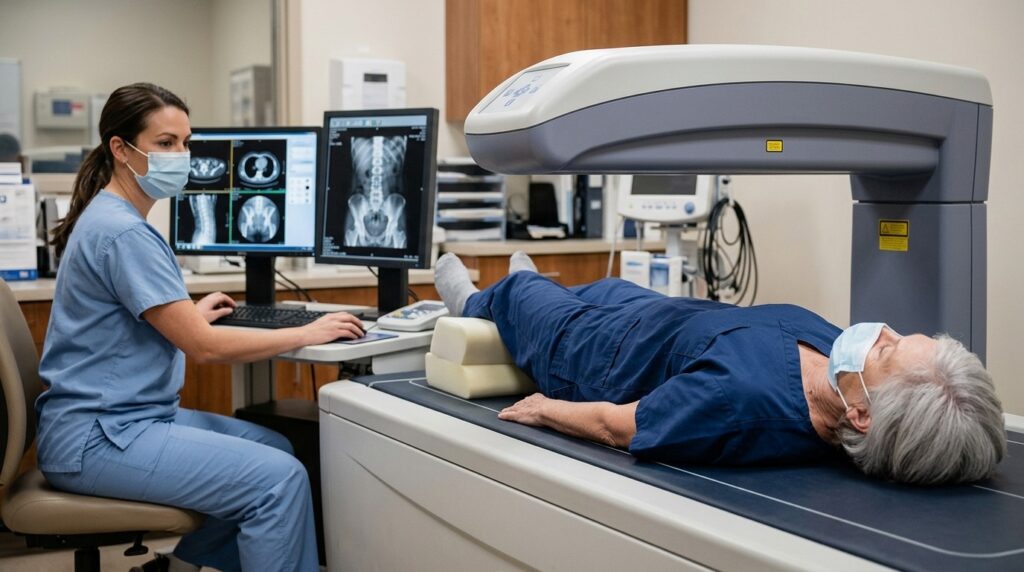
A patient undergoing densitometry, a bone density study
Physical Activity and Nutrition as Bone Protection
If osteopenia is detected, it’s not a reason to panic, but it is a serious call to action. Treatment at this stage usually doesn’t mean taking medications — it begins with lifestyle changes. For example, the effectiveness of physical exercise for improving bone density was proven in 2025, with results published in the scientific journal Nature.
Weight-bearing exercises — walking, dancing, running, and so on — stimulate the formation of new bone by creating mechanical stress on the skeleton. Strength training additionally strengthens both bones and muscles. Research mentioned in an article on Science Alert shows that regular physical activity is associated with improved bone mineral density and can reduce the risk of osteoporosis. It is also noted that practices like tai chi improve balance and muscle strength, reducing the risk of falls and therefore fractures.
Nutrition is equally important. Calcium is the main building material of bone, and vitamin D is necessary for its absorption. Dairy products, leafy green vegetables, and fortified foods are the main dietary sources of calcium. If the diet doesn’t meet requirements, a doctor may recommend supplements. Vitamin D deficiency is a widespread problem in many countries, so additional intake is often recommended. However, overdoing it with this vitamin is also dangerous, as vitamin D poisoning cases have recently risen by 1600%.
Quitting smoking and limiting alcohol are two more steps that help slow bone mass loss.
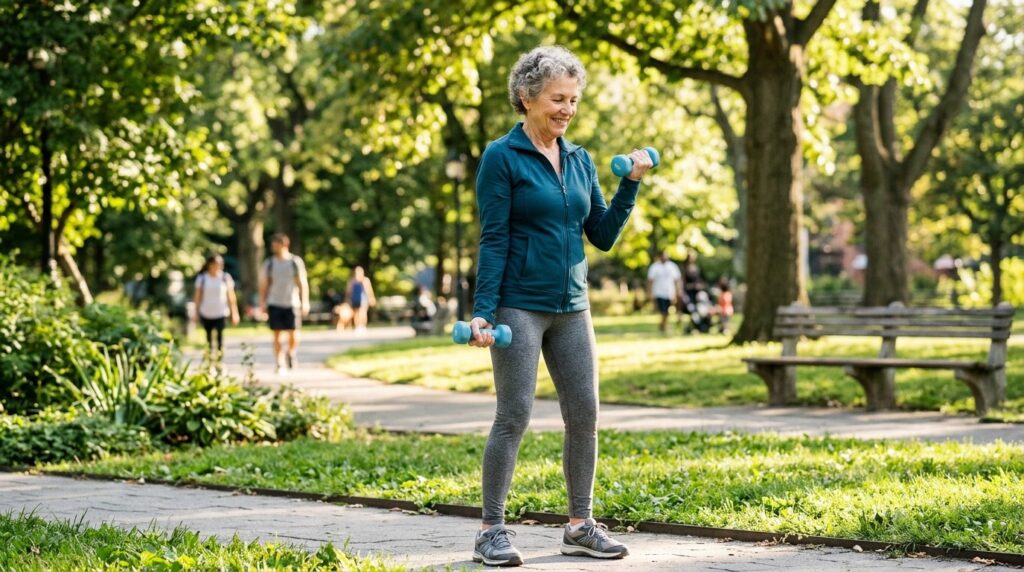
Strength exercises help strengthen bones at any age
When Medication Is Prescribed for Osteopenia
Not every person with osteopenia needs drug therapy. Doctors rely on individual fracture risk assessment: they consider age, T-score, steroid use, and other factors. Special calculators allow them to calculate the probability of a fracture within the next ten years and make a decision based on that.
If the risk is high or if a person has already suffered a fragility fracture, antiresorptive medications may be prescribed — drugs that slow the breakdown of bone tissue and help preserve its density. Such medications are more commonly used for osteoporosis but can also be beneficial for osteopenia patients in high-risk groups.
How to Stop Bone Density Loss
Most importantly, don’t perceive osteopenia as a mild version of osteoporosis that will inevitably progress into it. It is rather a point at which you can still turn the situation around. Research data indicates that early detection and targeted lifestyle changes can significantly slow bone mass loss and reduce the risk of developing osteoporosis. In some cases, bone mineral density even improves with properly selected treatment and habit correction.
Bone health is the result of how we ate, moved, and lived over decades. Maintaining healthy habits remains the most reliable strategy. And if you’re over forty, it makes sense to talk to your doctor about whether you need to undergo densitometry.