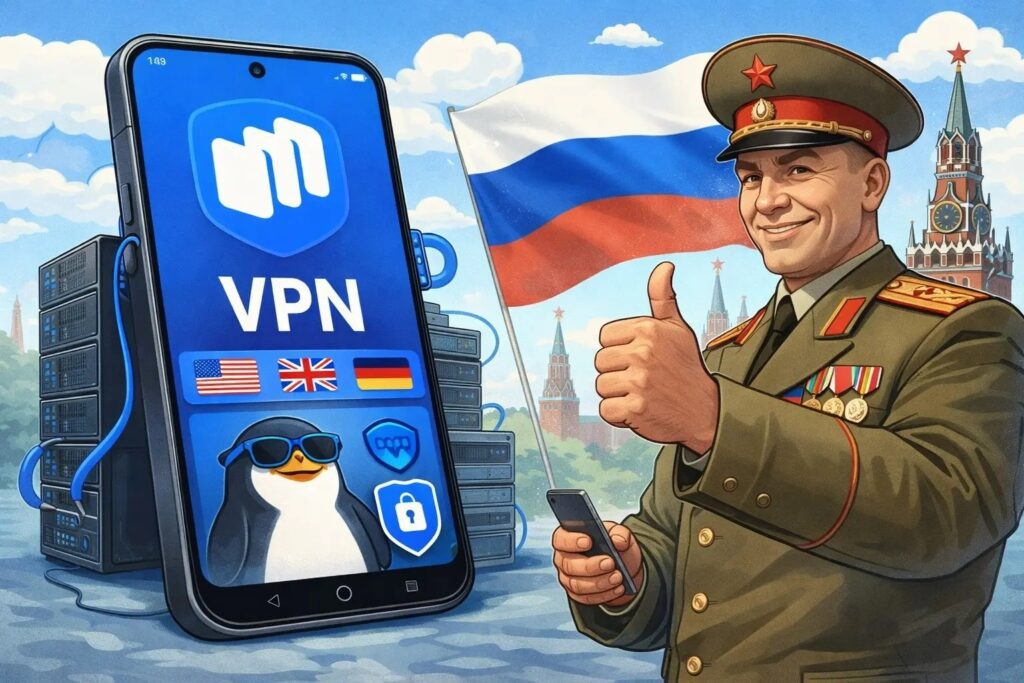
A complete VPN ban is being actively discussed in Russia. The topic has become so pressing that the question of whether to delete the app from your phone no longer seems like paranoia. The VPN situation in Russia is changing rapidly: what worked six months ago may not work at all today or could create unexpected problems. Here’s an honest breakdown: why you need it, what’s happening with its availability, and whether you should get rid of the app.

Once and for all, explaining VPN in Russia
Why You Need a VPN on Android
VPN on Android is a tool with several completely legal uses. Without going into technical details, it creates an encrypted tunnel between your phone and a remote server. This provides several practical benefits.
39% of Russians use a VPN in 2026 (that's every third smartphone owner).
VPN features that are actually used:
- data protection on public Wi-Fi networks: in cafes, hotels, airports — your traffic is encrypted and inaccessible to outsiders;
- corporate access: employees remotely connect to company work servers through a secure channel;
- privacy: your provider can’t see which websites you visit;
- access to foreign services: streaming, foreign stores, services unavailable in your region.
VPN usage in Russia in 2026 has grown exponentially: according to research, 39% of Russians already use VPN (8 percentage points more than a year earlier). Popularity is growing amid news of restrictions. The irony is that the louder talk of a ban gets, the more people download the app.
VPN Blocking in Russia
This is where things get really interesting. VPN blocking in Russia is happening on several fronts simultaneously, and the scale impresses even skeptics. The numbers speak for themselves: by the end of February 2026, Roskomnadzor had blocked 469 VPN services. For comparison: in October 2025, there were 258. That means in four months they blocked as many as in the previous several years. Since March 2026, machine learning algorithms costing 2.3 billion rubles have been added to traffic filtering systems: they recognize VPN on a phone by behavioral connection patterns, not just by protocol.

VPN in Russia barely works anymore
What this means in practice:
- WireGuard and OpenVPN are completely blocked;
- SOCKS5, VLESS, and L2TP have fallen under restrictions;
- hundreds of apps have been removed from Google Play at Roskomnadzor’s request; already installed ones continue to work, but without updates they gradually degrade;
- free VPN in Russia in most cases no longer works reliably: the protocols they use have long been blacklisted.
If you’re looking for an option that definitely won’t be blocked — there’s a legal VPN from RuStore that has passed verification and complies with Russian legislation. This isn’t an ad, just a fact: what’s approved by the regulator won’t be blocked by definition.
Why Apps Don’t Work Through VPN
Here’s the biggest surprise of 2026 for most users. VPN not working isn’t just because of Roskomnadzor’s blocks. Now Russian apps themselves are blocking users with VPN enabled. In April 2026, the research organization RKS Global tested 30 popular Russian Android apps. The result: 22 out of 30 detect VPN, 19 of them transmit VPN status to the server. The Ministry of Digital Development gave major Russian platforms a deadline (April 15, 2026) to restrict access for users with VPN enabled. For non-compliance — loss of IT accreditation and tax benefits.
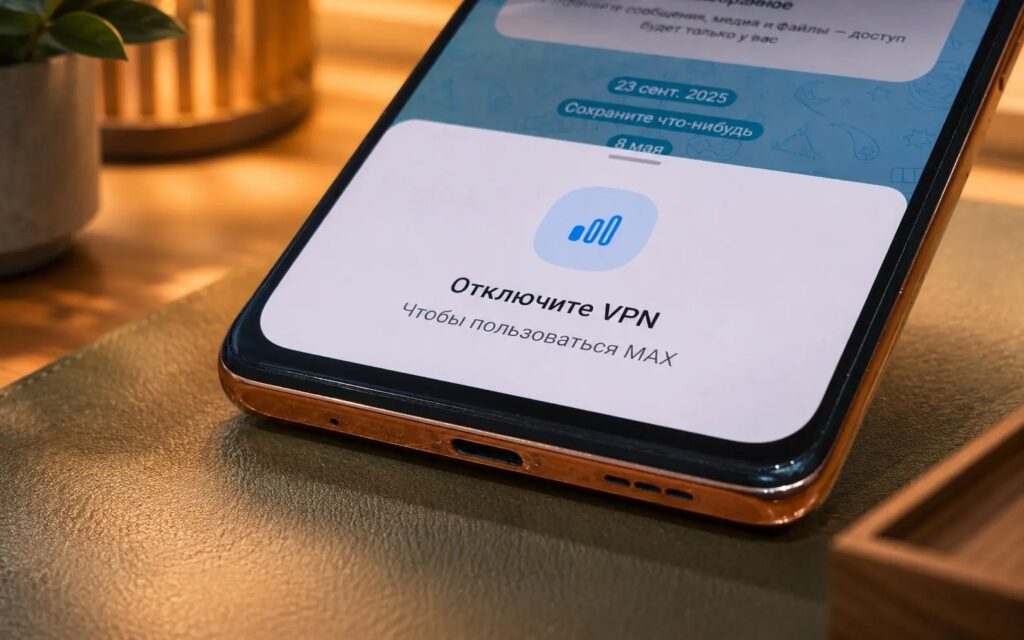
MAX and other apps already block VPN themselves
Apps not opening through VPN now affects SberBank, T-Bank, Wildberries, Ozon, and dozens of other services. The most unpleasant discovery: some apps (for example, Samokat and MegaMarket) obtain a list of all VPN apps installed on the device, even when VPN is currently turned off. That is, the mere presence is already being recorded. A full list of apps that block VPN is available in a separate article.
If websites don’t open through VPN, that’s also understandable. Some resources block access at the IP address level of VPN servers. What to do: before opening banking apps and marketplaces, you need to actually disconnect the VPN, not just minimize the app. Otherwise, the tunnel continues running in the background.
VPN Fees in Russia in 2026

Theoretically, VPN could cost you a fortune
Beyond technical restrictions, an economic lever is being discussed. In March 2026, at meetings between the Ministry of Digital Development and telecom operators, a proposal was made to introduce fees for international VPN traffic: approximately 150 rubles per gigabyte over the limit. A limited launch was discussed in the context of autumn 2026.
VPN traffic fees are not law, but an initiative at the level of discussions with operators.
VPN fees in Russia in this format would mean: you can use it, but it’s expensive. It’s not a ban, but an economic barrier. How much you’ll have to pay for VPN traffic — we’ve already calculated, and the numbers turned out to be alarming. Important nuance: at the time of publication, no official decision to introduce fees has been made. This is still an initiative at the discussion level, not a law. But the trend is obvious: VPN drawbacks in Russia are becoming more significant every month — both technical and potentially financial.
Is It Legal to Use VPN in Russia
The most important question, and the answer is clear. Using VPN in Russia by individuals is not formally prohibited. As of March 2026, not a single case of an ordinary user being fined for using VPN has been recorded.
Legal picture for 2026:
- using VPN is legal;
- corporate VPN for work tasks is fully legal — Roskomnadzor has confirmed this separately;
- fines for VPN in Russia for individuals have not been introduced and are not being discussed in the State Duma as an immediate agenda item;
- you can’t be jailed for VPN: no such provisions exist in Russian law.
Liability for VPN today is not a criminal or administrative matter. It’s about infrastructure restrictions: services are blocked, apps are removed from stores, protocols are cut at the operator level. The danger of VPN in Russia right now is not legal but practical: it may stop working or create inconveniences with Russian services.
Using VPN in Russia is legal. There are no fines.
Is VPN dangerous by itself? Only if we’re talking about questionable free services: a CSIRO study showed that 38% of free VPNs for Android contain malware. This is a real threat — and not from the government, but from the developers of such apps themselves.