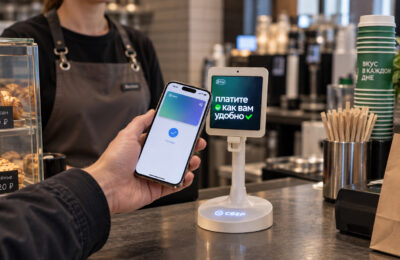
Imagine this situation. You’re in another city, you have cash in your pocket, but your bank’s ATM is on the other side of town. What do you do? Right now, you either search for “your” ATM or lose money on fees. But soon everything will change. The Central Bank has published a draft directive that will completely reshape how cash works through the Faster Payments System (SBP). As a reminder, SBP already allows paying via QR code even abroad, and now the system will learn to work with cash as well.
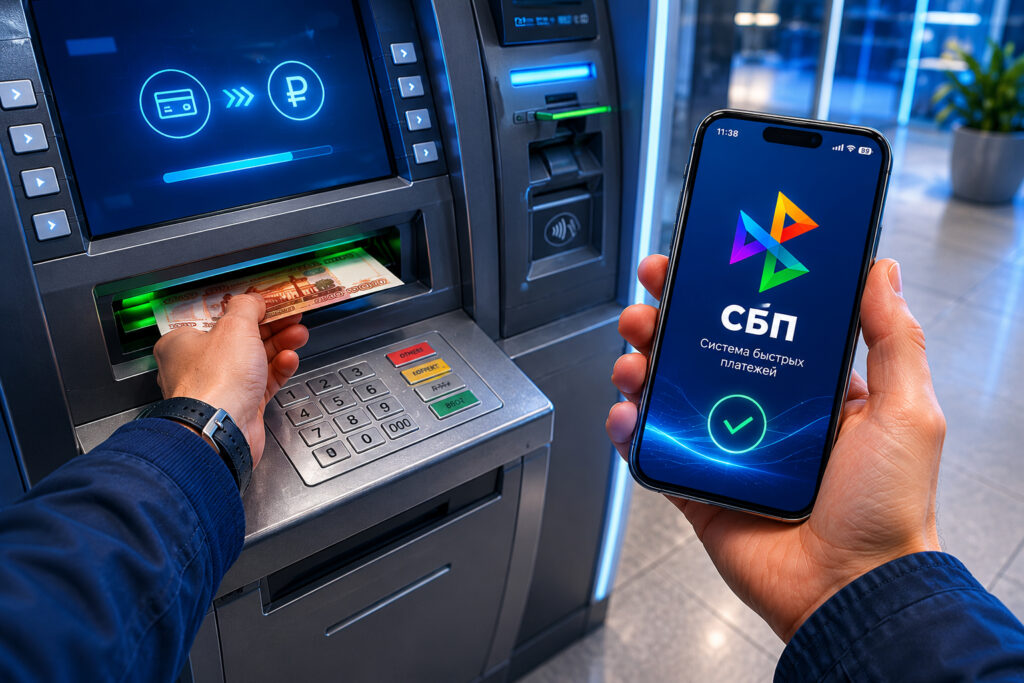
Depositing cash through an ATM will also be possible via SBP
Depositing Cash to Your Card via Another Bank’s ATM
The Bank of Russia has developed a draft directive according to which, starting October 1, 2026, Russians will be able to deposit cash into their accounts through any ATM of any bank participating in SBP. The money will be instantly credited to the bank where your account is held. That means you walk up to the nearest Sberbank ATM, insert your bills, and they instantly appear, say, in your T-Bank account — all without any fees.
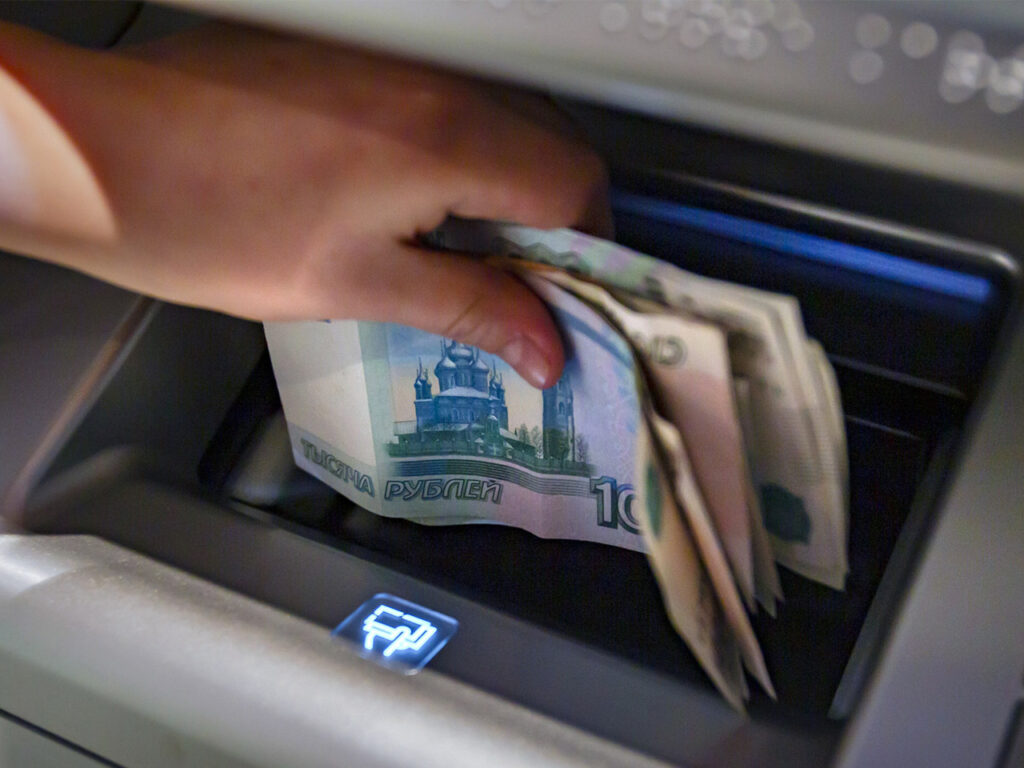
You’ll be able to enter your phone number, choose a bank, and the money will be credited to it. Image: finance.rambler.ru
The new service works specifically through SBP — the same system you’re already used to for transferring money by phone number. Only now it will learn to work with cash as well.
However, there will be limitations. The limits for depositing cash through another bank’s ATM will be 25,000 rubles per transaction, 50,000 rubles per day, and 200,000 rubles per month. To put this in perspective: if you need to deposit a large sum — say, 150,000 rubles — you’ll have to spread it over three days or go to “your own” bank’s ATM. The limits aren’t huge, but they’re quite sufficient for everyday tasks. Got paid in cash and want to put it on your card — no problem.
This will be especially useful for residents of small towns and villages where there may be only one ATM for the entire area — and it’s not from your bank. The Central Bank directly states that the service will increase the accessibility of financial services in remote and sparsely populated areas.
Which Banks Will Accept Transfers via SBP from Abroad
This isn’t the only innovation. Starting April 1, 2027, systemically important banks will be required to give clients the ability to receive cross-border transfers from other individuals via SBP. As a reminder, an INN (taxpayer identification number) has recently become required for SBP transfers — this is also important to keep in mind.
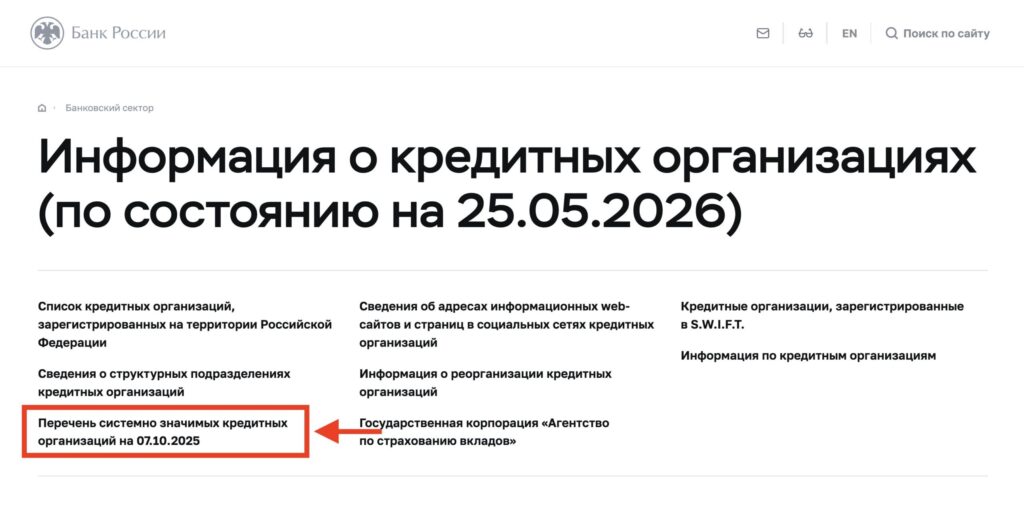
The list of important banks is posted on the Central Bank’s website
What are systemically important banks? These are the 12 largest credit organizations that account for about 80% of the total assets of the entire banking sector in the country. This list includes:
- Sberbank
- VTB
- Alfa-Bank
- T-Bank
- Gazprombank
- Sovcombank
- Rosselkhozbank
- Raiffeisenbank
- PSB
- MKB
- UniCredit Bank
- Bank DOM.RF
Simply put, if your loved one lives in Kazakhstan or Belarus and wants to send you money via SBP, your bank (if it’s on the systemically important list) will be required to accept such a transfer. Banks with a universal license will get a delay — they must provide this capability by October 1, 2027.
Cross-border transfers via SBP are already working with a number of neighboring countries — Abkhazia, Armenia, Belarus, Kazakhstan, Kyrgyzstan, Moldova, Tajikistan, and Uzbekistan. But until now there was no mandatory requirement for banks — each one connected voluntarily.
Paying Taxes and Fines via SBP Without Fees
Systemically important banks will be required to accept tax payments, fines, and government fees through SBP — on government services portals, agency websites, and at budget organization service points.
Some banks already allow paying fines and taxes via SBP. But this is an initiative of specific banks, not a mandatory requirement. Once the new directive takes effect, all 12 systemically important credit organizations will be required to support such payments. An important detail: back in November 2024, the Central Bank established a zero tariff for tax payments and government services via SBP — meaning there are no fees for such payments and there won’t be.
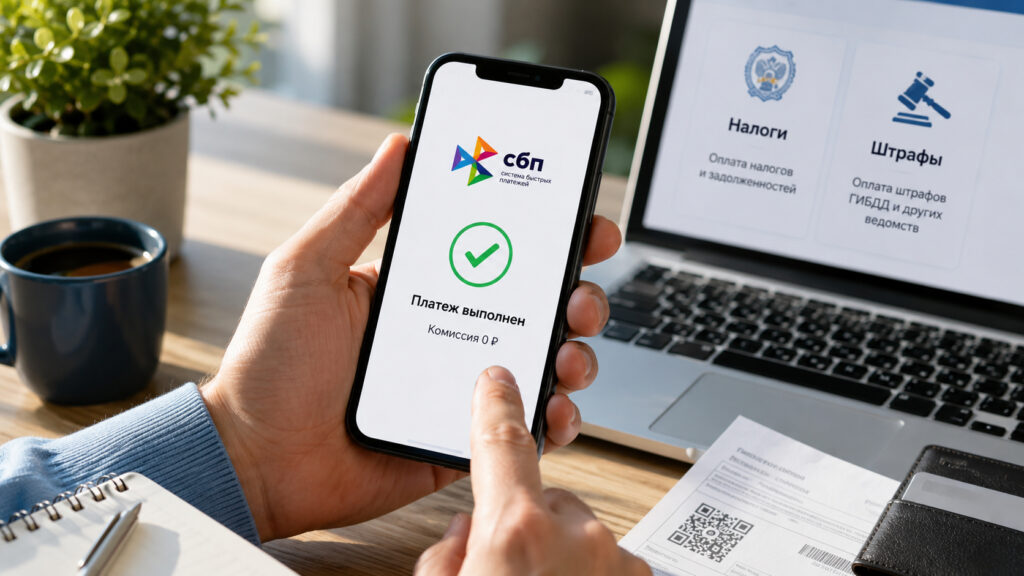
Paying fines and taxes will also be done through SBP
This is convenient. You receive a fine notification on Gosuslugi — you pay via SBP directly from your bank app without entering any card details. Fast, secure, and free.
When Will the New SBP Features Launch
Starting October 1, 2026 — depositing cash into your account through any bank’s ATM via SBP. Limits: 25,000 per transaction, 50,000 per day, 200,000 per month.
Starting April 1, 2027 — systemically important banks are required to accept cross-border transfers from individuals via SBP and to enable payment of government fees, fines, and taxes through the system.
The Central Bank’s draft directive is currently in the discussion stage — proposals and comments are being accepted until June 8, 2026. But given that the Central Bank has been consistently expanding SBP capabilities for years now, there’s virtually no doubt that all of this will become reality.