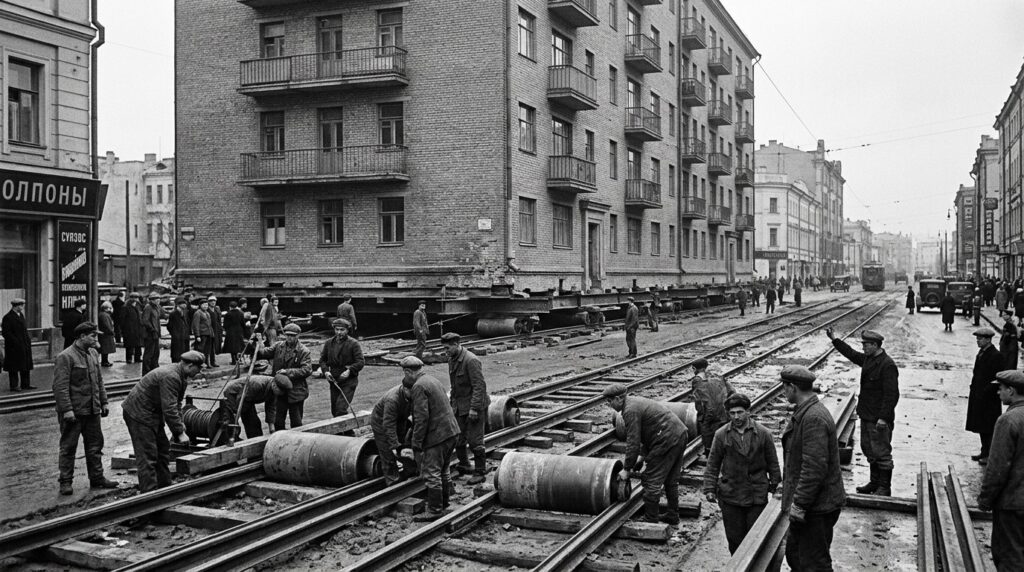
Preparation for building relocation in Moscow, 1930s
In the 1930s, something hard to believe was happening in Moscow: multi-story stone buildings weighing thousands of tons were moved from their foundations along with their residents, furniture, running water, and electricity. People would go to sleep at one address and wake up at another. This is not an urban legend — it was a real engineering practice that preserved dozens of historic buildings in the capital.
The First Case of Building Relocation
The idea of moving structures from place to place appeared long before Soviet builders. The first documented case dates back to 1455: in Bologna, Italy, architect Aristotele Fioravanti relocated the 24-meter bell tower of the Church of Santa Maria Maggiore by 13 meters. The tower was obstructing the construction of a new city administration building, and Fioravanti, using mechanisms he invented, moved it over the course of several days. For this feat, the city council awarded him the title of senior warden of the masons’ lodge and granted him a lifetime stipend.

Architect Aristotele Fioravanti
In Russia, the first experience dates to 1812, when a peasant named Dmitry Petrov moved a wooden church in Morshansk by 30 meters. And the first stone building was relocated in 1898 — a two-story mansion on Kalanchevskaya Street in Moscow, belonging to the widow of a Scotsman, Jane MacGill. The house was separated from its foundation, placed on rollers, and moved 100 meters using horses. But all these cases were isolated, one-off projects.
Creation of the Building Relocation Trust
Everything changed after the approval of the General Plan for the Reconstruction of Moscow in 1935. The city was to be radically rebuilt: old streets widened, new highways laid out. The problem was that dozens of residential buildings stood in the path of the new roads, including architectural monuments. Simply demolishing them was deemed unacceptable.
An engineering solution was found: rather than destroying the buildings, they would be moved. For this purpose, a special organization was formed under the Moscow Soviet — the Trust for Building Relocation and Demolition. Its chief engineer was Emmanuel Gendel — an outstanding specialist who ultimately devoted more than 40 years of his life to building relocation.
Before tackling serious projects, the trust’s employees gained experience. They moved six small brick buildings, including a building of the Aprelevka Gramophone Record Factory and several structures in the Serebryany Bor area. During these “training exercises,” the engineers mastered turns and changes in direction of movement.
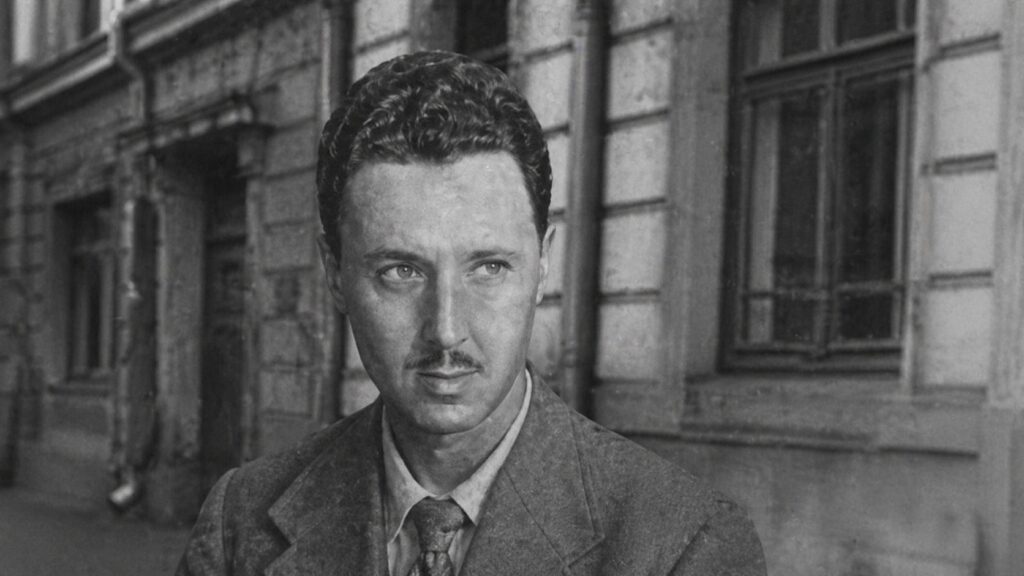
Soviet engineer Emmanuel Gendel
How Multi-Story Buildings Were Moved in Moscow
The relocation process looked roughly like this. First, the building was separated from its foundation — a series of openings were cut in the lower part of the walls, through which a powerful metal frame was inserted. Rails and rollers were laid beneath it. The rail tracks stretched from the old location to the new foundation, which had been prepared in advance.
The building was moved using winches and jacks. The entire structure rolled along the tracks so smoothly that residents inside often didn’t feel any movement. Utilities like water, electricity, and telephone lines were made flexible and extended so that nothing would be disconnected during the move. Preparation for relocation took several months, while the actual move could be completed in just a few days or even a single night.
How the Building on Sadovnicheskaya Street Was Moved
The first truly large-scale project was a five-story building on Osipenko Street (now Sadovnicheskaya). The building had an L-shaped form, and its longer section obstructed the construction of the Krasnokholmsky Bridge. Gendel proposed cutting the building in two: leaving the shorter part in place and moving the longer one.
The plan was executed in three days. The building moved along 37 rail tracks, and throughout this time, residents remained in their apartments. Electricity, water, telephone, and radio all continued to work, so daily life was not interrupted for a single minute. The movement was so smooth that many residents, according to contemporary accounts, only learned about the relocation after the fact.
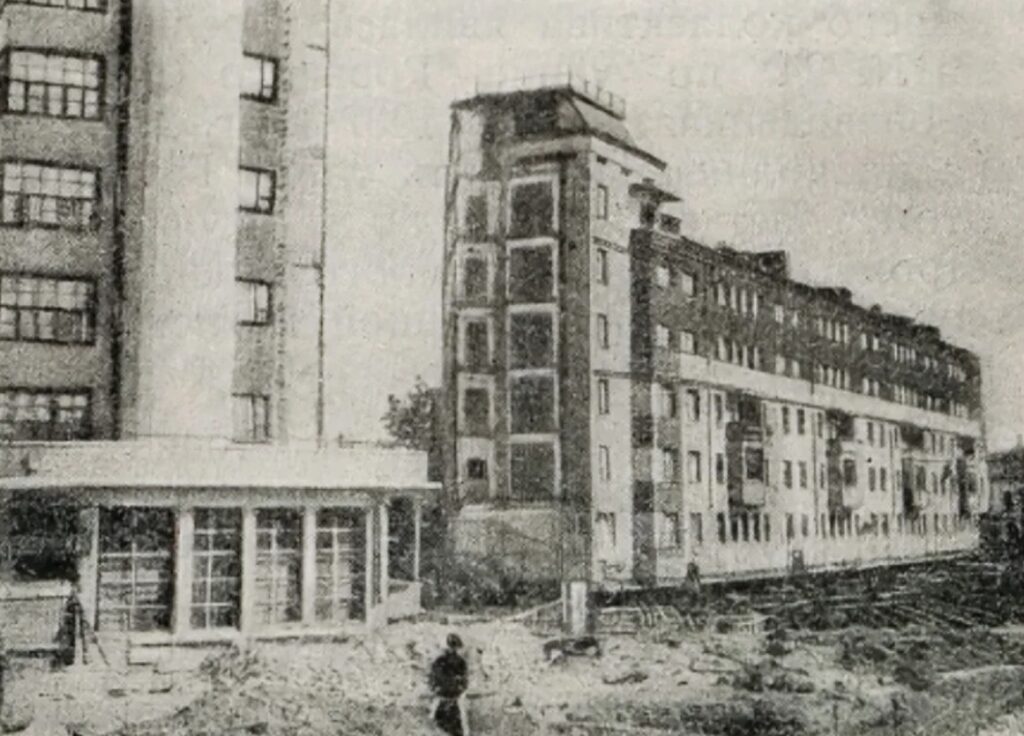
The building on Sadovnicheskaya Street after relocation. Image source: kommersant.ru
USSR vs. USA Competition: Who Could Move a Heavier Building
Building relocation was not exclusively a Soviet practice. In 1930, an impressive operation was carried out in Indianapolis with the eight-story Indiana Bell telephone company building weighing about 11,000 tons. Over 34 days, it was moved 16 meters and rotated 90 degrees. Throughout this time, 600 employees continued working inside, servicing approximately 170,000 telephone lines across the state.
For Soviet engineers, surpassing the American record became a matter of professional pride. And the opportunity presented itself during the widening of Gorky Street (now Tverskaya). Under threat of demolition was the Savvinskoye Podvorye (Savvino Monastery Metochion), a luxurious building in the neo-Russian style, built in 1905–1907. It weighed approximately 23,000 tons — more than twice the weight of the American telephone building.
Savvinskoye Podvorye: Relocated in One Night
The story of the Savvinskoye Podvorye relocation is perhaps the most striking episode in this entire saga. The 23,000-ton building stood on the red line of Tverskaya Street and was in the way of the street’s widening. It was slated for demolition, but residents petitioned the Moscow Soviet to preserve the building.
In the end, Gendel developed a relocation plan. Thirty-six rail tracks were laid under the building, and winches and jacks were installed. Residents were informed about the upcoming move, but the exact dates were deliberately withheld — they were given intentionally wrong dates. This was done on purpose: the engineers didn’t want unnecessary panic and commotion.
At night, the building began to move. A twenty-ton winch smoothly lifted the metochion off its foundation and rolled it along the rails. The relocation was completed in three days, with the building shifted nearly 50 meters deeper into the block. In the morning, residents discovered they were now living at a new address — Tverskaya, 6.
On the vacated site, a Stalinist residential building designed by Arkady Mordvinov was erected, completely blocking the view of the metochion. Today, to see this architectural monument, you need to enter the courtyard of building No. 6 on Tverskaya — and unexpectedly discover a fairy-tale tower house with pointed turrets.
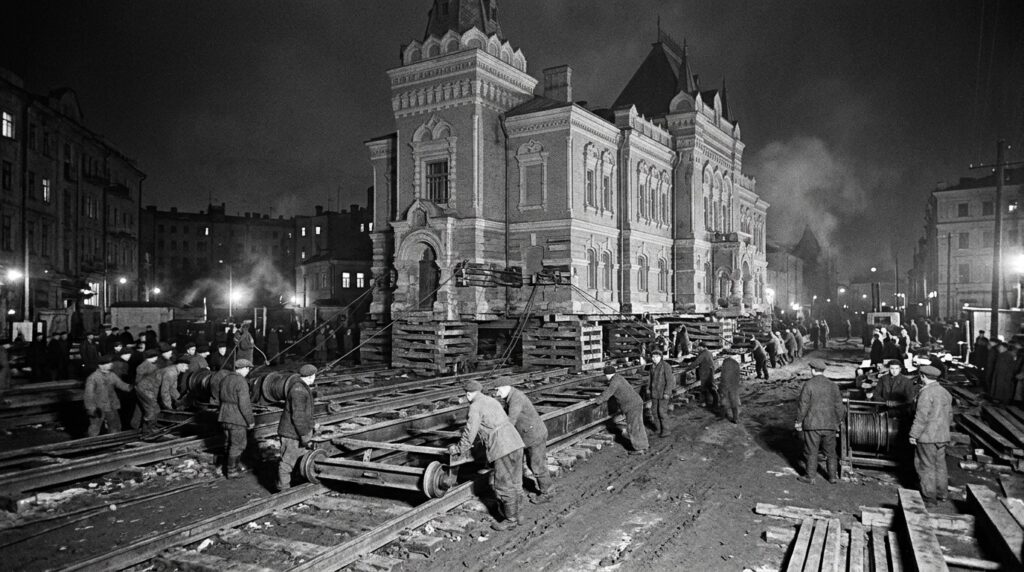
The Savvinskoye Podvorye was moved at night; residents only learned about the relocation in the morning
How Many Buildings Were Moved in Moscow
In total, about 70 architectural structures were relocated in Moscow over several decades. Among them was the Moscow Soviet building (now the mayor’s office) and the Eye Hospital, which was not only moved but also rotated nearly 97 degrees — while doctors inside continued seeing patients.
The last building to be “relocated” was the Moscow Art Theatre (MKhAT) named after Chekhov — in 1983, part of the building was cut off and moved to expand the auditorium and service areas. After that, the practice of building relocation effectively ceased, as perestroika began and the country faced entirely different challenges.
Engineer Gendel, who was behind most of these projects, continued working until a very old age. His last project in 1988 was straightening a tilted building.