How festival urine could be turned into vast forests
Music festivals are chaotic affairs. Beyond the booming bass and muddy boots, every festival leaves behind a mountain of waste. But sometimes unwanted leftovers can turn out to be valuable raw material. While most people see portable toilets as a necessary evil, British startups see an opportunity. Their plan is to use human urine to grow an entire forest. Sounds pretty strange, you might think — but behind it lies a real problem with global fertilizer supplies.
How Fertilizer Is Made from Human Urine
It all starts at massive music festivals. The NPK Recovery team has partnered with another startup called Peequal to process urine collected using innovative toilets. They install special stalls that separate urine from other waste right on site. This is a crucial point: if urine mixes with feces or water, extracting useful substances from it becomes much more difficult and hazardous.
The collected urine is processed right there on site in a mobile laboratory the size of a small horse trailer. Inside, bacteria work to extract three key nutrients from the urine — nitrogen, phosphorus, and potassium. These are exactly the substances plants need to grow, and exactly what synthetic fertilizers contain.
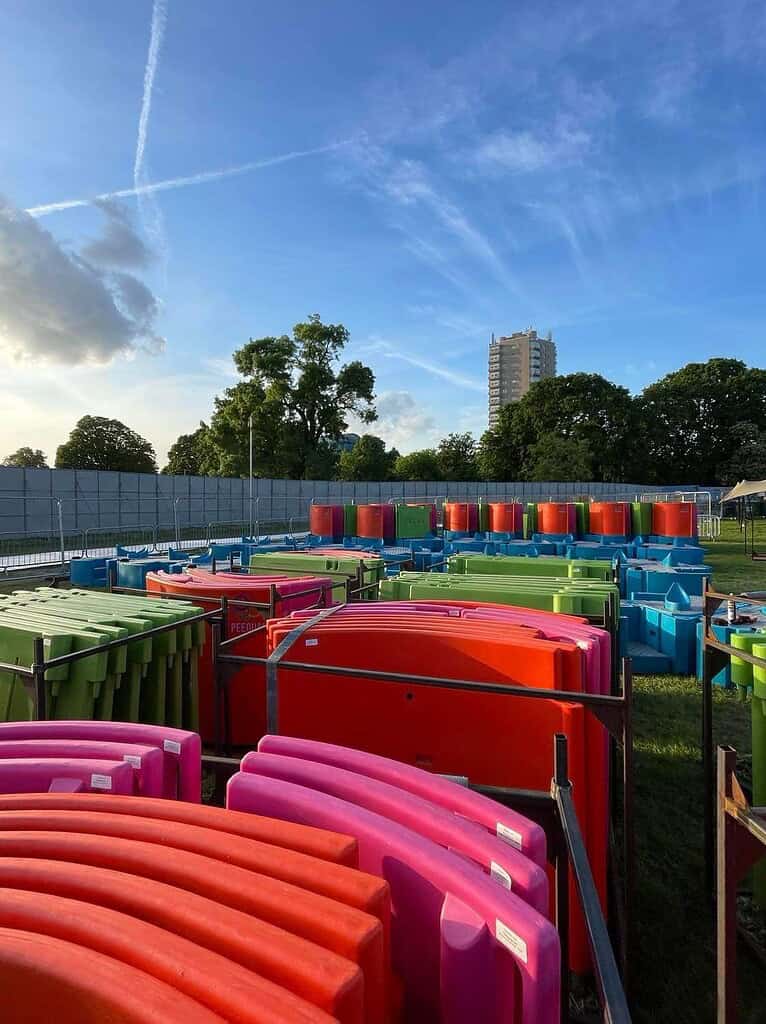
During the 2025 London Marathon.
The end product is a liquid fertilizer with no odor. The process also uses biochar — a carbon-based material that improves soil and helps retain nutrients. In field trials, the urine-derived fertilizer performed no worse than conventional synthetic counterparts when growing wheat and mustard.
How Urine-Based Fertilizer Will Be Tested on Trees in Wales
The project’s main goal is to grow approximately 4,500 trees, including beech and Scots pine, on the territory of Bannau Brycheiniog National Park (also known as Brecon Beacons) in Wales. It’s a beautiful but not particularly wooded area, and planting trees here is part of a large-scale landscape restoration program.
The project is planned for three years and is supported by a grant from the UK Forestry Commission worth over £435,000 (approximately $540,000). The first pine seed has already been planted on the site.

Brecon Beacons is a beautiful natural region, but there aren’t many forests there. Image in the public domain.
Until now, urine-derived fertilizer had only been tested on agricultural crops. This is the first time it’s being tried for growing trees. The three-year experiment will show whether such a product can work consistently in forestry, not just on laboratory plots.
Why the World Needs New Ways to Make Fertilizers
Fertilizers are one of those things few people think about until prices go up. And they have gone up. The production of synthetic fertilizers depends on natural gas, complex supply chains, and geopolitical stability. By some estimates, fertilizers account for up to 5% of global greenhouse gas emissions, plus they cause soil degradation.
The conflict around Iran and instability in the Strait of Hormuz, through which a significant portion of the world’s fertilizer supplies pass, have led to rising prices and raw material shortages for farmers. Under such conditions, the idea of producing fertilizers locally from a resource that will certainly never run out no longer looks exotic — it looks like common sense.
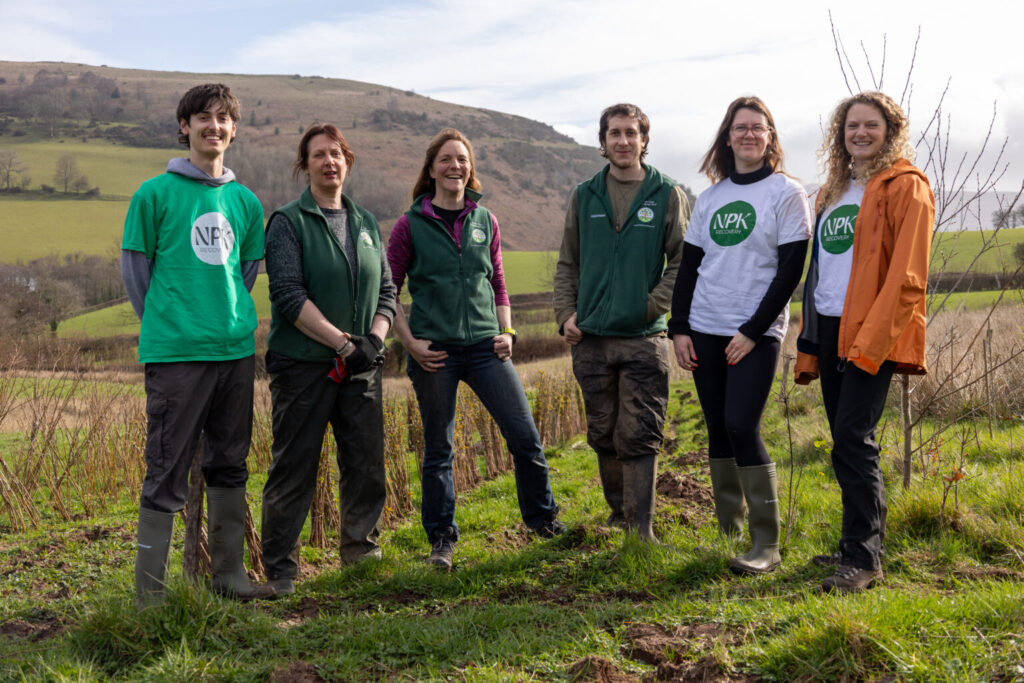
High-efficiency urine-based fertilizer will be used to save endangered British trees.
Human urine contains everything plants need: nitrogen, phosphorus, and potassium. The problem has always been different — how to safely extract these substances on an industrial scale without spreading pathogens and pharmaceutical residues. This is precisely the challenge that NPK Recovery‘s technology addresses.
Which Countries Are Making Fertilizer from Urine
Britain isn’t alone here. The idea of turning urine into fertilizer is developing in dozens of countries. Pilot projects for collecting and processing urine have already launched in Sweden (since the 1990s), Switzerland, Germany, the USA, South Africa, Ethiopia, India, Mexico, and France.
In the USA, for example, the University of Michigan received a $3 million grant back in 2016 to research urine processing, retrofitted toilets in one of its campuses, and produces fertilizers in a university laboratory. A Swiss startup developed an automated system that processes about 8,000 liters of urine per day, preventing nitrogen from entering rivers and lakes. And in Niger, a West African country with a population of about 28 million, women farmers tested urine-based fertilizer on fields over three years and achieved a 30% increase in millet yields.
As for Russia — there are no industrial projects for processing human urine into fertilizers yet. However, the tradition of using such waste in agriculture is not new: recommendations for applying liquid human waste to fields were documented as far back as the “Peasant Agricultural Encyclopedia” of 1926. Today, Russian scientists are actively working on processing organic waste into fertilizers — primarily poultry manure and livestock dung, and see this as a promising area for international cooperation with China, India, and Southeast Asian countries.
Can Urine-Based Fertilizer Help Restore Forests
Urine-based fertilizer has already proven its effectiveness on cereal crops under controlled conditions. But its ability to support tree growth over several years in a real environment has yet to be verified. Questions of scaling are also open: collecting urine at a festival is one thing, but establishing permanent collection in urban conditions is an entirely different challenge that requires redesigning toilets and sewage systems. Especially since sewage systems already struggle with everything people are used to flushing down the toilet without a second thought.
Nevertheless, the logic of the project looks compelling. Humanity produces enormous quantities of urine daily and spends enormous amounts of money on synthetic fertilizers, burning fossil fuels to produce them. Closing this cycle means simultaneously solving the waste problem, reducing the carbon footprint, making agriculture slightly less dependent on geopolitics, and helping forests that are no longer always coping with their role as carbon sinks. The three-year experiment in Wales will show how close we are to achieving this in practice.