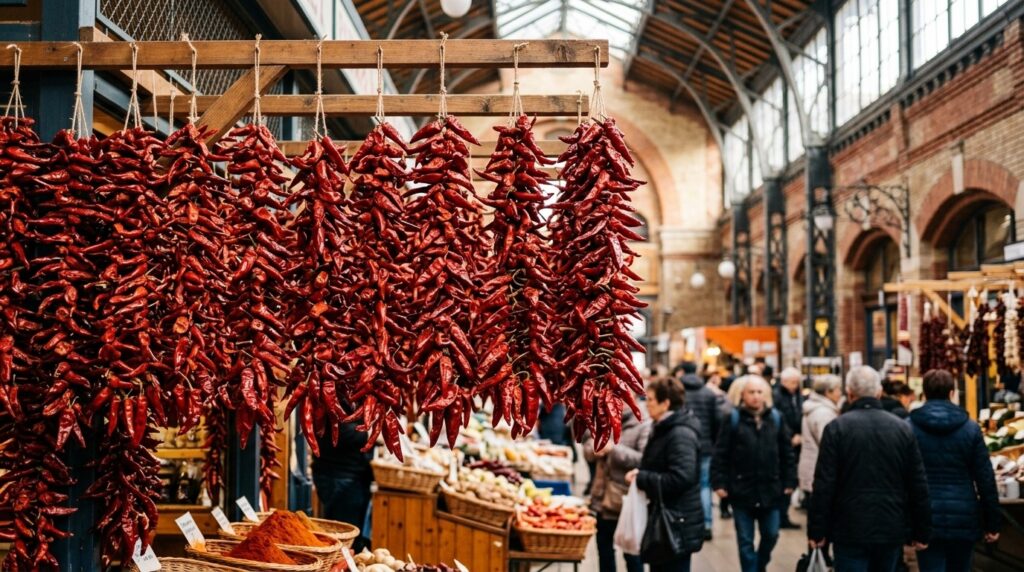
Most people still don’t know where paprika comes from
Paprika adds a vibrant red color and depth of flavor to dozens of dishes — from Hungarian goulash to Spanish paella. But a huge number of people still don’t know what this spice is actually made from. Many are convinced that paprika is some special plant. Spoiler: no, it’s just ordinary pepper, but not the one you’re thinking of.
What Pepper Paprika Is Actually Made From
If you thought paprika grows on some unique tree or shrub, you’re not alone. Confessions regularly pop up online from people who had no idea about the true origin of this spice for years. But the truth is simple: paprika is dried and ground pod pepper of the species Capsicum annuum.
Paprika is typically made from varieties with long, thin pods — they differ from the familiar sweet bell peppers sold in stores. Nevertheless, these are plants of the same species. There is no separate “paprika” crop.
Types of Paprika: Sweet, Hot, and Smoked — What’s the Difference
Not all paprika is the same. Depending on the pepper variety and drying method, completely different flavors are produced. The three main types you can find in stores:
- Sweet paprika — mild flavor without heat, bright red color. This is the one most commonly sold under the generic label “paprika.”
- Hot paprika — made from spicier pepper varieties, but still milder than chili. Adds noticeable heat.
- Smoked paprika (pimentón) — the pepper is first smoked over oak wood and then ground. This is a signature Spanish technique that gives dishes a characteristic smoky aroma.
In Hungary, there are officially eight varieties of paprika — from the most delicate “különleges” to the fiery “erős.” The difference between them lies not only in heat level but also in color, aroma, and powder texture.
How Paprika Became a Symbol of Hungarian Cuisine
The history of paprika is the story of one plant’s global journey. The wild ancestors of Capsicum pepper grew in Central and South America. They were gathered and eaten as early as 7,000 years BCE in what is now Mexico.
Pepper arrived in Europe thanks to Spanish and Portuguese seafarers in the 16th century. From there, the spice began spreading along trade routes — through the Iberian Peninsula to Africa, Asia, and the Balkans. According to the most reliable version, pepper was brought to Hungary by the Ottoman Turks, who controlled the central part of the country in the 16th–17th centuries.
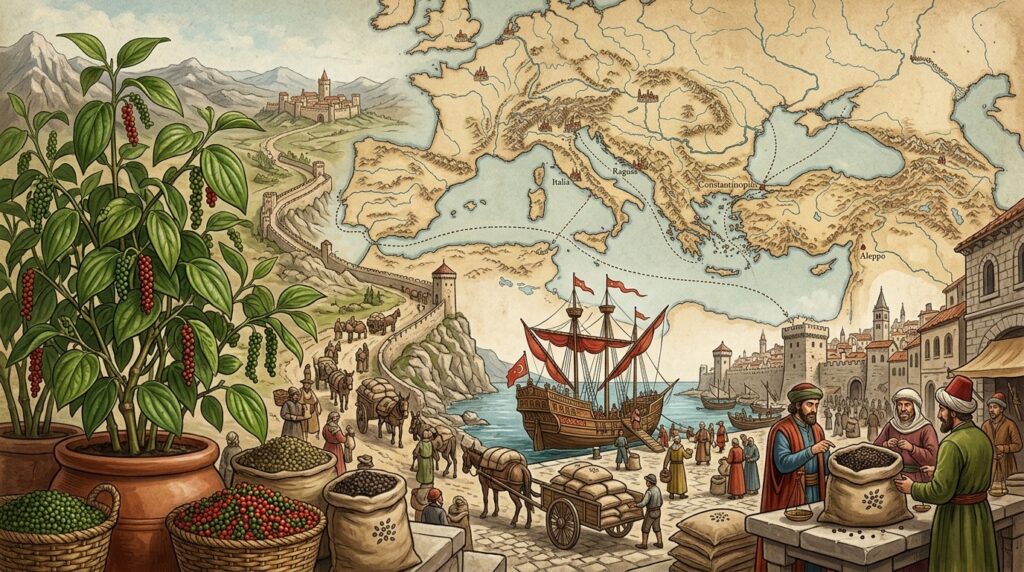
Spice trade routes to Europe during the Ottoman Empire era
Interestingly, at first pepper wasn’t eaten in Hungary — it was considered poisonous and was grown as an ornamental plant in aristocrats’ gardens. Only later did peasants discover its taste and began using it as a cheap substitute for expensive black pepper. By the end of the 18th century, paprika had firmly established itself in Hungarian cuisine, becoming the foundation of goulash, paprikash, lecho, and the fish soup halászlé.
The word “paprika” itself, by the way, is of Hungarian origin. It traces back to the Serbo-Croatian “papar,” which in turn derived from the Latin “piper” — pepper.
How Paprika Helped Discover Vitamin C and Win a Nobel Prize
Paprika once helped make a discovery of global significance. In 1932, Hungarian biochemist Albert Szent-Györgyi was working in Szeged — a city that was and remains the capital of Hungarian paprika. The scientist was researching vitamin C, but he had run out of material for experiments: the adrenal glands from which he extracted ascorbic acid were in short supply.
One evening, his wife served him fresh red pepper for dinner. Szent-Györgyi didn’t want to eat it — and instead took it to his laboratory. By midnight, he discovered that paprika contains an enormous amount of vitamin C — significantly more than citrus fruits. Within a week, his team extracted more than one and a half kilograms of pure crystalline ascorbic acid from peppers.
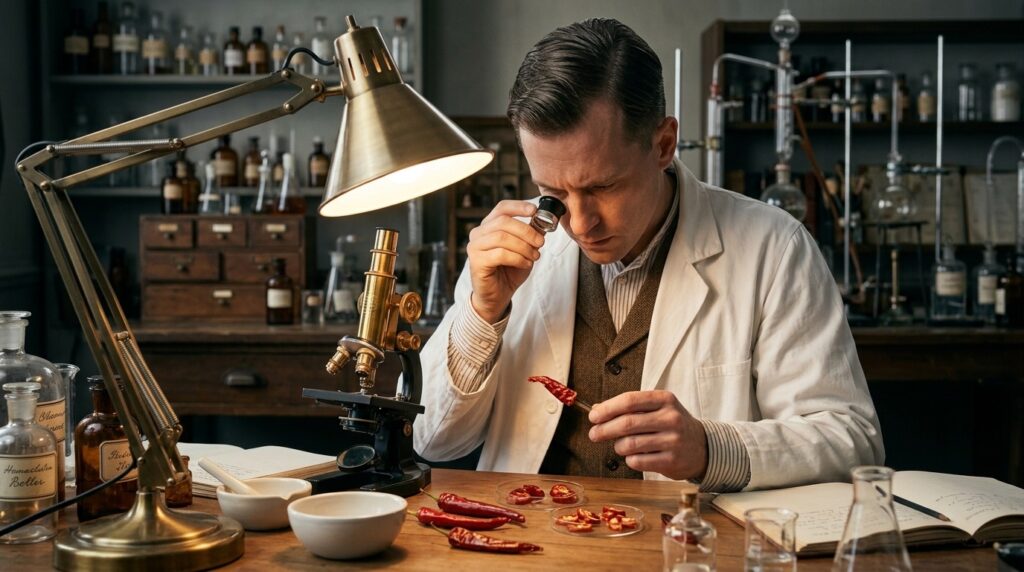
Reconstruction of a 1930s laboratory where vitamin C was researched
This discovery became one of the key steps toward understanding the role of vitamin C in the body. In 1937, Szent-Györgyi received the Nobel Prize in Physiology or Medicine — in part for research related to ascorbic acid.
How to Choose Quality Paprika at the Store
Paprika is the fourth most consumed spice in the world. It appears in barbecue sauces, sausages, marinades, rice dishes, and even in feed for zoo flamingos (yes, it’s paprika that helps them maintain their pink plumage color). But most people treat it as a generic red powder without thinking about the differences between types.
And the difference is fundamental. Put smoked paprika instead of sweet in a Hungarian goulash — and you’ll get a completely different dish. Use hot instead of sweet — and you risk ruining the sauce. Smoked and sweet paprika are essentially different spices, even though they sit side by side on the shelf.
Another nuance: paprika quickly loses its aroma and richness. If your powder is more than six months old, it has likely lost a significant portion of its flavor qualities. At the same time, it still looks red visually — and you may not even notice that the spice has “gone flat.”
Paprika is ground pepper with a five-hundred-year history of travel across three continents that once helped win a Nobel Prize. Not a bad pedigree for the contents of a kitchen cabinet.