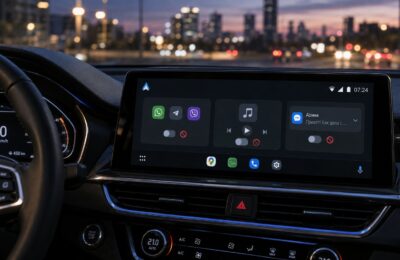
Ferrari has revealed its first electric car, the Luce — and its design was created by Jony Ive, Apple’s former chief designer. The very person who came up with the look of the iPhone, iMac, and MacBook. Looking at this car, you can’t help but think: this is exactly what an Apple electric car might have looked like if the company had seen its project through to the end. Apple cancelled its car, but what would have happened if Apple had actually released its own automobile?
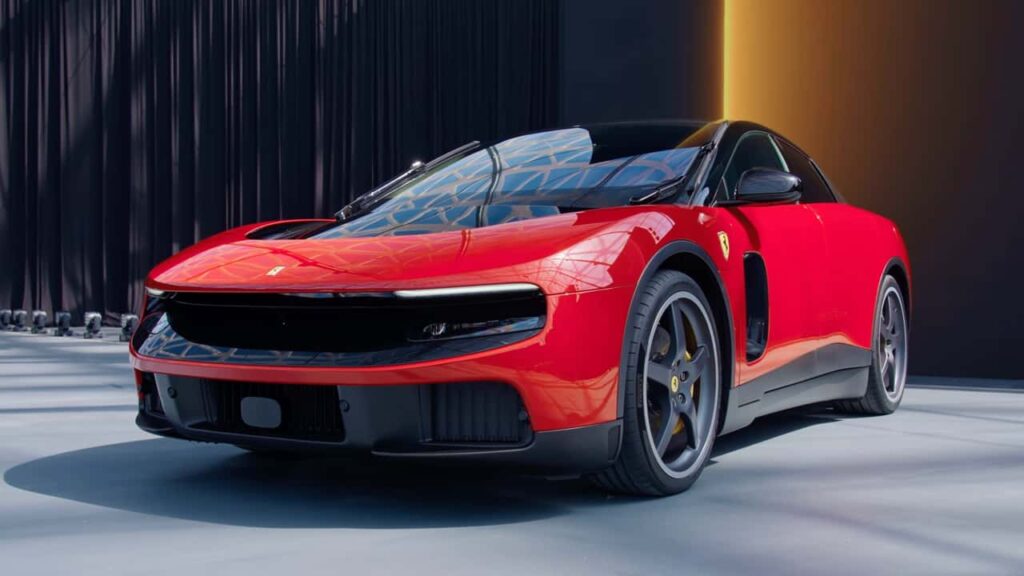
Imagine the Apple logo instead of the Ferrari badge
The Apple Car Story: How Project Titan Became Apple’s Biggest Failure
Apple began working on its own electric car back in 2014. The project was codenamed Project Titan, and at its peak, up to 5,000 employees were working on it. The company hired engineers from Tesla, Ford, and Mercedes-Benz, acquired startups, and registered dozens of patents — from autonomous driving systems to folding doors.
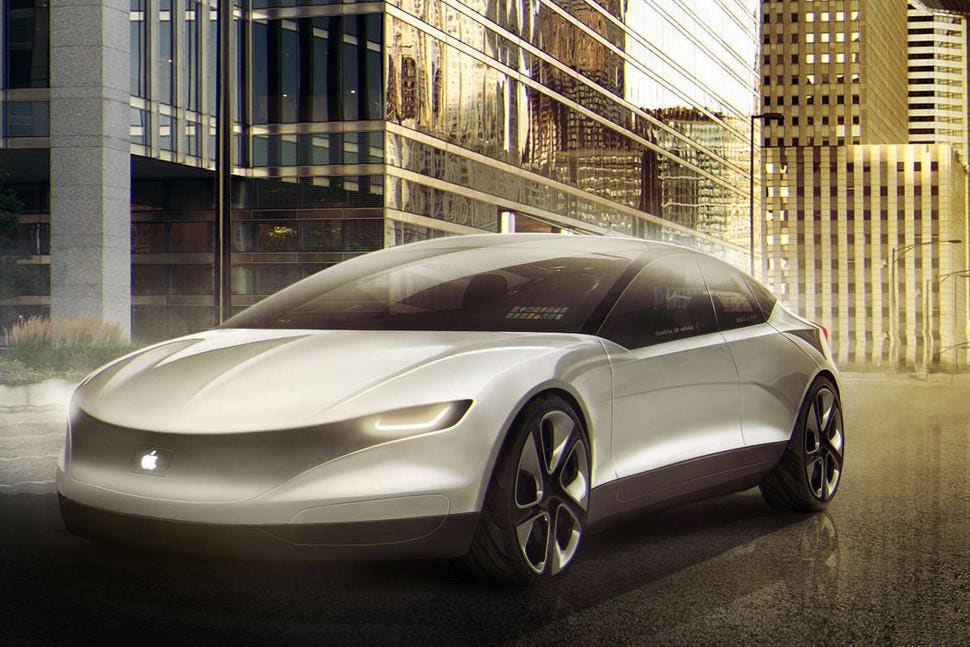
This is what the Apple Car was supposed to look like, according to leaks
But the project was constantly in turmoil. Over ten years, leadership, the concept, and ambitions changed multiple times. Initially, Apple wanted to create a fully autonomous vehicle without a steering wheel or pedals — with seats facing each other. Then the plans became more modest: a conventional interior, partial autonomy, and a price under $100,000. Ultimately, in February 2024, Apple shut down the project after 10 years of development. About 2,000 employees were transferred to the artificial intelligence division; the rest were laid off.
By various estimates, the company spent about 10 billion dollars on Project Titan. And never showed a single prototype.
Ferrari Luce by Jony Ive: Why It’s Being Compared to the Apple Car
And then yesterday, Ferrari unveiled the Luce — its first electric car. A five-seater, four-door vehicle with minimalist design and a teardrop-shaped body. But most importantly — its interior and exterior were developed by the studio LoveFrom, which Jony Ive founded after leaving Apple in 2019. Working alongside him on the car was another famous designer — Marc Newson.
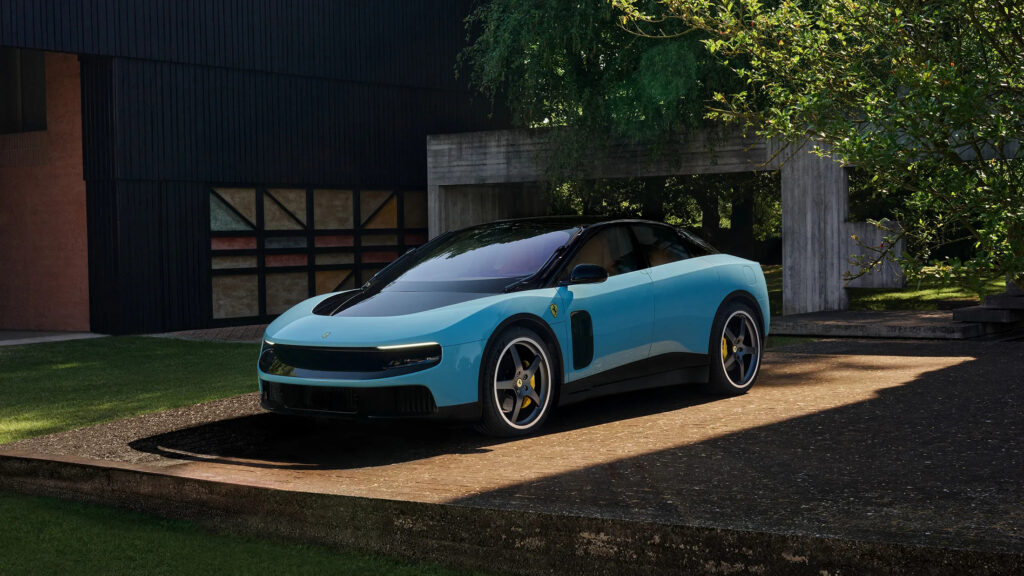
This is what the Ferrari Luce looks like as designed by Jony Ive
Four electric motors, a combined output of 1,035 horsepower, 0-100 km/h in 2.5 seconds, a 122 kWh battery, and a range of up to 530 kilometers. Top speed — 310 km/h. An 800-volt architecture with support for charging up to 350 kW. The aerodynamic drag coefficient is just 0.254, the lowest in Ferrari’s history. The price in Europe starts at 550,000 euros — roughly 55 million rubles. The price is shocking, especially when you look at the design. The interior is top-notch, but the exterior is hard to look at without tears.
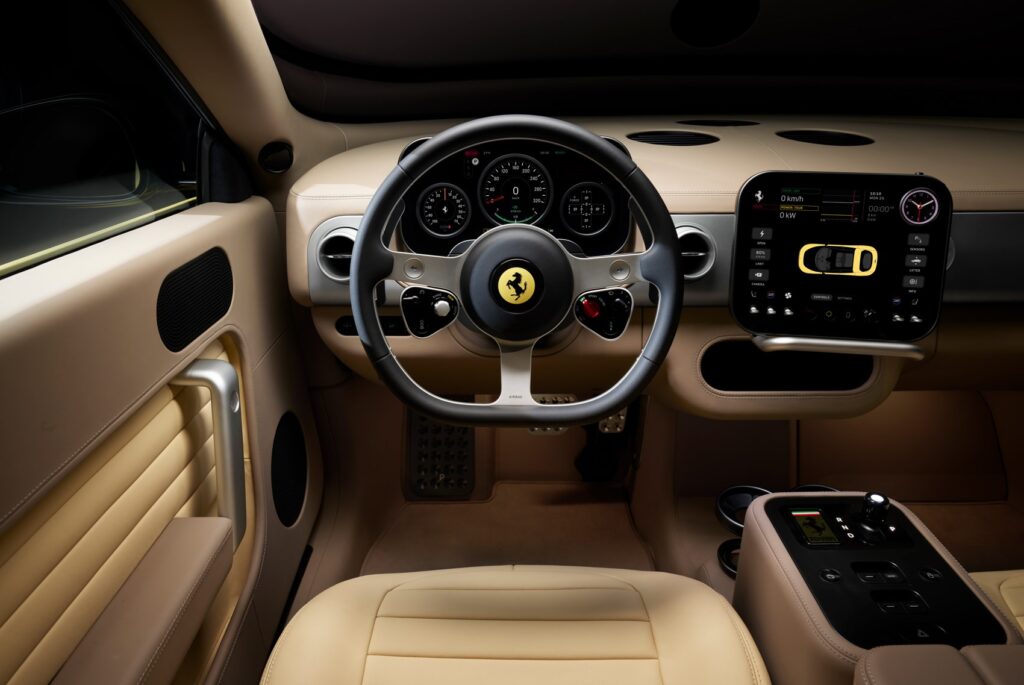
This is what the car looks like inside
Many who saw the Luce immediately wrote: “This looks like an Apple Car.” And it’s not just because Apple’s former chief designer is behind the design. The approach itself — minimal clutter, streamlined forms, glass and aluminum — is Apple’s DNA in its purest form.
Apple Car Design: Interior, Body, and the iPhone Ecosystem
If you look at the Ferrari Luce and recall everything we know about Project Titan, you can piece together a fairly plausible picture.
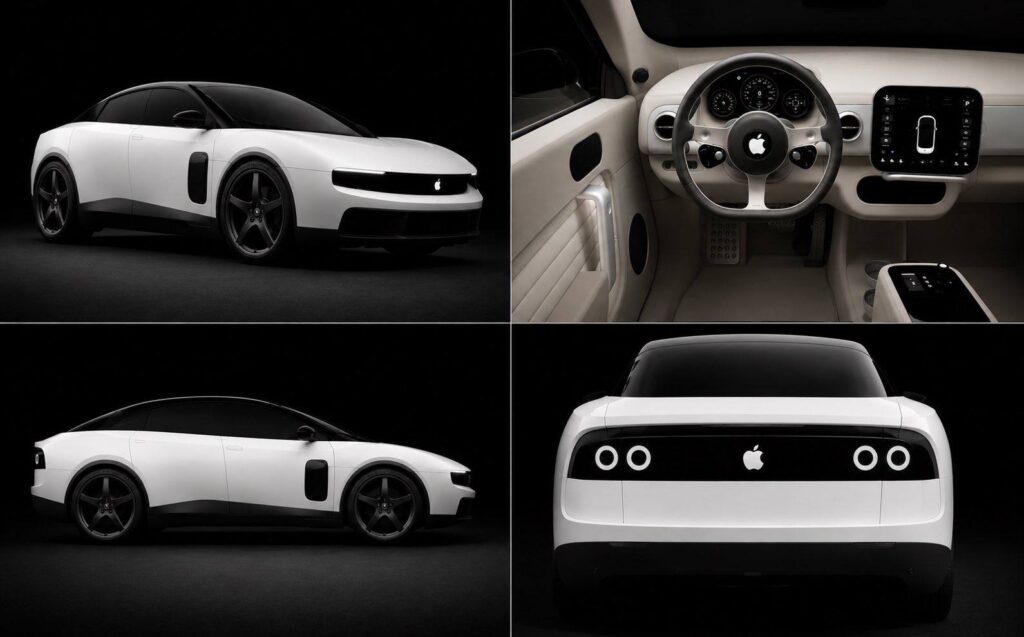
Logically, the Apple Car should have looked something like this. Image: BigGeek
- Design. Ive always put form first. The iPhone became a cultural phenomenon not because it had the best processor, but because it felt great in your hands. An Apple electric car would almost certainly have looked like a single sculpture — with no visible seams, flush door handles, and panoramic glazing. Roughly what we now see in the Luce: a smooth body, a teardrop silhouette, and an aluminum shell embracing a glass passenger capsule.
- Interior. This is where the Ferrari Luce is especially telling. Ive created an interior that goes against the main trend in electric vehicles — giant touchscreens. The Luce is full of physical buttons, toggles, and switches made from machined aluminum. The steering wheel is a work of art made from recycled aluminum with an anodized finish and glass elements. The Apple Car would almost certainly have taken the same approach. A company that spent years perfecting the tactile feedback of the Home button and the Taptic Engine wouldn’t have just slapped a tablet on the dashboard.
- Software. This is where Apple would have had its biggest advantage. No other automaker simultaneously owns an operating system, an app ecosystem, a voice assistant, and custom-designed chips. The Apple Car would have run on its own OS, and all settings, navigation, music, and calls would have been integrated with the iPhone in ways no other system on the market can match. In essence, CarPlay Ultra is a fragment of what could have become a full-fledged automotive platform.
- Apple Silicon under the hood. According to rumors, Apple planned to use its own chip in the car — a logical extension of the M-series lineup. It would have handled autopilot functions, data processing from dozens of sensors and cameras, navigation, and the infotainment system. One chip instead of dozens of control modules from different suppliers — that’s Apple’s typical approach to vertical integration.
Why Apple Never Released Its Own Car
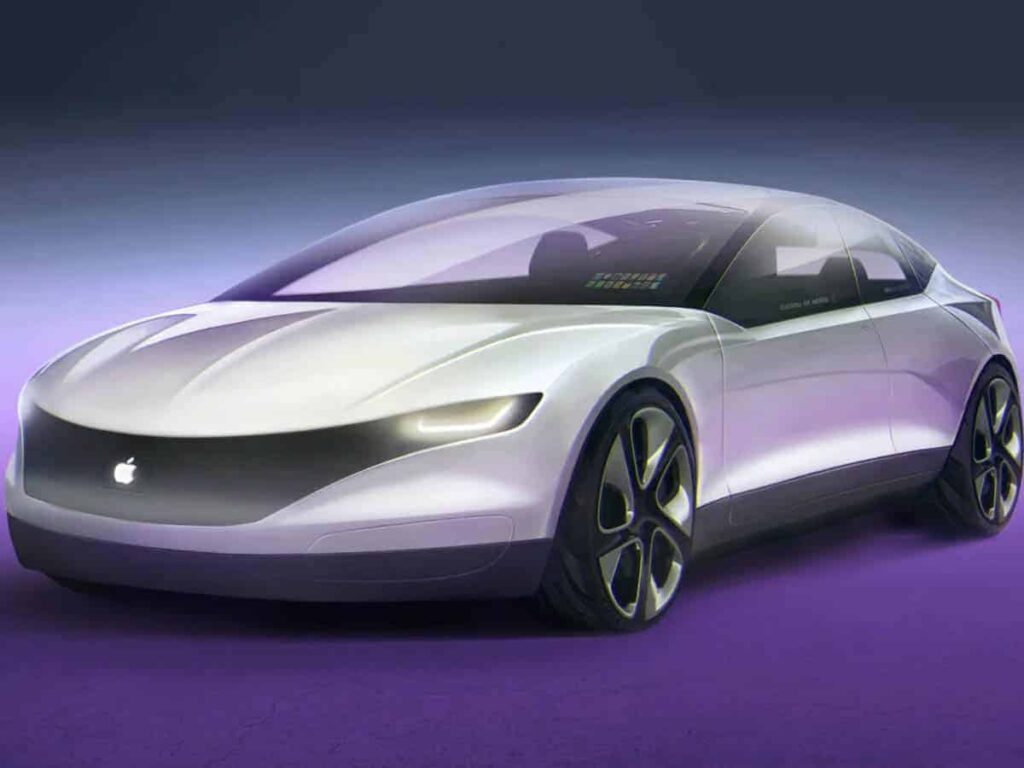
It turns out that the leaks from the Apple Car development era were close to what Jony Ive ultimately created