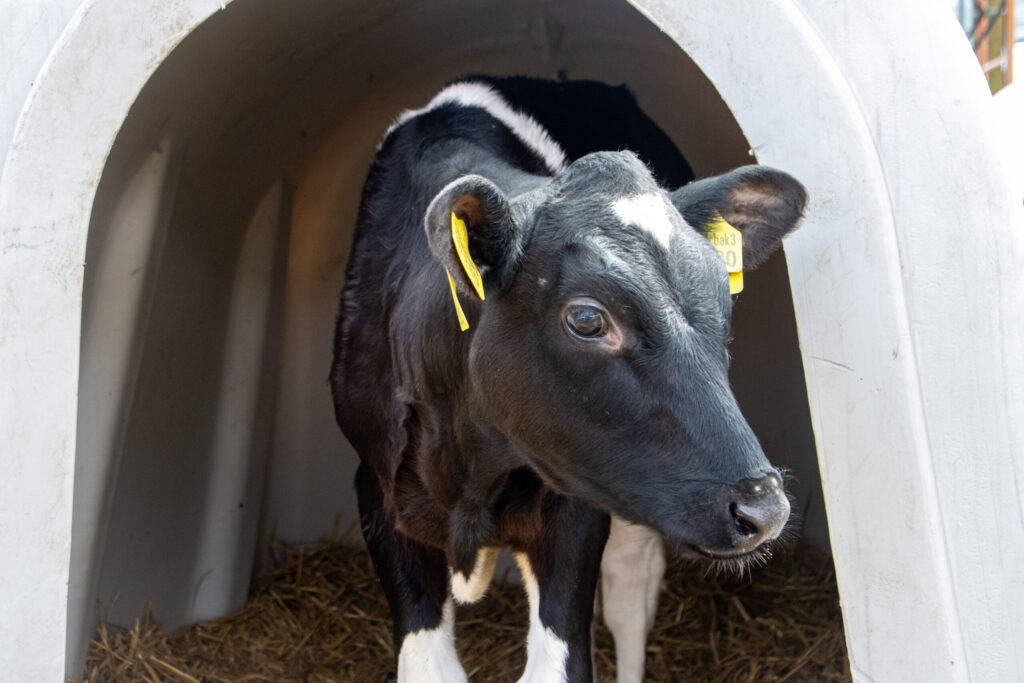
Cloned cow Zvyozdochka gives birth: is the calf healthy?
The cloned cow Zvyozdochka became a mother for the first time, and she did it as if there were no scientific experiment behind her at all. A heifer calf named Daryona was born naturally, without veterinary assistance, and is doing great. Animal cloning has long moved beyond laboratory sensations, but for biotechnology, this birth is important news: for the first time in Russia, it has been proven that a cloned cow can not only live but also produce healthy offspring.
Who Is Zvyozdochka and Why Was She Cloned
Zvyozdochka was born on March 3, 2024, in the Ust-Labinsk district of Krasnodar Krai, at the facilities of the Progress Agro agricultural holding. But she is no ordinary calf: Zvyozdochka is an exact genetic copy of a record-breaking cow that produced up to 18 tons of milk per lactation. For comparison, the average yield across farms is about 10 tons.
Why clone a cow at all? It’s simple: with conventional breeding, an animal’s outstanding qualities can be “diluted” by the genes of the second parent. Cloning preserves the entire set of genes — and essentially produces another record-breaker just like the original.
The cloning was performed using the Handmade Cloning (HMC) method. Unlike the classical method, this approach does not require expensive micromanipulators: everything is done by hand, which reduces costs and, according to research, even increases the success rate of live births. There is also another curious biotech project: Russian scientists have been creating cows with modified DNA to produce milk with new properties.
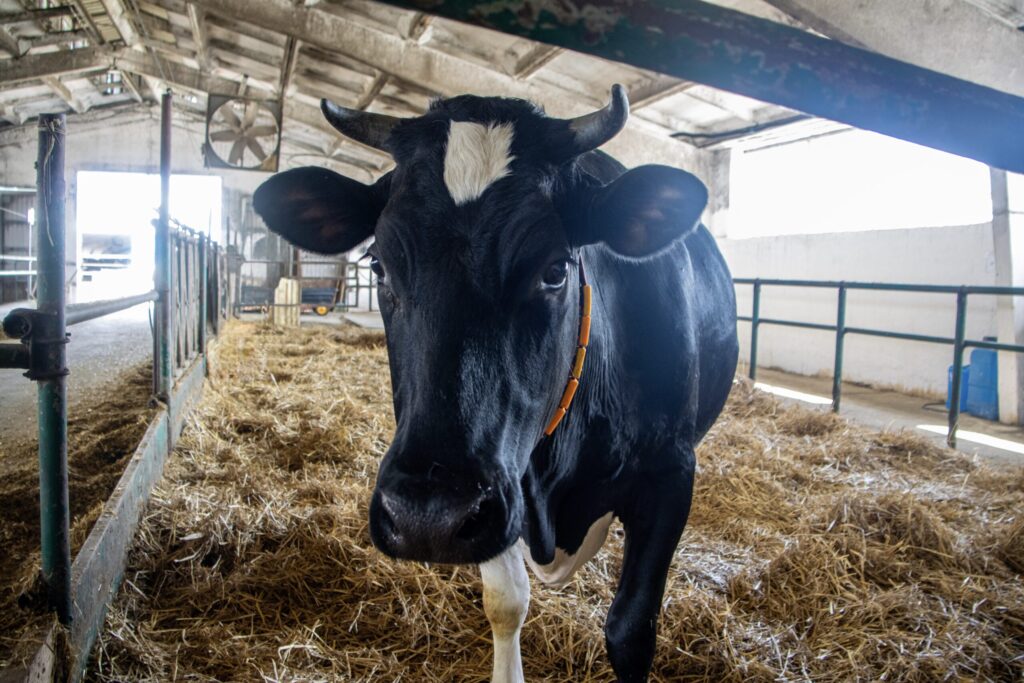
Cloned cow Zvyozdochka.
The Birth of Daryona: Why It’s Considered Rare
Cloned animals often face the large offspring syndrome — calves are born too large, and births cannot proceed without veterinary assistance. Zvyozdochka herself weighed 70 kg at birth — nearly twice the norm.
Her daughter, however, Daryona was born weighing 39 kg, and the delivery went entirely without veterinary intervention. According to specialists, this is truly a rarity for cloned animals. The heifer is growing at the same rate as her peers and showing good weight gain — a reliable sign of normal development.
An important clarification: Daryona is not a clone. She was born naturally, meaning she is an ordinary calf whose mother happens to be a genetic copy of another cow. And the very fact that a clone was able to carry and deliver healthy offspring is the key result of the experiment.
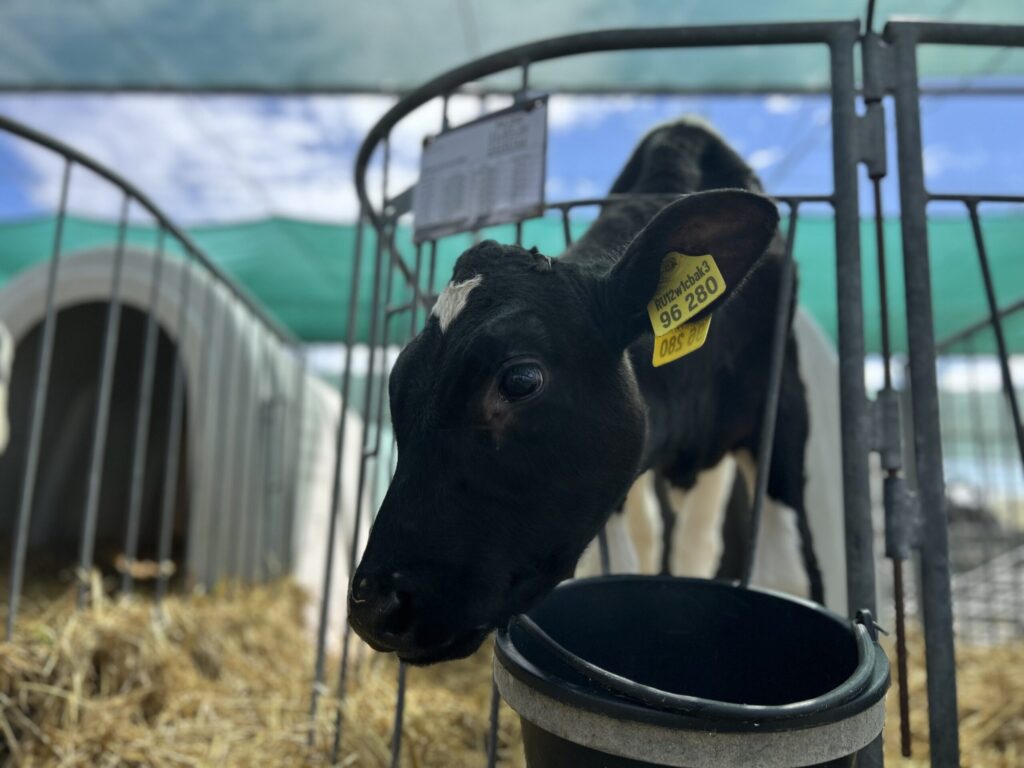
Daryona was born a completely normal, healthy, and active calf.
Milk from a Cloned Cow: Is It Different from Regular Milk
One of the most common questions: what about the milk from a cloned cow? Can you drink it, and does it taste different?
Laboratory tests showed that Zvyozdochka’s milk meets the highest quality grade and tastes no different from regular cow’s milk. Currently, Zvyozdochka’s productivity reaches 31 kg per day, and specialists forecast she will reach 12 tons per year.
Laboratory milk quality check (AI-generated).
This is an interesting point: the record-breaking mother also started with similar volumes, and her record 18 tons came during later lactations. So Progress Agro expects that Zvyozdochka will eventually match or even surpass the performance of her genetic original.
And to understand why the birth of a calf is so important for milk productivity, it’s helpful to remember where cow’s milk comes from and why lactation is triggered after calving.
What’s Next for the Cloning Program: Hundreds of Embryos and Cloned Bulls
The experiment with Zvyozdochka didn’t end there. In the fall of 2025, two more cloned calves were born on the farm — Milka and Iskorka. They are also genetic copies of the same record-breaking cow, but scientists managed to significantly reduce the large offspring problem during their births: one calf weighed 32.5 kg, the second — 56 kg. As a reminder: Zvyozdochka weighed 70 kg at birth.
The company’s cryobank currently stores several hundred cloned embryos of Zvyozdochka. In parallel, scientists are working on cloning two outstanding breeding bulls. The goal is to form an entire high-productivity herd with predictable genetics.
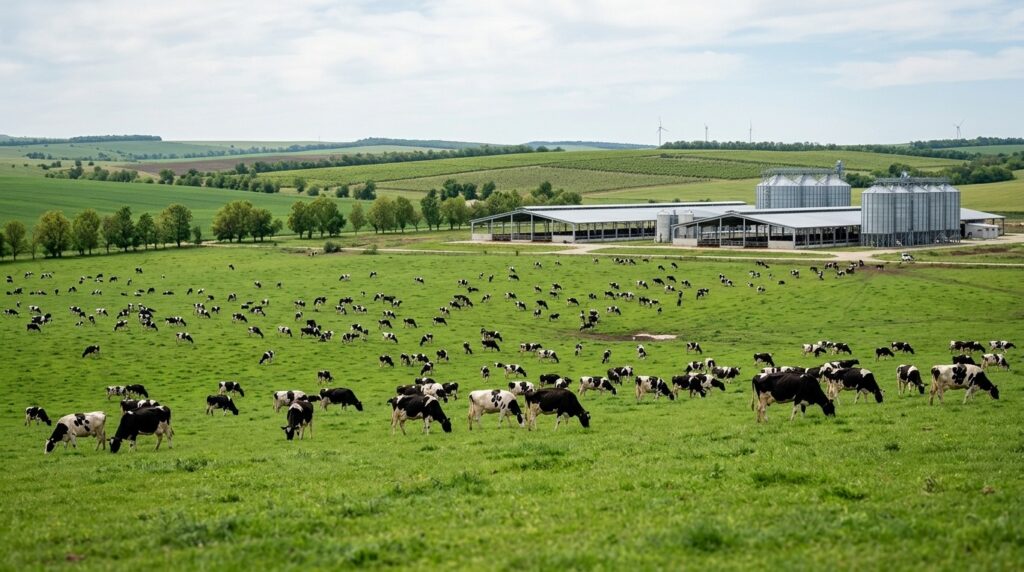
Dairy farm with cloned cows (AI-generated).
Why Russia Needs Cow Cloning
It might seem that cloning is something out of science fiction, far removed from real life. But that’s no longer the case — cloning has a concrete purpose: to reduce dependence on imported genetic material in livestock farming.
Today, Russian farms are largely dependent on foreign supplies of breeding cattle and semen. Cloning makes it possible to preserve the best domestic genotypes and replicate them without having to purchase genetics from abroad each time.
Of course, mass industrial cloning is still a long way off: the technology remains complex and expensive, and regulatory questions (for example, whether milk from clones will appear on store shelves) have yet to be resolved. But the birth of healthy Daryona is at the very least proof that the method works and clones are capable of normal life and reproduction. And for science and agriculture, this is a sign that the technology is developing in the right direction.