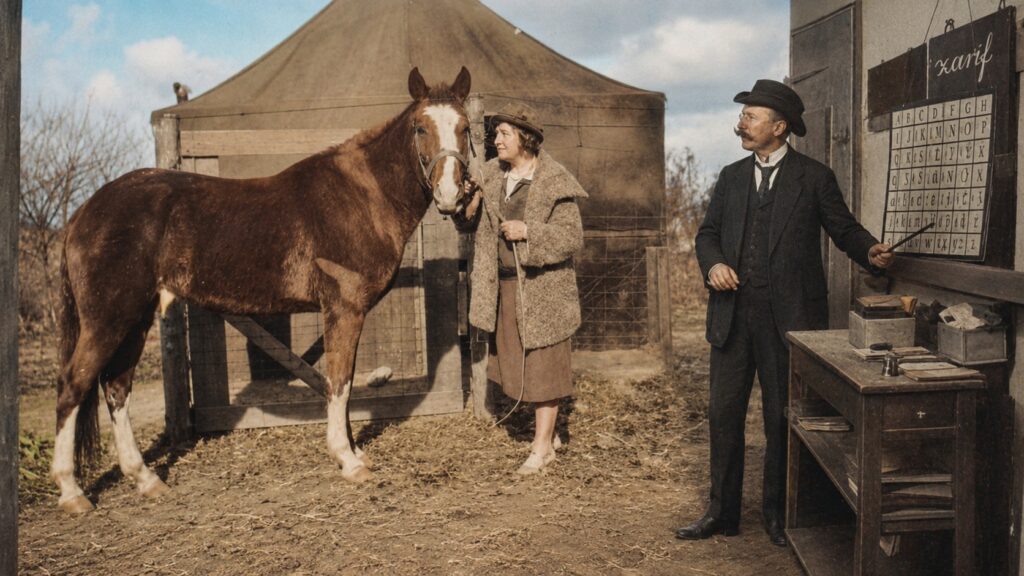
In the early 20th century, a horse named Clever Hans appeared to solve arithmetic problems by tapping his hoof — drawing huge crowds in Germany and baffling even prominent scientists. The eventual debunking of his supposed abilities did not just end a spectacle; it fundamentally changed how scientific experiments are designed, giving rise to safeguards against unconscious experimenter influence that remain essential today.
What you need to know
- Clever Hans, a horse in Germany, appeared to answer math questions correctly by tapping his hoof, but was actually reading involuntary body-language cues from questioners who knew the answer.
- Psychologist Oskar Pfungst demonstrated that Hans could only answer correctly when the questioner knew the answer and was visible to the horse.
- The discovery, now called the “Clever Hans effect,” describes how an experimenter can unknowingly influence a subject’s behavior through subtle, unconscious signals.
- According to Phys.org, the case directly contributed to the development of randomization as a core method in experimental research.
So-called telepathic animals were debunked, and it profoundly influenced science
When animals seemed to read minds
The early 1900s were a time of rapid scientific breakthroughs — X-rays, the telephone — and even pragmatic thinkers began to entertain the possibility that telepathy and clairvoyance might be real phenomena. Researchers started seriously investigating whether animals could read minds or solve complex equations.
Many prominent intellectuals of the era, including Nobel Prize-winning physicist J.J. Thomson, were actively studying mediums and séances. Before long, the focus of parapsychological inquiry shifted to animals that seemed to display hidden intellectual talents.
Rolf, the “thinking dog” of Mannheim
In Germany, a dog named Rolf gained enormous popularity. It was claimed that Rolf could tap out answers to math problems with his paw and even “speak” in full sentences using a special alphabet. One widely reported claim held that Rolf had confessed his Catholic faith to a priest.
Scientists were divided. Some saw evidence of extraordinary animal intelligence. The prominent Russian neurologist and psychiatrist Vladimir Bekhterev suggested the owner was simply transmitting correct answers to the dog telepathically. Oxford philosopher F.C.S. Schiller, however, took a pragmatic view in his reports for the Society for Psychical Research: if the dog was truly gifted at mathematics, why didn’t it use math in daily life? And if it was a devout Catholic, why didn’t it attend church?
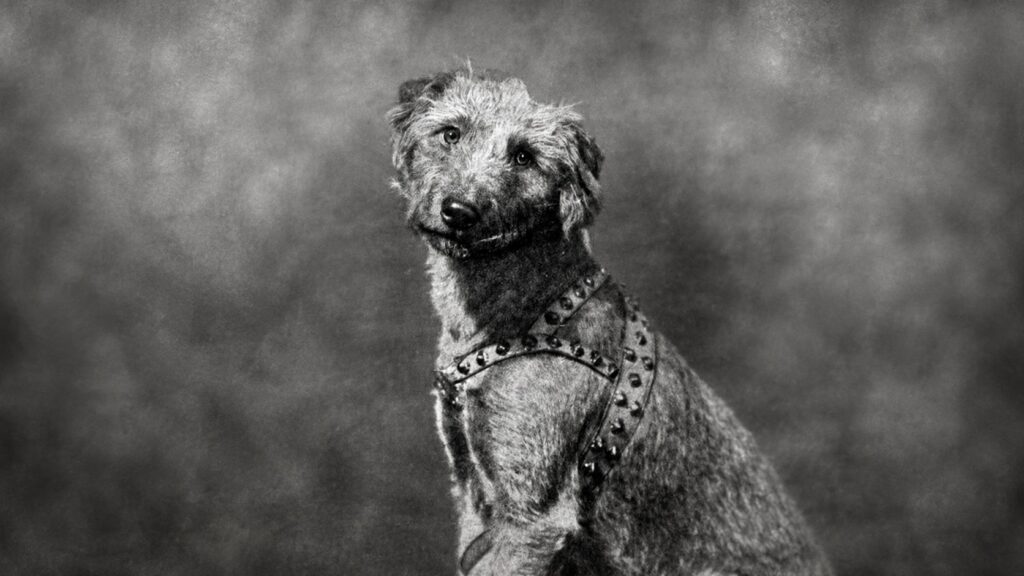
Rolf, the “thinking dog”
Lady Wonder and Clever Hans
In the 1920s, parapsychology pioneers Joseph and Louisa Rhine investigated a horse called Lady Wonder in the United States, which was said to predict the future and tell time using numbered blocks. But the most famous animal phenomenon of all was Clever Hans, a horse in Germany.
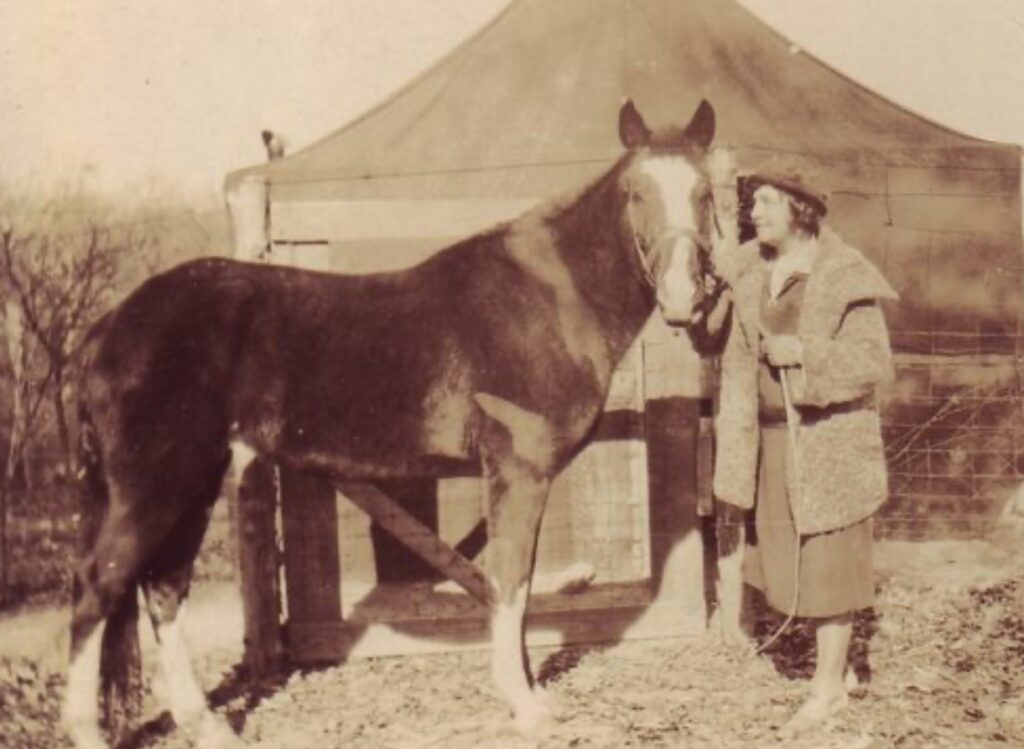
The horse Lady Wonder. Image source: paranormalcatalog.net
Hans drew enormous crowds. He appeared to solve arithmetic problems flawlessly, tapping out the correct answer with his hoof. Carl Stumpf, one of the founders of modern psychology, traveled to see the spectacle. Together with his assistant Oskar Pfungst, Stumpf set out to determine whether the horse truly possessed supernatural abilities or exceptional intelligence.
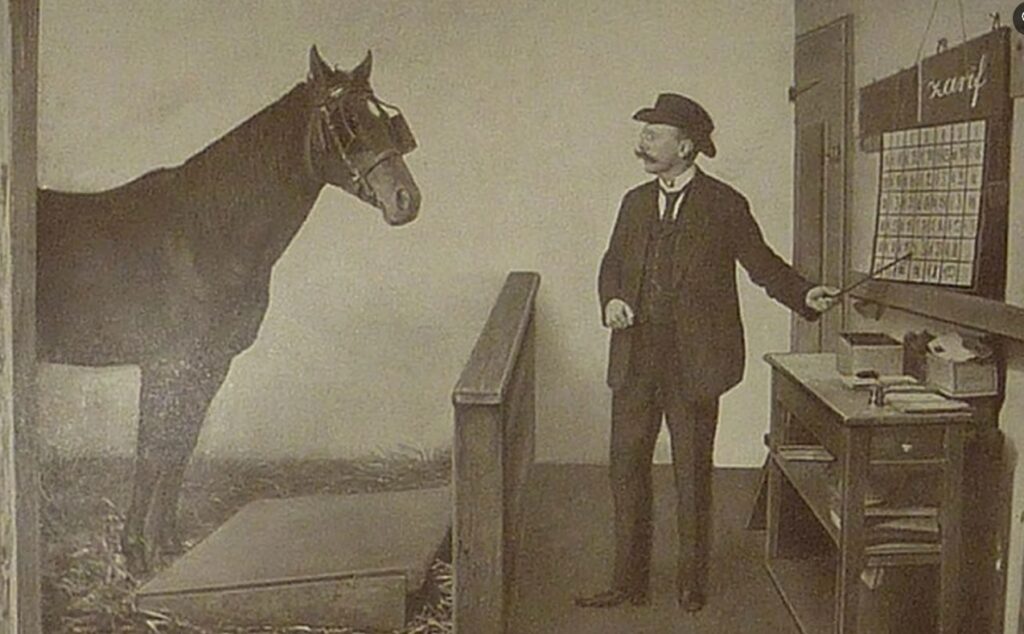
Hans was considered the smartest horse in the world. Image source: bezpodkov.ru
How Hans really guessed the answers
Pfungst conducted a series of rigorous experiments and uncovered a striking pattern. Hans gave the correct answer only when two conditions were met: the person asking the question knew the answer, and the horse could see that person.
There was no telepathy involved. The horse was simply an extraordinarily keen observer. As Hans tapped his hoof, the questioner’s tension would build. The moment the correct number of taps was reached, the person would involuntarily relax — subtly shifting posture, exhaling, or raising an eyebrow. Hans picked up on these microscopic, unconscious body-language cues and knew when to stop tapping to receive a treat. The owner had no idea he was cueing the animal himself.
This discovery became known in science as the Clever Hans effect. It describes a situation in which an experimenter, through poor experimental design, unknowingly influences the behavior of a subject.
How debunking a horse changed the rules of science
Pfungst’s finding was a turning point. It explained most “telepathic” phenomena through ordinary psychology and helped gradually exclude paranormal research from the programs of serious universities.
More importantly, the case permanently changed how experiments are designed. As noted by Phys.org, it was precisely the effort to eliminate such unconscious cueing that drove the development of one of the most important research methods: randomization.
To prevent a researcher’s expectations from distorting results, the assignment of tasks or participants began to be left to chance. Modern researchers follow several strict principles derived from this lesson:
- If a participant in an experiment knows the expected result, they may unconsciously conform to it.
- Even tiny nonverbal signals can completely compromise the integrity of an experiment.
- Any test must be designed to rule out accidental visual or emotional cueing by the observer.
The story of Clever Hans demonstrated that science must protect itself not only from deliberate fraud, but also from the sincere self-deception of the scientists themselves.