Apple has reported its best September quarter ever, with revenue of $114.5 billion, up 12% year over year. Its outlook is less comfortable for buyers. On his first earnings call as CEO, John Ternus called the current rise in memory prices unprecedented. After the report, he told Reuters that the foldable iPhone Duo is in short supply and that Apple cannot predict when that will end. Apple also expects memory shortages to limit Mac and iPad supply this quarter. When an analyst asked whether prices will rise again, Apple’s executives did not give a direct answer.
What you need to know
- Apple’s fiscal Q4 2026 revenue reached $114.5 billion, up from $102.5 billion a year earlier. That beat both Apple’s own guidance of roughly $111.7–113.7 billion and the analyst expectation of $113.3 billion.
- Ternus told Reuters the iPhone Duo is in short supply and Apple cannot predict when supply will match demand. Orders placed on Apple’s website on November 2 showed delivery in January.
- Apple expects December-quarter revenue to grow 7–10%, but gross margin to fall from 47.9% to 45–46%. Memory costs are rising, and Mac and iPad supply will be constrained.
- Asked whether prices would rise again, COO Sabih Khan avoided a direct answer.

John Ternus speaking on stage in front of the Apple logo and a rising revenue chart
Ternus’s first earnings report beat forecasts
Apple’s fourth fiscal quarter of 2026 covered July, August and September. The company earned $114.5 billion in revenue, compared with $102.5 billion a year earlier. That makes it Apple’s best September quarter on record. Over the summer, Apple had guided for roughly $111.7 billion to $113.7 billion, and analysts expected $113.3 billion. The result cleared the top of Apple’s own range.
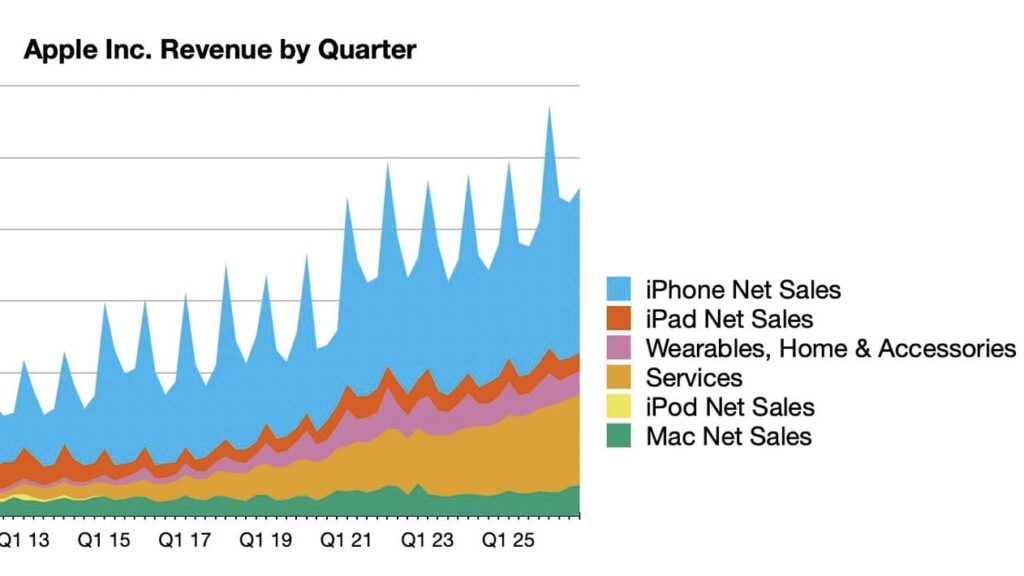
Apple’s quarterly revenue since 2013 by category: iPhone, iPad, Mac, services and wearables
This was Ternus’s first call with analysts as chief executive; Tim Cook handed him the role on September 1. The headline numbers from Apple’s official release:
- Revenue: $114.5 billion (+12%)
- Net income: $30.7 billion (vs. $27.5 billion a year earlier)
- Earnings per share: $2.10 (+14%; analysts expected $1.99)
- Gross margin: 47.9%
- Full fiscal 2026 revenue: $478.8 billion (+15%)
One detail is easy to miss. About one percentage point of margin and 5 cents of earnings per share came from refunded tariff duties. Part of the strong result therefore reflects a one-off benefit rather than sales.
Mac surged, while iPad and wearables slipped
iPhone remained the main driver, bringing in $57.6 billion, up 17% year over year. That figure does not include the iPhone Duo. The foldable went on sale on October 23, after the quarter closed, so its first revenue will appear in the January report. All of this growth came from Apple’s conventional iPhones.
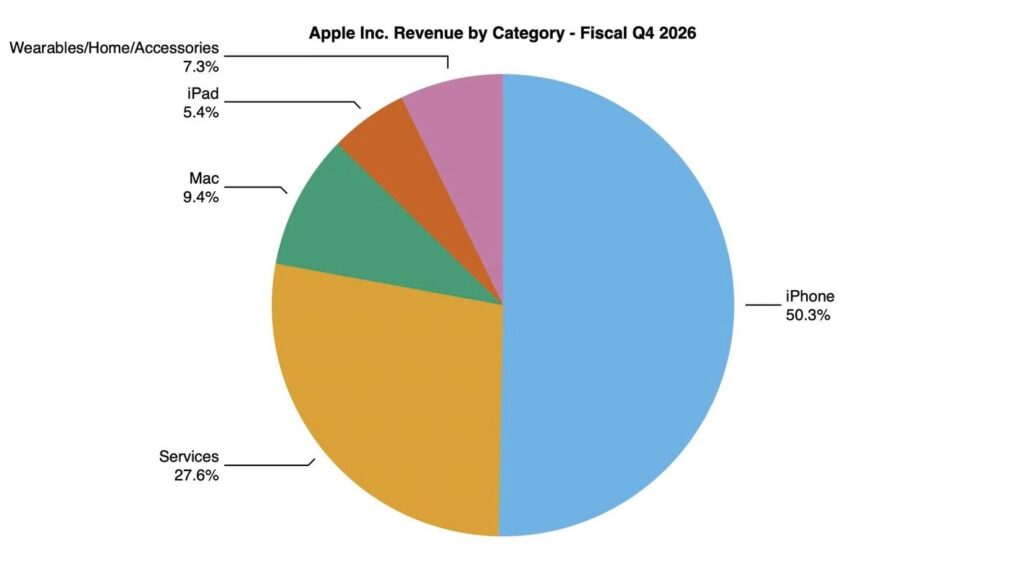
Apple’s fiscal Q4 2026 revenue: half from iPhone, more than a quarter from services
Mac posted the sharpest gain: $10.8 billion, up 24% year over year. According to the source, Macs were in short supply in the spring, and Apple appears to have now shipped the backlog. Services brought in $31.6 billion (+10%), another all-time record. iPad fell 10% to $6.2 billion, and wearables and accessories dropped 8% to $8.3 billion. Apple did not explain the declines. The source author suspects tablet buyers are holding off while they wait for a lineup refresh, but that is speculation.
By region, China stood out with 21% growth, a notable result in a market where Apple had recently been losing ground. Europe grew 11.5% and the Americas 10.2%. Japan was the only region to decline, down 1.4%.
For the December quarter, Apple guides for revenue growth of 7–10%. If that holds, it would be the highest-revenue quarter in the company’s history. The same outlook, however, calls for gross margin to fall from 47.9% to 45–46%. The likely reasons are explained below.
iPhone Duo is supply-constrained, and Apple can’t say for how long
After the report, Ternus told Reuters that the Duo is in short supply right now. He said the company cannot predict when supply and demand will balance. He offered no “by the holidays” or “in a couple of weeks” timeline.
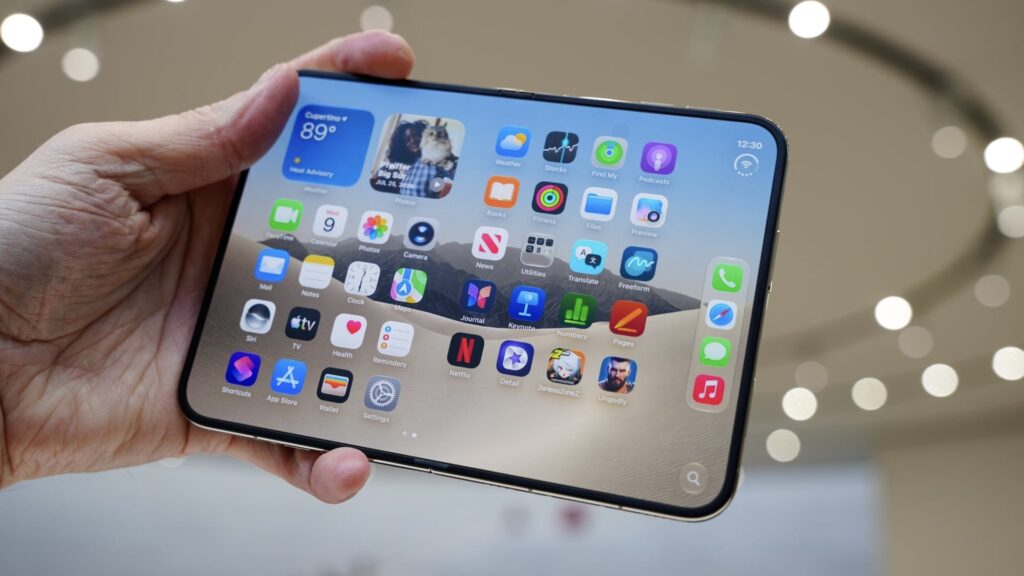
An unfolded iPhone Duo with the iOS home screen on its inner display
Delivery times show the scale of the shortage. An order placed on Apple’s website on November 2 showed delivery in January. Almost no units are available for online in-store pickup reservations. In mid-October, store staff were advised to discourage customers without a pre-order from visiting on launch day. Ternus says production is ramping up and Apple is trying to ship phones as quickly as possible. Apple has not disclosed how many Duo units it has built or sold.
The inner display problem
Ternus also addressed problems with the Duo’s inner screen. He said a “very small percentage” of devices had been returned because of the display, and that all affected customers are receiving replacement phones. A week earlier, Apple acknowledged that some Duo units have an inner-screen issue and asked owners to contact AppleCare. Owners have reported cracks along the hinge that look like a strip of bright pixels. One buyer in Australia said their screen cracked after fewer than 20 openings.
Memory is getting more expensive, and Apple won’t commit on prices
According to the source, Apple cut memory in the iPhone 18 Pro and Duo at the last minute this autumn. After this call, that decision looks easier to understand. According to MacRumors, Ternus described the current rise in memory prices as unprecedented. Memory costs had already risen in the September quarter and will be worse in the December quarter. Ternus said memory purchase prices will keep climbing after that.
For now, Apple is relying on memory it bought earlier at lower prices. It has also secured discounts on some other components, and it raised prices on iPad, Mac and iPhone in June and September. Ternus acknowledged that the benefit from memory bought in advance will fade over time.
What the balance sheet shows
The balance sheet shows how seriously Apple is preparing. Inventory more than doubled year over year to $14.5 billion. Purchase commitments with manufacturers jumped by $33 billion between June and September alone. The source reads this as Apple stockpiling chips before they get even more expensive. Together with the cost of the cloud-based Siri AI, the source sees this as the explanation for the projected margin decline.
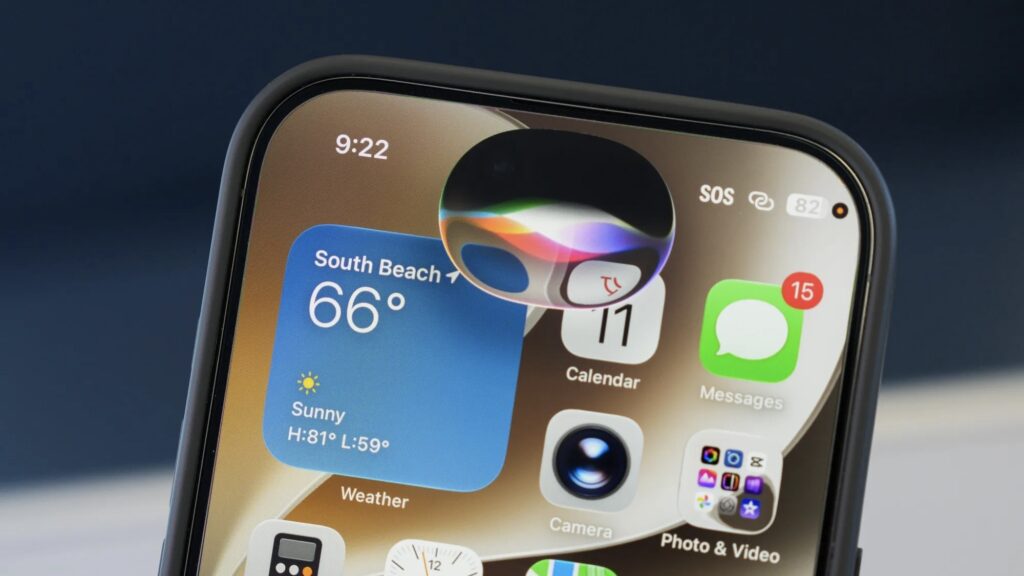
The top of an iPhone screen with the new Siri AI animation above the app icons
Mac and iPad supply will be limited first
Buyers will likely feel this through availability before they see it in prices. In the December quarter, the memory shortage will limit the supply of Mac and iPad. After record Mac growth, that is an unwelcome reversal. Anyone shopping for a new MacBook for the holidays may not find the configuration they want.
The price question Apple didn’t answer
The most important moment for buyers came at the end of the call. An analyst asked directly whether prices would go up again. Chief Operating Officer Sabih Khan took the question and avoided a direct answer, saying neither yes nor no.
Chief Financial Officer Kevan Parekh added that Apple made its past price increases “reluctantly.” He said the company tries to balance short-term and long-term interests and is “managing it well.” The source reads this as Apple not ruling out further increases while also avoiding alarming customers in advance. That is an interpretation, not a company statement.
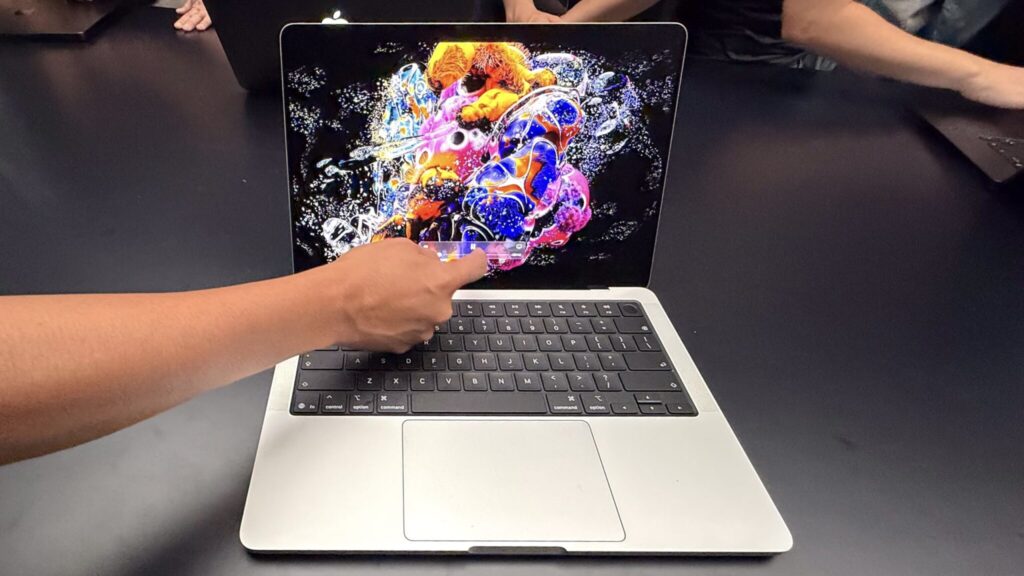
A person touching the touchscreen of a new MacBook Pro
What it means for buyers
Apple’s record is real, but it mainly benefits shareholders. Over the coming months, buyers face long waits for the Duo, constrained Mac and iPad supply, and prices Apple will not promise to hold. The source author advises against chasing a Duo in the first weeks, while it is scarce even in Apple Stores. Apple’s next report is expected at the end of January. It should give the first indication of how the Duo sold over the holidays.