A Telegram sticker weighing just 269 bytes is circulating in chats and forcing the mobile client to crash. According to the source report, it is not a virus, a hack, or a data-theft tool: it is a deliberately malformed image that the app cannot render, and the failure takes the whole client down with it. The problem needs no action from the victim other than receiving the sticker in a conversation, but the source stresses that the damage stops at a crash. Messages, contacts, files, and the account itself are reported to be unaffected.

Telegram crash message on an iPhone
What you need to know
- The sticker is only 269 bytes but contains a star shape whose parameters demand roughly 1038 vertices, which the mobile client cannot render.
- No clicks, downloads, or updates are required: simply receiving the sticker in a chat can trigger the crash.
- The source reports no account compromise, message theft, or remote code execution, only a denial-of-service-style crash.
- As of the source’s publication, Telegram had not issued an official statement, and the affected versions and platforms had not been confirmed.
How a tiny sticker crashes the whole app
The issue lies in the geometry embedded inside the sticker. The object contains what looks like an ordinary star, but with a parameter requiring a number of vertices on the order of ten to the thirty-eighth power. The mobile client dutifully tries to draw the figure and compute every one of those points, runs out of resources, and terminates. The source credits a Habr user under the handle denis-19 with first spotting the bug and describing its mechanics.
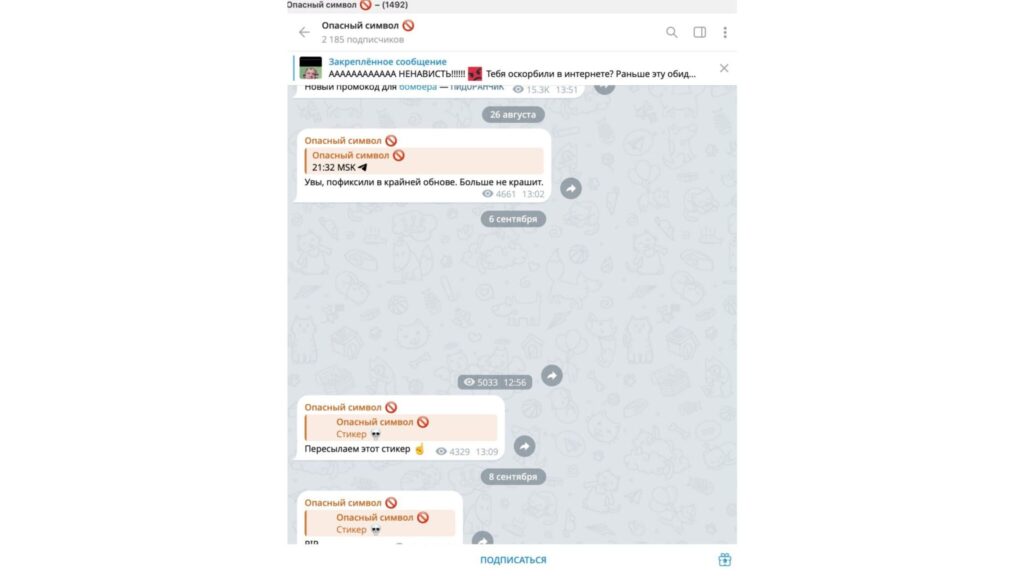
In a chat, the sticker itself appears as empty space
What makes this unpleasant is that no active step is needed on the recipient’s side: no link to tap, no file to download, no update to accept. The sticker only has to arrive in a conversation. Since anyone with a Telegram account can be sent a sticker, the pool of potential targets is very wide.
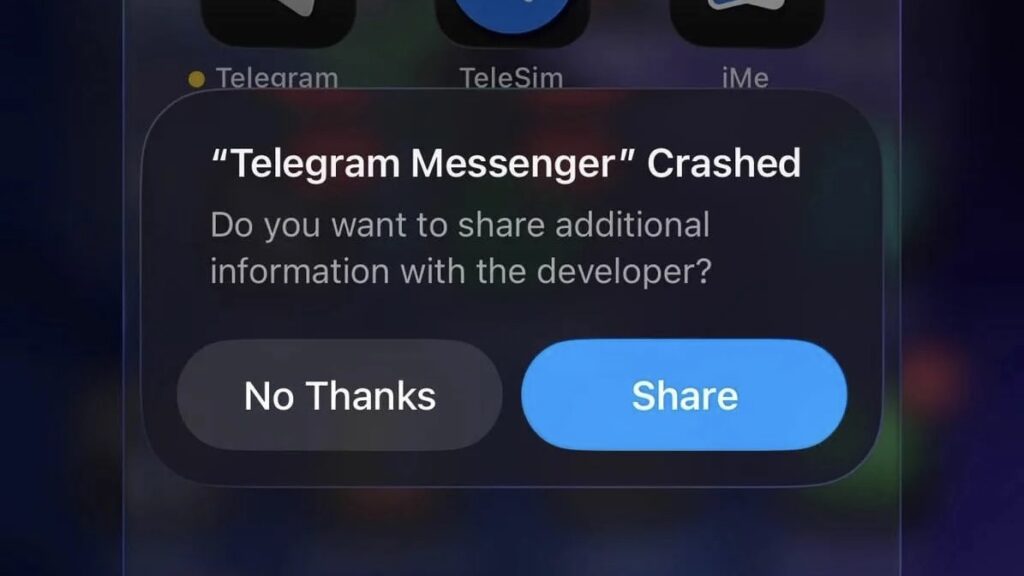
The error that can be reported to the developers
The reassuring part, per the source, is that nothing worse than a crash occurs. There is no account takeover, no reading of private conversations, and no remote code execution. This is a classic denial-of-service scenario: the goal is not to steal data but to knock a specific program out of action. Only the client’s ability to run is affected.
Why the bug keeps coming back
The sticker’s behavior is described as inconsistent. For some users Telegram crashes immediately on launch; for others it fails only when the specific chat containing the malformed star is opened. The frustrating part comes next: after a crash, the app often reopens straight into the same conversation and tries to render the same star again. The result is a closed loop: open, crash, relaunch, land in the same chat, crash again.
The source describes two ways to break the loop: clear the app’s cache, or delete the problematic chat entirely. Both sound simple, but doing either is hard when the client dies every few seconds. The steps below reflect the source’s instructions; menu wording may differ depending on your platform and app version.
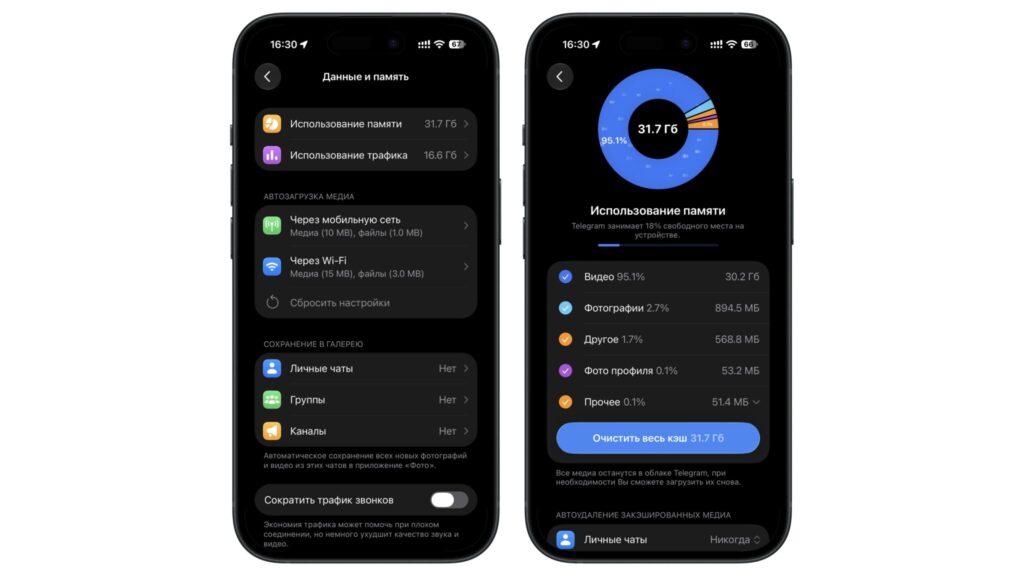
Clearing the cache in Telegram
- Open Telegram’s settings.
- Select “Data and Storage.”
- Go to “Storage Usage.”
- Tap “Clear Entire Cache.”
- If that does not help, or the app crashes immediately on launch and never lets you reach settings, uninstall and reinstall Telegram.
Who is at risk, and does it affect iPhone?
Here the picture is thin. The source says it is not yet known which Telegram versions are affected or which platforms are hit, whether Android, iOS, or the desktop client. At the time of publication there was no official statement from Telegram and no information about when a patch might arrive. The source argues that iOS should not be ruled out: the underlying mechanism is platform-agnostic, because it depends on rendering an impossibly complex shape rather than on any particular operating system. That reasoning is plausible but remains unconfirmed.
Telegram sign-in screen on an iPhone
Sticker-related problems in Telegram are not new, the source notes. An independent researcher previously described a similar bug in the desktop client’s handling of animated stickers. Earlier this year the industry also discussed a separate vulnerability tracked as ZDI-CAN-30207, initially rated 9.8 on the CVSS scale and later downgraded to 7.0. Reports of crashes caused by specific sticker packs appear on the messenger’s bug tracker with some regularity.
What to do until a patch arrives
Until an official fix ships, protection comes down to basic caution. Specialists cited by the source advise not opening chats containing suspicious stickers from unknown senders and keeping an eye on app updates in the official stores. The source author compiled a short checklist:
- Do not open conversations containing unfamiliar stickers from strangers.
- Keep Telegram updated to the latest version.
- If the app is stuck in a crash loop, clear the cache or delete the problematic chat.
- Do not panic: according to the report, your data and account are not affected.
The 269-byte sticker is a reminder that a threat does not have to be a sophisticated virus. A single badly constructed image can bring down an app used by hundreds of millions of people. It is some comfort that the damage stops at denial of service, but the episode leaves an uncomfortable aftertaste. Whether and when Telegram neutralizes its little “death star” remains to be seen.