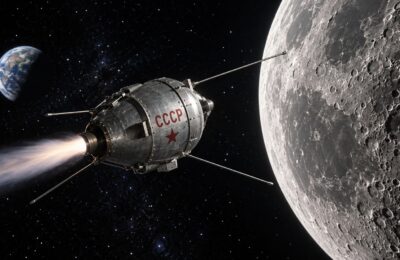
Did you also think quicksand would be a much bigger problem?
As children, many of us seriously believed that adult life would be like an adventure movie. You had to watch out for quicksand, never look a hypnotist in the eye, and under no circumstances wade into murky water. Cartoons, adventure films, and TV shows spent decades convincing us that the world was full of exotic threats lurking around every corner. The only problem is that real life turned out to be much more boring, and most childhood dangers were either greatly exaggerated or only existed in the movies. Meanwhile, the real adult problems — burnout, anxiety, loans, insomnia, and endless service passwords — somehow never got properly explained.
Quicksand — the danger we feared all through childhood
If you believed movies from the 1980s and 1990s, quicksand was one of humanity’s greatest threats. The hero would inevitably fall into a suspiciously flat patch of ground and slowly disappear beneath the sand, dramatically waving their arms. In real life, it turned out to be far less dramatic.
Real quicksand is a mixture of sand, water, and silt that behaves like a thick liquid. It can indeed make movement difficult and suck in your legs, but it’s extremely hard for a person to fully drown in it. The reason is simple: the human body is lighter than this mixture. Geologists and rescuers have long explained that the main rule is don’t panic and move slowly, gradually freeing your legs.
Can piranhas really devour a person in a minute?
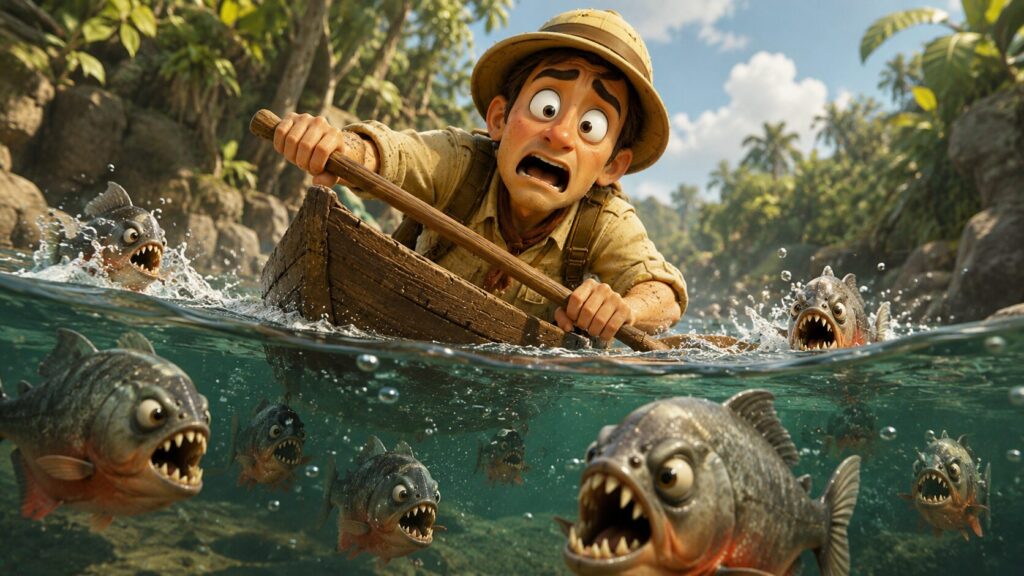
Everyone knew piranhas were toothy aquatic devourers of everything. And were terrified when something in murky water touched their leg.
Piranhas have a similar story. Movies turned them into “living blenders” that could reduce a person to a skeleton in seconds. In real life, piranhas are nothing like the crazed monsters from films — most species are quite cautious. Yes, they have powerful jaws and sharp teeth, but mass attacks are rare. Scientists note that they become more aggressive during food shortages or when protecting their young.
Interestingly, the image of “bloodthirsty piranhas” was largely cemented after Theodore Roosevelt’s visit to South America. Local residents deliberately staged a demonstration with starving fish to impress their guests. The story spread through books and eventually made its way to Hollywood.
Why the Bermuda Triangle turned out to be not so scary
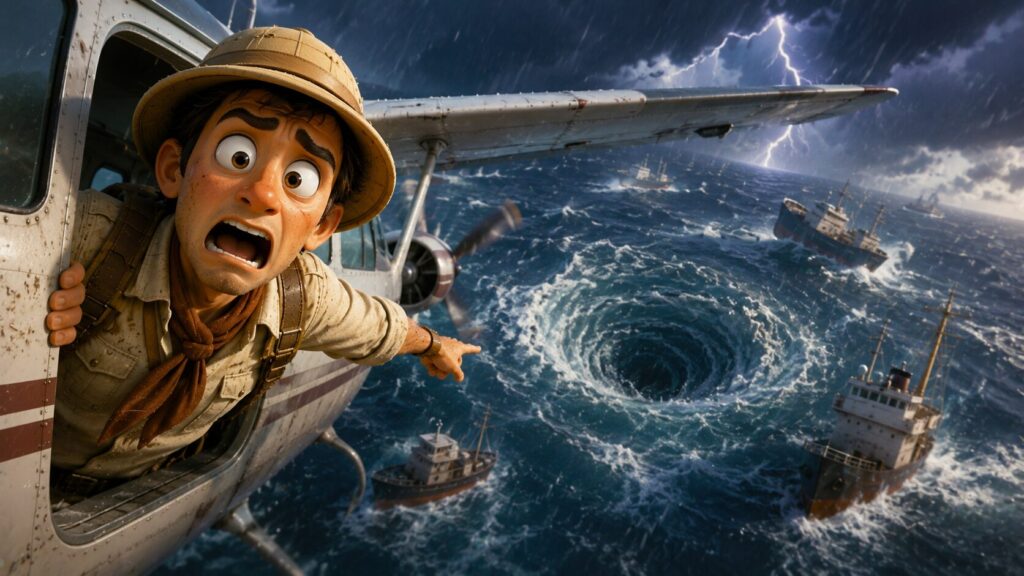
As a child, the Bermuda Triangle seemed like something mystical. Ships disappeared, planes went missing, even compasses didn’t work — nothing could enter it and come out normally.
For kids of the 1990s, the Bermuda Triangle was practically a portal to another dimension. Ships vanished, planes disappeared, compasses went haywire. It seemed like the most mysterious place on the planet.
In reality, everything turned out to be much simpler. The area is indeed challenging for navigation: there are strong storms, reefs, and the active Gulf Stream current. At the same time, accident statistics there don’t differ much from other busy maritime routes. Moreover, the Bermuda Triangle doesn’t even have official boundaries — different authors draw it differently. And honestly, when was the last time you even heard about it?
Where did the myth of spontaneous human combustion come from?

After children had already been warned not to run with scissors, talk to strangers, or sit too close to the TV, another fear appeared — spontaneous combustion.
A separate childhood nightmare — spontaneous human combustion. In old TV shows, it looked like a completely random and inexplicable death: a person was just sitting in a chair and suddenly burst into flames.
Analyses of such cases show that there was almost always an external source of fire: a cigarette, candle, fireplace, or faulty heater. And the strange effect where only the person burns without a fire spreading around them is explained by the so-called “wick effect”: clothing and fatty tissues sustain slow burning, resembling a candle.
At the same time, spontaneous combustion as a physical phenomenon does exist, but it applies to materials like oily rags, hay, or coal — not people.
Can hypnosis make a person do anything?
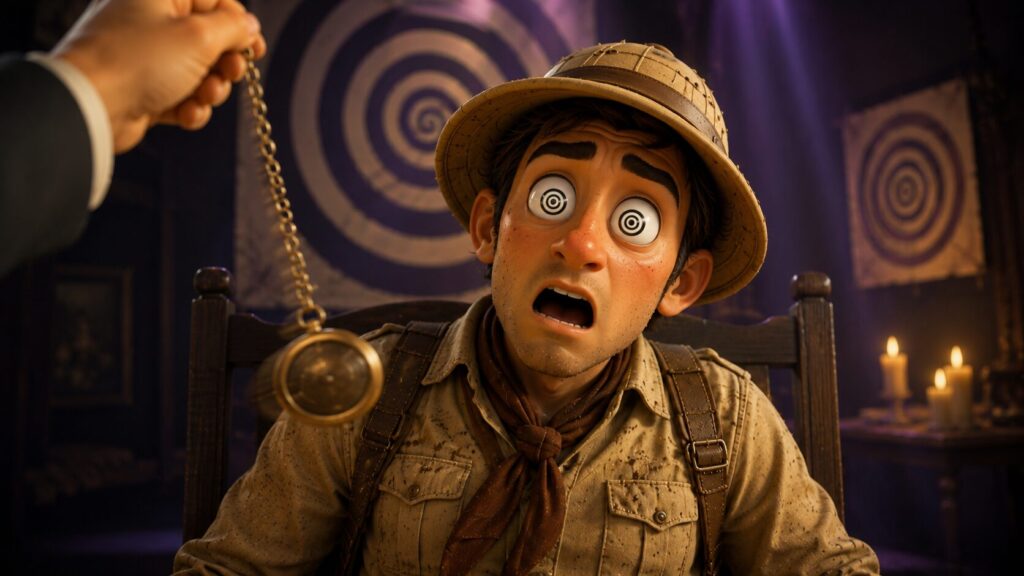
In children’s movies, the villain waves a pocket watch, whispers: “Your eyelids are getting heavy,” — and suddenly a perfectly normal person turns into a jewel thief, a chicken impersonator, or an obedient minion.
Another popular childhood fear was hypnosis. Movies convinced us that all it took was watching a pendulum, and a person would instantly turn into an obedient puppet.
In practice, it all works quite differently: hypnosis doesn’t shut down your personality and doesn’t erase moral boundaries. It’s a state of heightened concentration and suggestibility, but a person still retains control over themselves. Advertising, social pressure, and manipulation have a much stronger effect on people’s behavior — they just don’t look as dramatic as in the movies.
Why carnivorous plants don’t hunt humans
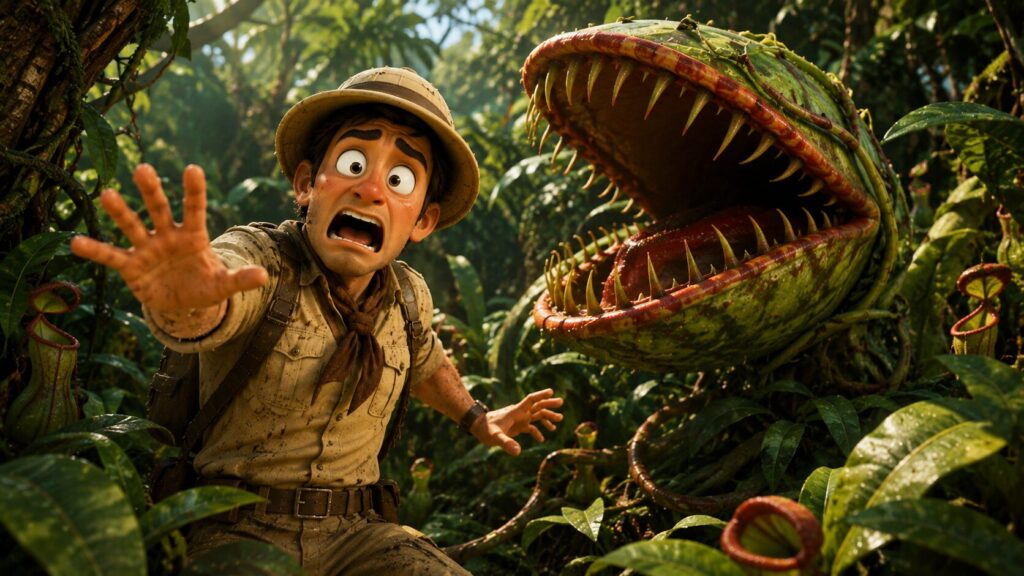
Carnivorous plants that could eat a person gave the imagination no rest, whether at home or on a walk.