The highest points where people live: top extreme habitations
At an altitude of 5,000 meters, there is half as much oxygen as at sea level, and the temperature hovers near zero year-round. Surprisingly, people here don’t just survive — they build homes, herd sheep, and mine gold in places where most of us would be dreaming of an oxygen mask after just a couple of hours. Here are five of the highest inhabited places on the planet.
La Rinconada, Peru — the highest city in the world
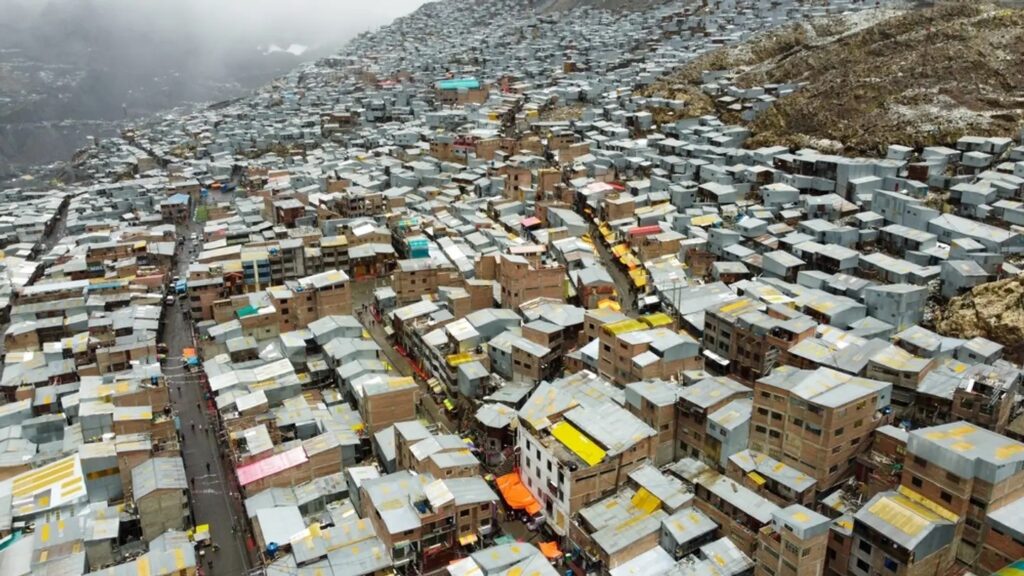
La Rinconada is located in the Peruvian Andes at an altitude of about 5,100 meters above sea level. It is the highest permanent settlement on the planet. By various estimates, between 12,000 and 50,000 people live here — the exact figures vary because official censuses give one set of numbers, while journalists who have visited the site report different ones.
Gold brought people here. The settlement appeared several decades ago as a temporary miners’ camp, but in the early 2000s, when gold prices surged sharply, the population grew by 230%. Miners work under the “cachorreo” system: 30 days of unpaid labor in the mine, and at the end — the right to carry away as much ore as you can. How much gold is in it, a person only finds out at home. Many are disappointed.
La Rinconada, Peru
The city has no sewage system, no waste collection, and no proper water supply. Residents keep warm by burning trash, and water sources are contaminated with mercury from the mines. Chronic mountain sickness is commonplace here — it causes dizziness, headaches, and can even lead to death. Crime rates are high, and law enforcement is essentially almost nonexistent.
Tuiwa, Tibet — a herders’ village on the shore of a sacred lake
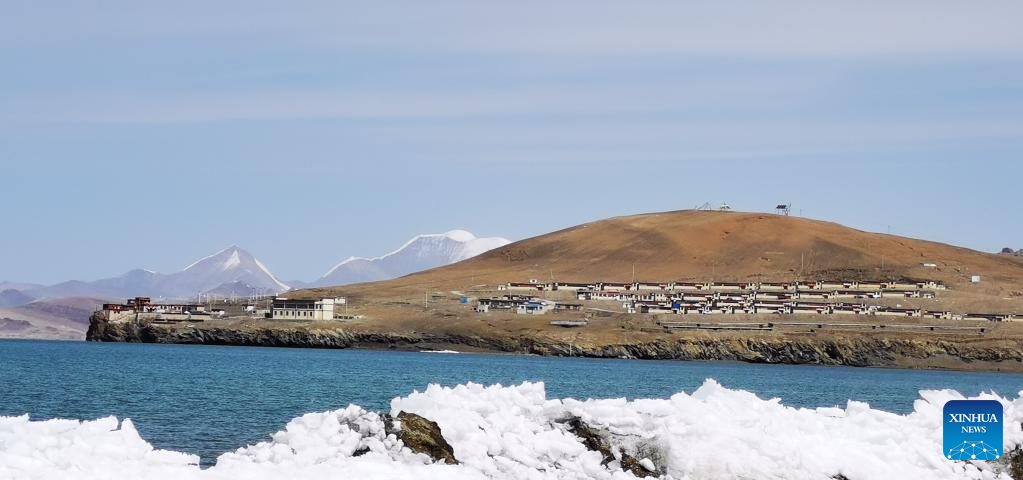
Tuiwa is the second-highest permanent settlement in the world. The village sits on the shore of the turquoise Puma Yumco lake at an altitude of 5,070 meters. Unlike La Rinconada, this is not a mining camp but an ancient Tibetan settlement where people have lived in harmony with nature for a very long time. It is in places like these that genetic adaptation to altitude becomes especially apparent.
The main occupation is herding. In winter, when the lake freezes, herders drive their flocks of sheep to an island in the middle of Puma Yumco, where the grass remains green. In spring, before the ice melts, the flocks are brought back. This tradition has been passed down from generation to generation — it has existed for thousands of years.
Tuiwa, Tibet, China
Life here is beautiful but harsh. The average life expectancy in the village is less than 50 years, and many residents still suffer from the effects of oxygen deprivation. In recent years, authorities have proposed relocating the village, but some residents have refused to leave their homeland. Especially since right by the lake stands the 500-year-old Tuigongba temple, where local residents spin prayer wheels and burn incense.
Rongbuk Monastery at the foot of Everest
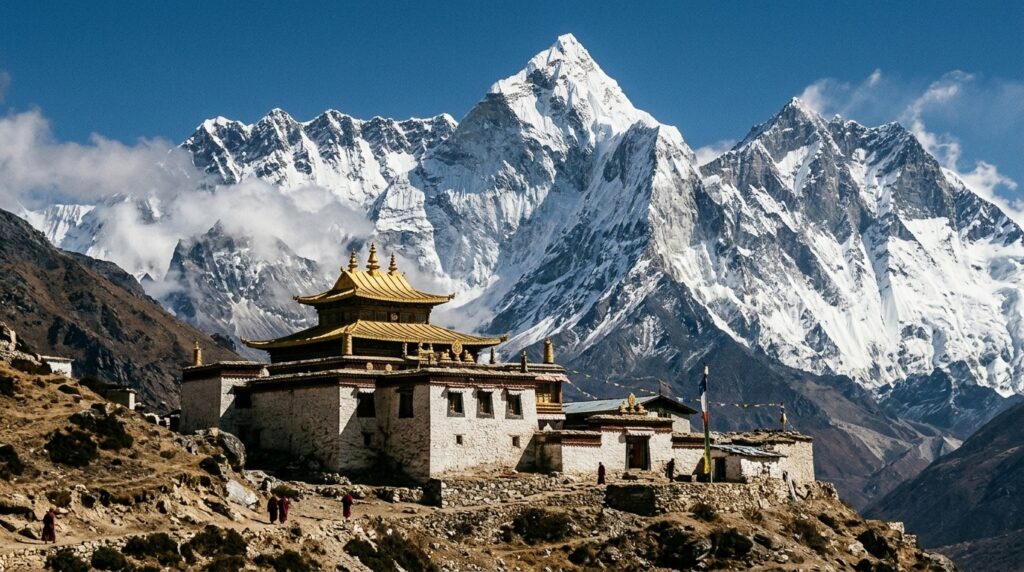
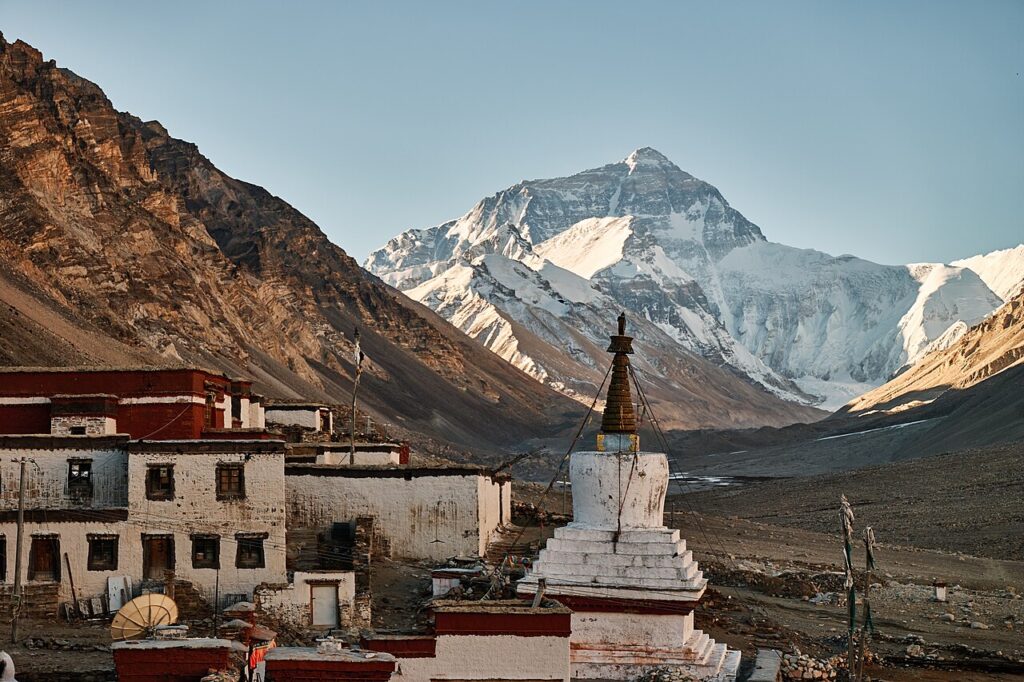
If there were a ranking of places where people live differently, Rongbuk would hold a special place in it. This Buddhist monastery is situated at an altitude of about 4,980 meters on the northern slope of Everest — and is considered one of the highest monasteries in the world.
Rongbuk Monastery, Tibet, China
The monastery was founded in 1902 by Lama Ngawang Tenzin Norbu at a site where Buddhist monks and nuns had been meditating in caves since the 18th century. An unusual detail: monks and nuns live and meditate here together — a tradition that has been preserved since the times of shared cave use.
Once about 500 monks and nuns lived here; now only a few dozen remain. The average annual temperature around the monastery is minus 17.5 °C, and the record low reached −55.7 °C. This is one of the coldest permanently inhabited places outside of Antarctica. It is so cold in the mountains not only because of the climate: at high altitude, pressure, wind, and air behave differently. Despite this, Rongbuk remains an important pilgrimage site for Sherpas and climbers heading to the Everest Base Camp.
Lobuche, Nepal — the last stop before Everest
The small settlement of Lobuche is located at an altitude of 4,940 meters in Nepal’s Khumbu region. It is one of the last stops for trekkers heading to the Everest Base Camp from the Nepalese side, from where the path to the highest point on the planet begins.
Lobuche is home to the Sherpa people, who have lived here for centuries. Sherpas practice Buddhism and maintain a deep spiritual connection with the mountains. Before climbing, mountaineers often stop here for a blessing. The village regularly hosts carnivals and religious festivals.
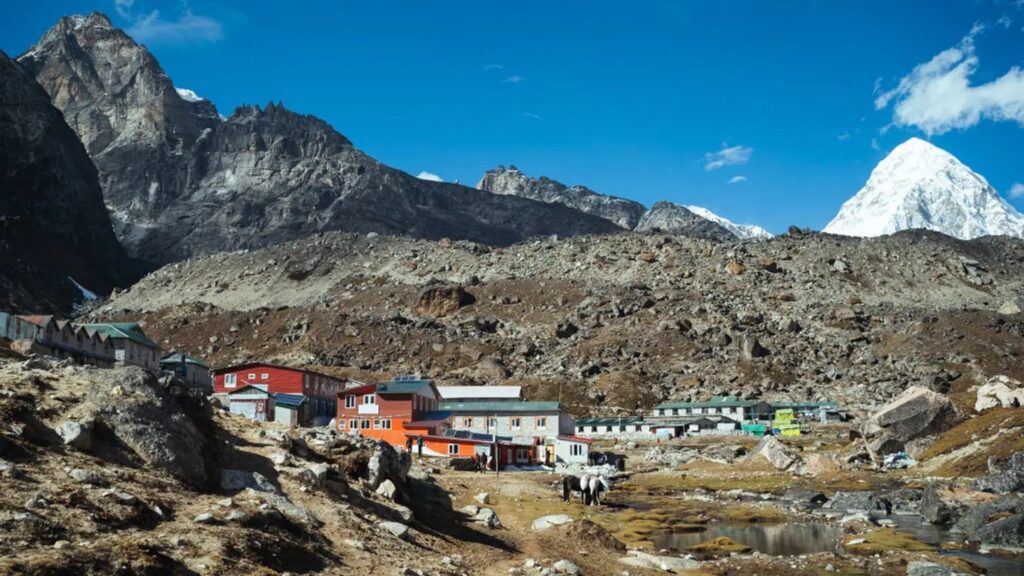
Lobuche, Nepal
For travelers, there are simple but quite comfortable lodges and the ever-present dal bhat — a classic Nepali dish of rice and lentil soup, traditionally eaten before heading higher.
Wenquan, Qinghai, China — a station on the highest railway
Wenquan is located at an altitude of about 4,870 meters and is a tiny outpost on the Qinghai-Tibet Railway — the highest railway in the world. The settlement was founded in 1955 and consists of literally just a few buildings against the backdrop of a vast mountain plateau.
Few people stop here, but those who have visited describe breathtaking views: dusty plains, snow-capped ridges on the horizon, and wild nature all around — snow leopards, antelopes, and wild yaks. Nearby there are hot springs, which gave the settlement its name (wenquan in Chinese means “hot spring”).
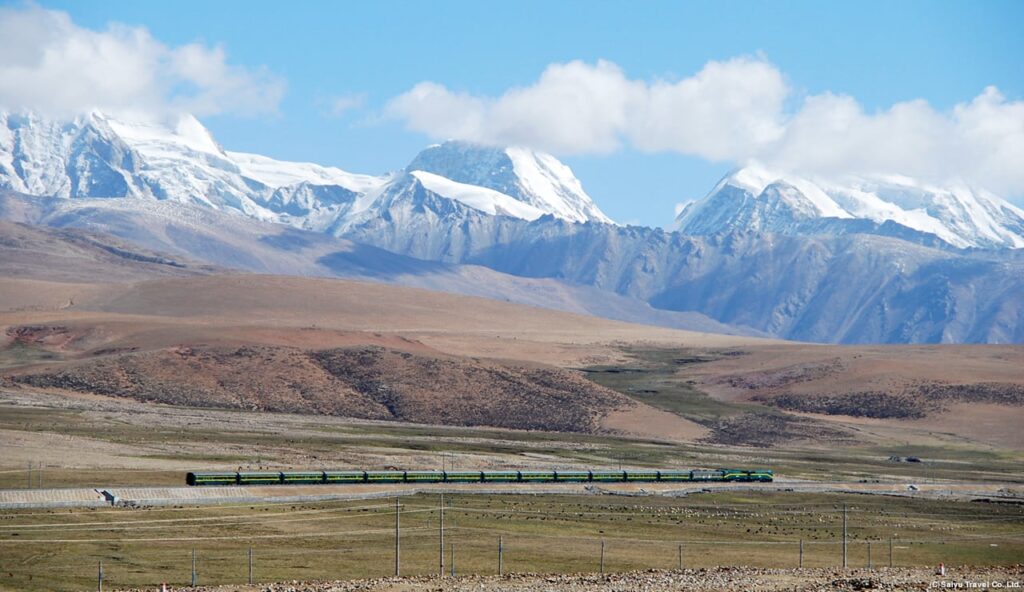
Wenquan, Golmud, Qinghai, China
How people survive in the world’s highest settlements
The International Society for Mountain Medicine defines “high altitude” as anything above 1,500 meters above sea level. At such elevations, oxygen levels already drop noticeably, and it becomes colder and drier. But our bodies can adapt quite quickly: just a couple of weeks at altitude is enough for changes in the blood to persist for several more months — red blood cells become more resilient and better at retaining oxygen.
And people who have spent their entire lives at altitude (such as the Sherpas) have adapted to thin air at a genetic level. They carry gene variants (in particular, EPAS1) that help the body use oxygen more efficiently. Where a lowlander would be gasping for breath, a mountain dweller feels perfectly fine.
That’s how different “normal life” can be. Some are drawn upward by gold, others by faith, and still others simply because the mountains are their home.