Xiaomi head Lu Weibing confirmed during a live stream: the new Xiaomi XRING chip will be released this year. He didn’t provide specifics — no name, no specs — limiting himself to calling it “very powerful.” But for those watching how the company is trying to break free from its dependence on Qualcomm and MediaTek, this signal is enough. As a reminder, the first 10-core XRING O1 processor is already running in the brand’s smartphones and tablets, and now the lineup is preparing for a serious step forward. Here’s what we know about the updated Xiaomi chipset.
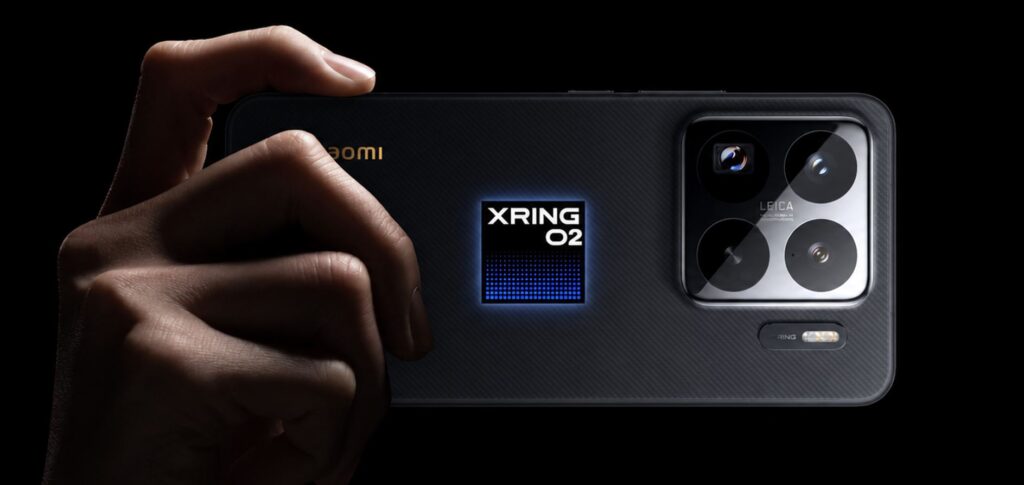
Xiaomi’s new processor is coming soon. First details
New Xiaomi XRING Processor — What We Know
Lu Weibing didn’t reveal a commercial name, and technical details also remained behind the scenes. However, he confirmed the main thing: the development of Xiaomi’s own mobile chipsets is continuing, and in 2026 the lineup will enter a new stage. He also asked people not to believe every rumor online — official information will come in due time.
There haven’t been serious details about the new chipset yet. But what matters is that it’s in development
As a reminder, the first flagship Xiaomi XRING O1 chip shipped in over a million devices, as company head Lei Jun previously confirmed. This means that Xiaomi’s first processor turned out to be not a one-time experiment, but the beginning of a long-term platform. For users, the conclusion is simple: the company is seriously building its own processor ecosystem. In the long run, this could deliver more refined optimization of HyperOS for “native” hardware — similar to how Apple tailors iOS for its chips. Xiaomi is currently actively making improvements to its OS.
How XRING O1 Differs from Snapdragon and MediaTek
To understand what to expect from the new chip, it’s helpful to recall where it all started. XRING O1 is Xiaomi’s first full-fledged flagship processor, released in 2025. It debuted in the Xiaomi 15S Pro and the Xiaomi Pad 7 Ultra and Pad 7S Pro tablets.
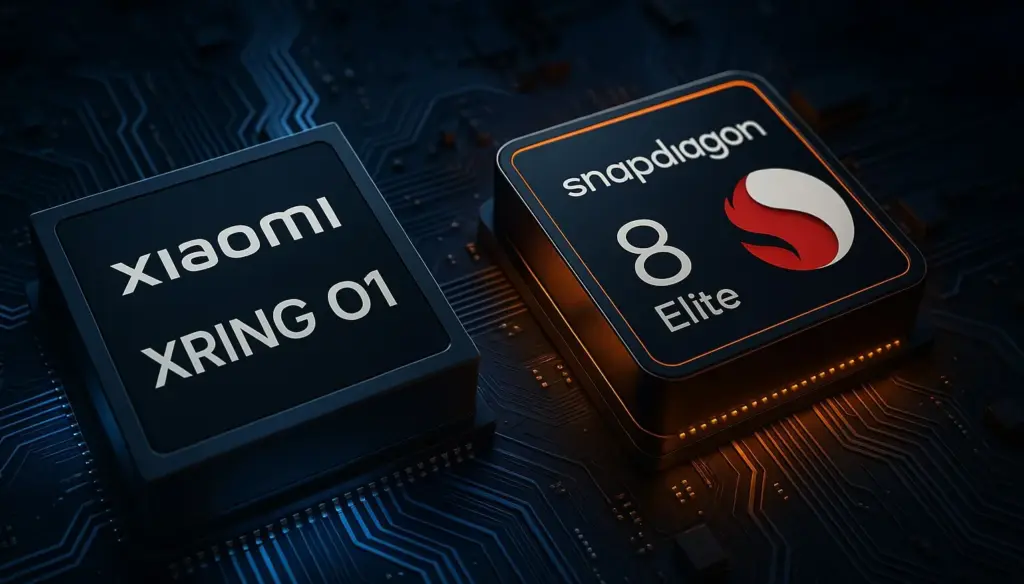
The previous chipset performed quite well against the 8 Elite
The chip is built on TSMC’s second-generation 3nm process. Inside — 19 billion transistors and 10 cores: a pair of powerful Cortex-X925, four Cortex-A725, and four more energy-efficient cores. Graphics are handled by a 16-core Immortalis-G925.
In terms of performance, the O1 competes with Snapdragon 8 Elite and MediaTek Dimensity 9400, although it falls behind Qualcomm in a number of benchmarks. The main highlight is Xiaomi’s proprietary neural processor at 44 TOPS and its fourth-generation image processing module. The graphics subsystem, however, received criticism for its lack of a system-level cache (SLC) — a shared memory buffer that speeds up data exchange between chip blocks.
XRING O3 Processor Specifications
According to rumors, the next chip won’t be XRING O2, but rather the XRING O3 processor — Xiaomi is skipping one generation. Important: this is a leak, not official data. Here’s what’s being reported:
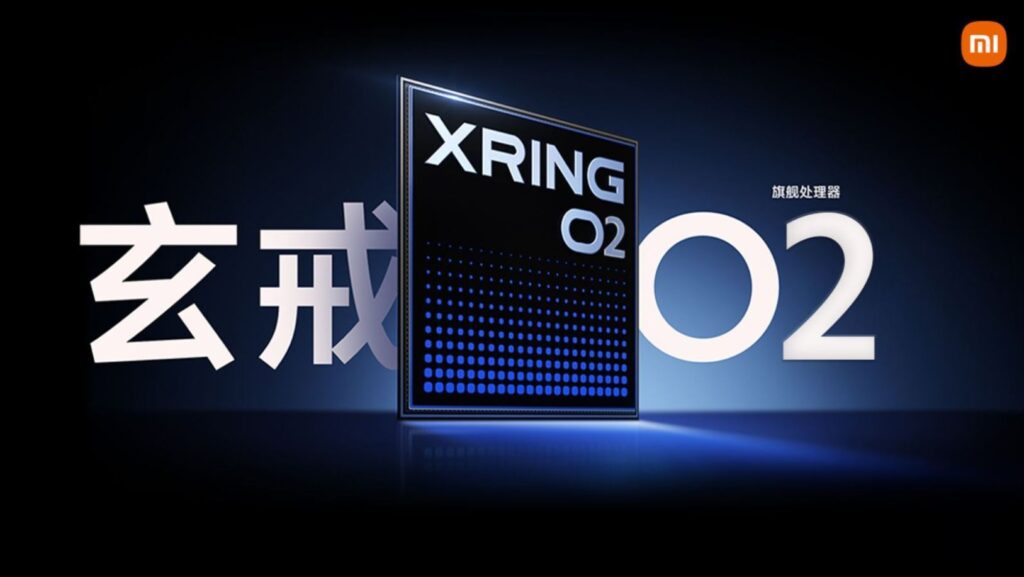
Xiaomi’s new chip will be an important step forward
- Clock speed up to 4.05 GHz
- New three-cluster processor architecture instead of the usual four-cluster design
- Unusual core structure: Prime, Titanium, and Little — without the traditional “big” core cluster
- Small cores with frequencies up to 3.02 GHz
- GPU frequency around 1.5 GHz with a performance boost of about 25%
- Support for 9600 MT/s DRAM
- Initially — for the Chinese market only
If the leaks are accurate, Xiaomi is trying an unconventional core layout, significantly different from the usual Arm-based solutions. The Prime + Titanium + Little scheme instead of the typical “big” core cluster represents a different approach to balancing performance and battery life. Whether it will work — we’ll only see in real-world tests.
Which Device Will Get the New XRING Processor
According to leaks, the first device to get the XRING O3 will be the Xiaomi MIX Fold 5. Yes, the same one that was reportedly shelved last year. The device has been spotted in the Mi Code database under model number 2608BPX34C and internal designation Q18. In Xiaomi’s numbering system, the “18” series is reserved for foldable models.
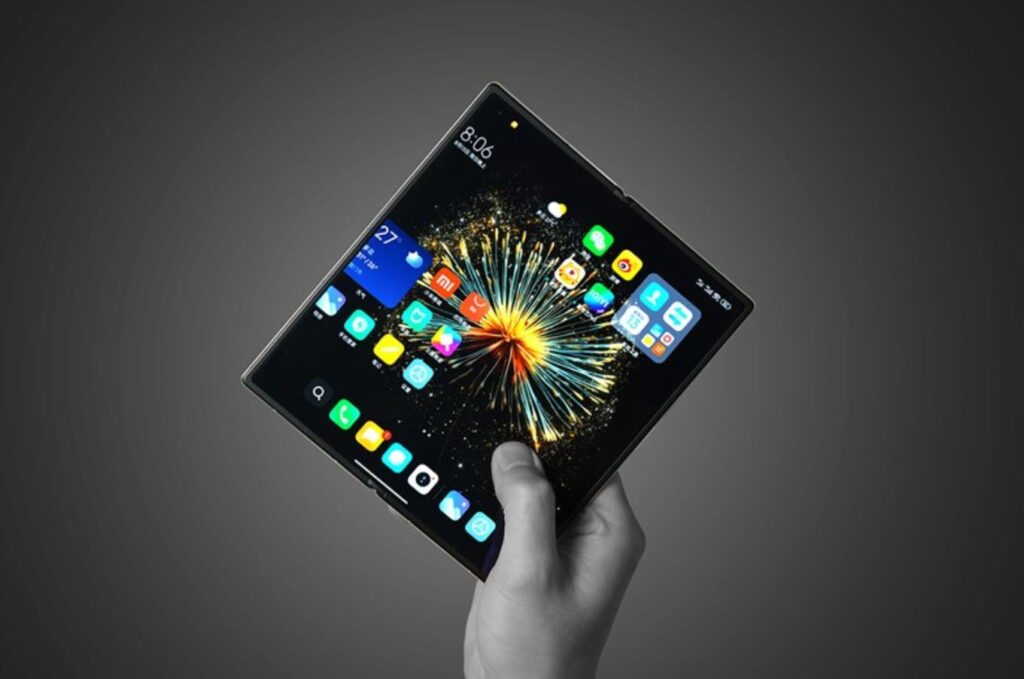
The new chip will debut in a foldable smartphone, not the S-series
The expected release window is Q3 2026, likely in July-August. However, the final device name is still uncertain: it could launch as the Xiaomi 17 Fold or even as a tri-fold device similar to Samsung’s.
The first XRING O1 chip already showed that Xiaomi is capable of making competitive hardware, albeit with caveats regarding graphics and heat management. For buyers, this is an interesting trend for now, rather than a reason to start saving up for a purchase. Besides, more competition means lower prices and a wider selection for everyone.