It turns out that a love of meat is not the main secret to longevity
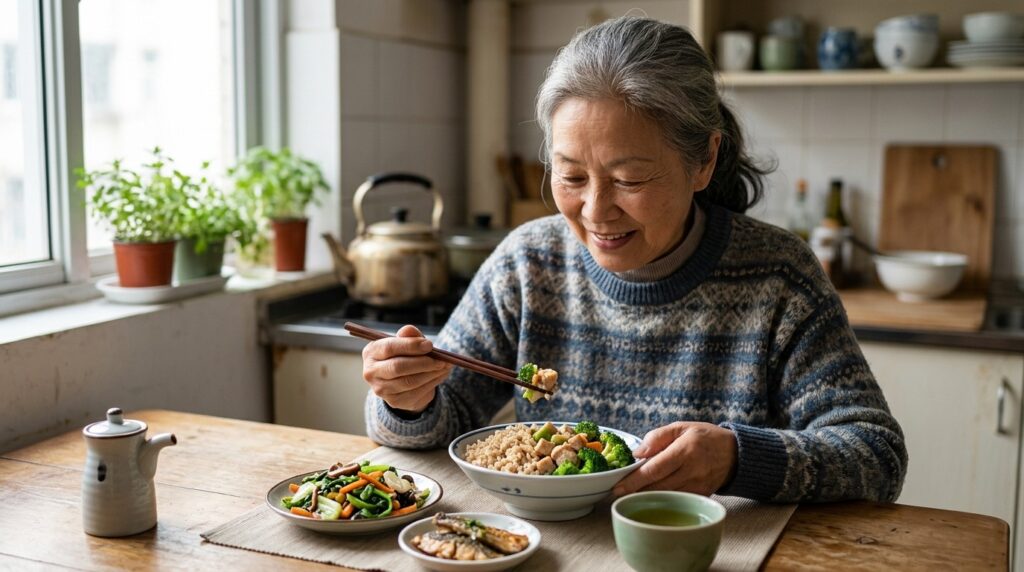
A new study involving more than 5,000 elderly people in China has caused a stir. It turned out that women who loved meat more often lived to 100 years than vegetarians. But before drawing conclusions, it’s worth looking into the details. Because they turn the whole picture upside down.
Study of centenarians in China
Chinese scientists analyzed data from one of the world’s largest studies of elderly people — the Chinese Longitudinal Healthy Longevity Survey. They compared 1,459 people who lived to 100 years with 3,744 people aged 80–90.
At first glance, the result looks unambiguous: among women, those who ate meat every day were 44% more likely to reach their 100th birthday compared to vegetarians. No such association was found among men.
But here’s the catch: this difference applied only to women with underweight. Among those whose weight was normal or elevated, no connection between meat consumption and chances of living to 100 was found.
Why low weight is more dangerous in old age than in youth
In young and middle age, excess weight is considered a risk factor because it is associated with heart disease, diabetes, and other problems. But after 80, the situation reverses. In elderly people, slightly higher weight is often associated with better health indicators and survival rates.
The reason is simple. As a person ages, they lose muscle mass. If their weight is too low at the same time, the body simply lacks protein to maintain muscles, calories to run the immune system, and nutrients to repair tissues. Underweight in elderly people is one of the serious risk factors that is often underestimated.
This is precisely why underweight vegetarian women ended up in the most vulnerable group. It’s not that meat has some magical power, but rather that without it, elderly people find it harder to get enough calories and protein.
The danger of protein deficiency after 80
With age, the need for protein does not decrease. On the contrary, elderly people need more protein than current guidelines recommend. Protein is essential for maintaining muscles, bones, immunity, and the body’s ability to recover from illness.
The problem is that many elderly people eat less than they need. This is because their appetite decreases, dental problems arise, and cooking becomes more difficult. If at the same time a person follows a vegetarian diet but doesn’t ensure it’s balanced, the risk of protein deficiency increases. One study of more than 65,000 people showed that vegetarians are more likely to experience fractures, possibly due to a lack of calcium and protein.
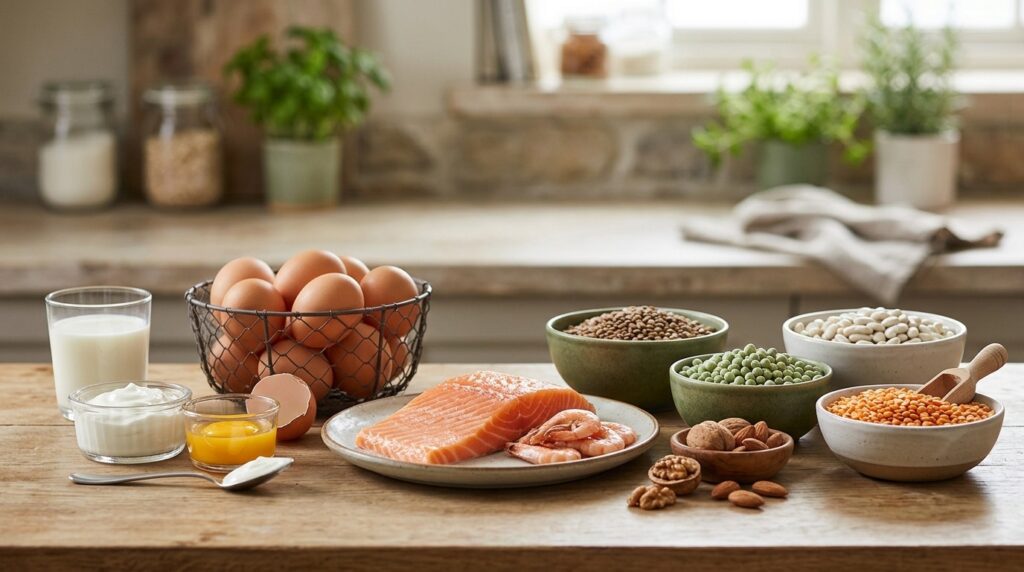
Protein-rich foods: fish, eggs, dairy products, and legumes
Notably, vegetarian women who ate fish, eggs, or dairy products lived to 100 with the same probability as meat-eaters. So the key factor for longevity is not meat itself, but a sufficient amount of animal protein and calories from any sources.
Why meat is not beneficial for everyone
This study has several serious limitations that are important to understand.
First, the study shows only an association between two facts, not a cause-and-effect relationship. It’s possible that women who ate meat were generally healthier and more affluent, which is what allowed them to live longer.
Second, the scientists assessed participants’ diets only in old age. How these people ate at 40, 50, or 60 is unknown to anyone but themselves. And yet, nutrition throughout one’s entire life affects health no less than diet in old age.
Third, the results were obtained in a specific population — among elderly Chinese people, whose diet, lifestyle, and genetics may differ from Russian or European realities.
Finally, numerous other studies show that vegetarian and plant-based diets are associated with lower risks of heart disease, stroke, type 2 diabetes, and obesity, and there is also evidence of protection against cancer. Processed meat and red meat in large quantities, on the contrary, are associated with a shorter lifespan.
Balanced nutrition in old age
The authors of the study, published in The American Journal of Clinical Nutrition, themselves emphasize that a balanced diet with sufficient amounts of both plant and animal foods is important for a long and healthy life. It’s not meat that makes people centenarians — it’s a sufficient amount of calories, protein, and other nutrients.
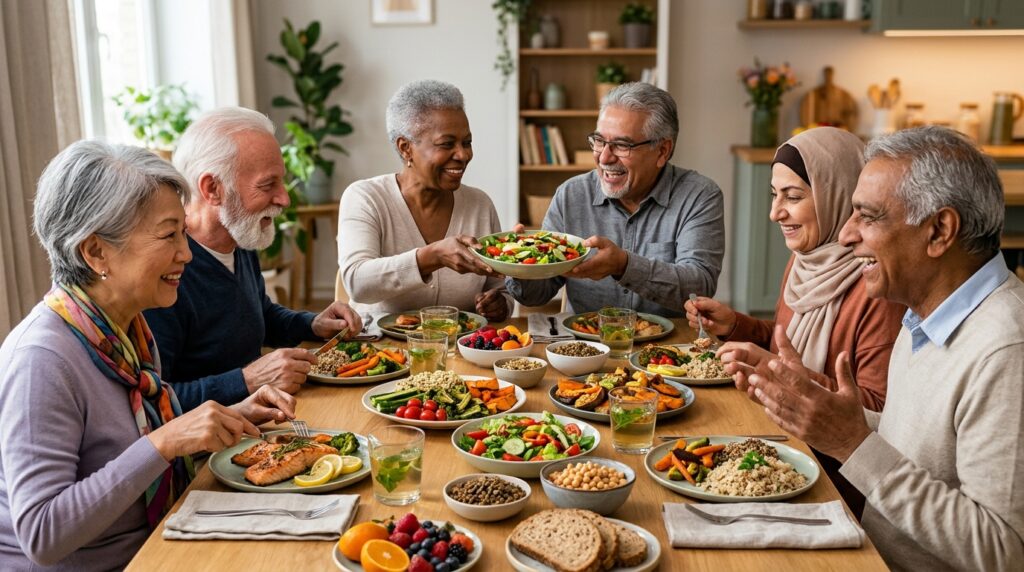
Diverse and balanced nutrition is the key to healthy longevity
By some estimates, up to 70% of the chances of living to 90 are explained by lifestyle: sleep quality, physical activity, and nutrition. And while in youth one can afford to experiment with diets, after 80 the priority shifts to simple things like adequate nutrition, preserving muscle mass, and getting enough protein.
So if you have a grandmother or grandfather in your family who doesn’t eat meat, this study is not a reason to convince them to eat steaks. Rather, it’s a reason to make sure they eat enough and get the necessary protein — and it doesn’t matter from what source exactly.