Apple gave the iPhone Duo’s inner folding display a matte finish instead of the glossy surface used by every other foldable on the market, and the company has now explained why. In an interview with TechRadar, Apple’s new vice president of hardware engineering Tom Marieb said the matte coating is there primarily to hide the crease along the fold and to keep it from becoming more visible as the device ages. The trade-off, according to the source author, is readability in direct sunlight, where a matte surface scatters the display’s own light and washes out the image. Below is what Apple said, how the hinge fits into the picture, and what buyers should weigh before ordering.
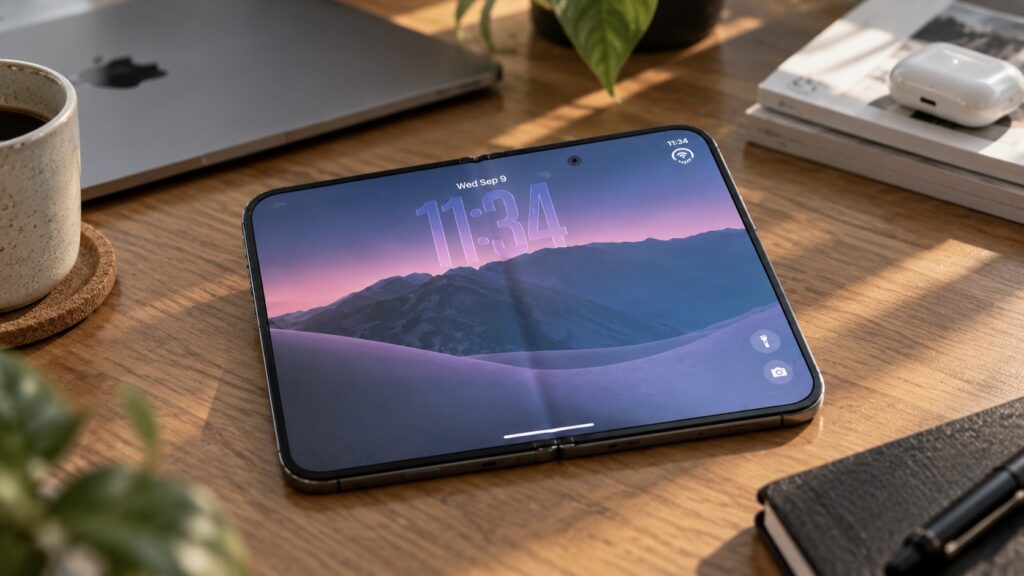
iPhone Duo in its unfolded state
What you need to know
- Apple’s hardware engineering VP Tom Marieb told TechRadar the matte inner display is meant to hide the fold crease and to tolerate the wear that makes creases more visible over time.
- The matte finish is standard on the iPhone Duo, whereas Apple’s similar nano-texture glass is a paid option on MacBook Pro, iPad Pro and Studio Display.
- The downside, per the source author, is poor readability in direct sunlight, because the coating scatters the screen’s own light as well as reflections.
- According to the source, pre-orders open October 16, sales begin October 23, and pricing starts at $1,999.
Why Apple chose a matte surface
The first question anyone asks about a foldable is whether the crease is visible, and what it will look like after a year or two of use. Marieb addressed this directly in his interview with TechRadar, explaining why the iPhone Duo’s inner screen departs from the usual glossy finish.
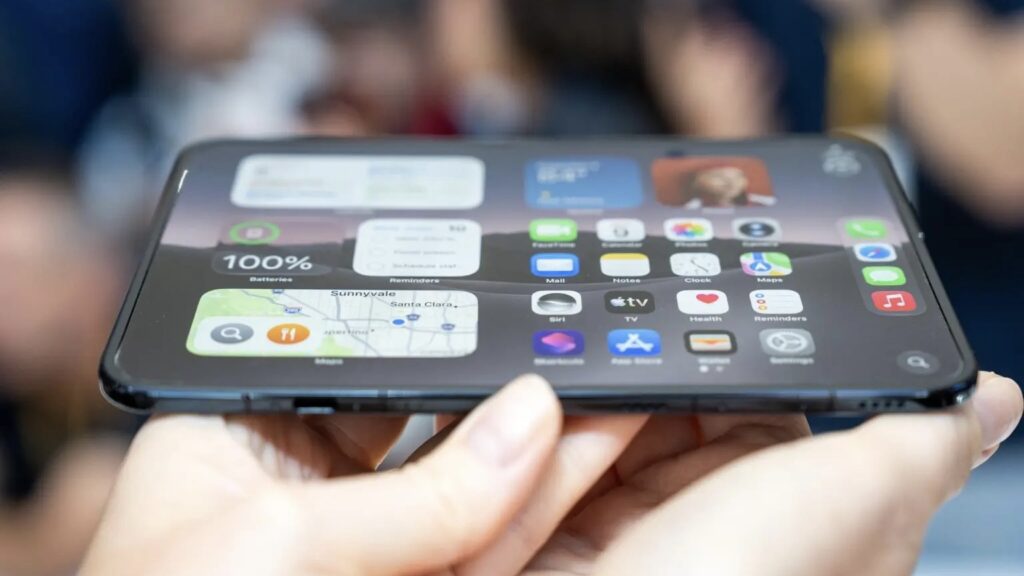
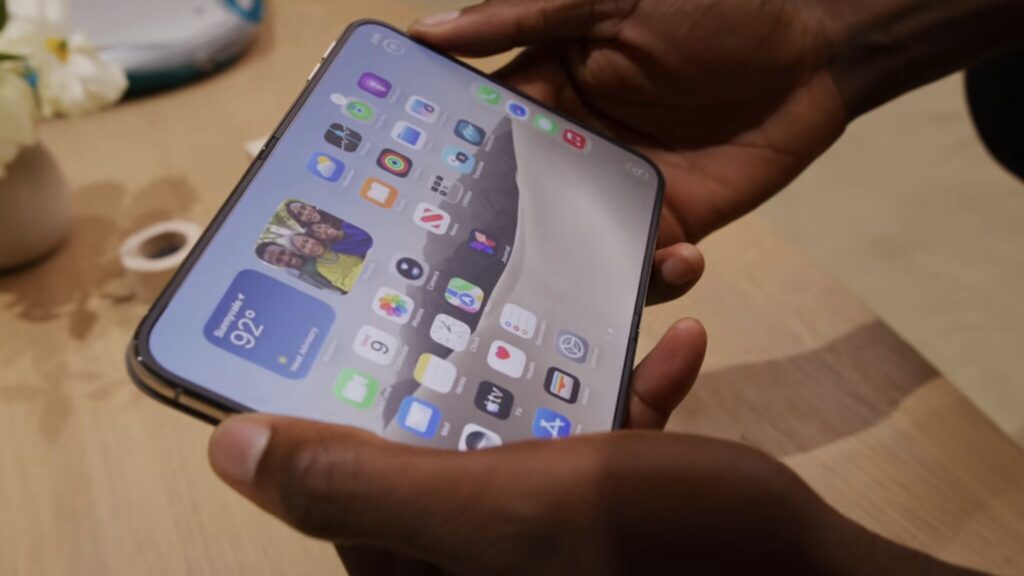
The reasoning is optical. A glossy display behaves almost like a mirror: any change in surface height, even a fraction of a millimeter, catches a highlight, and the eye immediately locks onto the unevenness. A matte surface diffuses light, so it masks the relief of the crease far more effectively. It also reduces glare from lamps and windows, which is welcome on a large screen.
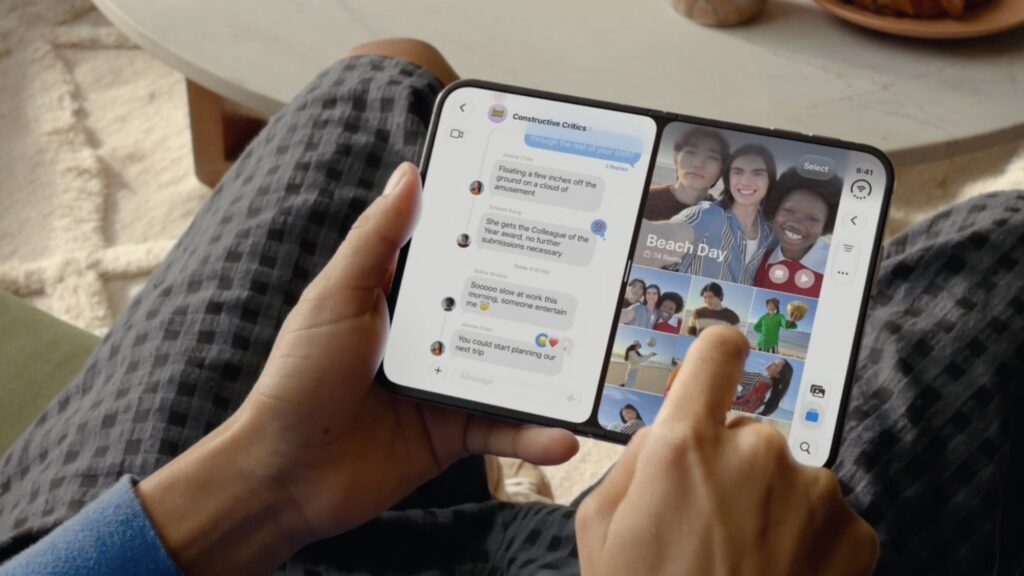
The matte inner display of the iPhone Duo in use
The more notable part of Marieb’s comments concerned longevity. On foldables, the crease almost always becomes more prominent over time as the hinge loosens and the display layers deform slightly. Marieb said the matte coating is far more forgiving of such changes, so that after a couple of years the difference from a brand-new unit should not be as glaring. He even invited users to hold Apple to account if that turns out not to be the case, an unusually direct commitment from a company that typically answers such questions cautiously.
The technology itself is not new. Apple has long offered a nano-texture finish on MacBook Pro, iPad Pro and Studio Display, but there it is a paid upgrade. On the iPhone Duo there is no choice: the matte screen is the only option.
The hinge Apple spent years on
The display is only half of the story. For the crease to stay hidden, the hinge has to hold its shape and resist loosening. Marieb described the hinge as a point of particular pride and said its development took a very long time.
Engineers spent considerable effort tuning the force required to open and close the phone. Apple wanted the iPhone Duo to shut firmly and confidently, like the door of an expensive car, a sensation intended to signal to the owner that the device is solidly built. A loose hinge that folds on its own in the hand was something the company wanted to avoid at all costs.
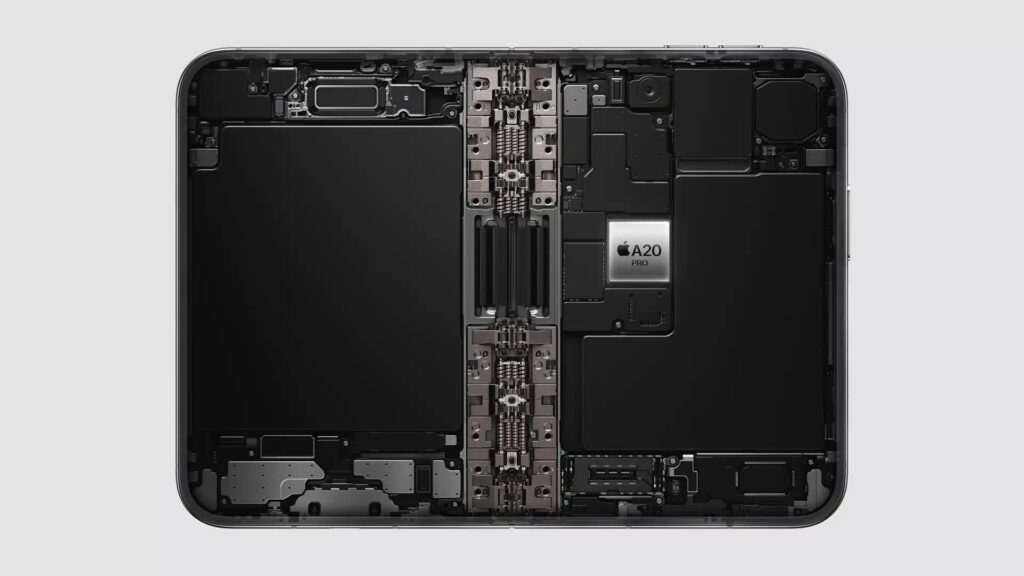
Internal components of the iPhone Duo
That resistance had to work across several use cases at once. The iPhone Duo can be fully opened or closed, but it can also be left half-folded, standing on a desk like a small laptop or propped upright for watching video or taking a timer photo. In each position the hinge must hold the screen without sagging. Marieb acknowledged that this part of the design consumed a great deal of effort.
Screen protectors also came up in the interview. Marieb made clear he dislikes them and believes they are simply unnecessary with Ceramic Shield 2. That is a matter of debate, and individual experience with cracked screens will vary.
The downside of a matte coating
A matte display has one obvious drawback, and it is the reason no other foldable maker has adopted it. Samsung, Google, Honor and others continue to use glossy surfaces even though they have fought the crease for years.
The issue is sunlight readability. A matte surface scatters not only reflections but also the light emitted by the screen itself. Indoors, that is a benefit. In direct sunlight, however, the image turns milky, contrast collapses, and, according to the source author, the picture becomes almost impossible to make out. The source author points to video footage circulating online showing the effect in practice.
Outdoors, the source author says, the iPhone Duo’s screen turns into a bright, washed-out patch; text and images are hard to discern, forcing the user to shade the phone with a hand or look for shadow. For a laptop sitting on an office desk that would not matter much. A smartphone is used very differently.
People open maps while walking, read messages at a bus stop, take photos outdoors and pull up tickets at a train entrance. If the screen shows almost nothing in those situations, that is a serious shortcoming no well-engineered hinge can offset, especially since it affects the inner display that is the main reason to buy a foldable in the first place.
The crease is hidden, but at a cost
To Apple’s credit, the source author concludes that the company genuinely succeeded with the crease: indoors it is barely visible, largely thanks to the matte coating. In the author’s view, Apple has addressed the chief complaint about foldables more effectively than its rivals, albeit in its own way.
The iPhone Duo display viewed at an angle
The open question is whether buyers will accept a screen that is hard to read in the sun. For many people an iPhone is an all-day tool, and a large share of that day is spent outdoors. The problem is likely to be most noticeable in summer, and possibly worse on bright winter days with snow and reflected light.
The iPhone Duo display seen from the side
Buyers will be able to judge for themselves soon. According to the source, pre-orders for the iPhone Duo open on October 16, retail sales start on October 23, and pricing begins at $1,999. Given that outlay, the source author recommends waiting for thorough outdoor testing before committing.
For anyone curious how a matte surface feels in daily use before the iPhone Duo arrives, the source author suggests a simple experiment: fit an inexpensive matte screen protector to a current phone and spend a couple of days using it outdoors. That should quickly show whether the compromise is acceptable, even if, as the author notes, Marieb would hardly approve of the protector itself.