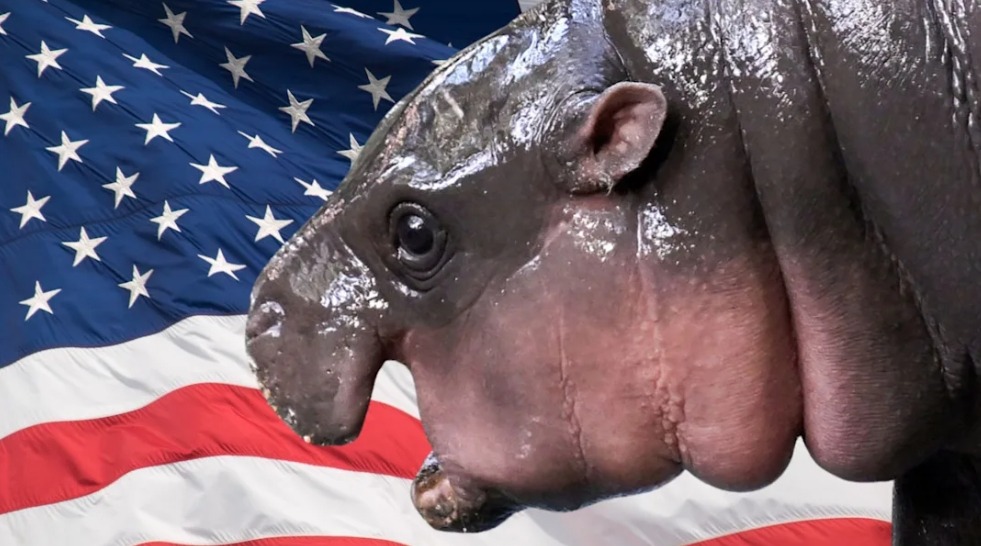
In 1927, the US president was gifted a hippopotamus
A pygmy hippopotamus named William Johnson Hippopotamus was probably the most unusual pet in the history of the White House. In 1927, he was gifted to President Calvin Coolidge, and instead of living on the lawn next to the Oval Office, he was sent to the National Zoo in Washington. There, Billy lived for nearly 30 years and became the common ancestor of most pygmy hippos in US zoos.
The White House Menagerie Under Calvin Coolidge
Calvin Coolidge, the 30th President of the United States, was known for being a man of few words, but his love for animals was undeniable. In addition to dogs, cats, and birds, his collection included wallabies, lion cubs, and the famous raccoon Rebecca. This was reported by the authors of the Mental Floss website.
The story of Rebecca deserves to be told separately: in 1926, the Coolidges were sent a raccoon as a Thanksgiving dish, but the family decided to adopt it instead. Rebecca received a collar and leash inscribed “White House Raccoon,” and the local press enthusiastically described how the animal played hide and seek with the staff and unscrewed light bulbs.
The Coolidges’ fame as animal lovers led to exotic animals being sent to them from all over the world. By August 1927, Coolidge had transferred the second-largest collection of animals among all presidents to the zoo — only Theodore Roosevelt had more. Among the gifts were lion cubs, a black bear, an antelope, and a bobcat. But the most unexpected was a pygmy hippopotamus.
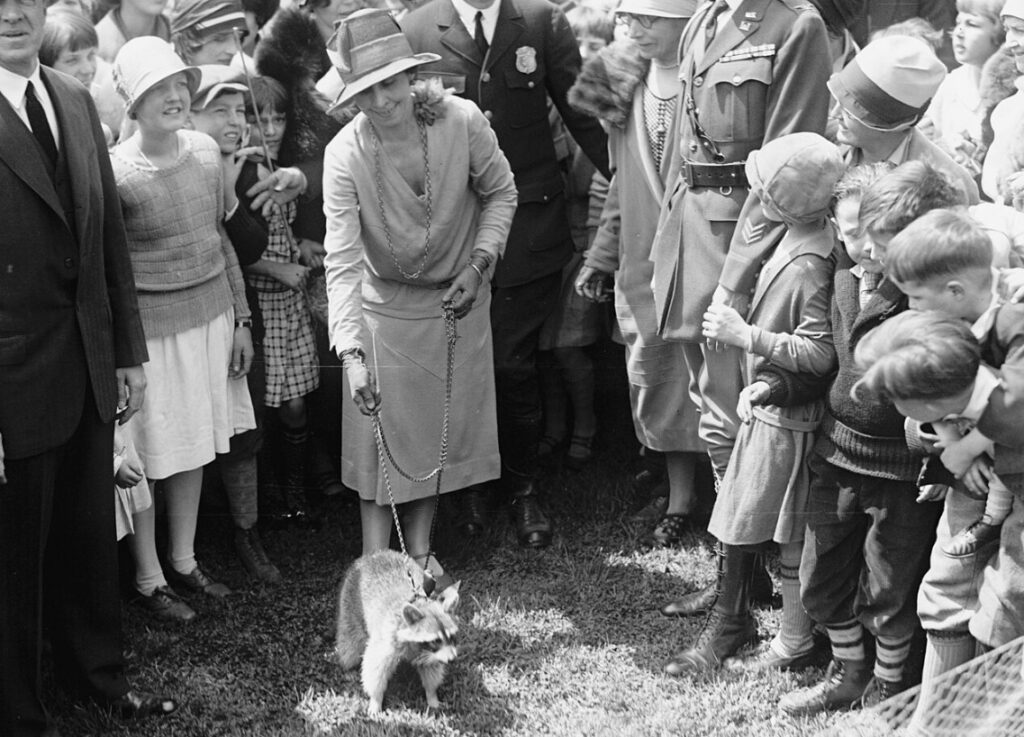
Rebecca the raccoon. Image source: wikimedia.org
How Billy the Hippo Came to America
In 1927, Harvey Firestone, founder of the Firestone Tire and Rubber Company, captured a pygmy hippopotamus on the grounds of his rubber plantation in Liberia. The circumstances of the capture were far from altruistic: the hippo’s habitat had been destroyed by one of Firestone’s plantations.
Firestone decided that the unusual animal would make a good gift for the president. On May 26, 1927, Coolidge learned that he would receive an adult pygmy hippopotamus about 1.8 meters long and weighing around 270 kilograms. It was clear that keeping such an animal in the White House was impossible, so Coolidge transferred Billy to the National Zoo in Washington.
By coincidence, Billy arrived in Washington on the same day as pilot Charles Lindbergh after his transatlantic flight. But when the president finished the ceremonial awarding of Lindbergh, he turned his attention to his new pet.
The Pygmy Hippo at the White House
At the time of his arrival, Billy was one of the most valuable animals the zoo had ever received — there were only eight other pygmy hippos in the country. The pygmy hippopotamus is a separate species, much smaller than the common hippo (roughly ten times lighter than its larger relative), a nocturnal and secretive inhabitant of the forests of West Africa.
Billy instantly became a public favorite. The New York Times reported that the hippo had “made many friends” since his arrival at the zoo. Journalists described him as an animal “playful as a dog,” next to whom even monkey antics went unnoticed by visitors.
In 1939, Billy even traveled to New York for the World’s Fair, where he became a popular exhibit at the Firestone company’s booth. Before the arrival of the famous pandas, pygmy hippo Billy was the main star of the National Zoo in Washington.
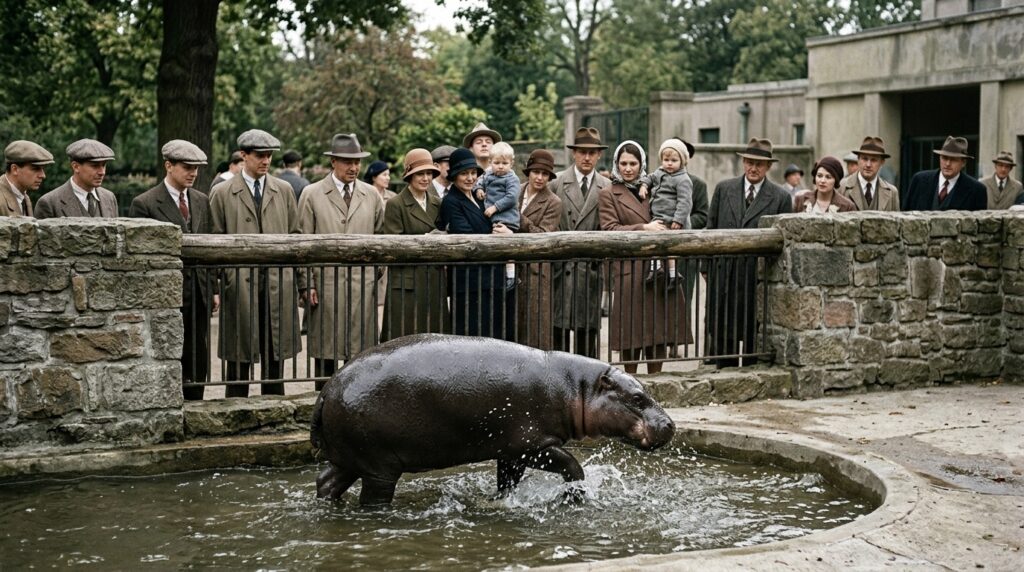
A pygmy hippo at the zoo, crowds always gathered at his enclosure
The Pygmy Hippo Dynasty in the US
In 1929, the zoo acquired a mate for Billy, a female pygmy hippo named Hannah. Until that point, most zoos followed a simple model: keep one animal of each species until its death, then replace it with another. The decision to breed pygmy hippos in captivity was groundbreaking.
But the early years were tragic. Billy and Hannah’s first calf, born in 1931, didn’t survive a week. The next two calves also died in infancy, and Hannah accidentally crushed the third by rolling over onto it. The press at the time blamed Hannah, calling her “simply a bad mother.”
Interesting fact: A baby hippo is scientifically called a calf, as hippos belong to the even-toed ungulate family.
But the problem lay elsewhere. Before the construction of the Pachyderm House in 1937, the pygmy hippos lived in the Lion House — likely a frightening environment for a mother-to-be. When the pair was moved to a separate enclosure, everything changed.
In 1938, Hannah successfully gave birth to her fourth calf. A young zoo visitor remarked that the baby looked like “a big licorice gumdrop,” and the name stuck immediately. Thus a tradition was born: all of Billy’s descendants were named Gumdrop with a Roman numeral — from Gumdrop I to Gumdrop XVIII.
In 1940, the zoo acquired a second mate for Billy, Matilda, with whom he also successfully bred. From 1938 to 1955, Billy fathered 18 calves from both females. Most of his offspring were traded for other animals — yaks, exotic cockatoos, and marsupials — and sent to zoos across the country.
A curious detail: by the time Gumdrop XVI was born, the zoo noticed that almost all of Billy’s calves were female. Later research confirmed that pygmy hippos in captivity do indeed produce more females, though Billy’s skew was particularly pronounced.
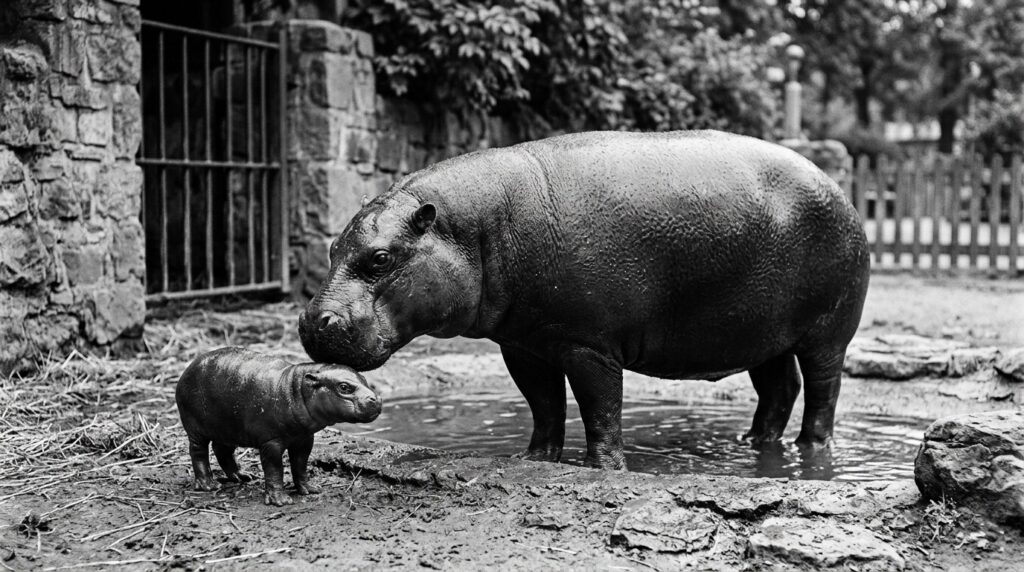
A newborn pygmy hippo next to its mother at the zoo
Billy’s Legacy and the Fate of Pygmy Hippos
Billy died on October 11, 1955, five months before the birth of the last Gumdrop. The zookeeper said at the time that Billy “kept at it right to the very end.”
But his main legacy is genetic. As one of the first pygmy hippos in captivity in the American zoo system, Billy became the direct ancestor of nearly all pygmy hippos in US zoos. Since his arrival, the National Zoo in Washington alone has seen 58 pygmy hippos born. Billy’s descendants were sent not only across America but also to the Philadelphia Zoo, the Fort Worth Zoo, as well as to Sydney and London.
In 1960, upon learning that the zoo’s females had been left without a mate after Billy’s death, Liberian President William Tubman sent a search expedition for a new male. A hippo named Totota arrived in Washington and continued Billy’s legacy with his daughters.
Today, pygmy hippos have the status of an endangered species on the IUCN Red List. According to 2015 estimates, fewer than 2,500 individuals remain in the wild. The main threats are deforestation, poaching, and wars in West Africa. At the same time, zoos around the world currently house more than 1,600 pygmy hippos — nearly as many as are thought to remain in the wild.