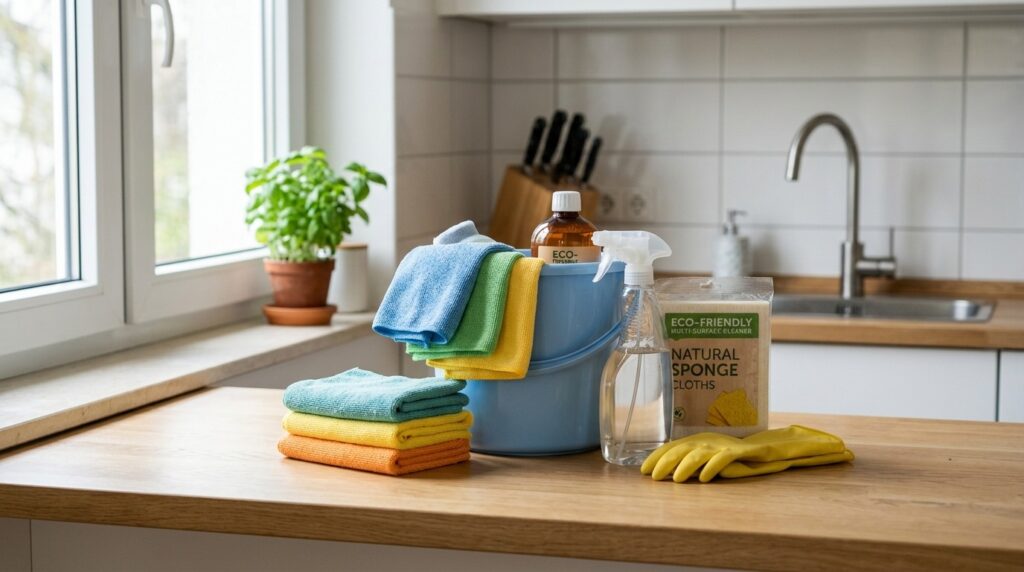
A few rules can noticeably improve the quality of every home cleaning session
The order of cleaning an apartment seems like an obvious thing, but most people do it chaotically and end up spending a third more time. Meanwhile, professional cleaners have long worked according to a clear algorithm based on simple physics and a bit of common sense. Where should you start cleaning your apartment, and why does this particular sequence actually work and prevent common mistakes?
Where to Start Cleaning Your Apartment
The most common mistake during house cleaning is immediately grabbing a rag or vacuum. In reality, the first stage of cleaning has nothing to do with washing at all. First and foremost, you need to get rid of the chaos. At this stage, you remove everything unnecessary from sight so you don’t have to wipe around each item individually later.
What you need to do before cleaning:
- Open windows for ventilation, especially if you plan to use household chemicals. Liquid products are preferable to aerosols because fine droplets from sprays enter the respiratory tract;
- Collect trash from the entire apartment into one bag;
- Take dishes to the kitchen, dirty clothes to the laundry, and clean clothes to their proper places;
- Remove bed linens, towels, the bathroom mat, and kitchen towels. Start the washing machine;
- Clear tables, nightstands, countertops, and sinks of small items;
- Prepare separate cloths for each zone: dust, kitchen, bathroom, toilet. One cloth for everything is not saving money — it’s transferring dirt from one place to another.
If there are stubborn stains on the stove, in the oven, in the shower, or on the toilet, apply cleaning product to them right away. While you’re working on other rooms, the chemicals will be doing the work for you.
IMPORTANT! Never mix different cleaning products together! Bleach must not be mixed with ammonia or other cleaning compounds — this can lead to the release of dangerous fumes.
Why You Should Clean Top to Bottom
The top-to-bottom cleaning rule is based on elementary gravity. Dust and small particles always fall downward. If you wash the floor first and then wipe the upper shelves, dust from them will settle on the freshly washed surface, and you’ll have to redo the work.
Therefore, in every room work from top to bottom. First wipe the tops of cabinets, light fixtures, and shelves. Then the middle level — tables, nightstands, appliances. And only at the end wipe the baseboards and floor.
The second rule that works in tandem is dry cleaning always before wet cleaning. First collect dust with a dry microfiber cloth or vacuum, and only then wipe with a damp cloth. If you immediately wet a dusty surface, you’ll get a dirty mess that’s harder to clean than dry dust.
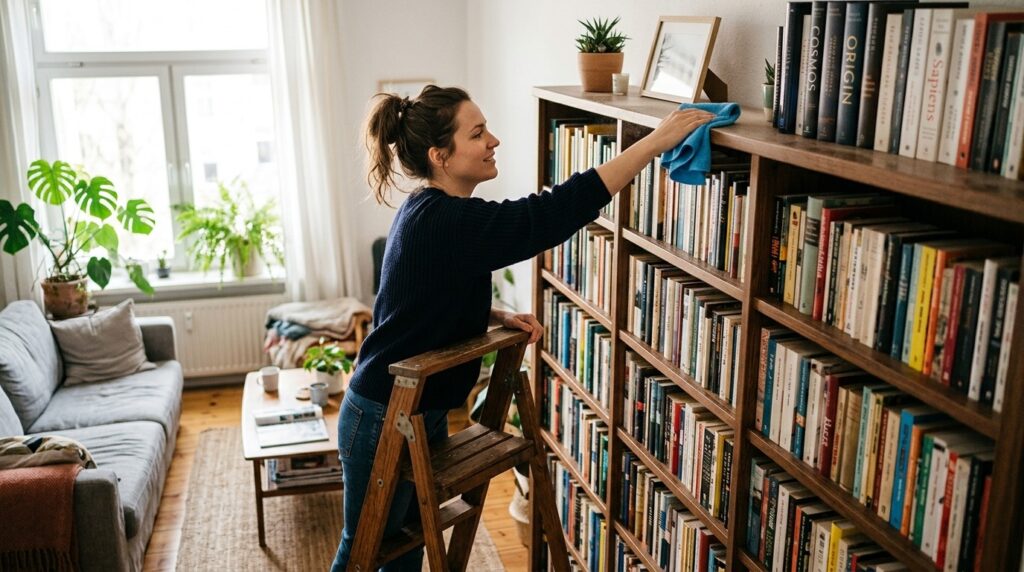
Cleaning in every room starts with upper surfaces
What Order to Clean Rooms
In addition to the top-to-bottom direction, there’s another cleaning approach: from clean to dirty. This means living rooms are cleaned before the kitchen, and the kitchen before the toilet. The British agency UKHSA recommends using separate cloths for toilets, kitchens, and common areas to reduce the transfer of bacteria between zones.
Here’s the best order for cleaning your apartment:
- Bedroom — the “cleanest” zone. There’s minimal grease and moisture here. Vacuum the mattress, wipe surfaces from top to bottom, and don’t forget light switches and door handles;
- Living room and home office — more dust, electronics, and pet hair. Special attention is needed for remotes, keyboards, and mice — everything frequently touched by hands;
- Entryway — a zone with outdoor dirt. Shake out the mat, wipe the mirror and door handles. But don’t clean it first, because you’ll be walking back and forth with trash and laundry and will track dirt right back in;
- Kitchen — grease, food residue, moisture. It has its own sequence: collect dishes, throw out trash, wipe upper cabinets and the range hood, then cabinet fronts, appliances, stove, countertop, and sink;
- Bathroom — limescale, soap residue, mold. The cleaning products applied at the beginning of the cleaning session will have already taken effect by this point;
- Toilet — the last zone. Use separate gloves and a separate cloth here, which goes into the laundry or trash after cleaning.
This sequence prevents “dirty” zones from contaminating “clean” ones. If after the toilet you go to the kitchen countertop with the same cleaning supplies, that would be one of the biggest blunders of your life.
How to Properly Clean the Kitchen
The kitchen is where food meets household grime. The Swiss Federal Office of Public Health (BAG) states that food residue should be cleaned up immediately because it feeds bacteria, mold, and attracts insects. For everyday cleaning of kitchen surfaces, water and soap are sufficient.
A separate point concerns handling raw meat and poultry. After butchering, the cutting board, knife, surface, and hands must be washed immediately, without delay. This is one of the few places in an ordinary apartment where additional treatment may actually be needed.
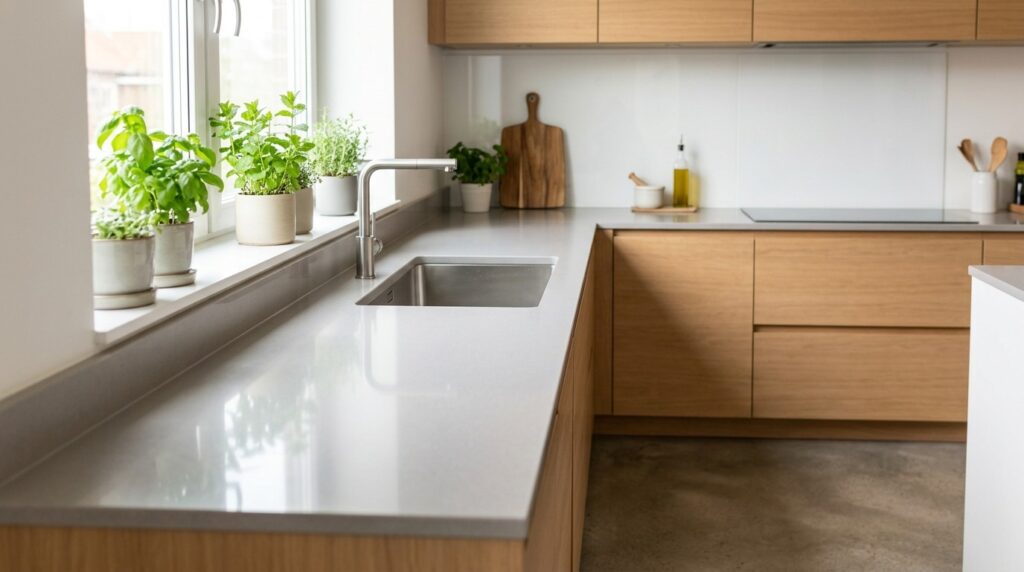
A clean kitchen: the countertop and sink are the final steps in cleaning this zone
How to Properly Clean the Bathroom
If you use a disinfecting product for the bathroom, don’t wipe it off immediately. The U.S. Environmental Protection Agency (EPA) explains that the surface should remain wet for as long as indicated on the label. Otherwise, the effect will be weaker.
And here’s what you definitely shouldn’t do: disinfect every surface with every cleaning. In most cases, regular cleaning with soap is enough to prevent the spread of germs. Disinfection is needed when someone in the family is sick or there are people with weakened immune systems.
Why Apartment Floors Should Be Washed Last
The floor is the final collector of everything that fell from above during cleaning. Washing it before you’ve finished with the surfaces means you’re guaranteed to wash it twice.
The correct order for washing floors:
- Pick up large debris from the floor;
- Vacuum the entire apartment, from the bedroom to the bathroom, in the same order you cleaned;
- Wet cleaning: start from the farthest rooms and work toward the exit so you don’t walk on wet floors;
- Wash the bathroom area with a separate cloth or mop attachment;
- After cleaning, wash the bucket and all cloths.
During a deep clean, it’s better to do all floors across the entire apartment at once rather than “a little bit in each room.” This way there’s less repeat dirt and fewer unnecessary trips back and forth.
The Most Common Apartment Cleaning Mistakes
Even if you follow the “top to bottom” and “clean to dirty” order, there are several typical blunders that can cancel out all your results.
- Mixing cleaning products. Bleach plus vinegar, ammonia, or an acidic toilet cleaner — this is a real risk of producing toxic gas. Bleach must not be mixed with any other products.
- One cloth for the entire apartment. You wiped the toilet, then used the same side on the kitchen table. We hope nobody would think of doing this;
- Washing the floor before dusting. Wiping the floor and then dusting upper shelves means giving dirt a second chance;
- Wet cleaning without dry cleaning first. A wet cloth on a dusty surface just smears the dirt around rather than removing it;
- Aggressive sprays in an enclosed bathroom. Ventilation and label instructions exist for a reason, not for decoration.