The times when even cheap Android smartphones could do almost everything flagships could seem to be over. It’s gotten to the point where buying many Xiaomi, POCO, and Redmi devices no longer makes sense. This is confirmed by the new Redmi 17C, which Xiaomi released on the Chinese market. Yes, the 120 Hz screen, large battery, and other familiar budget conveniences like a headphone jack and side-mounted fingerprint scanner are still there. However, compared to the previous generation, the new device has undergone a serious downgrade, and most likely, other devices will face the same fate in the foreseeable future. Below we break down what’s inside the Redmi 17C, who it’s for, and where the catch is.
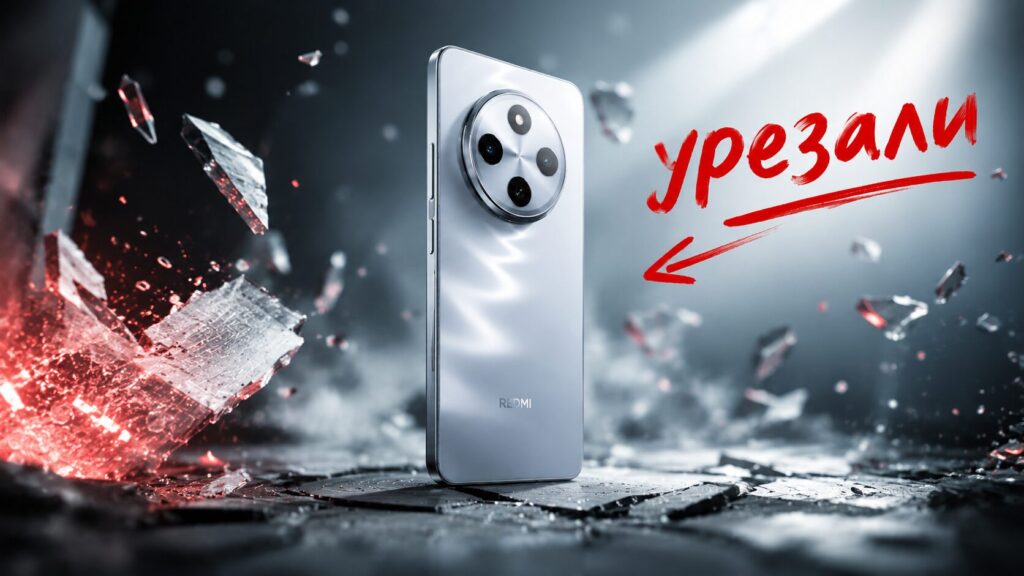
The era of good cheap smartphones has come to an end
Price and Versions of Redmi 17C — Xiaomi’s Cheapest Smartphone in 2026
The Redmi 17C is already available on Chinese marketplaces, including Xiaomi’s official store. This is the entry-level segment, and the company directly positions it as the cheapest new device of 2026 in its lineup.
The smartphone is offered in two memory configurations:
- 4 GB RAM + 64 GB storage — 799 yuan (about $115, approximately 13,000 ₽ in Russia)
- 4 GB RAM + 128 GB storage — 899 yuan (about $130, approximately 14,000 ₽ in Russia)
See that? The main limitation of the new device is the memory. It has only 4 GB of RAM, and nobody expected this from a 2026 smartphone. Because the previous generation — the Redmi 15C — had 6 GB as the base, and the top version offered 8 GB. Here there’s no choice: 4 and that’s it.
Xiaomi even cut the internal storage. If the Redmi 15C came with 128 GB of storage in its base version, and the top version offered 256 GB, now it’s either 64 or 128 GB. That’s how it is.
Screen, Processor, and Camera of Redmi 17C: Smartphone Specifications
However, in other respects, the smartphone turned out really decent. At its core is a 6.88-inch screen with a resolution of 1640 x 720 pixels and a refresh rate of up to 120 Hz. For a budget phone, this is nice: the interface and feed scrolling look smoother than at the standard 60 Hz. But the resolution here is low, so the picture won’t be particularly sharp — this is a typical entry-level compromise.
The screen features DC dimming and TUV Rheinland certification for reducing eye strain. In simple terms, the manufacturer claims less noticeable backlight flickering at low brightness — a plus for those who read a lot from their phone in the evening.
The Redmi 17C is powered by the octa-core MediaTek Helio G81-Ultra processor with speeds up to 2.0 GHz, and it comes out of the box with the fresh Xiaomi HyperOS 3 system. This is a solution for basic tasks: messengers, calls, navigation, light games. The main camera is 13 MP, and at this price point, you should only expect daytime shots without high expectations.
Redmi 17C’s 5160 mAh Battery and 3.5mm Headphone Jack
The biggest advantage of the model is the 5160 mAh battery. With a modest screen and undemanding processor, this capacity usually provides a confident full day, and even longer with light usage. Charging is wired, with power of up to 18W — that’s not fast, a full charge will take considerable time, so it’s more convenient to charge overnight.
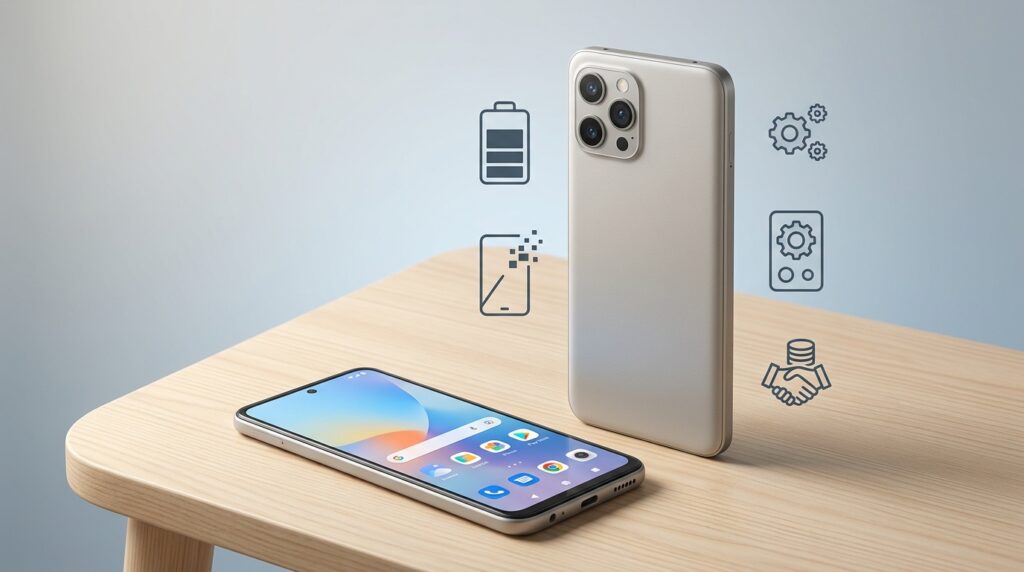
Redmi 17C — Xiaomi’s cheapest smartphone in 2026: price, screen, battery, specifications
Xiaomi claims the battery retains at least 80% of its capacity after 1,000 charge cycles. If the figures are to be believed, the battery should comfortably last a couple of years of daily use without serious degradation.
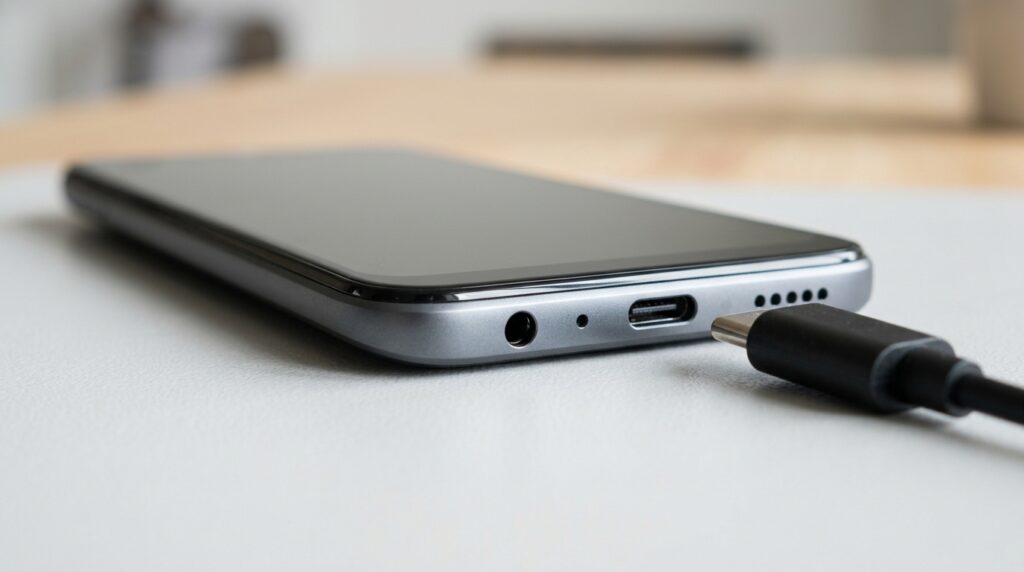
The 3.5mm headphone jack — a rarity that budget phone users still appreciate.
Among everyday conveniences, there’s a side-mounted fingerprint scanner, a classic 3.5mm jack for wired headphones, the Xiao Ai voice assistant, and the Xiaomi Super Island notification area (similar to live prompts at the top of the screen). An important caveat: the manufacturer makes no mention of NFC, which means you likely shouldn’t count on contactless payments with this phone in stores.
Which Budget Xiaomi Smartphone to Choose in 2026: Redmi 17C, Redmi A5, or POCO C81
If you’re choosing the cheapest Xiaomi device, keep in mind that the difference between such models usually comes down to details: screen refresh rate, battery capacity, and whether it has the small things you need like NFC. The Redmi 17C wins with its 120 Hz screen and large battery, but loses in RAM and, based on the description, in contactless payments.
| Specification | Redmi 17C | Redmi A5 | POCO C81 |
|---|---|---|---|
| Screen | 6.88″, IPS, 1640×720, 120 Hz | 6.88″, IPS, 1640×720, 120 Hz, 450 nits | 6.9″, IPS, 1600×720, 120 Hz, up to 800 nits |
| Processor | MediaTek Helio G81-Ultra, 8 cores, up to 2.0 GHz | Unisoc T7250, 12 nm, 8 cores, up to 1.8 GHz | Unisoc T7250, 12 nm, 8 cores, up to 1.8 GHz |
| Memory | 4 GB + 64/128 GB | 3/4 GB + 64/128 GB, microSD up to 1 TB | 4 GB + 64 GB, microSD up to 2 TB |
| Main Camera | 13 MP | 32 MP, f/2.0 | 13 MP (dual) |
| Front Camera | N/A | 8 MP, f/2.0 | 8 MP |
| Battery | 5160 mAh | 5200 mAh | 6300 mAh (+ 7.5W reverse) |
| Charging | 18W | 15W | 15W |
| OS | HyperOS 3 | Android 15 (Go) | Android 16, HyperOS 3 |
| Fingerprint Scanner | side-mounted | side-mounted | side-mounted |
| 3.5mm Jack | yes | yes | yes |
| Price | 799/899 yuan (~ 9,990 ₽) | from 6,499 ₽ | 10,999 ₽ |
Before buying, it makes sense to compare them on the points that matter most to you personally: contactless payment, memory capacity, and screen smoothness.
Who the Redmi 17C is for: those who need a simple and inexpensive second phone, a device for parents or a child, a device for calls, messengers, and music through wired headphones. Who should skip it: those who actively use contactless payments, keep many apps open, or expect fast charging and a good camera.
When Will the Redmi 17C Appear in Russia and How Much Will It Cost
So far, only sales in China have been officially announced. The manufacturer has not announced a global release, let alone an official launch in Russia, so there are no exact dates or ruble prices for our market at this time.