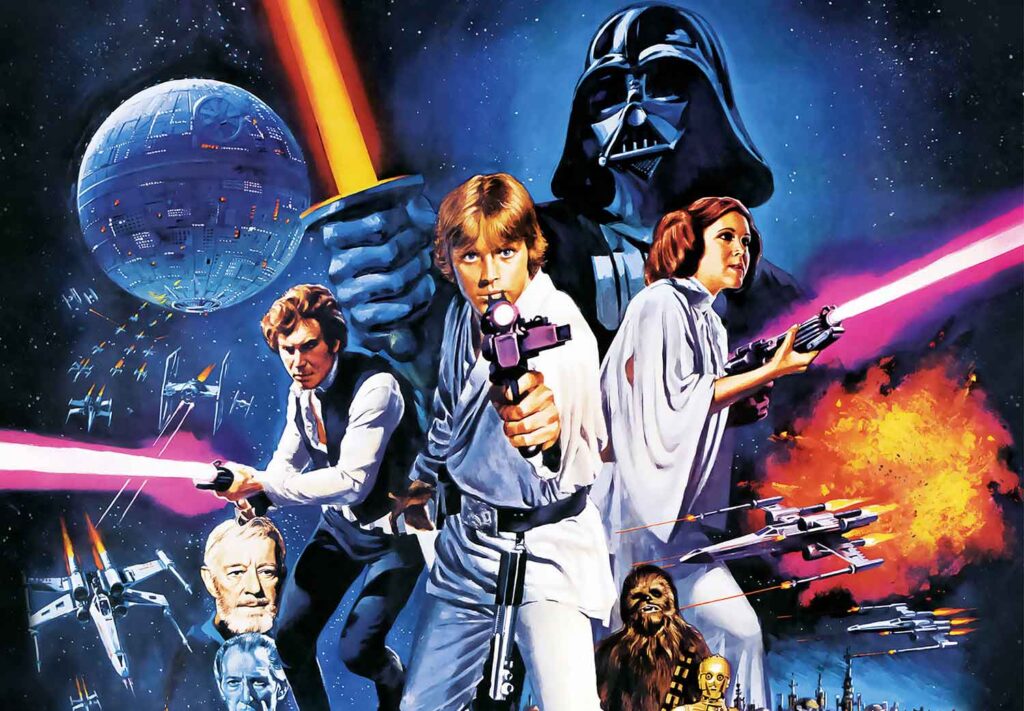
Star Wars are based on real history
When you watch Star Wars, it’s easy to assume the entire universe was invented from scratch. Lightsabers, the Force, Jabba the Hutt — the imagination seems to know no bounds. But if you dig deeper, a curious thing emerges: George Lucas built his “space opera” on a very real foundation — history, mythology, and political events of the 20th century. Even some of the aliens from Star Wars can be found in real nature.
The Jedi Were Inspired by Japanese Samurai
Lucas admitted on multiple occasions that he was hugely influenced by the films of Akira Kurosawa — Japanese historical epics known as “jidaigeki.” According to one popular theory, the word “Jedi” derives directly from this term.
But it’s not just about the name. The Jedi code of conduct closely mirrors bushido — the samurai code of honor, where honor, self-discipline, and service to a higher cause come first. Even the Jedi’s appearance — loose garments resembling kimonos and swords as their primary weapon — is a direct reference to samurai culture.
How Ancient Rome Inspired the Galactic Empire
The transformation of the Galactic Republic into a totalitarian Empire isn’t just a dramatic plot twist. Lucas deliberately replicated the path of Ancient Rome, where in 27 BC the Senate handed all power to one man — Octavian, who became Emperor Augustus.
Roman influence in Star Wars is visible in the details: the Senate as an institution of power, the architecture of buildings on Coruscant, the togas and robes of characters — all of it has a distinctly classical flavor. Lucas essentially retold the story of the fall of a republican system, only he moved it to space. That’s why this storyline can be read more broadly — as a story about how civilizations die when power gradually concentrates in one pair of hands.
Tatooine from Star Wars Exists in Reality
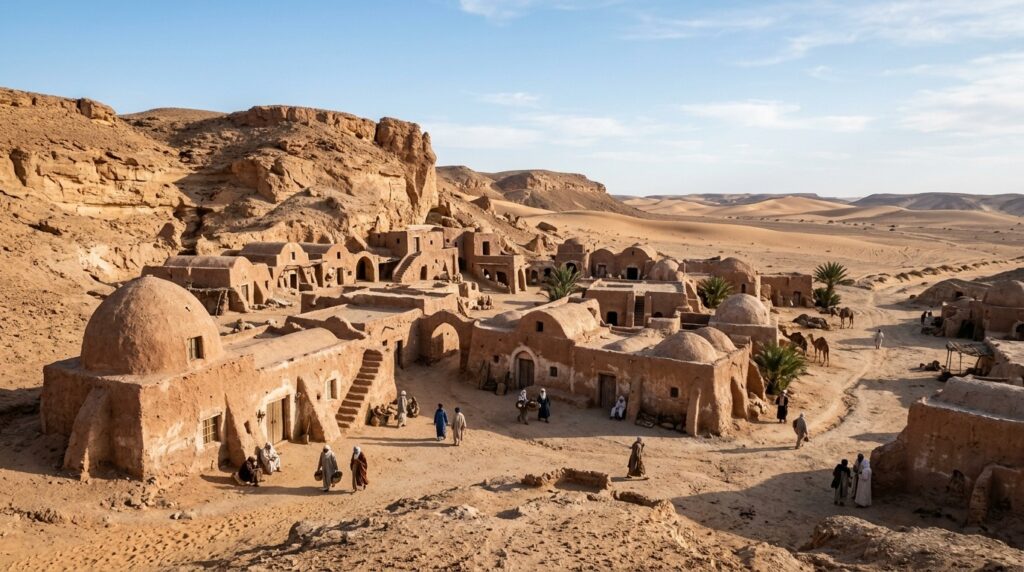
The city of Tataouine in Tunisia — the prototype for the planet Tatooine from Star Wars
The desert planet Tatooine, where Luke Skywalker grew up, is named after a very real place. In southern Tunisia, there is a city called Tataouine, and Lucas didn’t just borrow the name.
The architecture, landscape, and Berber culture of this region directly inspired the planet’s appearance in the films. The distinctive mud-brick structures we see on Tatooine are actual Berber dwellings. Some scenes from the original trilogy were filmed in Tunisia, and today some of the sets still stand in the desert, attracting tourists.
Real cosmic worlds can also be almost cinematic: scientists have found some of the most extreme planets, next to which Tatooine doesn’t seem like such a stretch of the imagination.
The Rebel Alliance Is Connected to the Vietnam War
The theme of resistance to oppression runs through all of Star Wars, and here Lucas drew on a very specific historical example. In a conversation with James Cameron in 2019, the director acknowledged that when creating the Rebel Alliance, he had in mind the Viet Cong — the guerrilla movement that opposed the South Vietnamese government and the US military.
Lucas wrote the original screenplays in the early 1970s, when the Vietnam War was the dominant topic in American society. Both directors noted a curious paradox: the heroes of the film are essentially rebels fighting against a regime — figures who in a different context would be called terrorists.
Why Stormtroopers Resemble Third Reich Soldiers
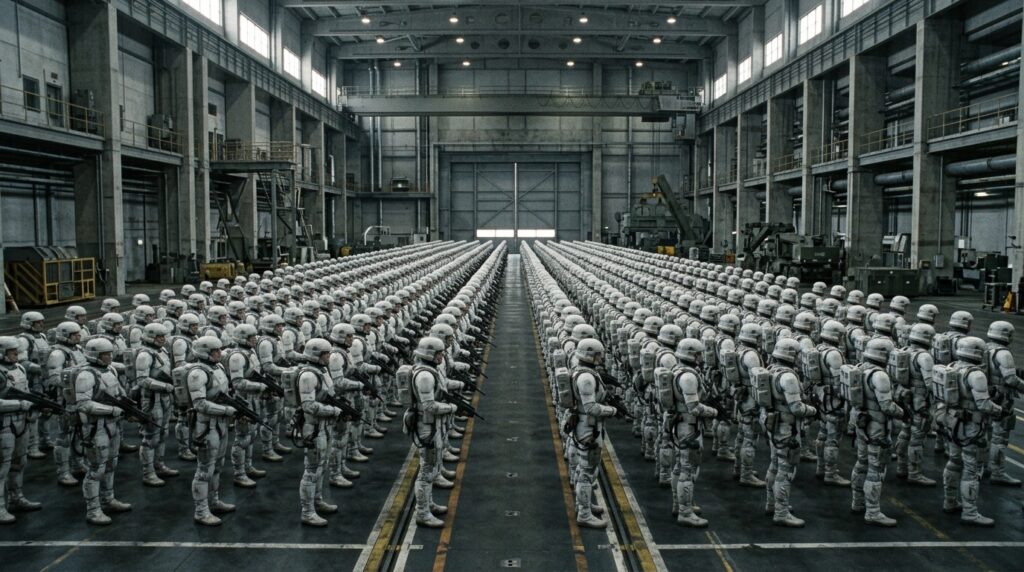
Imperial stormtroopers — a visual reference to the military aesthetics of the Third Reich
The word “stormtrooper” is taken directly from the history of Nazi Germany: the real German term Sturmtruppen referred to elite assault units of the German army, and the word entered the English language in 1931.
But Lucas borrowed more than just the name. The color palette, symbolism, and even the uniforms of the Galactic Empire were deliberately styled after the Third Reich. The black-and-gray palette, the strict officer uniforms, the mass formations of soldiers in identical armor — all of these are visual quotes from Nazi aesthetics that help the viewer instantly understand: the Empire is evil.
Emperor Palpatine Was Inspired by Nixon
When it comes to the prototype of the saga’s main villain, people usually think of Julius Caesar, Hitler, or Napoleon. All of these parallels are valid, but Lucas himself, in a 1981 interview, named a completely different person.
“His name was Richard M. Nixon,” the director explained. “He subverted the senate, ultimately seized power, and became an imperial figure. He was truly evil but pretended to be a good guy.”
Palpatine as a politician who destroys democracy from within while pretending to be its defender is a portrait modeled after the 37th President of the United States, who resigned following the Watergate scandal.
Podracing Mirrors the Chariot Races of Ancient Rome
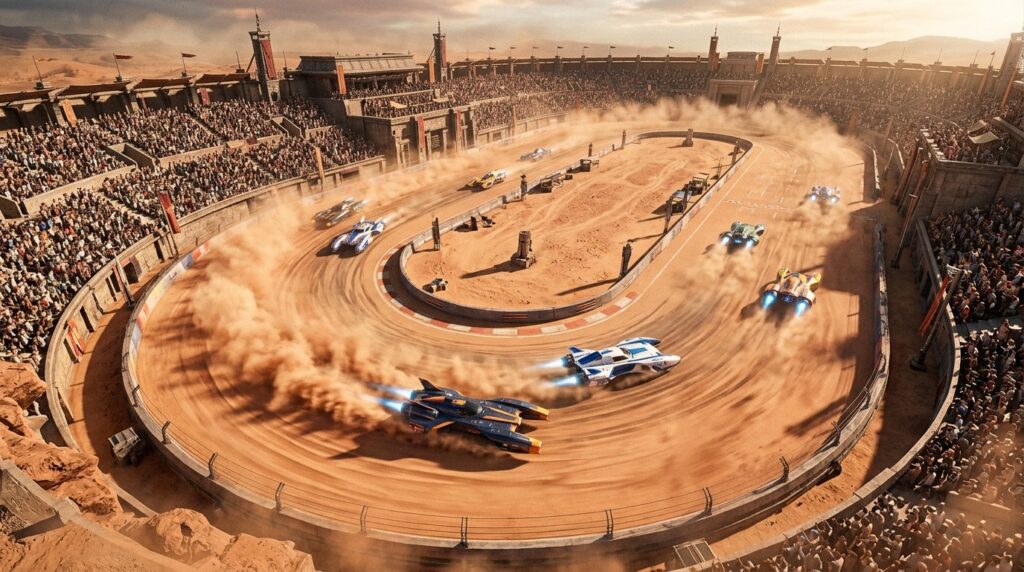
Podracing — a space version of Ancient Rome’s chariot races
The podrace scene in The Phantom Menace (1999) is one of the most spectacular episodes of the prequels. It was inspired by chariot races in Ancient Rome, and the giant arena on Tatooine was designed after Circus Maximus — the largest hippodrome of antiquity.
The filmmakers went even further, openly drawing inspiration from the legendary chariot race scene in Ben-Hur (1959). This was never hidden — the visual parallels between the two sequences are so obvious that critics called the borrowing “shameless” yet undeniably impressive.