
You can reduce tooth pain, but these methods don’t replace a visit to the dentist
I recently became curious about what actually helps with a toothache — not old wives’ tales, but proven recommendations from doctors and dental associations. After searching online, I found several effective options backed by clinical guidelines and decided to share them. But an important disclaimer right away: all of these are temporary measures until you see a dentist, not a replacement for treatment.
Pain Relievers for Toothaches
The fastest and most reliable way to deal with acute tooth pain is to take an oral painkiller. According to the American Dental Association (ADA) recommendations, nonsteroidal anti-inflammatory drugs (NSAIDs) work best for toothaches. For an adult without contraindications, ibuprofen at the standard dosage per the instructions is usually the most suitable option.
NSAIDs have important limitations. They should not be taken if you have a stomach ulcer, gastrointestinal bleeding, severe kidney disease, an allergy to this group of medications, during late pregnancy, or while taking anticoagulants without a doctor’s prescription. If you’re unsure, it’s better to check with a doctor or pharmacist.
How to Relieve a Toothache Without Pills
Sometimes you don’t have painkillers on hand, or they may be contraindicated. In that case, two simple methods recommended by major medical organizations can help.
First — a cold compress on the outside of the cheek for 10–15 minutes with breaks. Cold constricts blood vessels, reduces swelling, and dulls pain. However, you should not apply heat to the cheek, because if there’s an infection inside, warmth can accelerate the spread of inflammation and make things worse.
Second — warm (not hot!) saltwater rinses several times a day. This won’t cure the cause of the pain, but it can temporarily reduce irritation and discomfort. About half a teaspoon of salt per glass of warm water is enough.
Additionally, it’s worth switching to soft foods and avoiding chewing on the affected side. Very cold, hot, and sweet foods often intensify pain from cavities, cracked teeth, or nerve inflammation.
Why Toothaches Get Worse at Night
Many people have noticed that during the day a toothache is somewhat bearable, but at night the pain becomes unbearable. This isn’t just in your head — nighttime pain has very specific causes.
When you lie down, blood flows more actively to your head. If there’s inflammation in or around a tooth, the increased blood flow raises pressure on nerve endings, and the pain intensifies. Imagine an inflamed finger: if you lower your hand, the pain subsides, but if you raise it above your heart, it gets worse. The same thing happens with a tooth when you’re lying down.
There’s also a hormonal factor. After midnight, the production of adrenal hormones decreases, and these hormones have a natural analgesic effect. Plus, during the day the brain is busy with a thousand tasks and gets distracted from pain, but at night, in the quiet and relaxation, unpleasant sensations come to the forefront.
A simple tip: if your tooth starts aching at night, try sleeping in a semi-upright position by propping yourself up with a high pillow. This will reduce blood flow to the site of inflammation and somewhat lessen the pain.

At night, toothache pain feels stronger due to increased blood flow to the head when lying down
Common Mistakes When Dealing With a Toothache
When a tooth hurts, you want to do anything to help. But some popular “life hacks” aren’t just useless — they’re dangerous.
- Placing aspirin on the gum or tooth — this can cause a chemical burn to the mucous membrane. Aspirin only works when swallowed, and for toothaches, ibuprofen is usually more effective;
- Applying heat to the painful area — warm compresses, heating pads, and hot rinses can worsen inflammation and even provoke the spread of pus;
- Taking antibiotics “just in case” — without a doctor’s examination, this is pointless. Antibiotics don’t relieve toothache pain and aren’t always necessary. Their uncontrolled use leads to antibiotic resistance, where bacteria stop responding to treatment.
If there’s a “hole” in a tooth or a piece has chipped off, you can buy a temporary dental filling material at a pharmacy to briefly cover the defect. This will protect exposed tissues from irritants until you see a doctor, but it is not a proper filling.
When a Toothache Requires Urgent Medical Attention
Temporary measures are exactly that — temporary measures. They help you hold on until your dentist appointment but don’t eliminate the cause of the pain. There are situations when delaying a visit is not an option.
See a doctor as soon as possible if:
- the pain doesn’t go away for more than 1–2 days;
- swelling, fever, pus, or an unpleasant taste in the mouth appears;
- it hurts to bite down on the tooth;
- it’s difficult to open your mouth, swallow, or breathe — this is already a reason for emergency care.
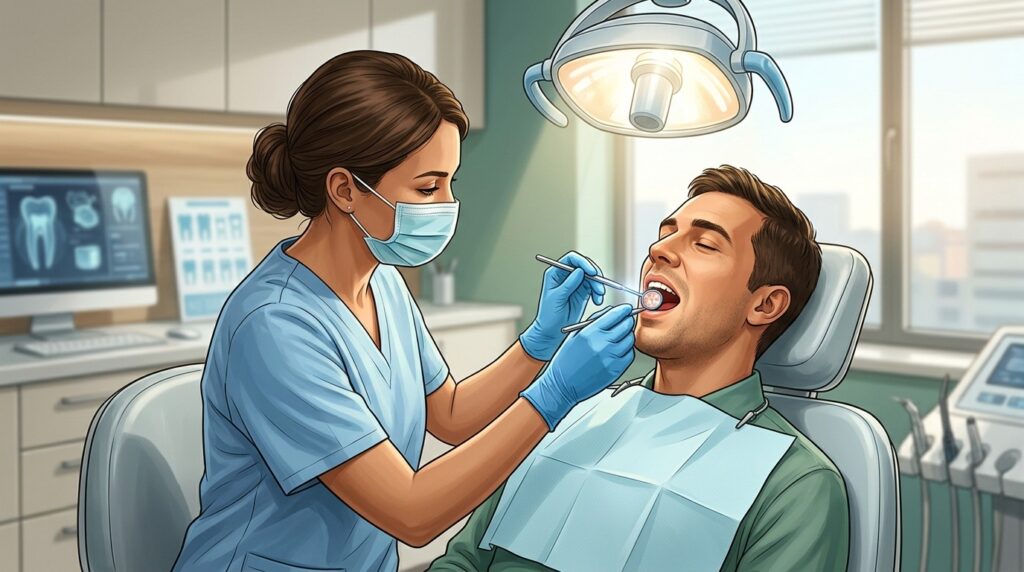
A visit to the dentist is the only way to eliminate the cause of a toothache
Postponing a trip to the dentist for a couple of weeks means risking that a simple filling turns into root canal treatment or even tooth extraction. Inflammation doesn’t stand still: bacteria advance deeper, tissues break down, and painkillers eventually stop helping.
All the methods listed in this article are proven recommendations from major medical organizations like the ADA, Mayo Clinic, and NHS. They will help reduce pain and prevent you from harming yourself until you find yourself in the dentist’s chair. But that chair is the only place where tooth pain can truly be eliminated.