If you rely on a smartwatch to track how many calories you burn during exercise, the number on your wrist is almost certainly too high. A study from Florida International University (FIU) found that popular smartwatches consistently overestimate calorie expenditure by 15% to 25% — and the error is even worse for people with higher body fat percentages, the very users who may need accurate data the most.
What you need to know
- Researchers tested Apple Watch Series 8, Fitbit Sense 2, Samsung Galaxy Watch 5, and Garmin Forerunner 955 against clinical-grade metabolic equipment and found all four overestimated calories burned.
- Apple Watch was the most accurate of the four; Garmin and Samsung showed the largest overestimates.
- People with a higher body-fat percentage received the least accurate readings, potentially leading them to believe they are in a caloric deficit when they are not.
- The Fitbit Sense 2 produced anomalous results — sometimes recording as little as one calorie for an entire intense workout — forcing researchers to exclude a significant portion of its data.
How the study was conducted
Researchers at FIU recruited 58 adult volunteers and had them perform interval cycling workouts alternating between moderate and high intensity. Each participant wore one of four smartwatches: the Apple Watch Series 8, Fitbit Sense 2, Samsung Galaxy Watch 5, or Garmin Forerunner 955.
Simultaneously, the participants’ true energy expenditure was measured using a COSMED K5 metabolic analyzer — clinical-grade equipment considered the gold standard for calorimetry. The results were published on the FIU News website.
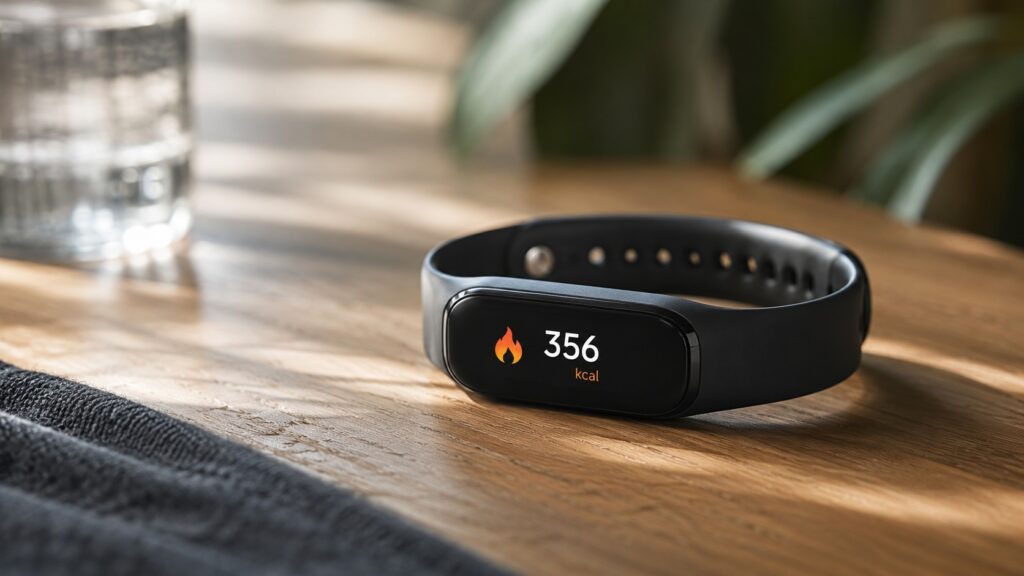
Fitness tracker manufacturers do not disclose exactly how their devices calculate calories burned.
How large is the calorie-counting error?
Across all devices, the typical overestimate ranged from 15% to 25%, with some individual models averaging even higher errors. Apple Watch performed best in terms of accuracy, while Garmin and Samsung devices showed the largest overestimates.
The Fitbit Sense 2 presented a different problem entirely. During testing, the device sometimes returned implausibly low readings — recording as little as a single calorie burned over an entire high-intensity session, or returning no data at all. These clear malfunctions forced the researchers to exclude a substantial portion of Fitbit data from their final analysis.
Body fat percentage amplifies the error
Perhaps the most significant finding was that the inaccuracy was not evenly distributed. The higher a participant’s body-fat percentage, the more the smartwatch overestimated their calorie burn.
Lead study author Jason Kostrna warned of the practical consequences: “You can be off by hundreds of calories every week and easily end up in a surplus, thinking you’re in a deficit.”
Why does this happen? The researchers do not yet have a definitive answer. They hypothesize that the problem lies in the proprietary algorithms manufacturers use to estimate energy expenditure. Because companies do not disclose the training data behind their models, the datasets may not be sufficiently diverse to account for varying body compositions.
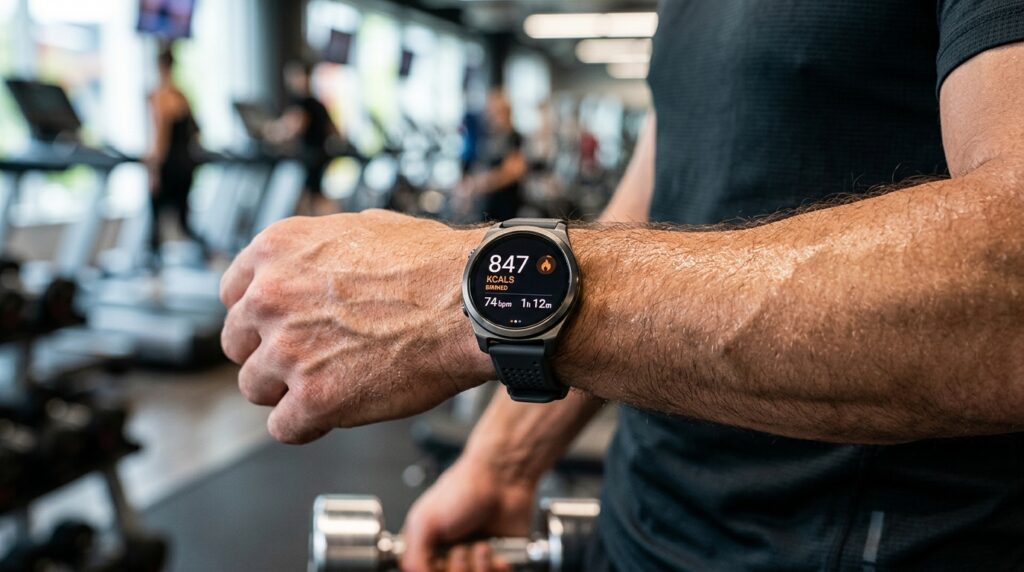
The higher the body-fat percentage, the less accurate the device’s calorie data becomes.
How to use your tracker more wisely
Based on the study’s findings, the researchers offer several practical suggestions for smartwatch users:
- Treat calorie counts as a rough guide. Always mentally round the displayed number down rather than taking it at face value.
- Don’t aggressively cut food intake to “compensate” for inaccuracy. Your body still needs fuel for recovery and consistent training.
- Focus on metrics smartwatches measure well. Heart rate and time spent in different heart-rate zones are more reliable data points and genuinely useful for building endurance.
What comes next
The FIU team is reportedly preparing a follow-up study to examine how smartwatches handle calorie estimation during resistance training, where short bursts of intense activity are even harder for algorithms to interpret. Until then, the researchers suggest treating the calorie figure on your screen with healthy skepticism — while acknowledging that if a wearable motivates you to exercise at all, it is already doing its most important job.