The price gap between the cheapest and most expensive robot vacuums can be tenfold or more, but the source author argues that the difference is not random — it maps to three distinct tiers of automation. Understanding those tiers is the key to deciding how much to spend. The source article breaks down eight cleaning devices (including two stick vacuums for comparison) across the Jonr and Roborock lineups, explaining what each price jump actually buys. The core insight: you are not paying for better suction as you move up — you are paying for less human involvement.
What you need to know
- The main cost driver in robot vacuums is the docking station’s capabilities (self-emptying, mop washing, mop drying, plumbed water), not suction power.
- The source compares eight models spanning three product categories: manual stick vacuums, mid-range self-cleaning robots (Roborock Qrevo line), and flagship robots (Roborock Saros line).
- Plumbed water connection — where the station fills and drains itself — sits at the top tier and only makes sense if your home’s plumbing allows the installation.
- Two of the eight devices reviewed are not robots at all but upright stick vacuums, included to illustrate the trade-off between cleaning quality and hands-free operation.
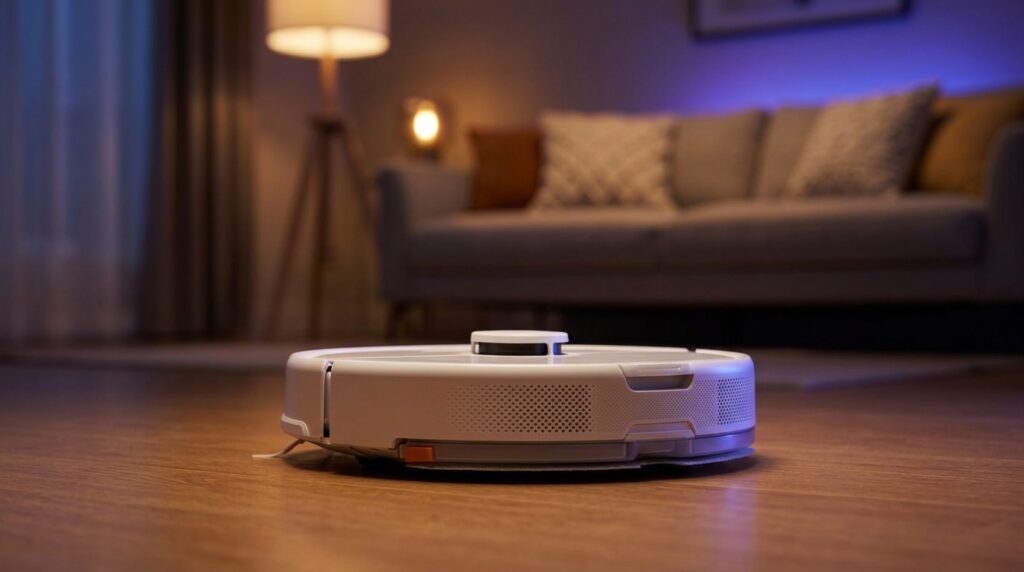
From an affordable mopping vacuum to a robot with plumbed water — the full range in one roundup.
What separates cheap robots from expensive ones
According to the source author, the single biggest differentiator between budget and premium robot vacuums is not motor power — it is the docking station. A cheap robot returns to its dock only to recharge. A more expensive one will also auto-empty its dustbin, wash its mopping pads, dry them, and head back out to continue cleaning. In other words, you pay for months of hands-off operation rather than marginally better floor cleaning.
The source identifies three ascending tiers:
- Basic: The robot vacuums and lightly mops, but you must manually maintain it — emptying the bin, rinsing pads, refilling water.
- Self-service station: The dock empties dust, washes and dries mop pads automatically. You still refill the clean-water tank periodically.
- Plumbed water: The station connects directly to your home’s water supply and drain, so it fills and empties itself. This is the most expensive tier and requires compatible plumbing.
Keeping these three levels in mind makes the wide price spread across models much easier to understand.
Jonr H2 Pro — a manual stick vacuum, not a robot
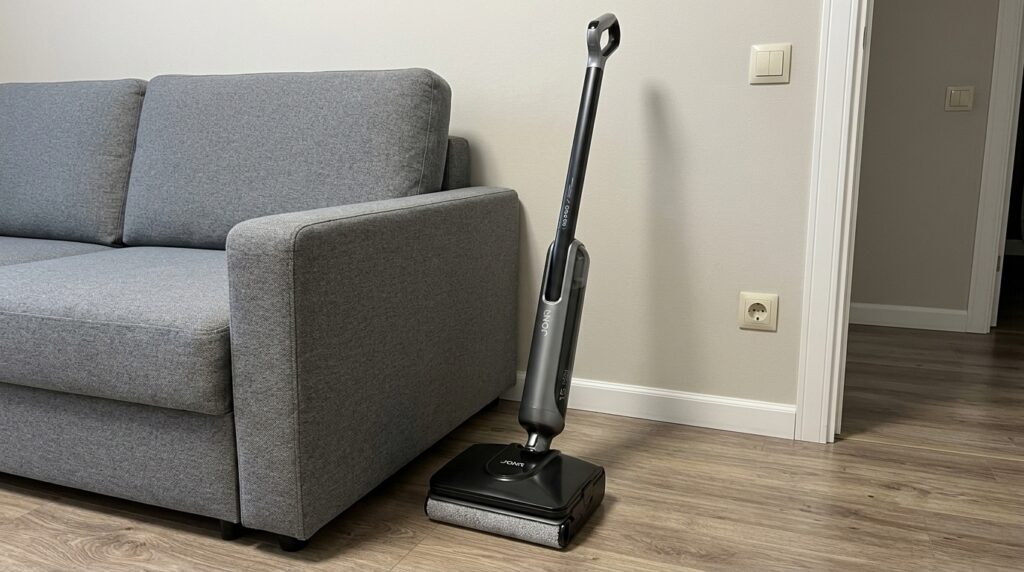
Not a robot but an upright mopping vacuum: you do the cleaning, but the price is honest.
The source author includes this model as a deliberate contrast. The Jonr H2 Pro is not a robot at all — it is a manual upright wet-and-dry vacuum that you push across the floor yourself. The trade-off is straightforward: you sacrifice hands-free convenience, but the source author notes it cleans floors more thoroughly than comparably priced robots and costs less than any robot in the roundup. For small apartments where cleaning quality matters more than automation, the source author calls it a practical option.
Roborock Qrevo L — entry-level robot with a self-cleaning station
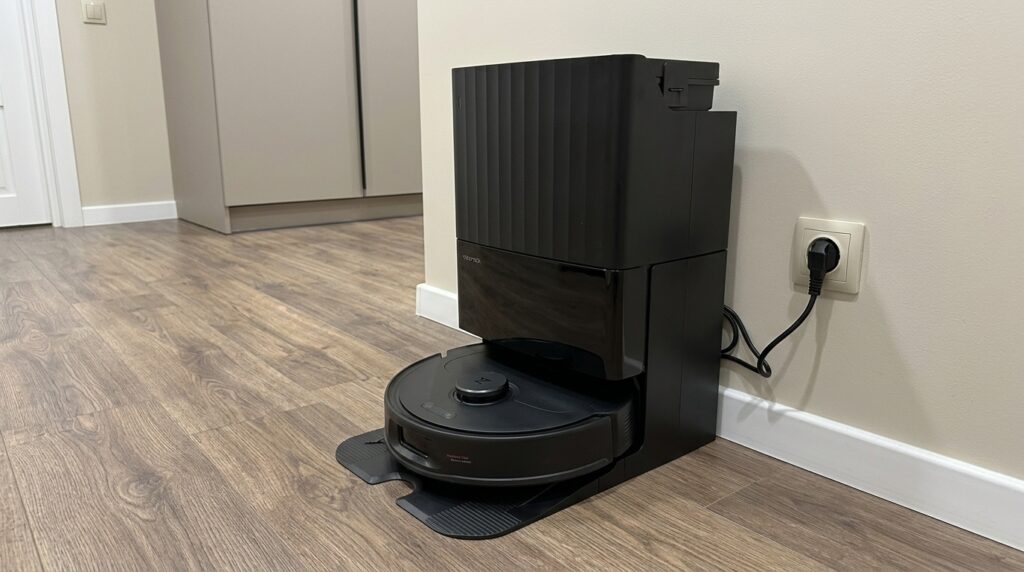
A localized version with a self-cleaning station at the lowest price point for this feature set.
The Qrevo L is described as the entry point for a “real” robot vacuum with station-based self-maintenance. It is the base model in Roborock’s Qrevo lineup. The source author notes it handles dust collection and light mopping adequately but cautions against expecting deep-cleaning miracles from its mop. For a standard-sized apartment where the goal is simply to stop mopping by hand, the source author considers this a reasonable starting point and advises against paying more if plumbed water and mop drying are not priorities.
Roborock F25 ACE Combo — premium stick vacuum, still manual
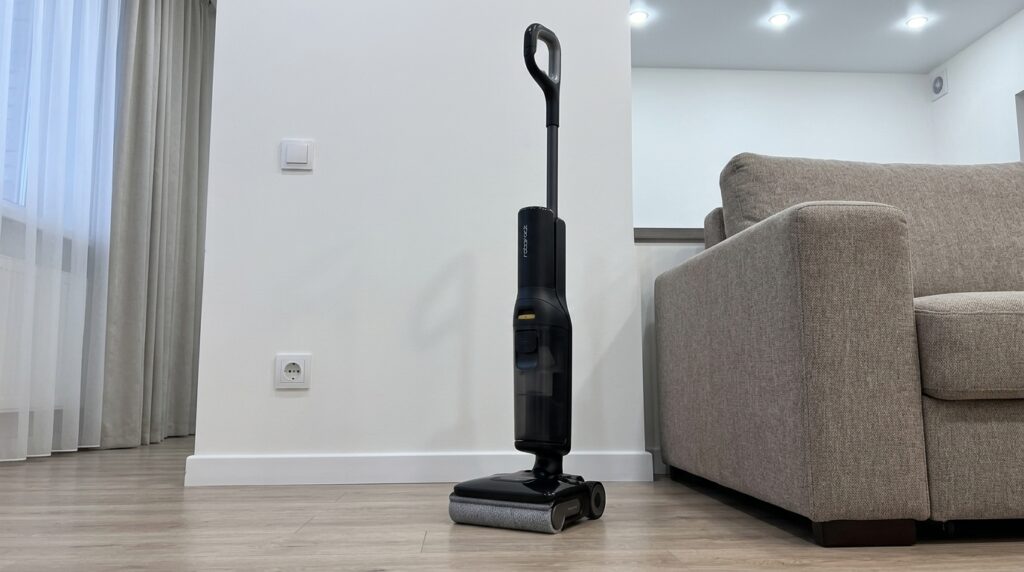
Again not a robot but an upright vacuum — this time from Roborock in a premium configuration.
The Roborock F25 ACE Combo costs more than some robots in this roundup, yet it is still a manual upright wet-and-dry vacuum. The source author highlights that its premium price buys superior mopping quality — corners, shoe marks, post-cooking kitchen messes — areas where robots typically struggle. The extra cost here goes toward cleaning performance, not autonomy. The source author recommends it only for users who prioritize floor cleanliness over hands-free operation and are willing to do the cleaning themselves, just faster and more thoroughly.
Roborock Qrevo CurvC — less frequent maintenance
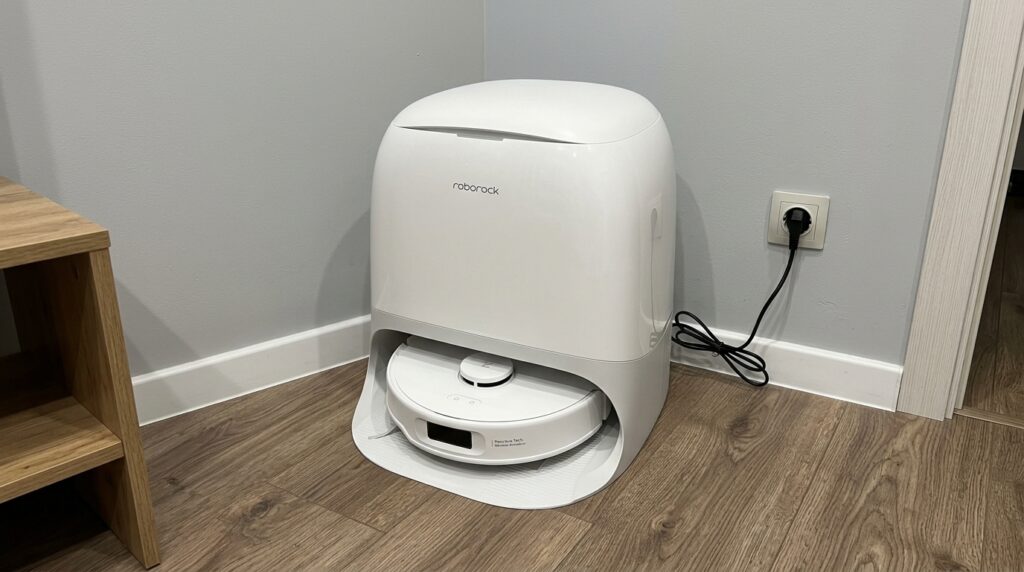
The next step up in the Qrevo line with more capable station maintenance.
The Qrevo CurvC sits above the Qrevo L in Roborock’s mid-range lineup. According to the source author, the price premium over the base Qrevo L buys improved station capabilities — meaning you need to interact with the robot less often — rather than better floor cleaning per se. The source author suggests this upgrade is justified for users who run the robot frequently (daily cleaning) and want the station to handle more of the maintenance. For those who only vacuum every couple of days, the source author considers the extra cost harder to justify.
Roborock Qrevo Curv 2 Flow — top of the mid-range
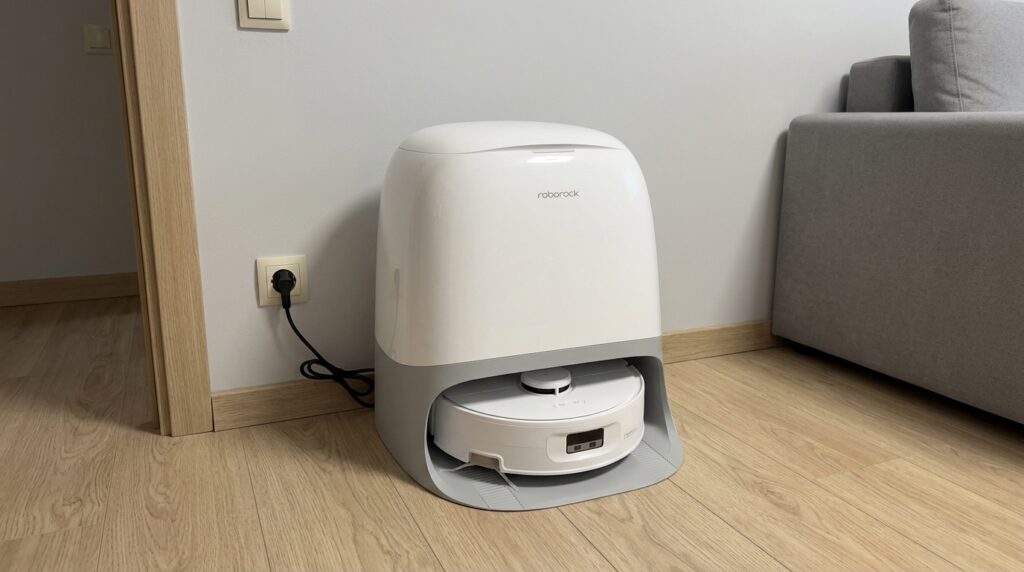
The top of the Qrevo line — the flagship Saros models cost even more, so this is the sensible ceiling.
The Qrevo Curv 2 Flow is the second-generation top of the Qrevo range. The source author describes it as the best option for buyers who want the maximum from the mid-range segment without stepping into the significantly more expensive Saros flagship line. Being a newer generation, it benefits from more refined station and mopping performance and more up-to-date app and firmware support. The source author notes, however, that this is already the zone of diminishing returns — each incremental price increase delivers progressively smaller improvements. For large apartments with daily cleaning needs, the source author considers it a logical choice.
Roborock Saros 10R — entering the flagship tier
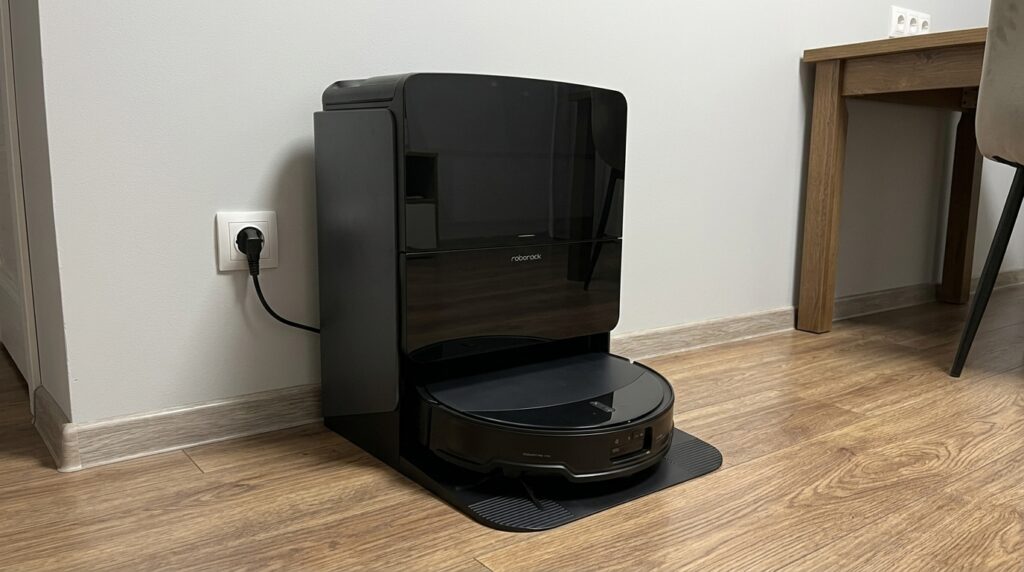
The first model in the Saros line: a different level of hardware and price.
The Saros 10R marks the transition from Roborock’s mid-range Qrevo family to its flagship Saros lineup. The source author is candid: the jump from the top Qrevo to the entry Saros is more about premium hardware, maximum automation, and future-proofing than about dramatically cleaner floors. This is a product aimed at buyers who want the best Roborock currently offers and are willing to pay a significant premium for it. The source author notes that for users who simply need a reliable working robot, reaching this price tier is not necessary.
Roborock Saros 20 — near the top, without plumbing
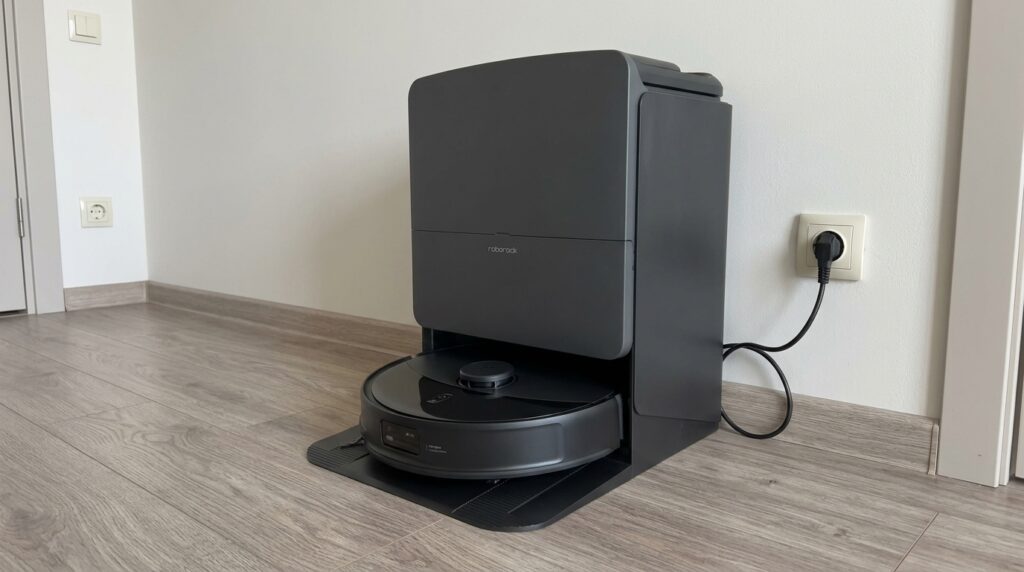
The senior Saros without plumbed water — the top pick for those who do not need pipe installation.
The Saros 20 is the second-generation flagship. Its station washes and dries mop pads automatically, but water must still be added manually — there is no plumbed connection. The source author considers this the sensible ceiling for most apartments where accessing water pipes near the dock is impractical. Compared to the Saros 10R, the premium buys a newer generation with refined internals. The source author advises choosing the newer model if the two are priced similarly, but acknowledges that at this level, buyers are paying for incremental refinements rather than transformative improvements.
Roborock Saros 20 RDS — the plumbed-water maximum
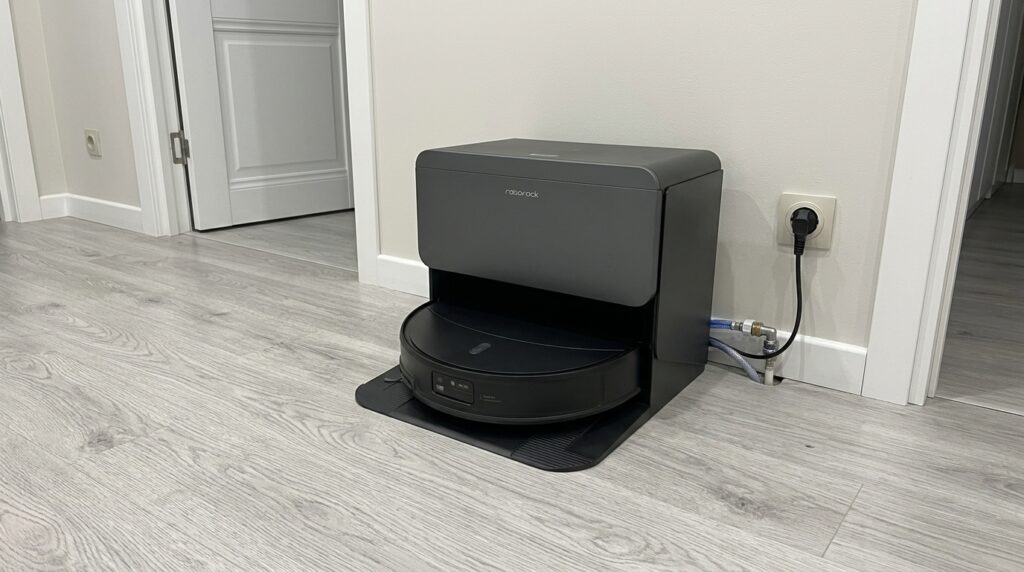
The top of the roundup: the same hardware as the Saros 20, plus plumbed water connection.
The Saros 20 RDS sits at the very top of this roundup. It is identical to the standard Saros 20 in every respect except one: its station connects directly to your home’s water supply and drain. This means the dock fills its own clean-water reservoir and empties dirty water automatically — you can potentially go months without touching the robot at all. The source author emphasizes that the entire price premium over the standard Saros 20 pays for this plumbing feature alone. If your home cannot accommodate the pipe connection, the standard Saros 20 delivers the exact same robot for less.
How to think about the lineup
The source author’s summary framework is straightforward:
- If floor cleanliness matters more than hands-free convenience, consider a manual stick vacuum (Jonr H2 Pro or Roborock F25 ACE Combo). They clean more thoroughly than comparably priced robots but require your active participation.
- If the goal is to stop cleaning altogether, the Roborock Qrevo L is described as a sensible entry point. For standard apartments with occasional cleaning needs, the source author advises against paying more.
- For daily cleaning in larger spaces, the Qrevo CurvC or Curv 2 Flow offer progressively more station automation, though with diminishing returns at each step.
- The Saros flagships are for buyers who want maximum hardware and long-term future-proofing. The plumbed Saros 20 RDS only makes sense if your home’s plumbing supports the installation; otherwise, the standard Saros 20 is functionally identical.
The source author’s overarching point is that the price tiers in robot vacuums correspond primarily to how much maintenance the station handles — not to how well the robot cleans your floor. Understanding that distinction is the key to avoiding overspending.