Google posted the Pixel 11 Pro and Pixel 11 Pro XL on its website ahead of its own launch event, revealing what the source author describes as the company’s best smartphones yet — but with several puzzling trade-offs. The phones upgrade the periscope zoom camera sensor significantly and move to the Tensor G6 chip, but they also cut battery capacity, drop back to 12 GB of RAM in the base configuration, and raise prices by $100–$200 compared to the Pixel 10 Pro generation. Here’s what the listings reveal and where the compromises lie.
What you need to know
- The periscope zoom camera sensor grows from 1/2.51″ to 1/1.95″ (still 48 MP, 5× optical zoom), which should improve low-light zoom shots.
- Base RAM drops to 12 GB — a configuration Google’s flagship Pixels haven’t used since the Pixel 8 era.
- Battery capacity shrinks: 4,850 mAh for the Pro (−20 mAh) and 5,115 mAh for the Pro XL (−85 mAh) versus their predecessors.
- Prices start at $1,099 / €1,199 for the Pixel 11 Pro (256 GB) and $1,299 / €1,399 for the Pixel 11 Pro XL (256 GB).
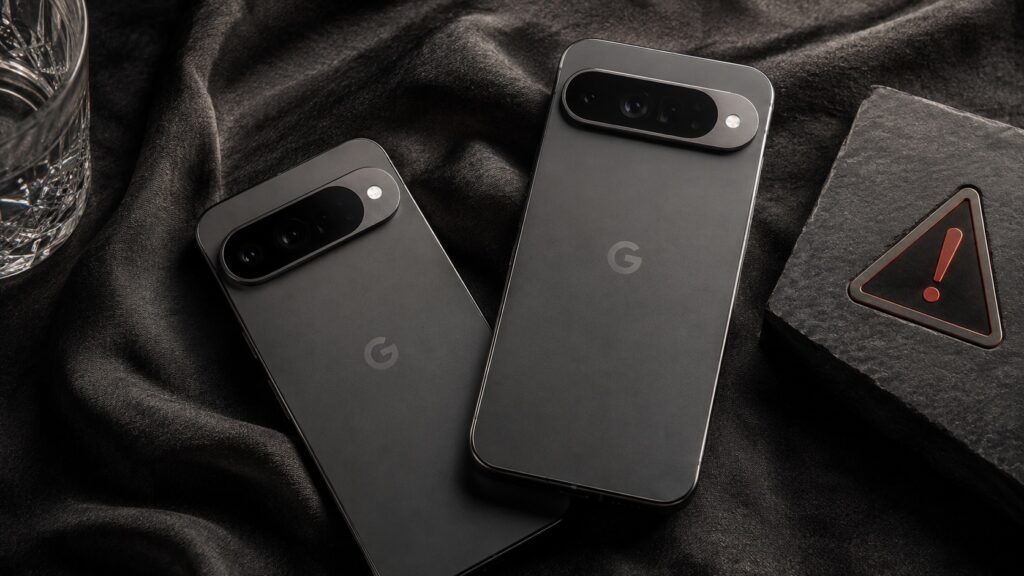
Google’s new Pixel 11 Pro lineup comes with notable compromises
What actually changed from the Pixel 10 Pro
According to the source, the upgrades are real but incremental. The Tensor G5 is replaced by the Tensor G6 — described as a routine generational update rather than a revolution. Wireless charging on the compact Pro model jumps from 15 W to 25 W. Both phones feature LTPO OLED displays with up to 120 Hz refresh rate and a peak brightness of 2,400 nits, protected by Gorilla Glass Victus 2.
The most meaningful improvement is the periscope zoom camera. Both models now use a larger 1/1.95″ sensor (up from 1/2.51″) at the same 48 MP resolution and 5× optical zoom. A larger sensor captures more light, so cleaner zoom shots — especially in low light — are a reasonable expectation, though real-world results remain to be tested. The main camera is 50 MP with optical stabilization, and the ultrawide is 48 MP.

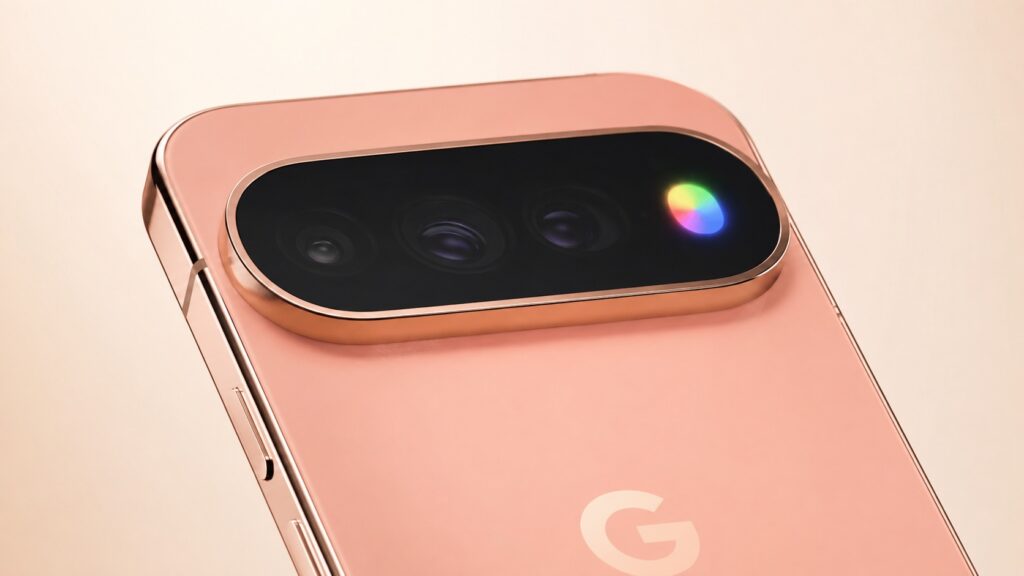
The new phones feature an RGB indicator called HiLight on the back
Google also removed the rear temperature sensor — the thermometer feature that the source author says few people used. In its place is a new RGB indicator called HiLight, a glowing light on the back of the phone. The source author characterizes this as replacing one marginally useful feature with another equally questionable one.
The downgrades Google would rather not highlight
The base configuration now ships with 12 GB of RAM. According to the source, Google’s flagship Pixels haven’t started at 12 GB since the Pixel 8 generation. For a 2026 flagship at these prices, the source author considers this a step backward.
Battery capacity has also decreased. While competitors like Samsung and Apple have been increasing battery sizes, Google went the other direction: the Pixel 11 Pro loses 20 mAh (now 4,850 mAh) and the Pro XL loses 85 mAh (now 5,115 mAh) compared to their predecessors. The reductions are small in absolute terms, but the direction is notable.
The included cable is another point of criticism from the source: both phones still ship with a USB-C cable limited to USB 2.0 speeds, which the source author finds disappointing at flagship pricing.

Pricing: $100–$200 more than last generation
Prices have risen across the board. The Pixel 11 Pro is $100 more expensive than its predecessor, which the source partially attributes to the elimination of the 128 GB storage tier and the reduction to 12 GB base RAM. The Pixel 11 Pro XL has increased by $100–$200, which the source suggests may be linked to memory market conditions but is otherwise difficult to justify.
- Pixel 11 Pro 256 GB — $1,099 / €1,199
- Pixel 11 Pro 512 GB — $1,219 / €1,329
- Pixel 11 Pro 1 TB — $1,449 / €1,589
- Pixel 11 Pro XL 256 GB — $1,299 / €1,399
- Pixel 11 Pro XL 512 GB — $1,419 / €1,529
- Pixel 11 Pro XL 1 TB — $1,649 / €1,789
Is the upgrade worth it over the Pixel 10 Pro?
The source author frames this as the central question. The Pixel 11 Pro generation delivers a new processor and a meaningfully improved zoom camera sensor, but buyers also accept smaller batteries, less base RAM, a USB 2.0 cable, and a decorative light replacing the temperature sensor — all at a higher price.
The source author’s assessment: if zoom photography is a priority, the Pixel 11 Pro and Pro XL are justified. For buyers who simply want a capable Pixel without paying the premium, the previous-generation Pixel 10 Pro models may offer a better value proposition, since the real-world experience gap is likely to be modest.
It’s worth noting that these conclusions are based on published specifications. Hands-on performance, real camera comparisons, and battery life testing have not yet been conducted, so final judgments should wait for independent reviews.