Peptides have become a wellness buzzword, marketed as a universal solution for energy, recovery, and anti-aging — especially amid growing interest in biohacking. But the reality is more nuanced: while some peptides are proven, approved medicines used to treat diabetes and obesity, the majority of those sold for general wellness have not been tested in humans and are officially considered experimental. Here is what the science actually supports and where the hype outpaces the evidence.
What you need to know
- About 7,000 peptides are known to exist in the human body, including insulin, oxytocin, and endorphins — they are natural signaling molecules.
- Roughly 100 peptides have been approved for therapeutic use in specific conditions such as diabetes and multiple sclerosis.
- Many wellness peptides sold online are labeled “for research only” to sidestep drug-approval oversight, and lack human safety data.
- A U.S. advisory committee recently voted to recommend expanded access to six unapproved peptides, but no new scientific evidence of their safety has emerged.

Peptides are a growing wellness trend, but the science behind many of them remains thin.
Short chains that run the body
Peptides are short chains of amino acids — the same building blocks that make up proteins, only smaller and simpler in structure. Inside the body they act as molecular messengers: they approach a cell and tell it what to do. Some function as hormones; others do not.
There are approximately 7,000 known peptides that help organs communicate and regulate functions ranging from blood-sugar control to mood. Insulin, oxytocin, vasopressin, and endorphins are all peptides. In other words, your body already produces and relies on peptides — no biohacking required.
From insulin to GLP-1 weight-loss drugs
The first synthetically produced peptide was insulin. Normally made by the pancreas to regulate blood sugar, synthetic insulin became essential for people with diabetes whose bodies cannot produce enough of it.
More recently, a class of drugs called GLP-1 receptor agonists — which includes products such as Ozempic and Wegovy — has become enormously popular. The hormone GLP-1 is naturally produced in the gut and works partly by signaling the brain that you are full, reducing the desire to eat more.
An important practical note: although many therapeutic peptides are delivered by injection, others can be taken orally or inhaled via nasal sprays. “Peptide” does not automatically mean “injection.”
The line between medicine and supplement
This distinction matters most for consumers. Peptides intended to treat or prevent disease, or to affect the structure or function of the body, are legally classified as drugs and must be regulated and approved for safety and efficacy.
Peptides derived from plants or food — such as collagen peptides — are classified as dietary supplements. Supplements are regulated far less strictly than drugs, which means their concentration and purity can vary more than those of approved medications. In practice, the contents of a collagen supplement jar may differ noticeably from what the label states.
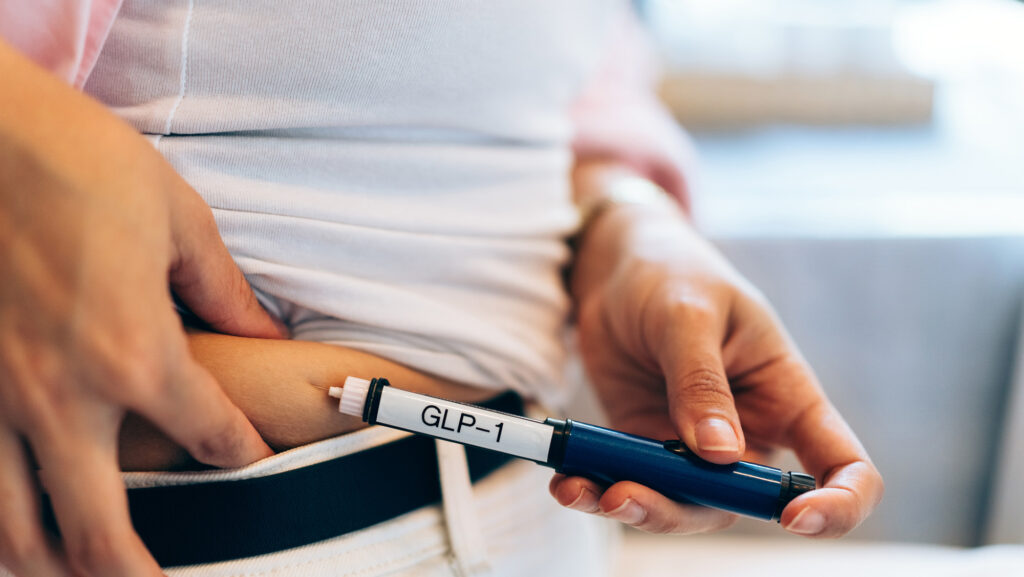
GLP-1 agonists, used for blood-sugar control and weight loss, are an example of approved peptide-based drugs.
What is proven and what is still experimental
Approved peptide drugs have gone through years of rigorous clinical trials to establish their safety and efficacy — the standard requirement for regulatory approval. About 100 peptides have been approved for therapeutic use in specific conditions, including diabetes and multiple sclerosis.
Then there is the trendy end of the market. Some peptides have become popular for general wellness and biohacking — self-experimentation aimed at improving physical and mental performance. They are often sold online with the label “for research purposes only,” a designation that helps sellers avoid the oversight applied to approved drugs.
According to the source, a Stanford peptide researcher has noted that only a small number of peptides are actually approved and considered safe and effective for specific diseases. Many others are not approved and should be regarded as experimental.
U.S. regulatory shift — and its limits
In July, a U.S. advisory committee discussed seven unapproved peptides and voted to recommend expanded access to six of them. These products are promoted for a range of purposes, including accelerating muscle recovery, treating gut damage, reducing inflammation, improving metabolism, enhancing cognitive function, and extending lifespan.
However, this is only a recommendation. The FDA still needs to complete a formal process before any policy change becomes final. Notably, this represents a reversal: these same six peptides were restricted in 2023 on the grounds that they were too risky for compounding pharmacies to produce.
Some peptides are medicines; others are sold as ordinary supplements.
Crucially, no new scientific evidence has emerged to support this shift. The vote does not mean these peptides have become more scientifically validated, safer, or more effective. It merely opens the possibility for more people to access them through compounding pharmacies.
Pure does not mean safe
Obtaining a peptide from a pharmacy does offer greater confidence that the vial contains the correct peptide at high purity and sterility. But pure does not equal safe. It still does not mean the peptide is safe for human use or capable of treating any disease.
The bottom line from specialists is straightforward: “authorized for compounding” is not the same as “approved.” For most wellness peptides, human data are scarce, the correct dose is unknown, and there is no certainty about what is actually in the vial. Add to that the unknown risks of combining these peptides with other medications or with each other.
Stripped of marketing, the landscape looks like this:
- Insulin and GLP-1 agonists — proven medicines with demonstrated benefits
- Collagen and food-derived peptides — supplements with inconsistent composition
- Wellness peptides sold online — experiments with no established safety data
The source notes that the Stanford peptide researcher himself takes a skeptical view of the trend: “I personally would not inject any experimental molecules into myself.” If a specialist who studies peptides professionally is in no rush to try them, that is a useful benchmark for everyone else. A trendy vial purchased online and an approved diabetes medication remain very different things — even when both carry the word “peptide” on the label.