Waking up in the middle of the night used to be normal
If you’ve ever woken up at three in the morning for no apparent reason and couldn’t fall back asleep for a long time, you probably thought something was wrong with you. But uninterrupted eight-hour sleep is a modern habit, not an evolutionary constant. For centuries, people slept in two shifts, and a midnight awakening was as ordinary as breakfast.
What Are First Sleep and Second Sleep
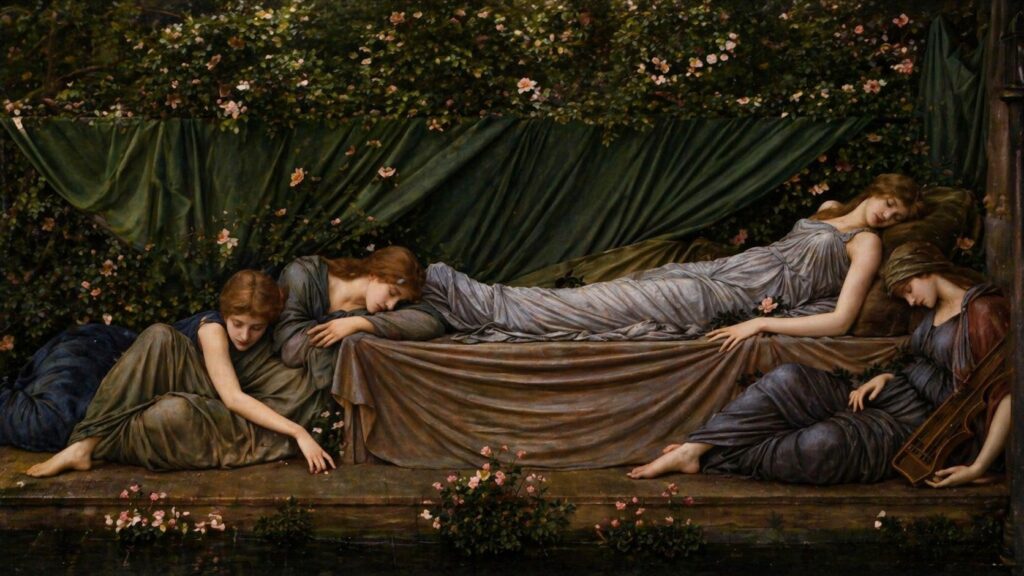
Before the advent of electricity, most people went to bed shortly after sunset. They slept for several hours, then woke up around midnight for an hour to an hour and a half, after which they fell asleep again until dawn. The first segment was called “first sleep,” the second — “second sleep.” Between them was a quiet interval of wakefulness that was perceived as a natural part of the night.
Historian Roger Ekirch of Virginia Polytechnic Institute discovered more than two thousand references to this pattern in historical documents: court records, diaries, letters, medical texts, and literary works. The first such reference he found was in a court document from 1697, where a nine-year-old girl mentioned that her mother got up after her “first sleep.” The term was used so casually that it clearly required no explanation.
Traces of biphasic sleep are also found in ancient literature. Virgil in the “Aeneid” mentions “the hour that ends the first sleep.” Homer uses similar phrasing. The Romans called first sleep “primus somnus,” and references to it have been found from the poet Ennius in the 2nd century BC to authors of the 5th century.
The nighttime break itself was not meaningless waiting. People got up to add wood to the fire, check on animals, read, or pray. Many couples used the quiet hours for intimacy. A 16th-century French physician, Laurent Joubert, even attributed the fertility of the working class to the fact that intimacy “after the first sleep” brought more pleasure and was more productive.
How Electricity Changed Human Sleep
The disappearance of biphasic sleep occurred over the last 200 years and was directly linked to the spread of artificial lighting. First oil lamps, then gas lighting, and by the end of the 19th century, electricity turned the night into an extension of the day. People stopped going to bed shortly after sunset and began staying up late.
From a biological standpoint, bright light in the evening shifts the circadian rhythm, the body’s internal clock. Ordinary room lighting before bed suppresses and delays the production of melatonin, the hormone that signals to the body that night has arrived, postponing sleep onset by about an hour and a half. The body becomes less inclined to wake up in the middle of the night because it falls asleep later in the first place.
At the same time, the Industrial Revolution changed work schedules. Factory shifts required a single block of rest, and by the early 20th century, the idea of eight hours of continuous sleep had displaced the centuries-old rhythm. According to Ekirch, the last mentions of biphasic sleep in documents date to the period of World War I.
Research on Biphasic Sleep in Humans
The main argument in favor of biphasic sleep being a biological norm rather than merely a cultural habit came from an experiment by psychiatrist Thomas Wehr of the U.S. National Institute of Mental Health in 1992. Wehr placed volunteers in conditions of 14 hours of darkness daily, without access to artificial light, for several weeks.
In the first days, participants slept for 11 hours, likely compensating for accumulated sleep debt. But by the fourth week, their sleep stabilized at 8 hours — split into two blocks of 3–5 hours with an interval of calm wakefulness of 1–2 hours. People experienced no discomfort from this; on the contrary, the interval was described as a state resembling meditation.
A 2017 study led by David Samson of Duke University examined sleep in an agricultural community in Madagascar living without electricity. The result was similar: local residents still slept in two phases, waking up around midnight.
However, the picture is not so clear-cut. A 2015 study that examined three groups of hunter-gatherers in Tanzania, Bolivia, and Namibia showed that these people slept continuously for 6–7 hours. The authors suggested that biphasic sleep may have been characteristic specifically of inhabitants of higher latitudes with their long winter nights, rather than of all humanity as a whole.
How Winter Changes the Perception of Time
Biphasic sleep may have played another role we don’t think about: it changed the perception of how long the night lasted. A quiet break in the middle created a clear “middle of the night,” and long winter evenings subjectively seemed shorter and were easier to endure.
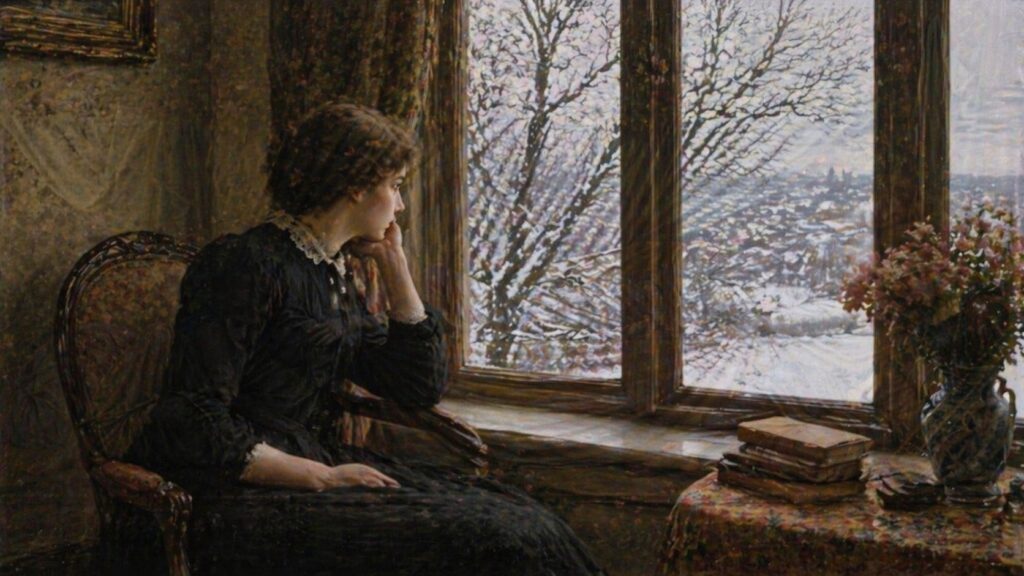
In winter, when morning light arrives later and remains dim, it is harder for our circadian rhythms to synchronize. Morning light is especially important for regulating the internal clock because it contains more blue light, which most effectively stimulates cortisol production and suppresses melatonin.
How easily the sense of time is lost without light cues is demonstrated by classic isolation experiments. People who lived for weeks in caves or laboratories without natural light and clocks quickly began miscounting days. In conditions of polar winter, when there are no sunrises and sunsets, time can subjectively come to a standstill.
Interestingly, inhabitants of higher latitudes adapt to this differently. A 1993 study showed that the Icelandic population and their descendants who moved to Canada have unusually low rates of seasonal affective disorder (winter depression). Scientists suggested that genetic characteristics help these people cope with the long Arctic winter.
The desire to sleep is strongly influenced by the amount of light
Waking Up at Three in the Morning Is Not Always Insomnia
Sleep specialists emphasize that brief awakenings are a normal phenomenon. They often occur during transitions between sleep phases, including before the REM (rapid eye movement) phase, which is associated with vivid dreams. The problem is not the awakening itself, but how we react to it.
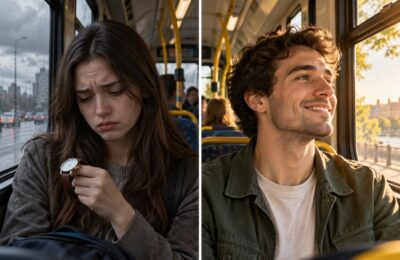
Without an interval when you can calmly get up and do something, as our ancestors did, waking up at three in the morning often turns into anxious clock-watching. The brain’s perception of time is elastic: worry and boredom stretch minutes, while activity and calm compress them. Lying in the dark and counting minutes, you literally make time drag slower.
Modern cognitive behavioral therapy for insomnia (CBT-I) surprisingly echoes pre-industrial practice. Its key recommendations:
- If you haven’t fallen asleep within 20 minutes, get out of bed;
- Engage in a calm activity in dim light, such as reading;
- Return to bed only when you feel sleepy;
- Remove clocks from sight and stop monitoring the time.
Essentially, therapists advise doing the same thing people did for centuries: instead of fighting the awakening, accept it and spend that time calmly.
Understanding that nighttime awakening may not be a disorder but an echo of an ancient rhythm can in itself reduce anxiety. And anxiety is the main enemy of falling asleep. The very fact that you know about biphasic sleep already brings you a little closer to the calm with which our ancestors greeted the midnight hour between first and second sleep.