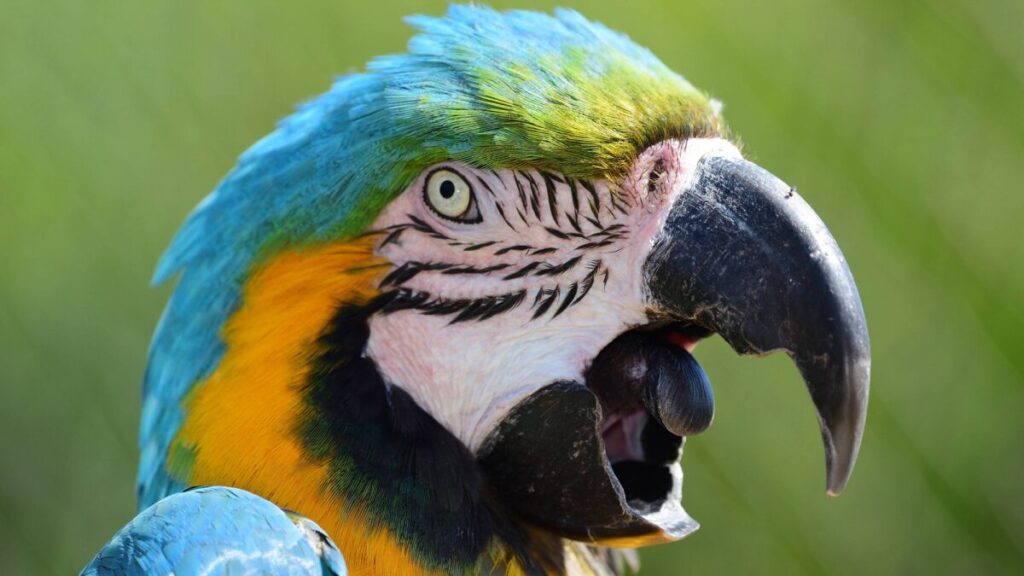
Parrots call each other by name — just like humans
Parrots are capable of not just copying human speech and talking like people, but meaningfully using names — addressing a specific person or animal. A new study of nearly 900 pet birds showed that some parrots use names in roughly the same way we do. However, there are some amusing differences: some birds say their own name to attract attention — something humans don’t typically do.
How Scientists Studied Parrot Speech and Name Usage in the Experiment
Studying parrot communication in the wild is extremely difficult: birds live in tropical forests, their calls are hard to decipher, and understanding exactly who a sound is directed at is nearly impossible. That’s why biologist Lauryn Benedict from the University of Northern Colorado took a different approach — she decided to work with birds that speak human language, meaning parrots living in people’s homes.
The scientists used data from the ManyParrots project — a network of researchers who collect surveys and audio recordings from parrot owners. Detailed data was obtained for 884 birds of 78 species. The results were published in April 2026 in the journal PLOS ONE.
Of the 884 birds, 47% of parrots, according to their owners, used names — specifically 413 parrots of 63 species. These birds produced a total of 802 phrases containing names. But not every parrot that says “Hello, Sasha!” understands that it’s addressing specifically Sasha.
Many parrots clearly learned names as part of a greeting phrase without associating the name with a specific person. If a bird says “Hello, Masha!” to everyone who walks in, that’s more likely automatic repetition than conscious addressing.
However, 88 parrots from 30 species used names in a truly appropriate way — addressing the correct person or animal. Of these, 42 birds of 19 species showed an even stricter result: they applied a specific name only to one specific being, rather than to a group or category. Scientists call this “individualized” name use.
How Parrots Use Names in Life and Communication with People
Parrots used names when greeting, saying goodnight, and to attract the attention of their owner. Non-social contexts were rare. Some examples from the study look particularly convincing: birds greeted the right person, called for someone who had left the room, and even commanded a specific dog by name to be quiet.
But there were also unusual patterns not typical of humans. The most common was the use of one’s own name: 280 parrots of 55 species said their own name. Why? According to the researchers, most often — to attract attention to themselves. It’s roughly as if you walked around the apartment repeating your own name until someone paid attention to you.

Parrots are incredibly social creatures, and names help them communicate. Image source: zookakadu.ru
Besides people, parrots called other birds by name (43 cases) and non-bird pets (39 cases). In other words, your parrot may well know and use your cat’s name. And this is especially interesting, since cats are also capable of recognizing the names of people and other animals.
Why Parrot Names Are Not Equivalent to Human Speech and Language
Despite the impressive results, the researchers emphasize caution in their conclusions. Christine Dahlin, co-author of the study, says directly: “We cannot conclude that this is an analog of human names, because animal signals are often too different, and we don’t fully understand the intention behind them.”
Moreover, all the birds in the sample used names invented by humans, and the question remains open whether parrots can create names on their own. Nevertheless, the study shows that parrots possess the cognitive and vocal abilities for flexible use of names — from communicating with people to talking about those who are not nearby.
Which Animals Use Names: Elephants, Dolphins, and Birds
Parrots are far from the only animals in which analogs of names have been found. A 2024 study showed that wild African savanna elephants address each other by name using individual sounds.
Bottlenose dolphins develop unique signature whistles — each individual has its own vocal signal that other group members use for identification. Dolphins also copy each other’s signals, effectively addressing the owner of the sound by “name.”
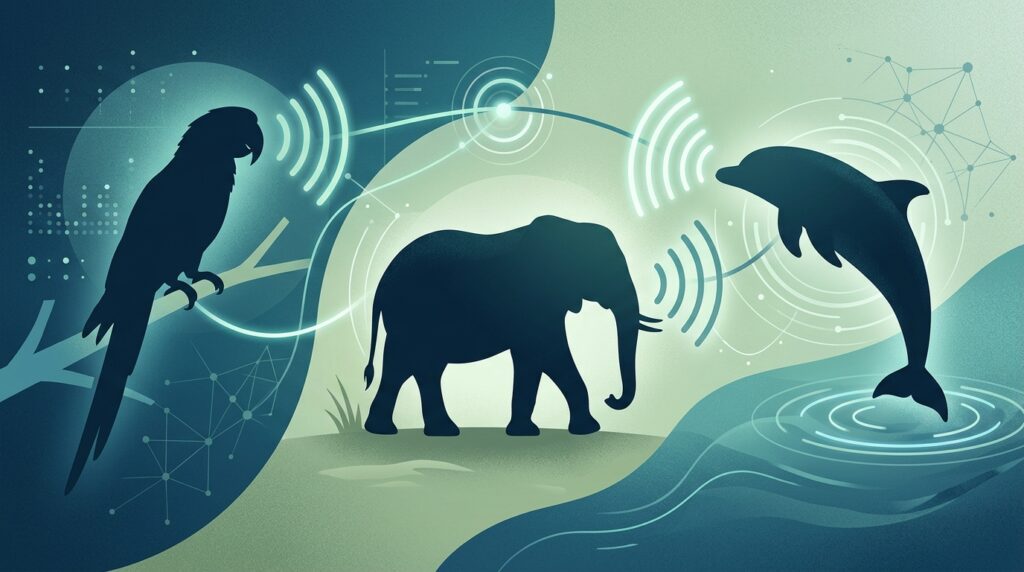
Parrots, elephants, and dolphins — three groups of animals in which analogs of names have been found
There is an important difference. Dolphins and parrots create “names” through imitation — they reproduce a sound associated with a specific individual. Elephants, however, based on the data, do not copy the sound of the addressee but use arbitrary vocal labels, which is closer to the principle of human language. All these species — humans, dolphins, parrots, and elephants — share one thing: they are intelligent, long-lived social animals living in stable groups.
What Parrot Names Tell Us About Animal Intelligence and Memory
Names are not just convenient labels. Humans organize their social lives largely because they can call others by name. Names may also help in the complex social relationships of animals. If a caged parrot can learn who is who and address the right being by name, this indicates serious cognitive abilities — associative memory, understanding of social roles, and the ability to use sounds contextually.
The researchers emphasize: parrots are very social animals with impressive imitation abilities. If they can learn and appropriately use names in captivity, it would not be surprising if they do the same in their wild flocks. And scientists are increasingly trying to decipher animal language not only through sounds but also through behavior, context, and social connections.
Meanwhile, data collection continues, and if you have a talking parrot, you can contribute to science through the Many Parrots Project.