You need water reserves in case of a shutoff, and there are specific recommendations on how many liters
In Russia, hot water is shut off every summer, although in other countries this isn’t always the case. Sometimes all water is shut off, but fortunately, residents are usually warned in advance. At that point, many people grab the first bottles they can find, fill them with tap water, and relax. But a few hours later, it turns out that this water wasn’t enough for soup, tea, or even just washing your face. Because a comfortable day without water supply requires not just containers of liquid, but three completely different types of reserves. And if you don’t know how they differ, the second day of the shutoff will be a nightmare.
How Much Water Does a Person Need Per Day
The minimum for survival is drastically different from our usual consumption. The U.S. Centers for Disease Control and Prevention (CDC) states a strict minimum of about 4 liters per person per day. This is only enough for drinking and the most basic hygiene.
However, for a more or less normal life in an apartment, the World Health Organization (WHO) recommends storing 15 to 20 liters per person per day. This figure already includes cooking, hand washing, and cleaning. Russian EMERCOM standards confirm this logic: of the recommended volumes, only a small portion goes to actual drinking, while the majority is spent on household needs.
If you convert this into practical numbers, a reasonable total reserve for a family of three for a week would be about 200–300 liters. That sounds intimidating, but storing this entire volume exclusively as expensive drinking water is completely unnecessary.
What Kind of Water Is Best to Store at Home for Drinking and Household Needs
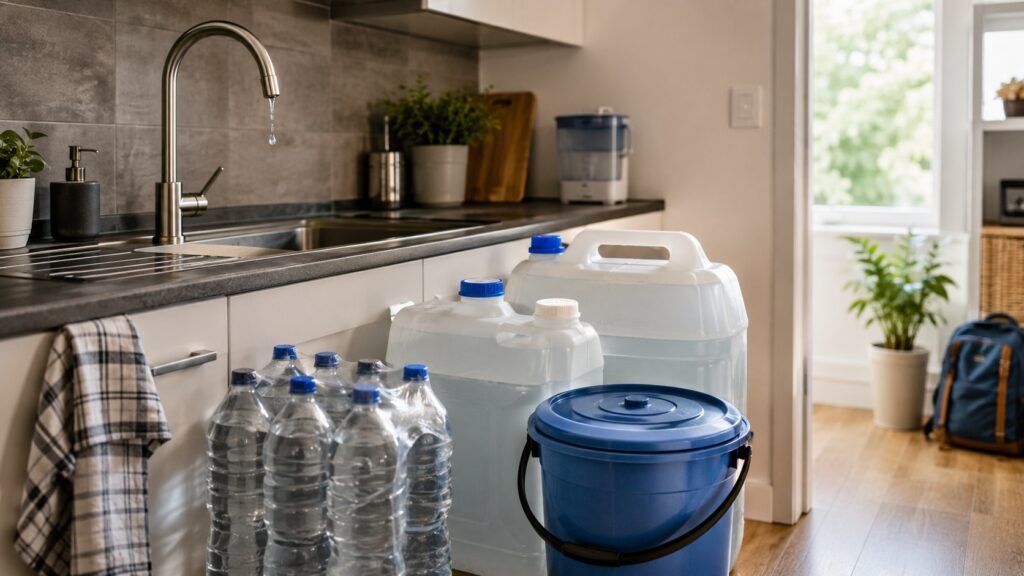
The most reliable and safe source of drinking water in an emergency is considered to be factory-sealed bottled water in unopened containers. It’s worth keeping it in bottles ranging from 1.5 to 19 liters, distributed across rooms. This is the water that should be used for cooking, preparing baby formula, and brushing teeth.
For flushing the toilet, soaking dishes, and mopping, non-potable utility water works perfectly. Pour it into canisters and tightly sealed buckets, making sure to leave a visible label that says “do not drink.”
If you’ve been warned about the shutoff in advance and are filling your own supply from the tap, use only food-grade plastic canisters. It is strictly forbidden to fill containers that previously held toxic substances, pesticides, or household chemicals. Experts recommend replacing self-filled drinking water every 6 months, and swapping factory-bottled water as its expiration date approaches.
What to Do with the Toilet When the Water Is Shut Off
Everything depends on whether the sewer system is still working. If the pipes are fine, the toilet can be flushed manually: just pour a bucket of utility water directly into the bowl.
But if the sewer system is damaged or overwhelmed, flushing is strictly prohibited — otherwise you’ll get a backflow of sewage right into your apartment. In such cases, sanitation services recommend shutting off the water supply to the tank and lining the bowl with two heavy-duty garbage bags.
What Household Items Are Needed During a Prolonged Water Shutoff
Instead of expensive survival gadgets, it’s better to stock up on simple items that effectively conserve this precious resource.
- Food-grade canisters of 10–20 liters. Several medium-sized containers are much more practical than one gigantic, impossible-to-lift tank;
- A regular spray bottle. It allows you to wash your hands and surfaces with a mist rather than a stream, which drastically reduces water usage;
- Disposable paper plates and utensils. It’s not the most eco-friendly option, but during a prolonged outage, it will save you dozens of liters on dish washing;
It’s important to remember that washing hands with soap removes germs best of all. If there is absolutely no clean running water, use a hand sanitizer with at least 60% alcohol content and disposable wet wipes.
How to Purify Water at Home
If your drinking supply has run out and only questionable water is available, the best way to kill bacteria remains boiling. Clear water should be brought to a vigorous rolling boil for at least 1 minute, while cloudy water should first be strained through a clean cloth or paper filter.
However, chemical or radioactive contamination cannot be removed by boiling or chlorination. If the water smells like fuel or toxic substances, drinking it is strictly prohibited.
Minimum Supply List for a Water Emergency at Home
To avoid panicking during a major water emergency, assemble a basic kit calculated for one adult for 7 days:
- Drinking water (30–40 liters) and utility water (40–70 liters);
- Several food-grade canisters with a capacity of 10–20 liters;
- A bucket with a tight lid and heavy-duty construction bags;
- Cat litter or sawdust for a portable toilet;
- Wet wipes, toilet paper, and alcohol-based hand sanitizer;
- Disposable gloves and paper towels.
Proper preparation for a water shutoff isn’t paranoia — it’s common sense. By separating your reserves into utility and drinking water, you’ll not only save money but also protect your home from unsanitary conditions. The key is to check expiration dates in time and keep your sanitation kit in an easily accessible place.