OnePlus Nord 6 and Nothing Phone 4a — two of the most notable mid-range smartphones in 2026, but their approaches are completely different. The freshly arrived in Russia OnePlus Nord 6 features a 7,500 mAh battery, IP68+IP69K protection, and the near-flagship Snapdragon 8s Gen 4 chip. The other offers a periscope telephoto lens with 3.5x zoom, the signature Glyph lighting, and one of the cleanest software shells among all Android manufacturers. The prices are close, and both smartphones compete for the title of best mid-ranger of the year. Which is better — OnePlus or Nothing Phone? Let’s break down the specs, differences in approach, and figure out which phone suits whom.
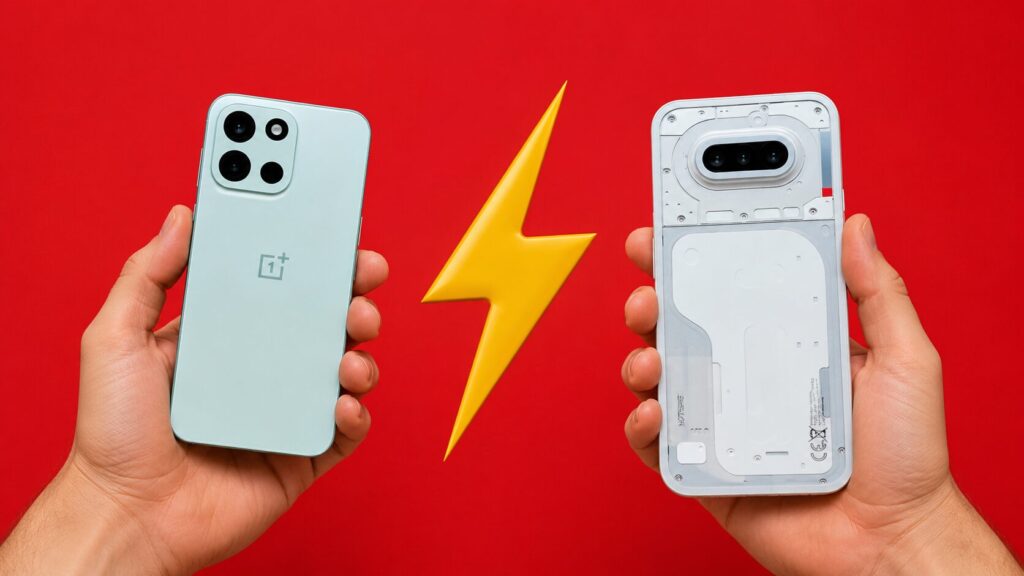
Comparing two new devices from closely related brands
OnePlus Nord 6 or Nothing Phone 4a — Which Smartphone Is More Powerful
The main hardware difference is the Snapdragon processor. OnePlus Nord 6 runs on the Snapdragon 8s Gen 4 — a near-flagship level chip. Nothing Phone 4a uses the Snapdragon 7s Gen 4, which is roughly one tier lower. In practice, this means: both smartphones run smoothly and without lag in everyday tasks, but in demanding games and multitasking, the Nord 6 will be noticeably faster.
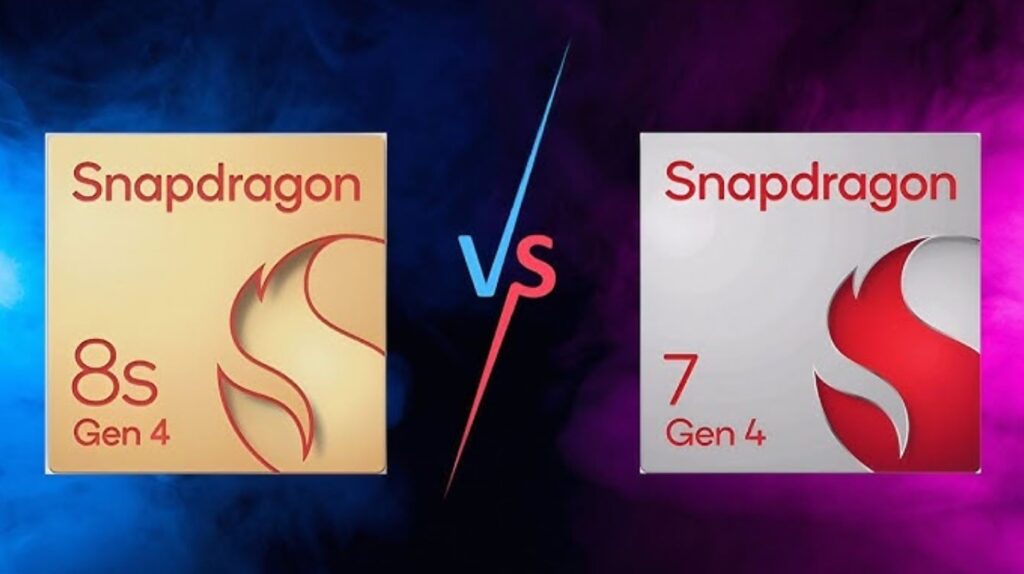
The smartphones run on chipsets of different tiers. Obviously, the 8-series version is more powerful
Additionally, the Nord 6 has faster storage — UFS 4.1 standard, while the Nothing Phone 4a comes with UFS 3.1. In practice, this speeds up app loading and switching between them. If you actively game or keep dozens of tabs and chats open, the difference will be noticeable. For messengers, social media, and streaming, both smartphones handle things equally well.
| Specification | OnePlus Nord 6 | Nothing Phone 4a |
|---|---|---|
| Processor | Snapdragon 8s Gen 4 | Snapdragon 7s Gen 4 |
| Chip class | Near-flagship | Mid-range |
| Storage | UFS 4.1 | UFS 3.1 |
Obviously, OnePlus Nord 6 is more powerful than Nothing Phone 4a thanks to its sub-flagship chipset, although the 7s Gen 4 is also good in daily life. But the storage type makes the real difference: UFS 4.1 is the optimal format today, while 3.1 is significantly slower. I felt the speed difference myself, which I discussed in my review of the Nothing Phone 3a.
Display: 165 Hz vs. a Brighter Panel
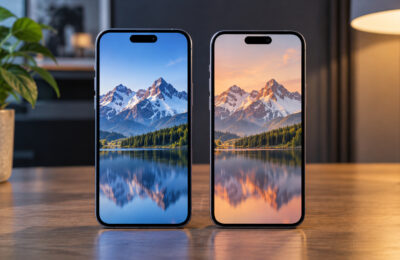
Both smartphones are equipped with 6.78-inch AMOLED displays with HDR10+ support, but the emphasis is different. OnePlus Nord 6 offers a 165 Hz refresh rate and peak brightness of 3,600 nits. Nothing Phone 4a is limited to 120 Hz, but peak brightness is claimed at 4,500 nits.
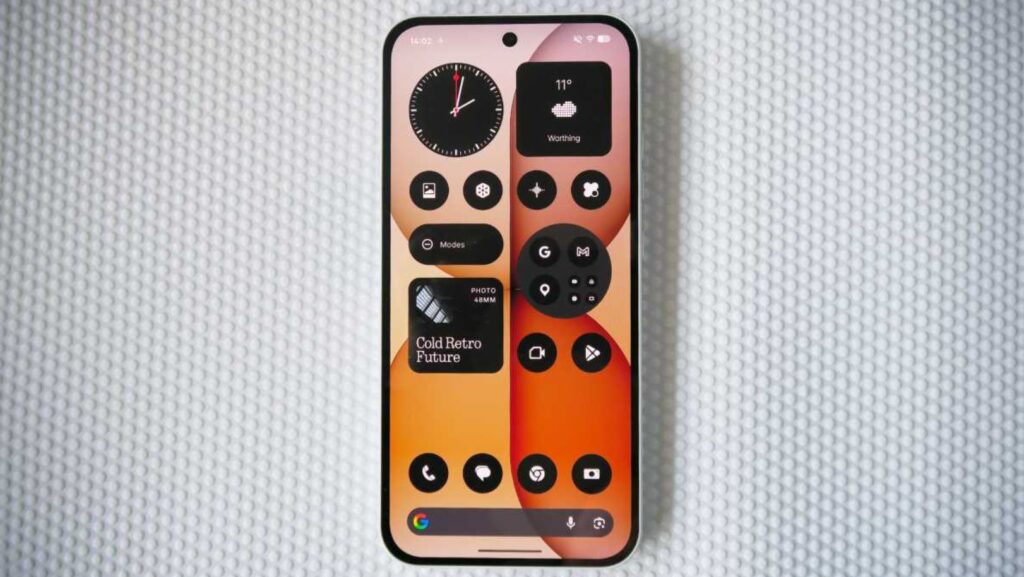
Nothing traditionally doesn’t skimp on an excellent display in its smartphones
What does this mean in practice? The difference between 120 and 165 Hz is noticeable in games and when quickly scrolling through feeds. In most regular apps, both screens will look equally smooth. The higher brightness of the Nothing Phone 4a screen can come in handy in bright sunlight, although 3,600 nits on the Nord 6 is also an excellent figure.
| Specification | OnePlus Nord 6 | Nothing Phone 4a |
|---|---|---|
| Panel type | AMOLED, HDR10+ | AMOLED, HDR10+ |
| Diagonal | 6.78″ | 6.78″ |
| Refresh rate | 165 Hz | 120 Hz |
| Peak brightness | 3,600 nits | 4,500 nits |
Here the Nothing smartphone’s display looks slightly more advanced. After all, 4,500 nits of brightness is much more practical than 165 Hz, which is virtually unused and unnoticeable anywhere.
Cameras: Periscope Zoom on OnePlus Nord 6 vs. Nothing Phone (4a) System
This is where the most noticeable difference lies. OnePlus Nord 6 has a simple setup — a 50 MP main camera and an 8 MP ultrawide. There’s no telephoto module at all. Nothing Phone 4a, at a lower price, offers a triple camera: a 50 MP main module, a 50 MP periscope telephoto with 3.5x optical zoom, and an 8 MP ultrawide.
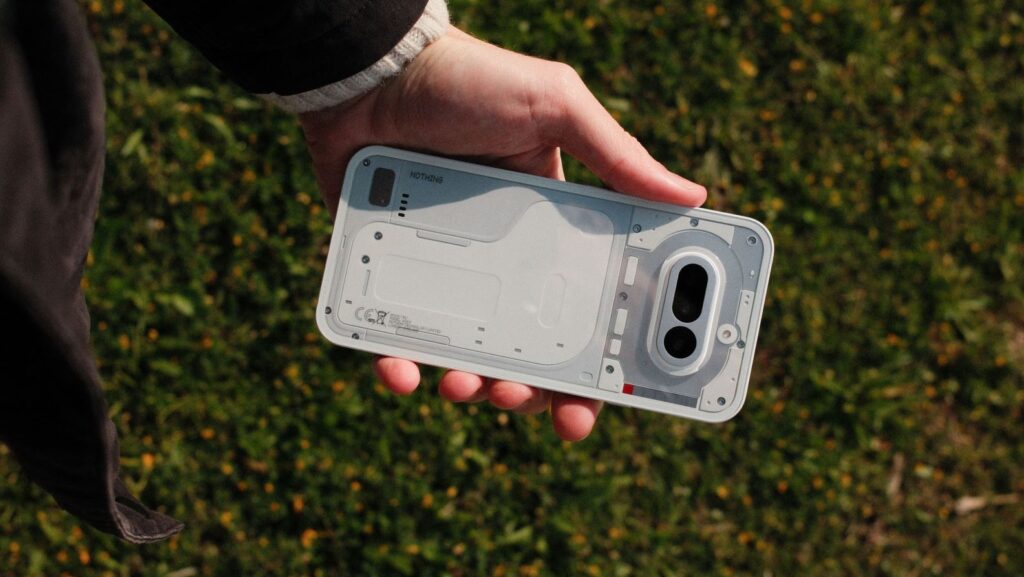
The Nothing smartphone is more geared toward photography, although it falls slightly behind in video recording
A periscope camera in the mid-range segment is still a rarity. It allows you to take portraits with beautiful bokeh, zoom into distant objects without losing quality, and overall makes the camera significantly more versatile.
| Specification | OnePlus Nord 6 | Nothing Phone 4a |
|---|---|---|
| Main camera | 50 MP | 50 MP |
| Telephoto | None | 50 MP, periscope, 3.5× optical zoom |
| Ultrawide | 8 MP | 8 MP |
| 4K Video | 60 fps | 30 fps |
| 4K Selfie | Yes | No |
That said, Nothing has a special approach to smartphone cameras. If photography is important to you, Nothing Phone 4a is better in terms of camera. But Nord 6 has an ace up its sleeve with 4K video at 60 frames per second (Nothing has 30 fps), as well as 4K selfie recording. But for most users, the zoom will prove more useful.
Battery and Charging: Nord 6 — the Autonomy Champion
The OnePlus Nord 6 battery leaves no chance for the competitor. The global version features a 7,500 mAh battery. Nothing Phone 4a has 5,080 mAh in the global version. Powerful batteries in OnePlus 2026 smartphones are the main highlight — they have virtually no competitors on the market.
The Nord 6 can easily last a day and a half to two days of active use, while the Nothing Phone (4a), based on my observations, confidently lasts one day, sometimes a bit longer. Charging on the Nord 6 is also faster — 80W vs. 50W. Plus, OnePlus has bypass charging — when plugged in, power goes directly to the processor, bypassing the battery. For those who game or use the phone while charging, this is a real benefit.
| Specification | OnePlus Nord 6 | Nothing Phone 4a |
|---|---|---|
| Battery (global) | 7,500 mAh | 5,080 mAh |
| Battery (Indian) | 9,000 mAh | 5,400 mAh |
| Charging power | 80W | 50W |
| Bypass charging | Yes | No |
| Battery life | 1.5–2 days | 1 day |
Additionally, OnePlus has an important feature — performance mode switching. Nothing Phone 4a only has battery saving mode. Naturally, the Nord 6 is significantly more practical in everyday use.
Protection, Design, and Everyday Convenience
OnePlus Nord 6 is protected to IP68 and IP69K standards — the smartphone withstands full submersion and even pressurized water jets. Nothing Phone 4a has IP64 protection — against splashes and dust, but not submersion. If you frequently use your phone in the rain, by the pool, or are simply prone to dropping it in water, the Nord 6 is more reliable.