Apple hasn’t even shown its foldable iPhone yet, and other companies are already showing off finished products. Recently, OPPO released a smartphone with no crease on the screen, just as Apple wanted, and today Huawei has officially announced the Pura X Max — the world’s first smartphone in the so-called “wide” foldable form factor. The very same one that Apple is reportedly preparing for its fall presentation. Sales start on April 20, and for now only in China. But the fact itself is telling: Huawei isn’t just competing with Apple — it’s literally six months ahead with the exact same design. A wide inner screen, a compact outer one, a horizontal book-style clamshell like the iPhone Fold.
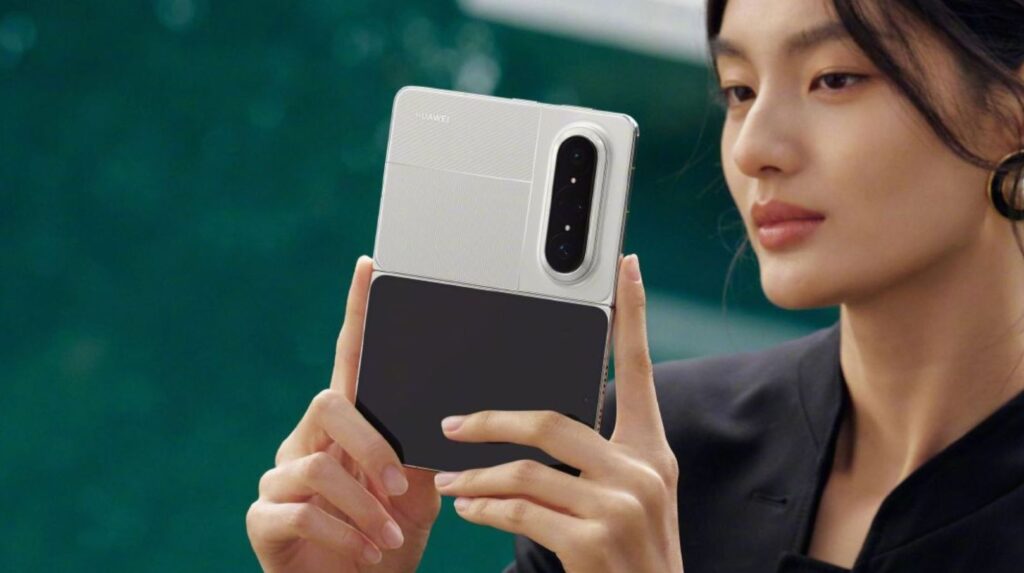
Huawei unveiled a new foldable smartphone in the style of the iPhone Fold. Photo: beebom.com
What Is the Huawei Pura X Max and How Is It Different from the Pura X
It’s important not to confuse the two. The Huawei Pura X, released in March 2025, is a vertical clamshell with a 6.3-inch inner screen and a tiny 3.5-inch square display on the outside. Essentially, it’s a Samsung Galaxy Z Flip analog — compact and unusual, but not built for multitasking.
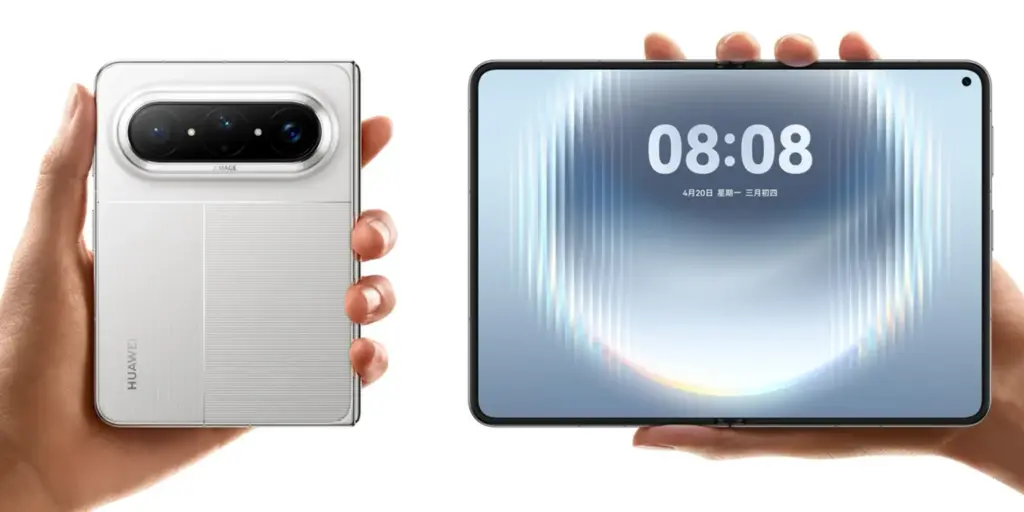
The Chinese clearly peeked at the design of the iPhone Fold, which hasn’t even been released yet
The Pura X Max is a completely different device. It’s a horizontal “book” with an inner screen of 7.69 inches (WQHD+, approximately 16:11 aspect ratio) and an outer display of 5.5 inches. Unfolded, it’s almost a tablet. Folded, it’s a fairly normal, albeit somewhat wide smartphone.
Under the hood is the new Kirin 9030 chip with a 9-core architecture, which is also expected in the Pura 90 series. Huawei doesn’t skimp on memory configurations, offering the following options:
- 12/256 GB.
- 12/512 GB.
- 16/512 GB.
- 16 GB/1 TB.
The color palette includes five options: “Interstellar Blue,” “Olive Gold,” “Phantom Black,” “Zero Degree White,” and, of course, “Bright Orange,” because in 2026 you absolutely can’t do without orange. The full Huawei Pura X Max specifications haven’t been revealed yet — only basic information has been shared. But the overall picture is clear: this is a direct competitor to the upcoming iPhone Fold.
iPhone Fold vs Huawei Pura X Max — Specs Comparison
The iPhone Fold (or iPhone Ultra?) is expected in fall 2026, so we’re comparing based on leaks and insider information. Huawei hasn’t revealed everything either, but the key foldable smartphone parameters are already known.
| Parameter | Huawei Pura X Max | iPhone Fold (expected) |
|---|---|---|
| Inner screen | 7.69 inches, WQHD+, ~16:11 | ~7.8 inches, 4:3 |
| Outer screen | 5.5 inches | ~5.5 inches |
| Processor | Kirin 9030 (9 cores) | Apple A20 Pro (2 nm, GAA) |
| RAM | 12/16 GB | 12 GB LPDDR5X |
| Storage | 256/512 GB/1 TB | 256/512 GB/1 TB |
| Main camera | No data (Pura X has 50 MP) | 2x 48 MP (wide + ultrawide or tele) |
| Biometrics | Presumably fingerprint scanner | Touch ID in power button (no Face ID) |
| Thickness (folded/unfolded) | No data | ~9–9.5 mm / ~4.5 mm |
| OS | HarmonyOS | iOS 27 |
| Price | Not announced | From $1,999 (~200,000 rubles in Russia) |
| Availability | China, from April 20, 2026 | Globally, fall 2026 |
On paper, the devices are surprisingly similar in format. Both are horizontal clamshells with an inner screen of about 7.7–7.8 inches and a 5.5-inch outer screen. The difference is in the details. But the new Huawei clamshell is already on sale and offers up to 16 GB of RAM and 1 TB of storage. However, it runs on HarmonyOS without Google services, and the Kirin 9030, despite all improvements, isn’t manufactured on the most advanced process node.
Apple promises a record-thin body (4.5 mm when unfolded), an A20 Pro processor on a 2-nanometer process, and a virtually invisible crease. But you’ll have to pay at least $2,000 for that — and wait another six months. The difference is obvious.
Why Everyone Is Copying iPhone
Wide foldable smartphones aren’t just another trend. They’re an answer to a specific problem: traditional devices like the Galaxy Z Fold have a narrow and inconvenient outer screen. Using it in folded mode is quite an ordeal. The “wide” format solves this problem: when folded, the phone looks and works like a regular smartphone, and when unfolded, it transforms into a mini-tablet.
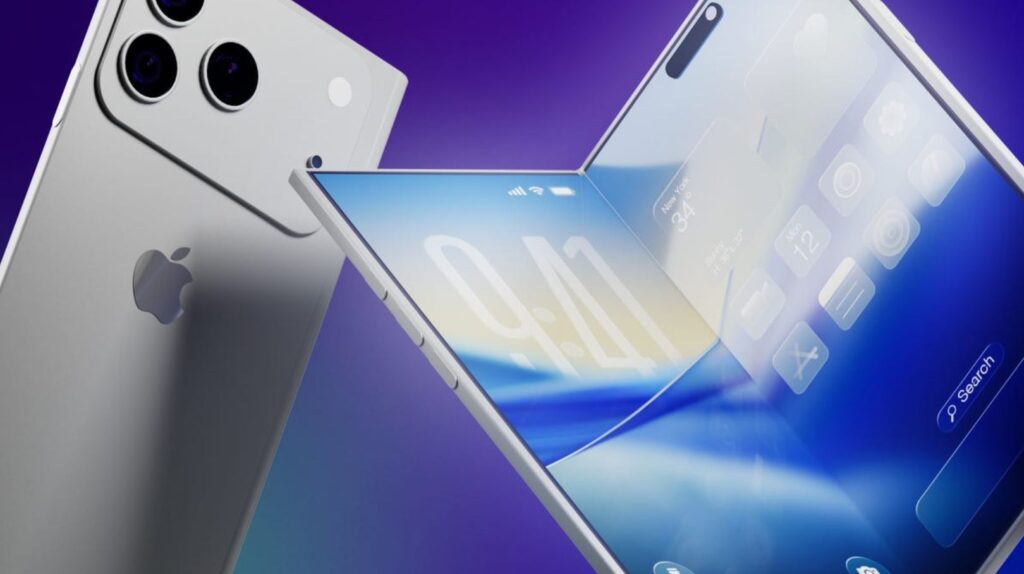
As soon as Apple hinted at releasing an iPhone Fold — everyone suddenly started releasing similar devices
And here it’s telling how the market reacts to Apple, even when the company hasn’t released anything yet. All it took was leaks about the iPhone Fold with a wide form factor — and off they went. Samsung is preparing the Galaxy Z Fold Wide, which is rumored to be shown on July 22. Oppo is working on the Find N7 in a similar design. Honor has also been spotted preparing a wide foldable device.
The situation is painfully familiar: Apple sets the direction — Android brands rush to implement it first. It happened with the screen notch, with Dynamic Island, with the camera “island.” Now the same thing is happening with foldable smartphones. Huawei turned out to be the fastest in this race — the Pura X Max came out six months before the iPhone Fold.
Should You Wait for the iPhone Fold or Already Look at Huawei
In short — it depends on which ecosystem you’re in and how patient you are. The Huawei Pura X Max is a device for enthusiasts and those who want to try the new form factor right now. But there are caveats: the device is only sold in China, runs on HarmonyOS without familiar Google services, and there’s no talk of global sales. If you’re willing to deal with shipping and software adaptation — it’s a chance to get an “iPhone Fold” six months before everyone else.
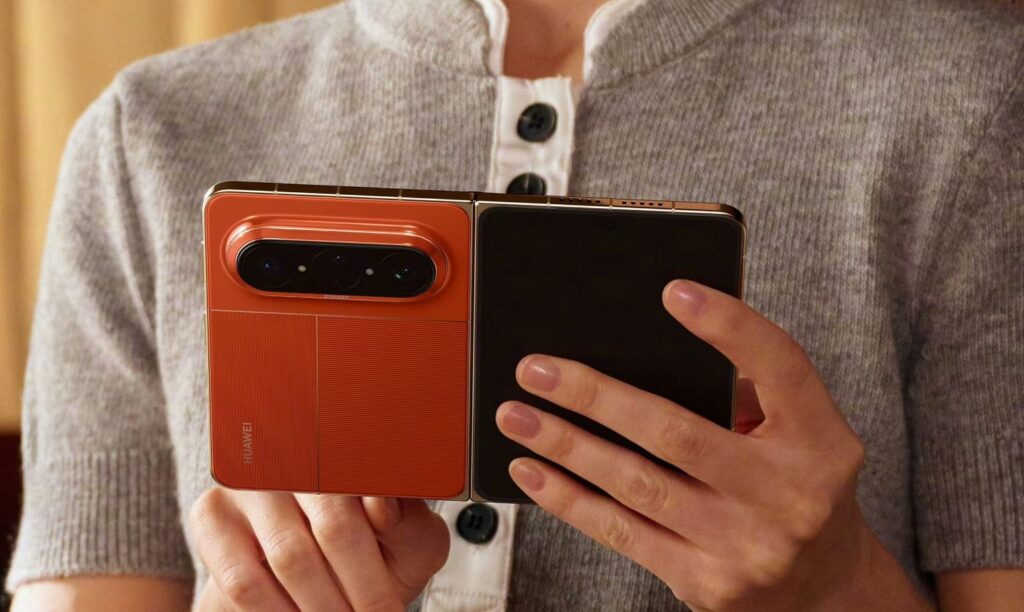
There’s a feeling that the idea of buying the new foldable Huawei isn’t such a bad one
The iPhone Fold is expected to launch around September-December 2026. The price starts at $2,000 in the US, and in Russia through resellers — approximately 200,000 rubles for the 256 GB version. For that money, Apple promises record thinness, an invisible crease, the most powerful processor, and full ecosystem integration. For those already living in the world of iPhone, iPad, and Mac — it will be a logical, albeit very expensive purchase.
One thing is certain: 2026 will be a turning point for foldable smartphones. Huawei made the first move. Now it’s Apple’s turn.