Two years after launch, the iPhone 16 Pro Max is still sold new at a noticeably lower price than at release, and it remains a capable phone for everyday use. According to the source author, who recently moved from an iPhone 16 Plus to an iPhone 17, the 2024 flagship keeps two advantages the newer iPhone 17 Pro and iPhone 18 Pro no longer offer: a titanium frame and the classic corner camera square. Its main weakness is thermal: it has no vapor chamber, so under long, heavy loads it heats up faster and throttles sooner than its successors. Below is what the source says about the trade-offs and who the phone still suits.
iPhone 16 Pro Max held in hand
What you need to know
- Apple introduced the iPhone 16 Pro Max in September 2024 and discontinued it after the iPhone 17 Pro launched, but remaining new units are still sold by large retailers and marketplaces.
- It keeps a titanium frame and a corner camera square; the iPhone 17 Pro and 18 Pro switched to aluminum and a full-width camera plateau.
- In Geekbench 7 averages cited by the source, the A18 Pro trails the A19 Pro by roughly 10% single-core and 14% multi-core; early iPhone 18 Pro Max figures suggest a gap of about 40-50%.
- The 16 Pro Max has no vapor chamber, relying on graphite sheets and the chassis for cooling, so extended gaming or long 4K recording makes it heat up and throttle sooner than newer models.
The 2024 flagship: what is inside
Apple unveiled the iPhone 16 Pro Max in September 2024, so the device is now two years old. A year ago, after the iPhone 17 Pro arrived, Apple stopped production and removed it from its own store. New units nonetheless remain available through major retailers and marketplaces, and the source notes they cost noticeably less than the iPhone 17 Pro Max and, even more so, the iPhone 18 Pro Max. On paper the specifications still look solid.
| Specification | iPhone 16 Pro Max |
|---|---|
| Display | 6.9-inch OLED, 2868 × 1320, ProMotion 1-120 Hz, Always-On |
| Brightness | Up to 2000 nits outdoors, minimum 1 nit |
| Processor | A18 Pro, 3 nm, 6-core CPU, 6-core GPU |
| RAM | 8 GB |
| Storage | 256 GB, 512 GB, 1 TB |
| Main camera | 48 MP, f/1.78 |
| Ultra-wide | 48 MP, f/2.2 |
| Telephoto | 12 MP, 5x optical zoom |
| Front camera | 12 MP, f/1.9 |
| Video | Up to 4K at 120 fps, Dolby Vision, ProRes Log |
| Battery life | Up to 33 hours of video playback |
| Port | USB-C (USB 3, up to 10 Gbit/s) |
| Wireless charging | MagSafe up to 25 W, Qi2 |
| Body | Titanium, IP68 |
| Dimensions and weight | 163 × 77.6 × 8.25 mm, 227 g |
The display, cameras and build still hold up. The internals look weaker: 8 GB of RAM against 12 GB in the 17 Pro and 18 Pro, and a chip that is two years old. The source advises buyers to check the storage capacity, confirm the unit is new rather than refurbished, and make sure the seller provides a warranty.
Titanium frame and a compact camera block
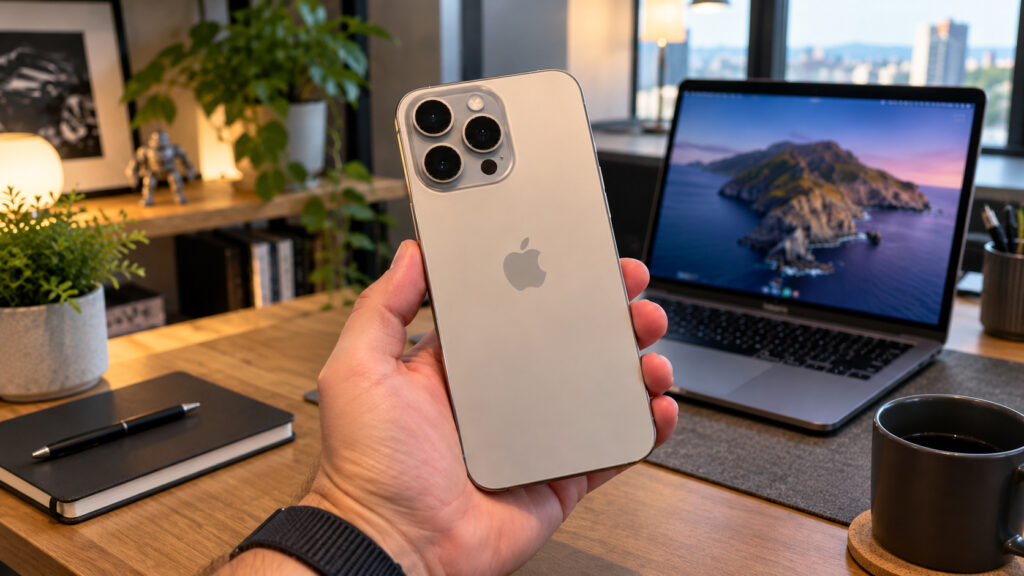
The source author singles out design first. On the iPhone 17 Pro, Apple introduced a wide camera “plateau” spanning the top of the back, and the 18 Pro kept that idea. Some people like it, but many still have not warmed to it. The iPhone 16 Pro Max keeps its cameras in the familiar square in the corner, which the author considers the neater look.
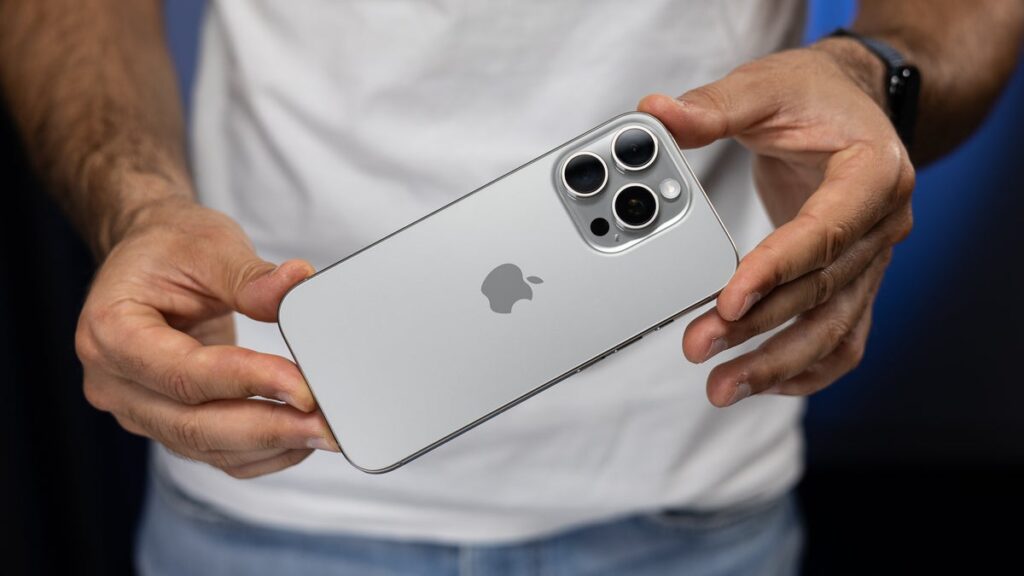
Back panel of the iPhone 16 Pro Max
The second advantage is the titanium body. With the 17 Pro, Apple returned to aluminum, and the 18 Pro continued that course. Aluminum is lighter and dissipates heat better, but a titanium frame is less prone to scratches and feels more premium in the hand, so the source counts the material as a plus for the 16 Pro Max.
The back is a single sheet of matte glass with no inserts or seams between materials. The 17 Pro has an aluminum back with a separate glass window over the MagSafe area, which the author finds unusual and less appealing than the plain rear of the 16 Pro Max. The phone reads as a classic iPhone and, in the author’s view, does not look dated even next to the new models. The Action button and the touch-sensitive Camera Control are present here too; both carried over to the newer models, so the 16 Pro Max loses nothing in day-to-day controls.
A18 Pro performance in 2026
In everyday tasks the iPhone 16 Pro Max performs very well, according to the source: messengers, social apps, the camera, navigation and demanding games open without delay, and iOS 27 runs smoothly. In ordinary use, the author says, most people are unlikely to notice a difference from the newer iPhones.
iPhone 16 Pro Max processor
Benchmarks tell a different story
Synthetic tests show a clearer gap. For the 16 Pro Max and 17 Pro Max, the source author used average Geekbench 7 results from the Geekbench Browser database; for the 18 Pro Max, the figures come from early review measurements. The source cautions that the database for the newest model is still filling up, so its numbers may shift.
| Model | Single-core | Multi-core |
|---|---|---|
| iPhone 16 Pro Max (A18 Pro) | 2871 | 7691 |
| iPhone 17 Pro Max (A19 Pro) | 3168 | 8804 |
| iPhone 18 Pro Max (A20 Pro) | about 4025 (preliminary) | about 11,525 (preliminary) |
By these figures, the 16 Pro Max trails the 17 Pro Max by roughly 10% in single-core and 14% in multi-core performance. Against the 18 Pro Max the gap is substantial: about 40% single-core and nearly 50% multi-core. Graphics follow a similar pattern: the source cites around 27,000 points in the Metal test for the 16 Pro Max versus almost 43,000 for the 17 Pro Max. In benchmarks, then, the phone clearly lags the newer models, even if that difference rarely shows in daily use.
Cooling is the real weak point
For an owner, thermal design matters more than benchmark scores. Apple fitted a vapor chamber for the first time in the iPhone 17 Pro and reworked it in the 18 Pro. The 16 Pro Max has no vapor chamber; heat is dissipated through graphite sheets and the chassis itself. Under sustained load it therefore heats up much faster than current iPhones and reduces clock speeds.
In normal use this is barely noticeable. Problems appear when you play Genshin Impact at high settings for half an hour, record long 4K video in summer heat, or charge the phone while running navigation. The body becomes noticeably hot, screen brightness may drop, and game frame rates dip. The 17 Pro and especially the 18 Pro handle such scenarios more calmly; the source notes Apple claims the new cooling in the 18 Pro sustains performance up to 40% better than the previous generation.
Cameras, display and battery two years on
The cameras remain strong. The 48 MP main sensor delivers detailed shots in daylight and in the evening, and the 48 MP ultra-wide makes macro and wide shots look respectable. Video is a highlight: 4K at 120 fps, Dolby Vision, ProRes Log and four studio-quality microphones.
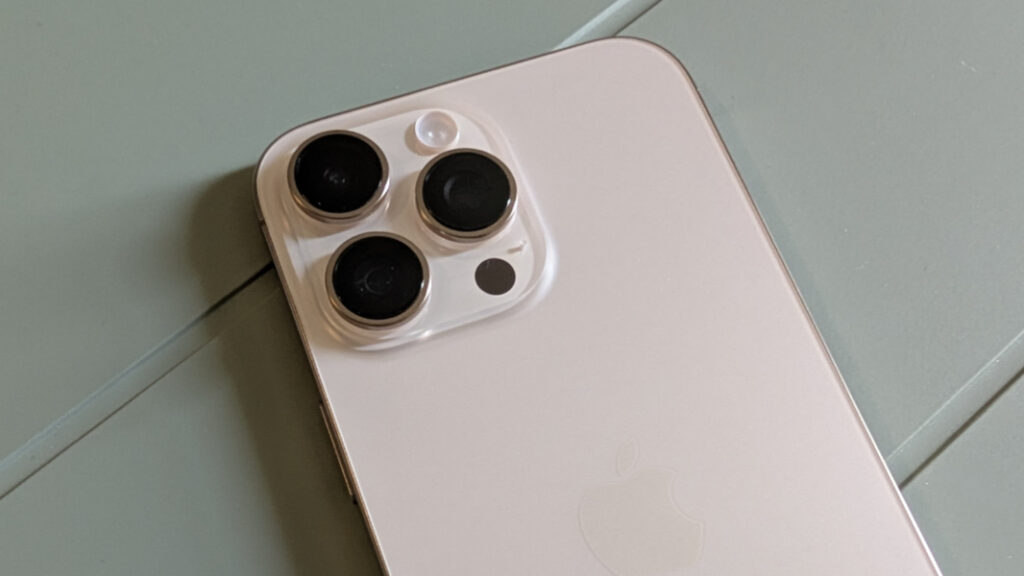
iPhone 16 Pro Max camera
The telephoto is the weaker link. The 5x zoom is good in bright sunlight, but the telephoto is only 12 MP, and detail fades quickly in low light. The iPhone 17 Pro moved to a 48 MP telephoto, and the 18 Pro gained a variable-aperture main camera. The front camera is simpler too: 12 MP, against 18 MP with Center Stage on the newer models.
The display is still attractive: 6.9 inches, 120 Hz and Always-On. But the 17 Pro raised peak brightness to 3000 nits and added an anti-reflective coating, so the newer phones are easier to read in direct sun. The 16 Pro Max battery is rated for 33 hours of video and, per the source, comfortably covers a day of active use; the 17 Pro Max is rated higher, but the 16 Pro Max still reaches the evening without trouble. The rest is up to standard: USB-C at USB 3 speeds, MagSafe up to 25 W, Wi-Fi 7 and IP68 protection. The source expects the phone to keep receiving iOS updates for several more years.
Who should buy the iPhone 16 Pro Max in 2026
The picture is fairly clear. The iPhone 16 Pro Max remains a strong smartphone with a specific profile. If you want a classic titanium iPhone with the familiar corner camera layout at a lower price than the current flagships, the source considers it an excellent option.
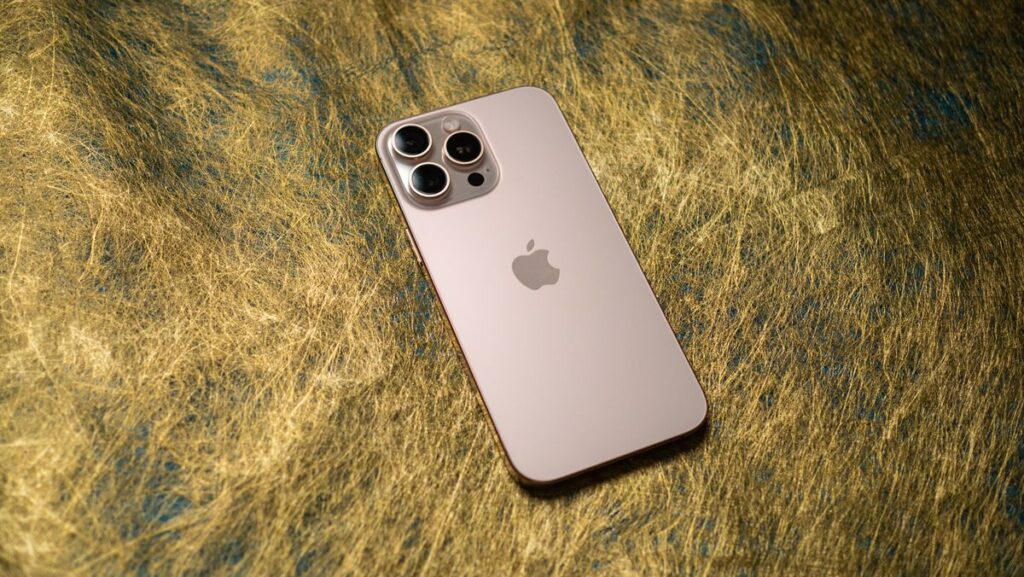
Back panel of the iPhone 16 Pro Max
If you plan to push the phone hard and often, with long gaming sessions, video editing or extended 4K recording, and you want it to stay cool without throttling, the source recommends a more recent model. The iPhone 17 Pro or 18 Pro, with their vapor chambers, handle those workloads noticeably better. The source offers this quick reference:
| Your use case | Suggested choice |
|---|---|
| Social apps, calls, photos, navigation | iPhone 16 Pro Max handles it easily |
| You want titanium and the classic design | iPhone 16 Pro Max |
| Long gaming sessions at high settings | iPhone 17 Pro or 18 Pro |
| Shooting and editing long 4K video | iPhone 17 Pro or 18 Pro |
| Frequent zoom shots in the evening | iPhone 17 Pro or 18 Pro |
One final budgeting note from the source: a case and a power adapter are not included in the box, so factor them into the total cost.