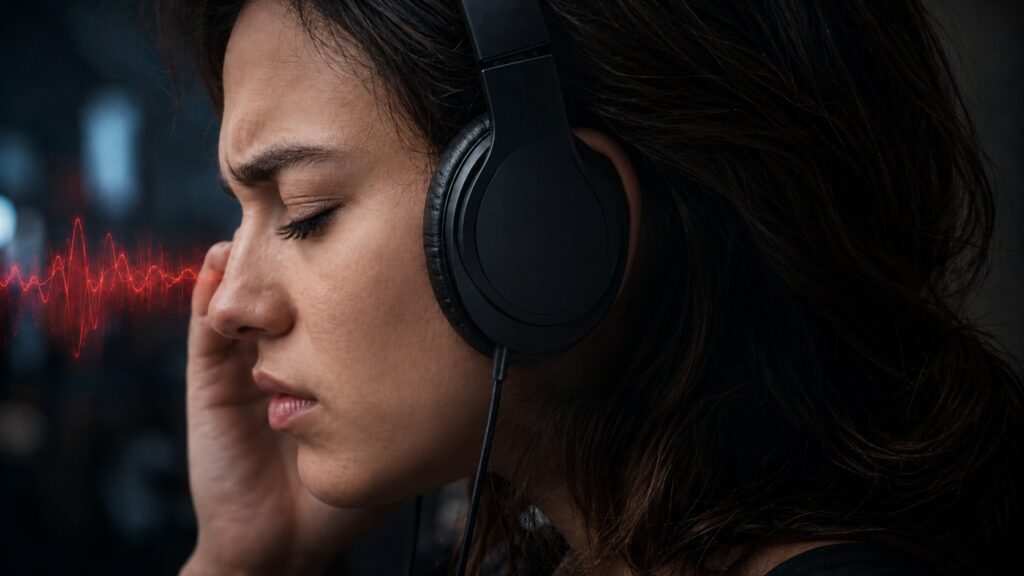
Headphones damage ears so slowly that we don’t notice it
I often listen to music with headphones, and sometimes I crank the volume up to the max. I bet you do the same, especially when your favorite song with a killer chorus comes on. One time I was listening to music so loud that my ears started ringing. That’s when I got genuinely scared that it was tinnitus that would never go away. Fortunately, everything turned out fine, but here’s the question: can music actually damage your eardrums? I looked up the information online for you, and now I’m eager to share what I found.
Can Headphones Rupture Your Eardrum?
The short answer is no, if we’re talking about consumer headphones and regular music listening. To physically damage an eardrum, you need either a sudden pressure spike or a mechanical injury — for example, pushing an object too deep into the ear canal or an insect getting into the ear. Headphones don’t create that kind of pressure.
However, headphones can produce sound at volumes up to 110–130 dB. For comparison, that’s the level of the loudest rock concert or a jackhammer operating right next to your ear. At such volumes, it’s not the eardrums that get damaged, but the sensitive cells of the inner ear, and that’s precisely what leads to hearing loss. The process is gradual, which is why people don’t notice it.
How Loud Music Damages Your Hearing
Inside the ear, there’s a built-in evolutionary defense that few people know about. When an excessively loud sound enters the ear, two tiny muscles — the stapedius and the tensor tympani — reflexively contract. They essentially block the door, preventing dangerous vibrations from reaching deeper nerve endings.
The problem is that these muscles get tired. If loud music plays for a long time, the defense weakens and sound waves begin to directly affect the auditory nerve endings. This leads to their gradual damage.
Besides hearing loss, the habit of listening to music at high volume can cause other unpleasant effects:
- Ringing or noise in the ears after removing headphones;
- Headaches and increased blood pressure;
- Irritability and unexplained fatigue;
- Decreased concentration.
Ringing in the ears after using headphones is a signal that the auditory cells were overstressed. If this happens regularly, the damage accumulates.
What Volume Level in Headphones Is Dangerous for Hearing?
A whisper is about 20 dB, a normal conversation is 30–35 dB, and shouting is around 60–65 dB. Sounds up to 85 dB can be listened to for up to 8 hours without health risks. But anything above 90 dB is already dangerous.
Many modern smartphones and players can output 110 dB or more through headphones. It’s hard to gauge the actual volume level when using headphones, especially in noisy places like the subway or on the street. People unconsciously turn up the volume to drown out external noise and easily reach dangerous levels.
There’s a simple rule: if you can’t hear what people standing next to you are saying while wearing headphones, the volume definitely exceeds the safe threshold. The recommendation is to keep the volume level no higher than 60% of the maximum on your device.

In noisy public transport, people unconsciously increase the volume to dangerous levels
Why In-Ear Headphones Are More Dangerous Than Regular Ones
Not all headphones are equal when it comes to health. In-ear (canal) headphones are inserted directly into the ear canal, placing the sound source as close as possible to the eardrum and inner ear. According to Rospotrebnadzor data, daily use of in-ear headphones over 4–5 years can lead to first-degree hearing loss. The person thinks they hear normally, but in reality, they already have difficulty distinguishing whispers and quiet speech.
Additionally, in-ear headphones create a sealed space in the ear canal, which interferes with natural ventilation and can promote the development of infections.
The safest option is over-ear headphones that fully encompass the ear. They provide good sound isolation without the need to crank up the volume, and the sound source is at a distance from the ear canal. Second best are on-ear headphones, which also sit on the outside.
How to Listen to Music with Headphones Without Harming Your Hearing
Few people are ready to give up headphones entirely, but reducing the risks is quite doable. Here are the main rules:
- Don’t exceed 60% of the maximum volume on your device;
- Limit listening time with headphones — no more than 60 minutes at a stretch, then give your ears a rest;
- Choose on-ear or over-ear headphones instead of in-ear buds;
- When possible, listen to music through speakers — it’s the gentlest option;
- Don’t forget about hygiene: wipe your headphones with antiseptic once a week and don’t share them with other people.
It’s also worth mentioning situations when headphones should be put away entirely. During any ear inflammation — outer or middle ear otitis — headphones must not be used for the entire duration of the illness. You can return to using them only after your doctor gives the go-ahead.
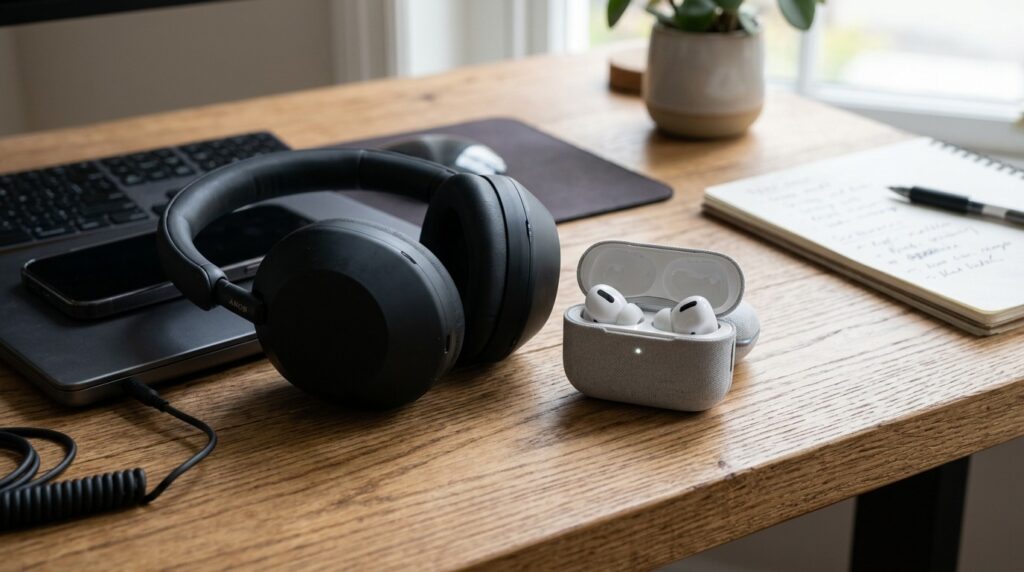
Over-ear headphones are safer for hearing than in-ear buds
When It’s Time to See a Doctor About Hearing Problems
Many people ignore the first warning signs of hearing problems, attributing them to fatigue. But there are symptoms that warrant scheduling an appointment with an ENT specialist:
- Ringing or noise in the ears that doesn’t go away after removing headphones;
- A feeling of congestion in the ear;
- You’ve started hearing whispers or quiet speech worse;
- People around you say you frequently ask them to repeat themselves;
- Ear pain after using headphones.
Hearing loss in its early stages is treatable if the damaging factor is removed in time. But if you continue to subject your ears to loud music, the changes become irreversible.
So it turns out that headphones don’t “blow up” your eardrums, but when used improperly, they slowly rob you of your hearing. The insidious part is that the process takes years and becomes noticeable only when a significant portion of the damage has already occurred. The “60-60 rule” — no more than 60% volume and no longer than 60 minutes — sounds boring, but it’s exactly what allows you to enjoy your favorite music both at thirty and at sixty.