Some early iPhone Duo owners say the foldable’s inner display cracked along the hinge within hours of purchase, and a few report failures during initial setup. Owners on Reddit describe the same pattern: a crack along the centre fold, followed by a permanent line of lit pixels across the screen. Apple has not commented. A teardown by iFixit points to three hinge components that could be involved, but iFixit says the teardown does not prove the cause. The number of known cases is still small, and nobody yet knows how widespread the problem is.
What you need to know
- Reports began right after sales started on Friday, October 23. The r/iPhoneDuo subreddit now has a shared “crackgate” thread.
- 9to5Mac’s Benjamin Mayo counted about ten unique cases. That is a small number, but the failures look strikingly similar.
- iFixit identified three possible hinge-related causes and stressed that these are hypotheses, not a diagnosis.
- In the US, replacing the inner screen costs $999 without AppleCare+ and $99 with it. The Duo itself starts at $1,999.
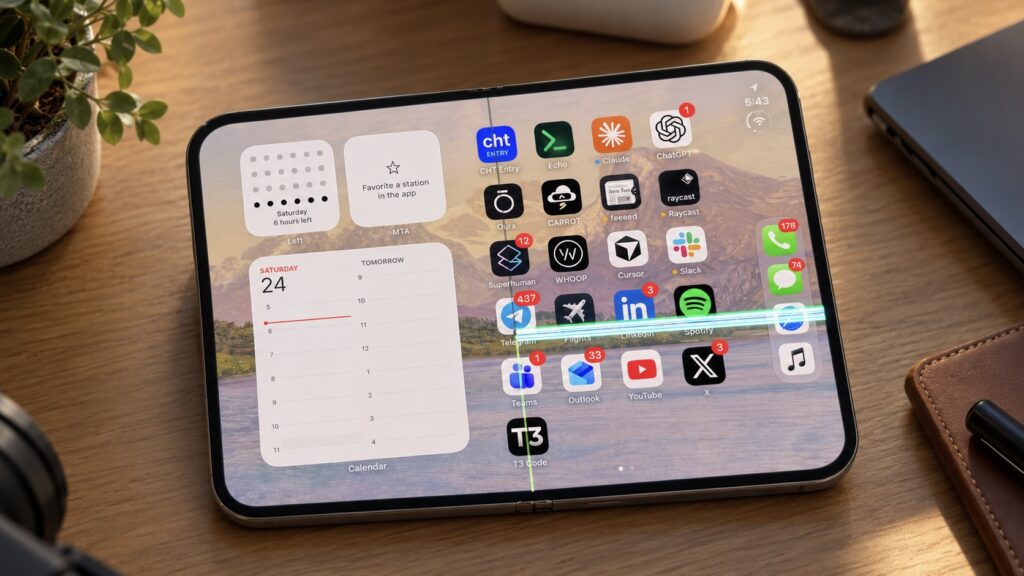
An unfolded iPhone Duo on a table with a crack along the fold line and a glowing strip of pixels across the screen
The crack runs along the fold
Sales began on Friday, October 23. By the weekend, the r/iPhoneDuo subreddit had a shared thread with the telling name “crackgate”. One owner wrote that the screen cracked six hours after purchase. Others report that their devices did not last a full day.
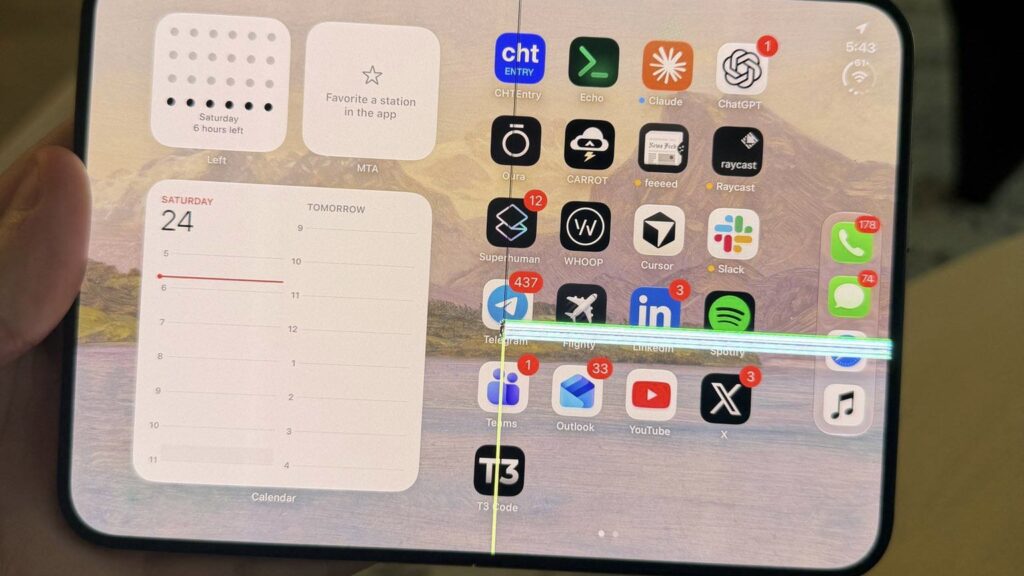
An iPhone Duo in a hand with a crack along the fold and a glowing horizontal strip across the icons
The reports describe the same failure. The inner screen cracks along the hinge’s centre line. Then a straight row of white pixels lights up across the display and stays on.
Many owners say they heard a crunching sound while folding or unfolding the phone before the damage appeared. A couple of people say their Duo broke while it was still on the initial setup screen, before it had ever been carried in a pocket.
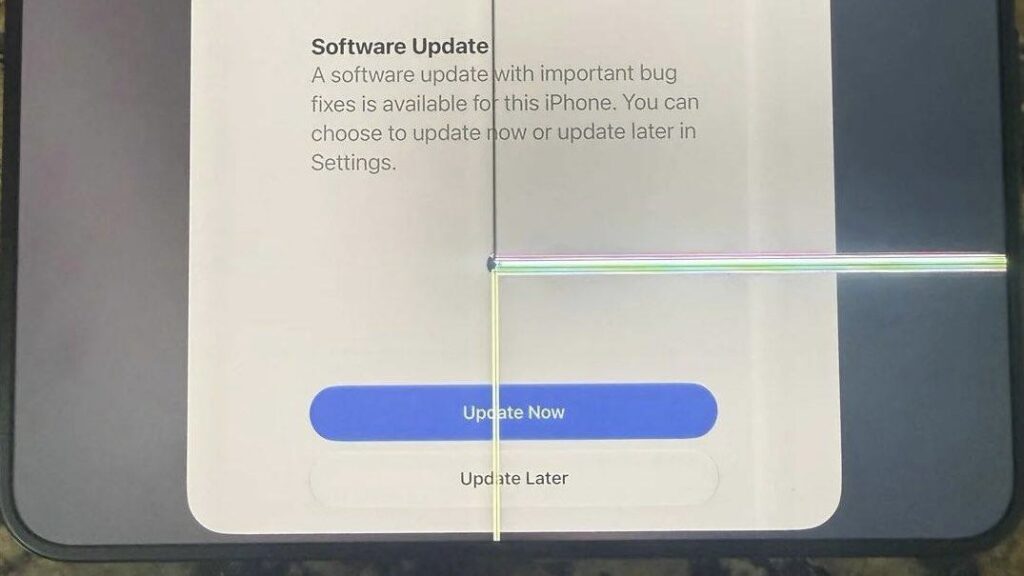
A software update screen on an iPhone Duo with a crack down the middle and a multicoloured strip of pixels
How widespread is it?
Nobody knows yet. Benjamin Mayo of 9to5Mac counted about ten unique cases. Against hundreds of thousands or even millions of phones sold, that is a tiny fraction. Still, the near-identical failure pattern is more concerning than the raw number of complaints.
Replacements vary depending on where you bought it
Buyers who purchased from an Apple Store have mostly fared better. Most owners who returned there with a cracked screen reportedly received a new phone without argument, which suggests staff may already have seen similar units.
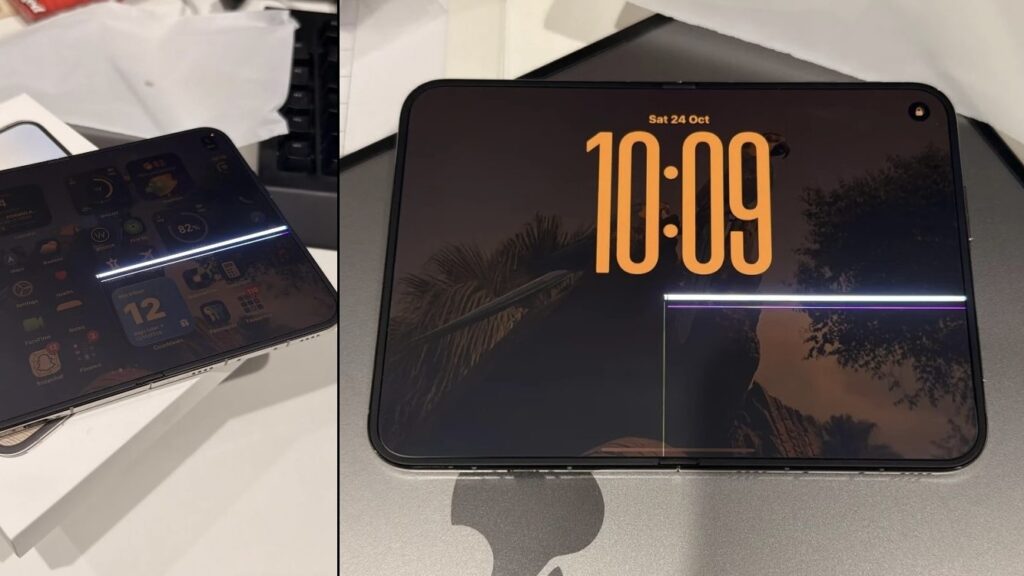
Two iPhone Duo units with a white strip on the inner screen, one on the home screen and one on the lock screen
US carriers have handled cases differently. They reportedly had no spare units available for swaps, so owners were told to wait. One buyer was told he had probably dropped the Duo and would have to pay for the repair himself. There is no way to verify whether a drop happened, but the case shows that, without an official position from Apple, each service provider is making its own call.
9to5Mac contacted Apple for comment and had not received a reply at the time of the report. Apple has also not issued any guidance on how to fold and unfold the Duo.
iFixit points to three hinge components
iFixit tore down the iPhone Duo and scanned it with CT imaging. It then built a 3D model of the hinge using scans, teardown video and Apple patents. The mechanism turned out to be more complex than the patents suggested.
The hinge uses gears, springs, interlocking metal links and curved guide rails. These parts guide the hinge so the screen bends in a teardrop shape instead of folding at a sharp angle.
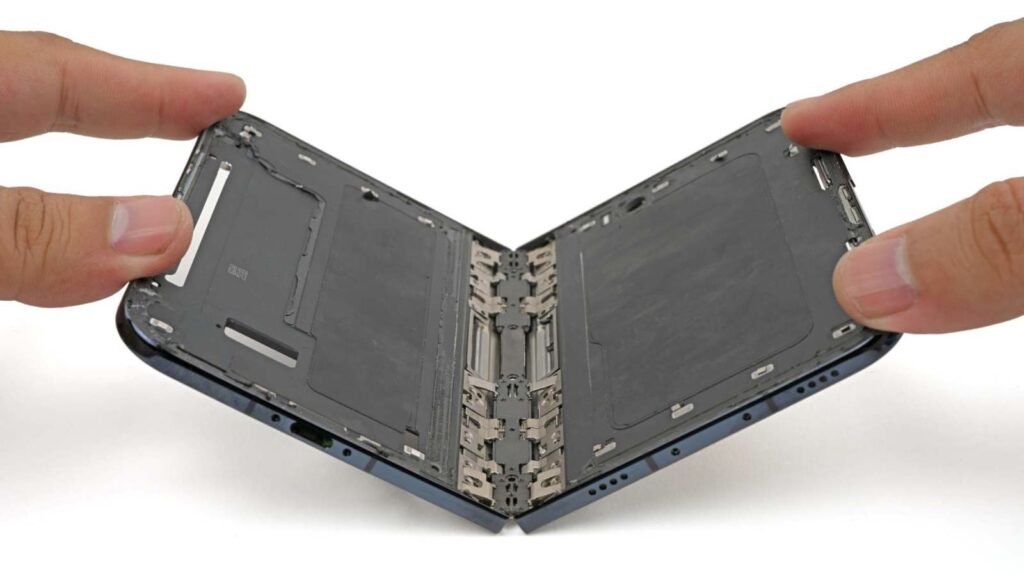
A disassembled iPhone Duo without its screen, held in hands, showing the hinge of metal links and guide rails in the centre
Many of the cracks appear to start in the same place: where the cable cutout meets the hinge’s central support. That points to three possible causes:
- Central support plate: The plate may not fully retract when the phone closes, so it could press on the screen harder than intended.
- Curved guide rails: The rails rise above neighbouring parts during folding. If they shift in an unintended way, they could rub against the underside of the display.
- Stress concentration: Several rigid edges meet in the problem area, which could concentrate stress on the screen layers there.
iFixit cautions that the teardown does not prove the exact cause. These are hypotheses, not a diagnosis. Some owners have proposed a similar explanation: one production batch may contain a slightly misaligned hinge part that pushes against the screen from inside. That theory is also unconfirmed.
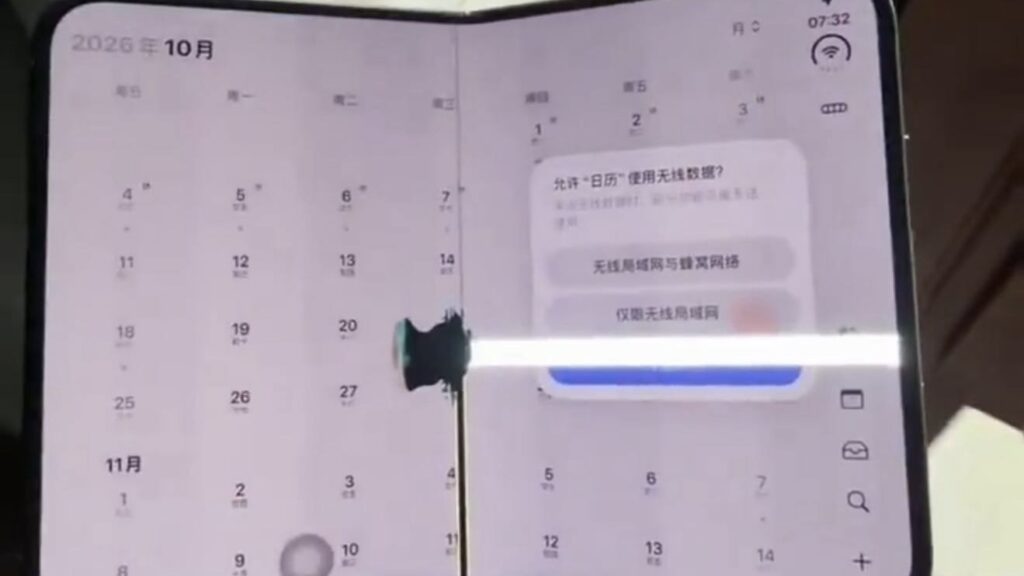
An iPhone Duo with a Chinese-language interface, showing a black spot on the fold and a white strip on the right half of the screen
Dust test and water resistance
iFixit also found that the hinge began to crunch slightly after a fluorescent dust test. Even so, much less dust got inside than in other foldables iFixit has taken apart. The Duo’s IP68 rating still applies, and it is rated to withstand immersion at 6 metres for 30 minutes.
Easier to repair than other foldables, but not cheaper
iFixit gave the Duo a provisional repairability score of 5 out of 10. That is the best score it has given any foldable it has torn down. Several design choices help:
- The inner screen’s frame is held by clips, not just adhesive, so it can be removed without breaking.
- The outer screen also comes off surprisingly easily. That matters because it must be removed to reach many internal parts.
- The phone has two batteries, rated at 11.567 Wh and 7.506 Wh. Both use adhesive that releases when an electric current is applied.
The score is provisional because it depends on whether Apple starts selling spare parts.
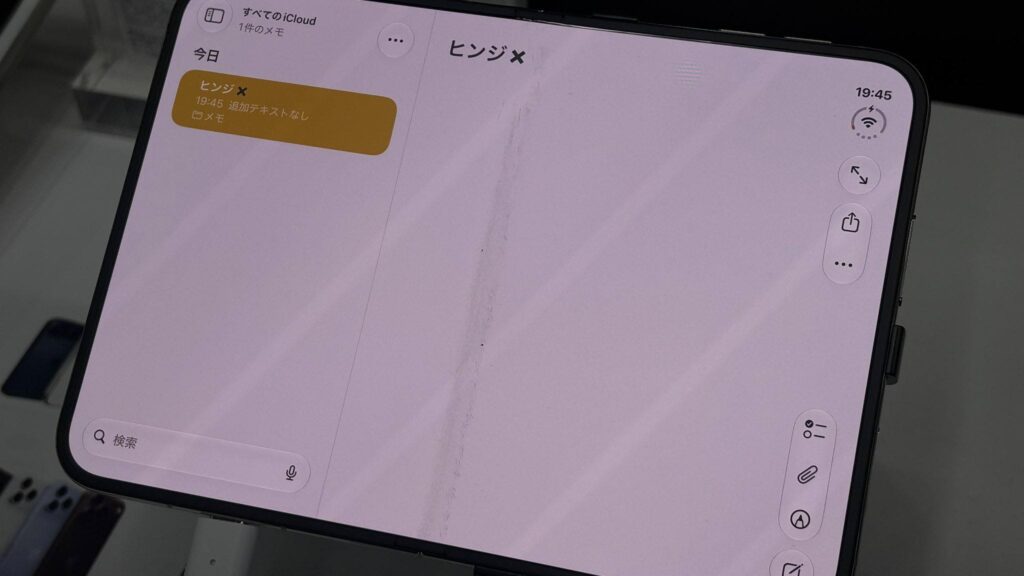
The inner screen of an iPhone Duo with a Japanese-language interface, showing coating wear along the fold
US repair costs
Easy disassembly does not make repairs cheap. In the US, Apple’s prices are:
| Item | Without AppleCare+ | With AppleCare+ |
|---|---|---|
| Inner screen replacement | $999 | $99 |
| Protective layer over the folding screen | $49 | $19 |
The Duo starts at $1,999. AppleCare+ costs $399 as a one-time payment. A crack along the fold damages the display itself, not just the protective layer, so the cheaper layer replacement would not cover it.
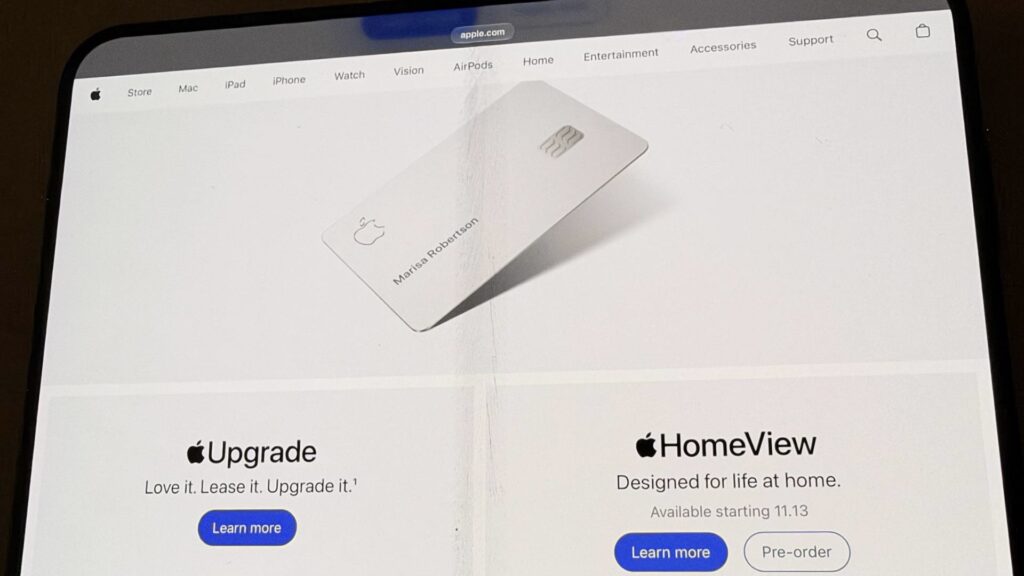
Apple’s website in Safari on an iPhone Duo, with scratches and a crease visible along the fold line
Simple precautions while the cause is unknown
The author of the original report says there is no reason to panic if your Duo is undamaged, but suggests a few low-cost habits until the cause is identified. These are the author’s suggestions, not guidance from Apple:
- Listen to the hinge: In the first few days, fold and unfold the phone gently a few times and listen. If the hinge crunches, go back to the store right away instead of waiting for a crack.
- Close it by the edges: Close the Duo by holding the edges of the body instead of pressing on the centre of the screen. There is no proven link to the failures, but pressing on the fold serves no purpose.
- Keep your proof of purchase: Hold on to the box and receipt.
- Question a drop diagnosis: If the screen cracks on its own, do not immediately accept an explanation that the phone was dropped.
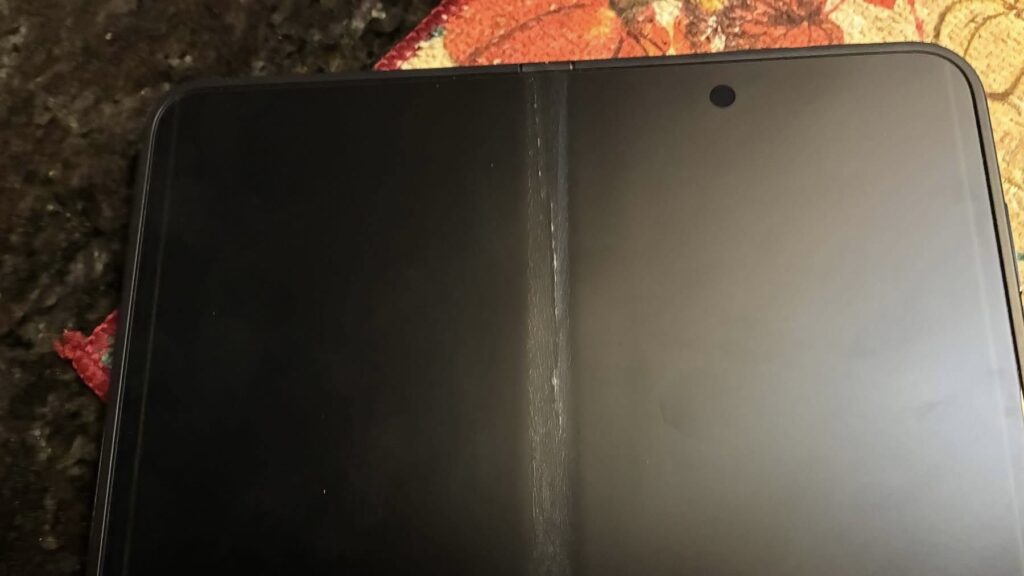
The switched-off inner screen of an iPhone Duo with a worn strip along the fold
To protect the matte coating, the author also recommends cleaning the inner screen with a soft microfibre cloth instead of the edge of a T-shirt. This will not prevent a defect, but it may help preserve the coating.
What remains uncertain
The cause has not been established, and Apple has not commented. It is also unclear whether the problem is limited to a defective batch or affects all units.
For prospective buyers, the author advises not to rush. First production runs of a new design often bring surprises, and a clearer picture of whether this is a bad batch or a wider problem is expected within a couple of weeks.