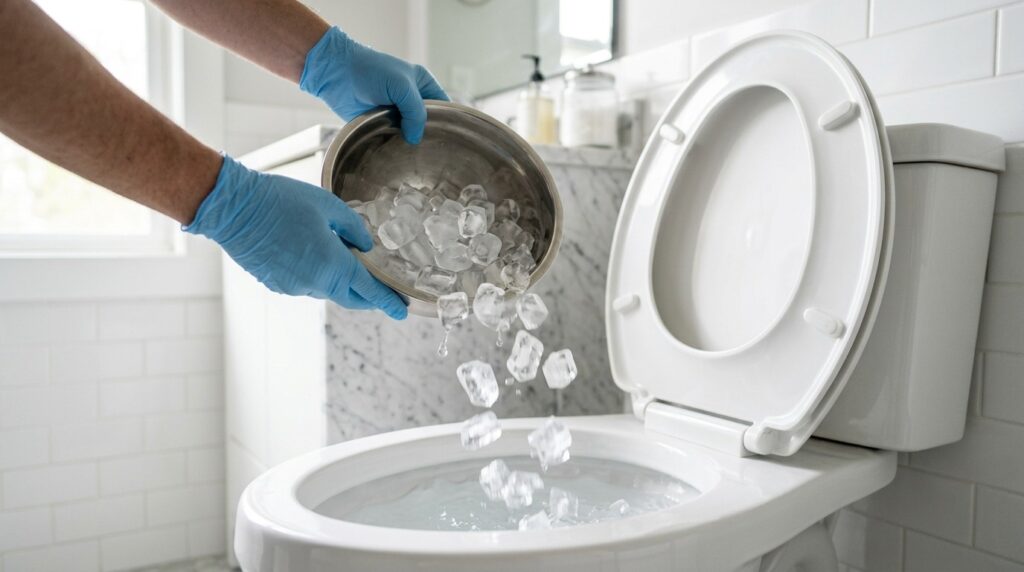
Ice can clean a toilet better than a brush
Has this ever happened to you? During a deep clean, you scrub the toilet with a special cleaner, work it with a brush, and a couple of days later some kind of stain appears again? It’s frustrating, but it turns out that ordinary ice cubes from the freezer can remove toilet stains better than any expensive gel. It sounds like another TikTok life hack from a blogger who’s never held a mop, but the effect is genuinely interesting. How can ice help clean a toilet?
The Main Drawback of Toilet Cleaning Products
If you’ve ever applied gel or powder to the walls of a toilet bowl only to find it simply dissolved at the bottom, you’re not alone. The shape of the toilet bowl and gravity work against you: liquid and powdered products slide off the porcelain in seconds and end up in the standing water, where they do little good.
Adding more water to raise the level won’t work either. A toilet is designed so that when a certain volume is exceeded, the water automatically drains away, similar to the overflow in a bathtub. So you simply can’t fill the bowl to the brim — any excess will immediately drain out.
This is exactly where ice comes in. It’s solid, doesn’t raise the water level, and yet occupies space above the waterline. And it’s perfectly capable of restoring a toilet to its original whiteness.
How Ice Cubes Help Clean a Toilet
The method, described in the specialized publication House Digest, works in two stages, both based on simple physics.
The first effect is the barrier effect. Two cups of ordinary cubes from the freezer are poured into the toilet and form a temporary “shelf” above the water level. When gel is poured or powder is sprinkled on top, the product settles on the icy mound and presses against the porcelain — right where stains typically accumulate. It doesn’t immediately slide down, giving it time to work on the grime.
The second effect is abrasive. As the cubes move around the bowl, they gently knock off surface buildup: thin mineral layers, mold film, and light dirt. The porcelain doesn’t get scratched because ice is significantly softer than ceramic.
There’s also a third, less obvious bonus. When ice melts during flushing, it releases cold water gradually, extending the rinse cycle. The surface afterward remains smoother than after a typical quick flush with warm water.
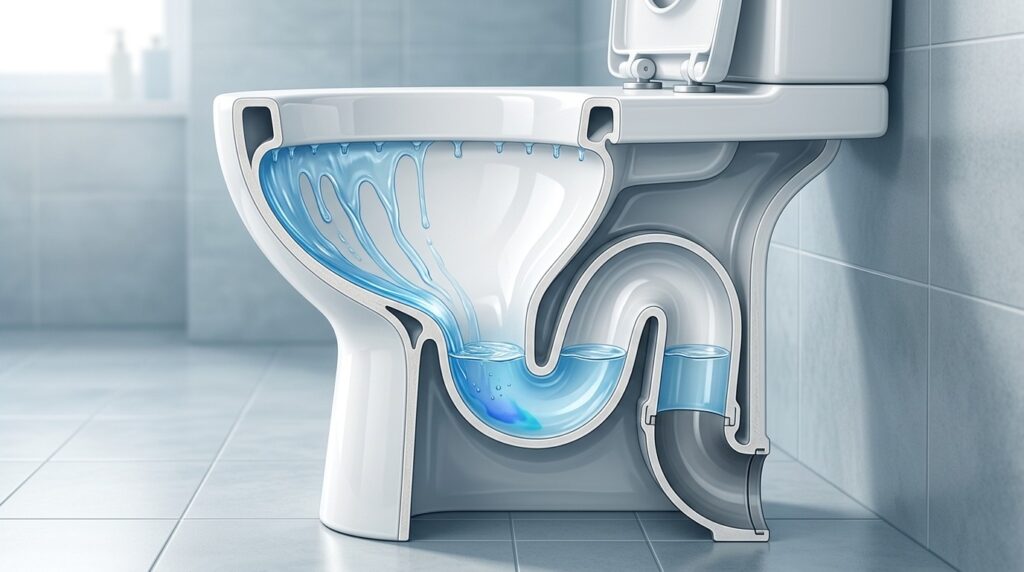
Ice cubes in a toilet clean the surface in three different ways
Cleaning a Toilet with Ice
The procedure takes just a few minutes and requires nothing more than ice, one cleaning product, and gloves.
- Pour about two cups of ordinary ice cubes into the toilet so the mound rises above the water level;
- Apply one (and only one!) cleaning product onto the ice mound — liquid, gel, or powder;
- Wait a few minutes while the product works on the walls;
- Scrub with a toilet brush, moving the ice around the bowl — the cubes will additionally polish the surface;
- Flush. The ice will go down the drain and melt. It’s no larger than what a toilet handles every day.
For those who want the most thorough cleaning possible, there’s an advanced version. A clean sponge is inserted into the drain as a plug to keep the ice from going down. Then the cubes are rubbed directly on the porcelain while wearing gloves, like a pumice stone, reaching the space under the rim. When finished, remove the sponge and flush. The sponge and gloves after this procedure should only be used for the toilet.
You can add a little white vinegar or a pinch of baking soda to the ice mound — this gently handles light stains and works as a natural deodorizer. But never mix these additions with a commercial cleaning product.
The Danger of Mixing Cleaning Products
On TikTok, ASMR videos are popular where bloggers fill the toilet with ice and then pour in three or four different products, add powder, and whip everything into a thick, colorful foam. This is dangerous and poses a real risk of poisoning.
Many household cleaning products contain citric acid or other reactive compounds. If such a product is accidentally mixed with a chlorine-based bleach, chlorine gas is released, which can send a person to the hospital. The most alarming aspect of the trend is precisely the use of several products simultaneously.
As for the ice itself, a plumber interviewed by journalist Grace Dean from Tom’s Guide confirmed: ordinary cubes are safe for plumbing. They’re no different in size from what a toilet flushes every day and melt long before reaching narrow pipe bends. Problems can only arise with large chunks or sharp shards — those can indeed scratch porcelain or get stuck in the drain.
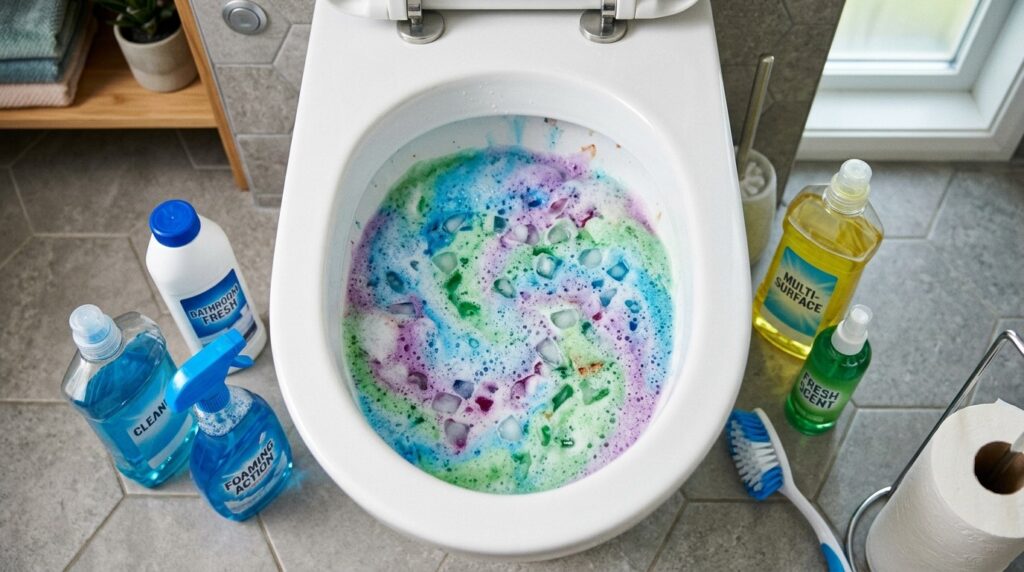
Popular ASMR videos with a “soup” of multiple products — pretty but dangerous
What Ice Cubes Won’t Clean in a Toilet
It’s important to understand that ice cubes aren’t a replacement for a full cleaning — they’re a way to make it more effective at early stages of buildup.
Ice won’t handle:
- thick limescale that has accumulated over months;
- calcified rings embedded in the porcelain;
- full disinfection, because that requires a specialized sanitary solution and manual scrubbing.
However, ice is excellent at catching surface buildup before it hardens. Regular use once a week reduces the frequency of heavy deep cleans: soft grime is removed while it’s still easy to deal with.
Before first use, it’s worth inspecting the toilet. If the porcelain has cracks or the flush mechanism is unreliable, the cubes could cause harm. In homes with small children or curious pets, it’s better not to leave ice with cleaning product unattended.
Can You Throw Ice in the Toilet
For a toilet in normal condition, this is a quick, cheap, and nearly foolproof trick. A handful of cubes, one dose of cleaning product, a flush — that’s all there is to it. The method requires no special tools or expensive formulas and fits into a regular weekly bathroom cleaning routine.
The key is not to copy ASMR bloggers and not to brew a “chemical soup.” The real danger of the trend isn’t the ice — it’s the mindless mixing of household chemicals. One product, ordinary cubes from the freezer, a few minutes of waiting, and the result will be more noticeable than the usual struggle with a toilet brush.