Huawei announced the Watch GT 7 and Watch GT 7 Pro for global markets on September 2. Outwardly the new watches are almost identical to last year’s GT 6, but the health and sports software has grown noticeably: the watches now estimate the risk of elevated blood sugar, warn about signs of atrial fibrillation, and produce a morning readiness index. The GT line remains Huawei’s flagship for battery life, and in health features it is now catching up with the sport-oriented Watch Fit 5 Pro.
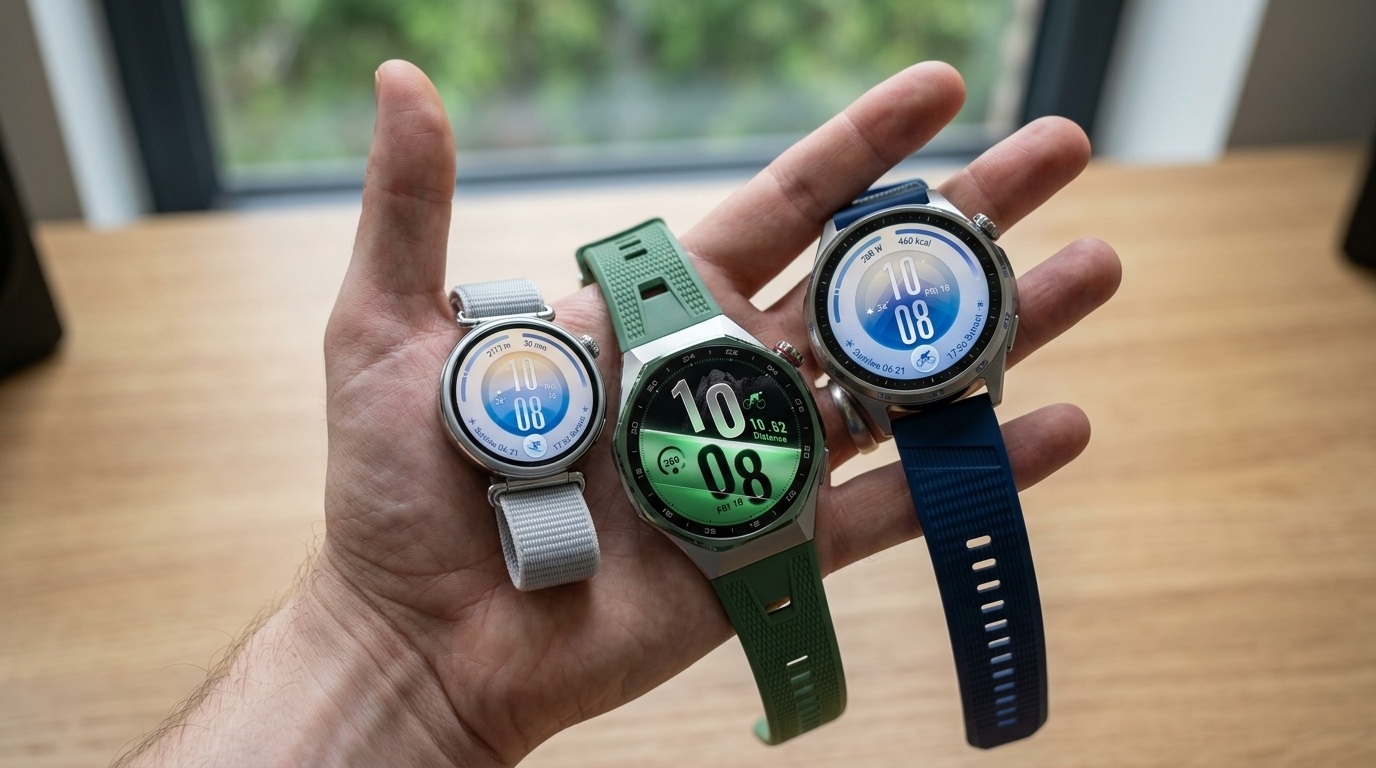
Huawei’s new smartwatches
What you need to know
- The GT 7 and GT 7 Pro were announced on September 2 with largely unchanged hardware but new software: a readiness index, TruSleep 5.0, atrial fibrillation risk warnings, and a diabetes/prediabetes risk assessment.
- The diabetes feature is not a glucose meter: it uses the optical heart-rate sensor over 3 to 14 days of continuous wear and sorts users into low, medium, or high risk, advising a doctor’s visit at medium or high risk.
- A new trail-running mode extends continuous GPS recording to 51 hours on the 46 mm GT 7 and GT 7 Pro (up from 40 hours on the GT 6), and to 32 hours on the 41 mm model (up from 25).
- Battery life is unchanged: up to 21 days for the 46 mm models in light use, about 12 days in normal use, and 7 days with the always-on display.
The phone counts steps; the watch watches your heart and sugar
A smartphone in your pocket knows relatively little about your body: it can count steps, sometimes floors climbed, and roughly estimate distance. The GT 7 continuously records heart rate, heart rate variability, blood oxygen, and skin temperature around the clock, and the Pro version can also record an ECG when you touch the sensor with a finger. All of this accumulates overnight and turns into a morning summary of your body’s state that a phone simply cannot produce.
The new element in that summary, the readiness index, is built from heart rate variability, sleep history, and recent workouts. It uses a single number to suggest whether to push hard today or take it easy. Garmin and Samsung have long offered similar metrics, so here Huawei is catching up rather than innovating. Sleep tracking has been updated to TruSleep 5.0, with added emotional-state analysis and reminders to move when the watch notices you have been sitting too long.
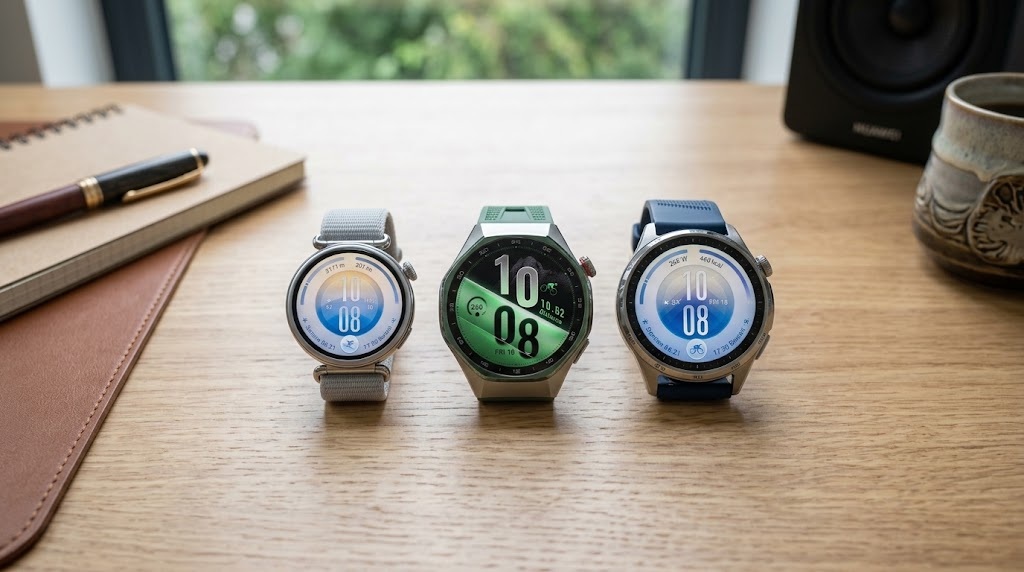
The new sleep-tracking technology is supported across the whole lineup
Using indirect indicators, the watches now warn about the risk of atrial fibrillation and the likelihood of elevated blood sugar. These two features are what make the new generation more interesting than the sensor list alone suggests. The catch is right there too: these are risk estimates, not diagnoses, and the watches themselves remind you of that.

Diabetes risk assessment without a finger prick, but it is not a glucose meter
The obvious question: do the watches measure blood sugar? No. The GT 7 has no optical glucose sensor and does not display a glucose reading the way a meter does. Instead it relies on the ordinary optical heart-rate sensor: over several days the algorithm analyzes heart-rhythm patterns and other metrics, then assigns you to a low, medium, or high risk group for diabetes and prediabetes.
To get a result, the watch must be worn continuously for 3 to 14 days. At medium or high risk it advises seeing a doctor, and that is where its role ends. The point of the feature is to catch a problem in someone who has never had a blood-sugar test and was not planning to. It is useful, but it cannot replace laboratory tests.
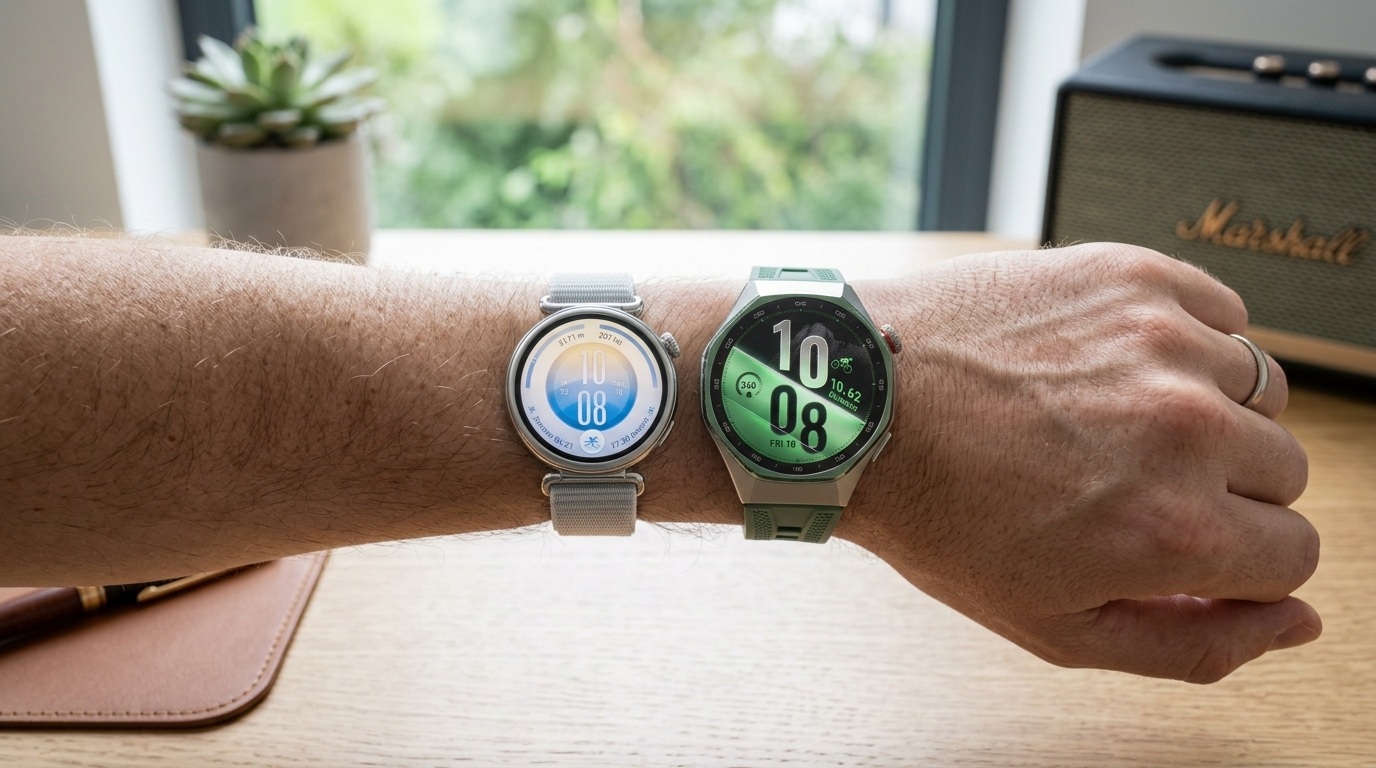
The watches can also estimate diabetes risk
An important note on novelty: Huawei announced its diabetes-risk assessment program in early 2026 and promised it first for the GT 6 Pro as a research program. On the GT 7 and GT 7 Pro it is listed from launch, alongside heart, respiratory, and high-altitude health studies; the base GT 7 additionally gets ovarian-function assessment and polycystic ovary syndrome risk estimation. Availability of such features depends on the medical regulators in each country, so the feature set may differ from market to market.
Skiing, cycling, and 51 hours of GPS: what changed versus the GT 6
The sports side has been updated more than the hardware. New alpine skiing and snowboarding modes count turns, their frequency, and g-forces; at indoor ski facilities without a GPS signal, the watch determines active time from body position and elevation change. Cyclists get AI-assisted climb analysis, and golfers get detailed course maps with an automatically rotating view of the green.

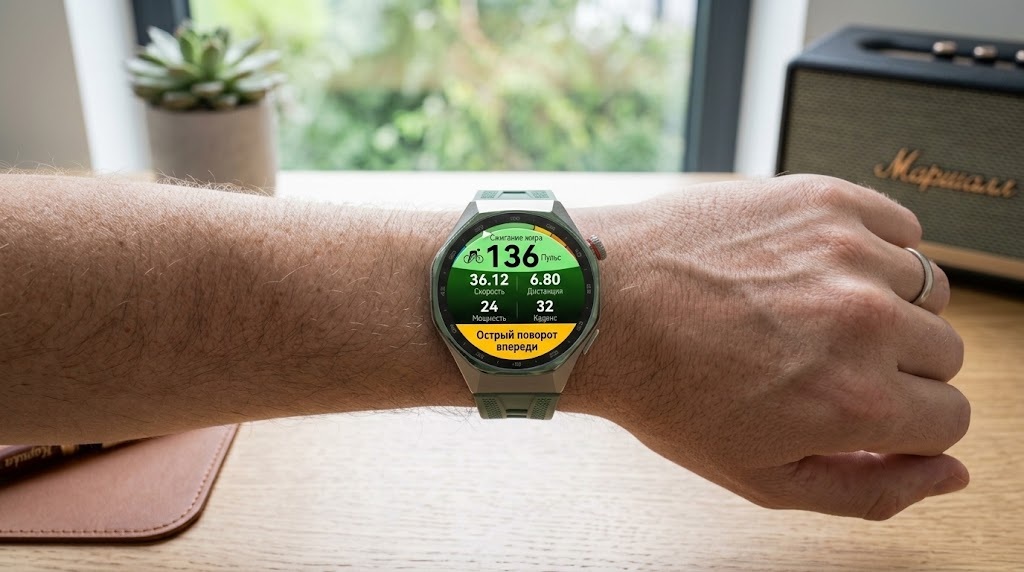
The watches gain new features for cyclists and skiers
The most tangible improvement is a new trail-running mode with extended GPS recording. The 46 mm model and the GT 7 Pro last up to 51 hours in it, versus 40 hours in the equivalent mode on the GT 6 and GT 6 Pro. The small 41 mm GT 7 goes from 25 to 32 hours. For multi-day hikes and ultramarathons that is a meaningful difference; for park runs it is not.
Otherwise battery life is the same as last year: the 46 mm GT 7 and GT 7 Pro run up to 21 days in light use, about 12 days in normal use, and 7 days with the always-on display. The 41 mm version offers up to 14 days in light mode and about 7 days in normal use. For comparison, most Wear OS watches manage two to three days.
Wait for the GT 7 or buy the GT 6 now?
So far Huawei has given pricing only for China: the GT 7 costs 1,588 yuan for the 41 mm model and 1,688 yuan for the 46 mm model, and the GT 7 Pro costs 2,688 yuan. The GT 6 remains on sale and offers the same case, the same 3,000-nit display, and the same battery life of up to 21 days. Huawei has already promised some of the new features, including the diabetes-risk assessment, to the previous generation via updates, though without guarantees or timelines.
Who should choose what among the options available today:
- GT 6 suits those who want sleep tracking, heart rate, blood oxygen, calls from the wrist, and long battery life without paying extra. It is the most sensible option for everyday wear and the pool.
- GT 6 Pro is worth choosing if you value ECG, a titanium case with sapphire glass that resists scratches over a year of use, and diving with a depth sensor.
- Waiting for the GT 7 makes sense for skiers, cyclists, and trail runners who need more than 40 hours of continuous GPS. For everyone else, the new generation mostly brings software.
If you already wear a GT 6 or GT 6 Pro, there is no need to replace it with a GT 7: the sensors are the same, and the main additions live in the software. If you are choosing your first Huawei watch, it is reasonable to wait for local GT 7 pricing and see how much the GT 6 drops in price after the launch.