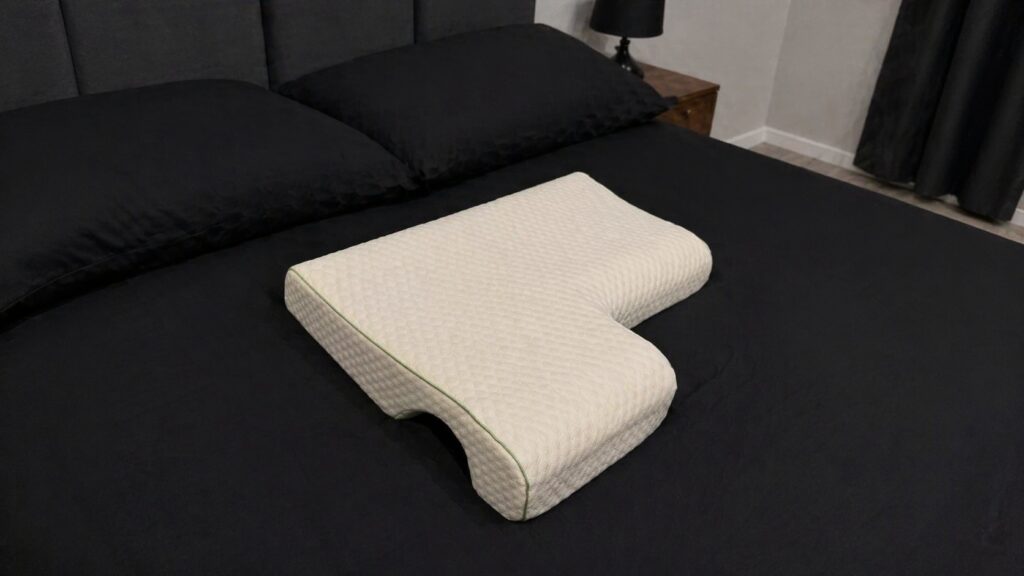
A side-sleeping pillow can noticeably improve your health, tested and proven
I’ve slept on my side for as long as I can remember. And for just as long, I’ve suffered from a numb arm in the morning, shoulder pain, and the feeling that my neck spent the night in a vise. Recently I tried an orthopedic pillow with an arm cutout, one of those made from memory foam. Let me tell you how it went and why this isn’t just another marketing gimmick.
Three Main Problems with Side Sleeping
Side sleeping is one of the most popular positions. But it has specific biomechanical downsides that you rarely think about until you start waking up with numb fingers.
The first problem is shoulder compression. When you lie on your side, the entire weight of your upper body falls on one shoulder. A regular pillow does nothing to compensate for this pressure: the shoulder presses into both the mattress and the pillow simultaneously, and the shoulder joint ends up in an unnatural position.
The second problem is compression of blood vessels and arm nerves. A familiar situation: you put your arm under your head, wake up — and it feels “not yours,” tingling, unresponsive. This is paresthesia — a sensory disturbance caused by compression of nerve endings and blood vessels. If it happens rarely and goes away within a minute after changing position, it’s nothing serious. But regular compression is at least a reason to think about how your sleeping setup is organized.
The third problem is misalignment of the “head–neck–spine” axis. When sleeping on your side, the distance from the mattress to the head is greater than when sleeping on your back. If the pillow is too low, the neck bends sideways. If it’s too high — it bends the other way. In both cases, stiffness and pain in the cervical spine await you in the morning.
How a Side-Sleeping Pillow with an Arm Cutout Works
The memory foam pillow I tested looks unusual. It has a distinctive profiled shape with a cutout on the side — that’s where your shoulder and arm go. The filling is memory foam.
The essence of memory foam is that it responds to body heat and pressure. Within a few seconds, the material softens and conforms to the shape of your head and neck, and when you get up — it slowly returns to its original shape. Thanks to this, the pillow doesn’t “collapse” or bounce back, but genuinely supports you.
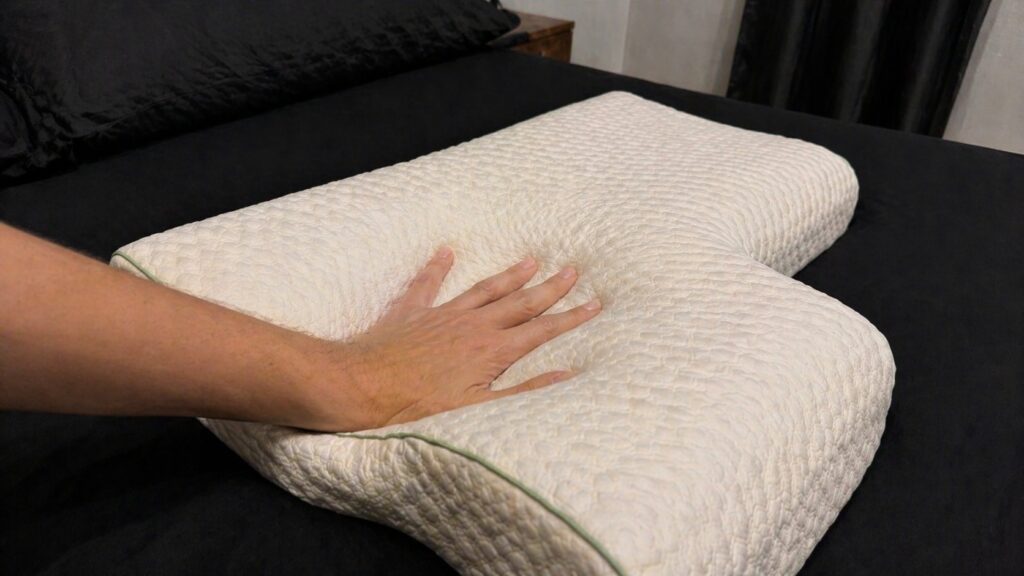
At first the pillow may seem firm, but then it becomes softer
Benefits of a Side-Sleeping Pillow: What Changes for Your Neck and Shoulders
The first and most noticeable thing — your arm stops going numb. The cutout works like a channel: you slide your arm under the pillow, and it doesn’t get pinched between your head and the mattress. The shoulder stays in a more natural position, and pressure on it decreases. For me, this was the main revelation — I simply stopped waking up from numbness.
Second — the neck really does stay in a neutral position. The pillow’s height and shape are designed so that your head doesn’t tilt sideways. The spine from the lower back to the back of the head remains in a straight line — as if you were standing upright, but lying down. This reduces morning pain and tension in the cervical region.
Third — you toss and turn less. When your arm doesn’t go numb and your neck is comfortable, there’s no reason to flip over every half hour. Fewer micro-awakenings mean deeper sleep.
A separate bonus I hadn’t anticipated — sleeping as a couple became more comfortable. If you cuddle your partner while sleeping, your arm usually ends up pinched. A pillow with a cutout solves this conflict: your arm slides into the channel, blood circulation isn’t disrupted, and you don’t need to “rescue” it every ten minutes.
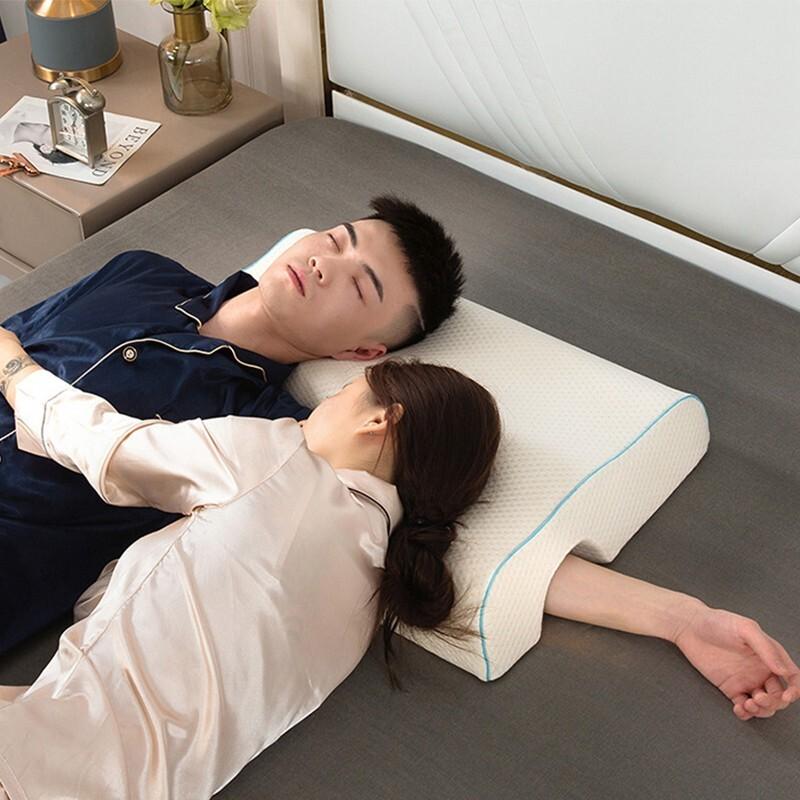
The arm rests freely in the pillow cutout — nothing goes numb
Who Will Benefit from a Side-Sleeping Pillow
Based on my experience and common sense, this pillow will be useful for several categories of people:
- Those who primarily sleep on their side — this is the main audience;
- People whose arm frequently goes numb during sleep;
- Those who complain about morning neck and shoulder pain;
- Couples where one or both partners like to cuddle while sleeping.
It’s important to understand that a pillow is not medicine and doesn’t replace a visit to the doctor. If your arms go numb regularly and for extended periods, if neck pain doesn’t go away — this could be a symptom of osteochondrosis, carpal tunnel syndrome, or other conditions that require diagnosis.
In summary, I’ll say this: a pillow with an arm cutout is not a marketing trick or a gadget for the sake of a gadget. It’s a logical evolution of orthopedic design for a specific use case. It doesn’t solve all sleep problems, but three specific ones — shoulder compression, arm numbness, and neck misalignment — it noticeably eliminates. For me, it became one of those things where you think: why didn’t I try this sooner?