The rumored foldable iPhone Ultra is generating enormous buzz, but a closer look at the leaked specifications raises a practical question: can a single foldable device truly replace a large-screen iPhone and an iPad? The source author, who currently uses an iPhone 16 Plus alongside a 10.9-inch iPad, argues that — based on everything leaked so far — the answer is no, at least not for everyone. The reported ~5.5-inch outer display is smaller than the iPhone 16 Plus screen, the ~7.8-inch inner display falls short of even the iPad mini’s 8.3 inches, and the rumored price of around $2,400 approaches the combined cost of both devices it aims to replace.
What you need to know
- According to leaks, the iPhone Ultra’s outer screen is roughly 5.5 inches and its inner foldable screen is roughly 7.8 inches — smaller than the iPhone 16 Plus and iPad mini, respectively.
- Insider pricing estimates put the device at approximately $2,400, which is comparable to buying a standard iPhone and a full-size iPad separately.
- The Galaxy Z Fold 8 reportedly uses the same display panel, and its crease is still visible — suggesting Apple may not fully eliminate the fold line either.
- iOS 27 beta code has already revealed software adaptations for the foldable form factor, but no software update can increase the physical screen size.
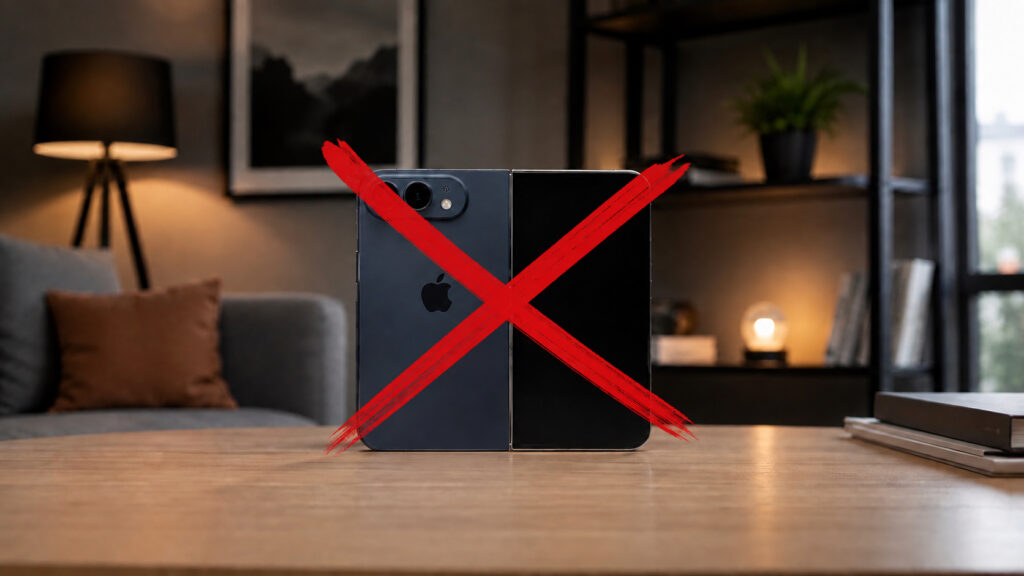
The source author questions whether the iPhone Ultra makes sense for users already happy with a large iPhone and iPad combo
The outer screen is smaller than a current large iPhone
According to the leaks cited in the source, the Ultra’s outer display measures roughly 5.5 inches. That is noticeably smaller than the iPhone 16 Plus screen. The source author points out that this means the device, when folded — which is how most people use a phone throughout the day — would actually offer less screen real estate than the phone it is supposed to replace. For users who specifically chose the Plus model for its generous display, this is a meaningful downgrade in everyday use.
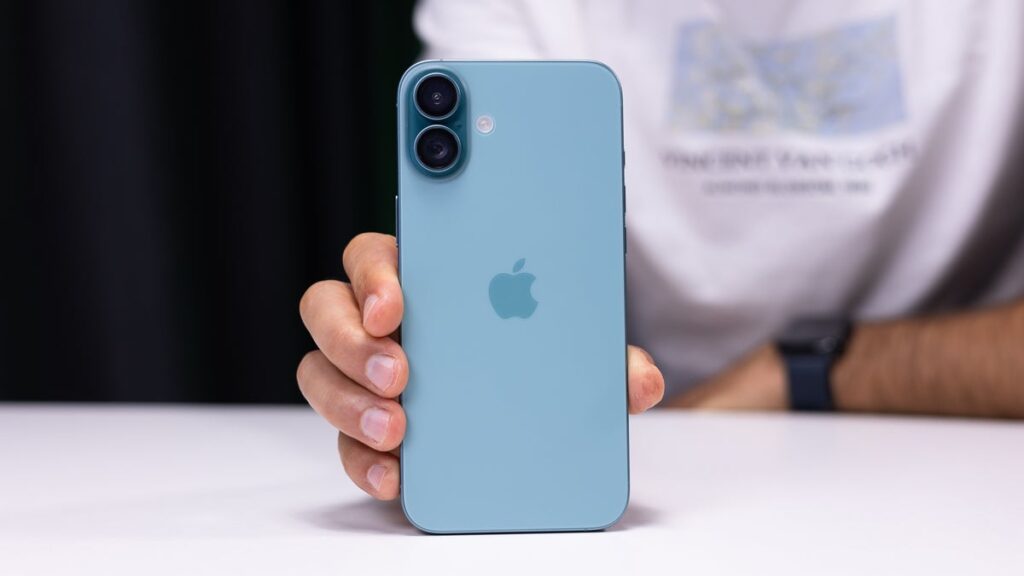
The outer screen is reportedly much smaller than the iPhone 16 Plus — yet it would be the display used most often
The inner screen still falls short of a tablet
The rumored 7.8-inch inner display sounds impressive until you compare it with existing iPads. It is smaller than the iPad mini (8.3 inches) and far smaller than a standard 10.9-inch iPad. The source author describes this as a curious compromise: a device meant to merge phone and tablet ends up smaller than both. The outer screen is smaller than the phone; the inner screen is smaller than the tablet. And the expected price, according to insiders, is roughly equivalent to buying both devices separately.
Multitasking on a 7.8-inch screen has clear limits
One of the main selling points of a large foldable screen is split-screen multitasking. The source author reports that full windowed multitasking arrived on iPad only with iPadOS 26, and that even on a 10.9-inch display, running two apps side by side feels cramped — interface elements get cut off, and the experience is more frustrating than productive. The author says that in 99% of cases, only one app is kept on screen at a time.
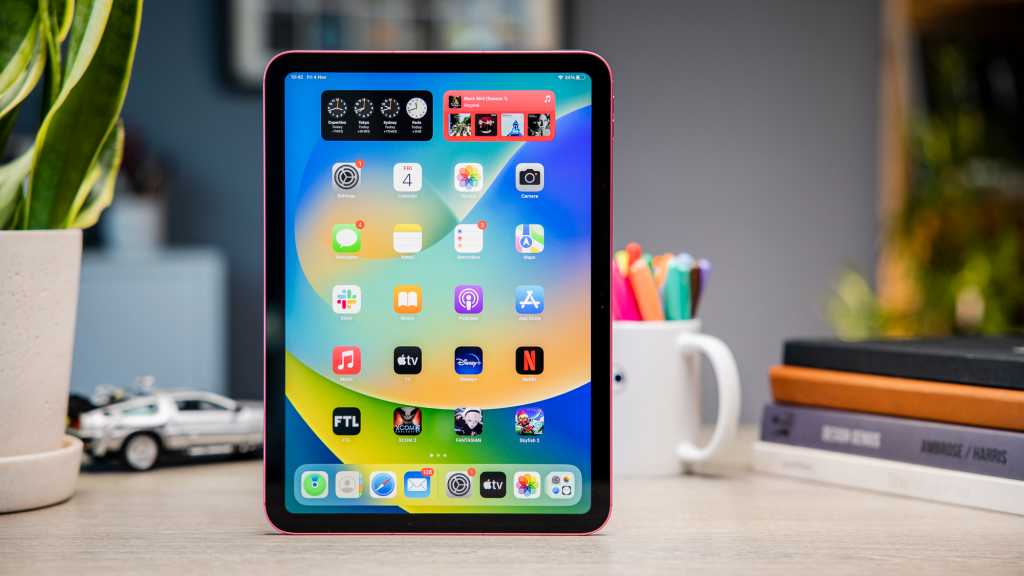
In terms of screen size, the Ultra reportedly cannot compete with even a basic iPad
Transferring that same scenario to the Ultra’s even smaller 7.8-inch inner display raises further doubts. Running two apps side by side on 7.8 inches is, as the source author puts it, an acquired taste — and not one they share.
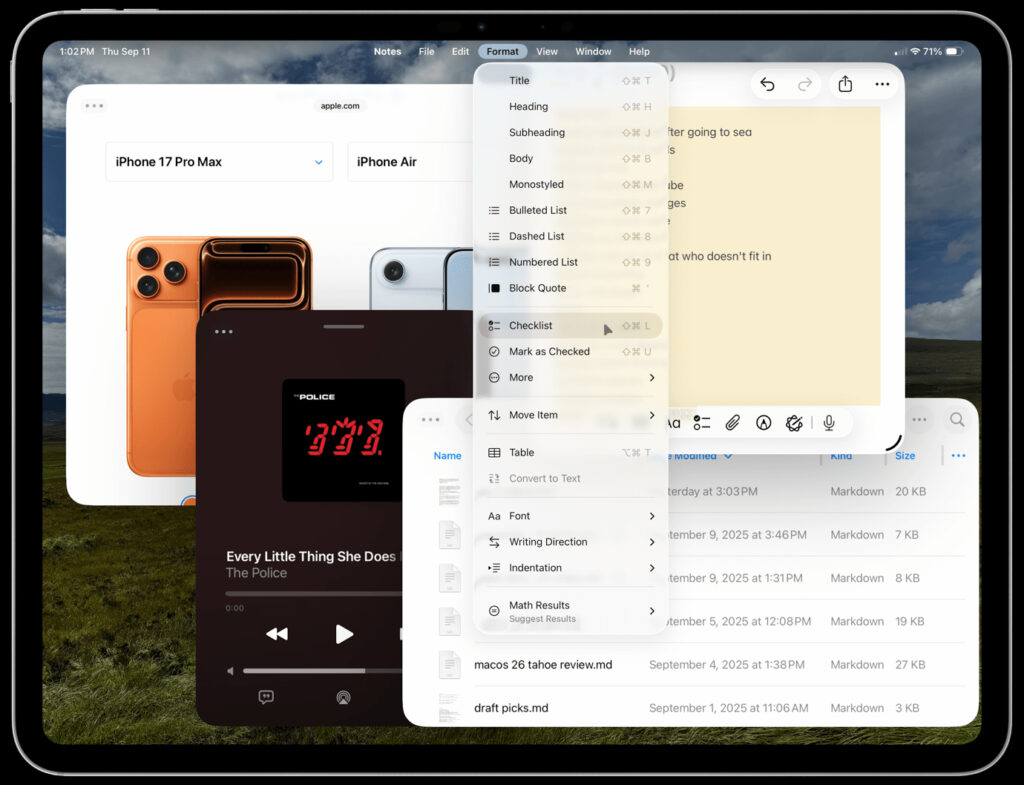
An iPad screen can accommodate multiple apps, while the Ultra reportedly supports only two side by side
Where the Ultra could shine — and where it still falls short
Setting multitasking aside, the source author identifies one scenario where the large inner screen genuinely makes sense: watching video and, when held vertically, scrolling through social media and websites. In this mode, the unfolded Ultra reportedly approaches iPad mini-level comfort. But it still does not match a full-size iPad, which the author prefers for media consumption.
There is also the question of the display crease. According to the source, the Galaxy Z Fold 8 reportedly uses the same display panel as the iPhone Ultra, and its crease remains visible — suggesting Apple may not have fully eliminated this characteristic of foldable screens either. This remains based on rumors and is not confirmed.
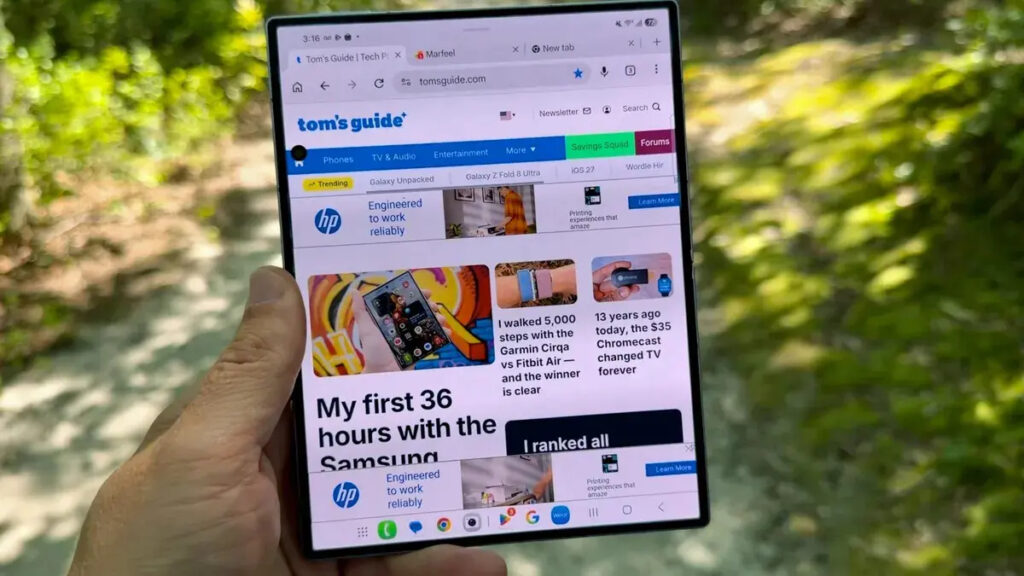
Held vertically when unfolded, the Ultra could be useful for browsing social media and websites
Apple is also adapting its software for the new form factor — iOS 27 beta has already revealed features tailored to the foldable device. However, as the source author notes, no software update can increase the physical size of the screen.
The price question: $2,400 for a compromise?
The source author’s central objection comes down to value. With insiders estimating a price of around $2,400, the Ultra would cost roughly as much as buying a standard iPhone and a full-size iPad separately. For someone who already carries both and finds the combination satisfactory, the foldable’s compromises — a smaller outer screen, a smaller inner screen, and limited multitasking — are hard to justify at that price point.
The author is careful to note that hands-on experience could change this assessment. Feeling the hinge mechanism, seeing the display in person, and using the software adaptations might shift the calculus. But based purely on the leaked specifications and pricing, the source author concludes that the foldable iPhone Ultra looks like “a beautiful, expensive, and not particularly necessary toy” — at least for users who are already comfortable with a large iPhone and iPad combination.
Important caveat: All specifications, pricing, and design details discussed here are based on leaks and insider reports. None of this information has been officially confirmed by Apple, and final details may differ significantly.