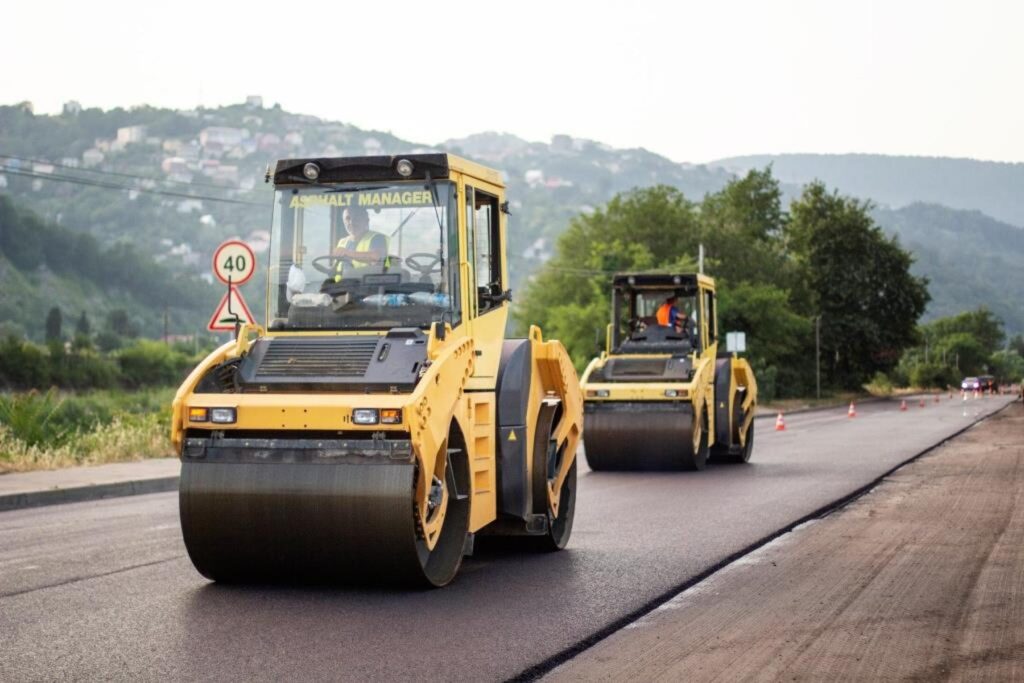
Algae road surface: 100 times less toxic fumes and roads that don’t deteriorate. Image source: mintrans.gov.ru
Step outside in any major city on a hot summer day — and you’ll notice the heavy smell of hot asphalt. We’re used to ignoring it, but scientists warn: the real threat is hidden in these very fumes. Now an international team of engineers and biologists is proposing a radical solution — replacing the petroleum component of road surfaces with fast-growing algae. The first tests look impressive.
Why Regular Asphalt Is Dangerous for Human Health
Asphalt is mostly crushed stone and sand. To hold it all together, bitumen is used — a black viscous substance left over from refining crude oil. As bitumen ages and heats up in the sun, it releases volatile organic compounds — carbon vapors that continuously rise from the road surface.
In the short term, inhaling these fumes causes dizziness and difficulty breathing. Road workers who spend years in contact with hot asphalt have a significantly increased risk of developing lung cancer. But the problem extends beyond construction workers.
Recent studies have shown that ultraviolet light and heat change the chemical composition of bitumen as the road ages. The surface begins to release increasingly smaller and more toxic molecules — often completely odorless. These tiny compounds easily penetrate blood vessels and reach vital organs. Scientific models link such emissions to neurological damage, especially in women and the elderly.
“Heat makes the situation worse,” says Elham Fini, a senior researcher at Arizona State University’s Global Futures Laboratory. “It intensifies emissions from asphalt.”
How Algae Asphalt and Bio-Bitumen Are Made
The idea sounds strange: replacing a petroleum product with green mass from a pond. But algae have several properties that make them an ideal candidate.
Algae grow at enormous speed — some species double their mass in a single day. They absorb carbon dioxide from the atmosphere and lock it in their cells. One acre (about 0.4 hectares) of cultivated algae yields up to ten times more biomass than a field of corn or soybeans.
Roads built from algae withstand cold much better than traditional asphalt surfaces. Image source: zmescience.com
To turn algae into a bitumen analog, scientists use a process called hydrothermal liquefaction. Essentially, it’s a high-tech pressure cooker that mimics the conditions under which the Earth spent millions of years turning ancient organic matter into oil. Only instead of geological ages, the process takes just hours. The output is bio-oil, which is then refined to the consistency of bio-bitumen — a viscous binder suitable for standard asphalt mixtures.
Importantly, growing algae requires neither drinking water nor fertile land. Elham Fini, together with Peter Lammers from the Arizona Center for Algae Technology and Innovation, cultivates special strains using wastewater from treatment plants.
“It’s a great system,” explains Lammers, “because we use water with high nitrogen and phosphorus content that cannot be discharged into nature. Instead, we direct it to growing new algae.”
Algae Asphalt Doesn’t Crack and Withstands Freezing Temperatures
One of the main weak points of regular asphalt is winter. In freezing temperatures, petroleum bitumen becomes brittle and develops thermal cracks. Algae, as it turns out, solve this problem too.
In a study conducted by specialists from the Pacific Northwest National Laboratory and Arizona State University, scientists tested how asphalt with an algae additive behaves at sub-zero temperatures. The result: adding just 6% of a bio-binder based on Ulva macroalgae radically changes the physical properties of the surface. The material remains flexible and absorbs the load from heavy vehicles without cracking.
Even more surprising was the self-healing ability. When researchers tested bio-oil from another species of algae — Haematococcus pluvialis — the elastic recovery of asphalt under load jumped from 0.1% to 71%. The road essentially “springs back” instead of accumulating damage.
Algae Asphalt Reduces Toxic Emissions by 100 Times
The main question is — do algae help combat toxic fumes? Laboratory tests showed encouraging results. The algae-based bio-binder doesn’t completely stop vapor emissions, but it locks in the most dangerous compounds — the very ones that penetrate arteries and reach the brain. According to published data, the algae additive reduces the overall toxicity of asphalt emissions by approximately 100 times.
In addition, the bio-binder slows the natural deterioration of the surface. The road maintains its integrity longer, emits fewer fumes, requires fewer repairs, and ultimately costs less for city budgets.
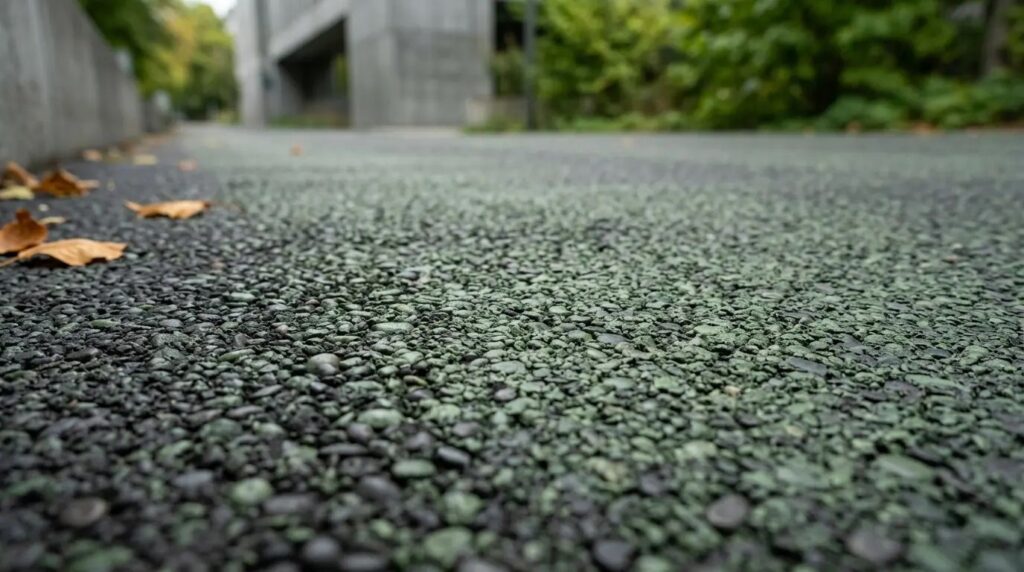
Asphalt with an algae-based bio-binder additive looks almost identical to regular asphalt.
There’s also a climate bonus. Every percent of petroleum bitumen replaced with algae-based bitumen reduces net carbon emissions by 3%. The logic is simple: extracting and refining oil releases ancient carbon trapped underground for millions of years. Algae, on the other hand, absorb CO₂ from the air as they grow. When they are processed into bio-binder, that carbon remains locked inside the material. Theoretically, a road with a 33% bio-binder additive achieves full carbon neutrality.
When Will Algae Roads Appear in Cities
Despite impressive laboratory results, mass adoption is still far off. Bio-bitumen production is currently significantly more expensive than extracting regular oil. Scaling up will require serious investment in bioprocessing plants. Additionally, years of testing under real traffic are needed — millions of trucks create loads that cannot be fully replicated in the laboratory. This is especially important for countries with challenging climates, such as Russia, where there are almost no concrete roads, even though they are considered strong and durable.
However, progress has already begun:
- In France, the Algoroute project successfully laid bio-bitumen on test sections, confirming a reduction in carbon emissions of up to 70%.
- In the United Kingdom, construction company Tarmac launched similar pilot projects.
- In Phoenix, an experimental section of road with algae asphalt is planned — testing under extreme Arizona heat will provide data that is hard to dispute.
For now, this is still in the early stages of development, and it may take years before algae asphalt appears on city streets. But the idea itself — turning road surfaces from a source of toxic fumes into an air purification tool — no longer looks like science fiction. It is backed by concrete numbers and working prototypes.